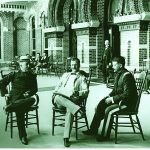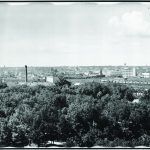
It might hard to imagine now, sitting on the Plant Hall verandah at the University of Tampa, but in 1891, it was the Tampa Bay Hotel. On that patio, guests would sip iced tea to cool off, because there was no air conditioning and no downtown skyline.
The hotel was a seasonal destination for guests at a time when Tampa was a small fishing village and orange groves. The population was about 750 people.
If the walls could talk, you’d hear some famous voices including Booker T. Washington, Theodore Roosevelt and, of course, Henry B. Plant himself.
Plant, a Connecticut entrepreneur and investor, had bought or built eight hotels in Florida, including the newly renovated Belleview Inn, which was named The Hotel Belleview in 1896 when it opened.
Today, Plant Hall is home to the Henry B. Plant Museum, where you can go back in time. The museum’s writing and reading room, for example, appears as it did when the hotel was open. “Our important things never left the building,” says Cynthia Gandee Zinober, executive director of the museum.
In 1904, the hotel held its first Gasparilla Ball, and the museum still has three traditional gowns created by Ann Lowe, who famously made Jacqueline Kennedy Onassis’ dress for her wedding to John F. Kennedy.
Plant helped establish the Tampa Bay area as a tourism destination—not only by developing his hotels, but with the train tracks he acquired to bring people to Florida. After his 1884 track purchase, he developed Port Tampa, connecting his steamship line to the rail system. Many of those tracks were converted to CSX property.
During the hotel’s first season, more than 4,000 guests stayed there. Visitors golfed, boated down the Hillsborough River, and ate fancy meals in the grand banquet hall.
In 1898, the Tampa Bay Hotel was a base of operations for the U.S. Army during the Spanish-American War. Col. Theodore “Teddy” Roosevelt and his Rough Riders camped near the hotel during this time. At night, Roosevelt visited his wife, who stayed in the hotel.
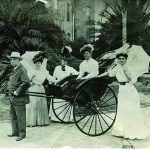
Details found throughout the museum include the Venetian mirrors, intentionally mismatched china in the dining room, and garden seats, which sat near where carriages would pull up on the north side, near the river. Trains picked up and dropped off passengers on the south side.
The Tampa Bay Hotel closed in 1930 because of a decline in tourism, and it was sold to the city in 1905 for $125,000. In 1933, the city established the Tampa Municipal Museum to preserve a pivotal part of Tampa’s history—the same year the school moved to the property. In 1974, the museum was renamed for the hotel’s founder. ♦