Measuring the economic impact of Tampa Bay Markets

Tampa Bay Markets drives millions in local growth through 16 markets and 900 vendors across Tampa Bay.

Local markets are more than weekend events. They are test beds for new products, launch pads for entrepreneurs and reliable drivers of foot traffic that support nearby shops and restaurants. Tampa Bay Markets, a for-profit company founded in 2010, has built a network of 16 locations with 18 event days each month, creating measurable impact across the region.

Filling a gap

When Tiffany Ferrecchia moved to Tampa in 2007 as a personal chef, she was looking for a place to sell her sauces and prepared foods. A whole-foods chef focused on healthy cooking, she had developed a line of sauces she wanted to sell locally, but found no reliable venues to do so.

“I came here and I was like, where’s the markets?” she said. At the time, the area had only a few scattered options, leaving small food and craft makers without local exposure or low-risk ways to reach customers.

She decided to build what Tampa lacked. “I wrote a proposal and gave it to the City of Tampa and the Downtown Partnership,” she said. “They bid on it, and that’s how the first downtown market was born in 2008.”

READ: Bern’s Dessert Room turns 40 with Tampa Heights brewery collaboration

From that foundation, Ferrecchia co-founded Tampa Bay Markets in 2010. The company grew from a single downtown event to six locations by 2020 before the pandemic forced a complete shutdown.

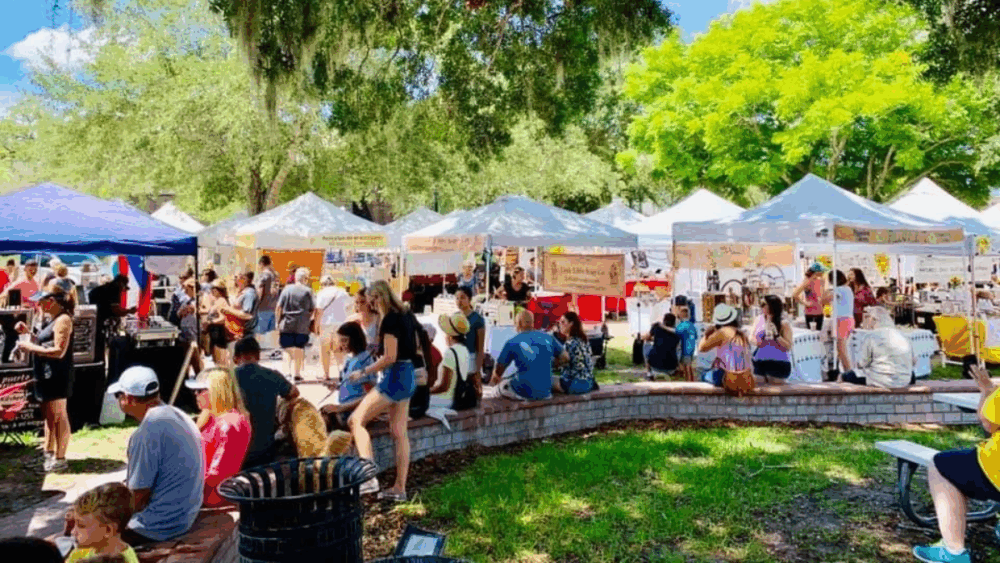
Visitors gather under the oaks at the Dunedin Downtown Market, one of Tampa Bay Markets’ most popular weekend destinations.
Crowds relax and shop beneath oak trees and white vendor tents at the Dunedin Downtown Market, part of the Tampa Bay Markets network, on a sunny weekend afternoon.

During the closure, she created an online multi-vendor marketplace to keep small businesses visible. “We did what we could,” she said. “Then in 2021, we reopened and added seven new markets in one year.”

Ferrecchia now leads the company on her own after her longtime business partner retired in June. She oversees a team of more than a dozen market managers who help run events across Hillsborough, Pasco and Pinellas counties.

Building a small-business engine

Tampa Bay Markets now hosts about 900 participating vendors each month. Booth fees range from $45 to $85, depending on location. Farmers are given their first year free, with discounted space afterward.

“We really try to support local farmers,” Ferrecchia said. “It’s important to us that they have a place to sell.”

The company operates some of Tampa Bay’s most popular open-air events, including the Dunedin Downtown Market, Fresh Market at Hyde Park Village, Fresh Market at Wiregrass, Sunshine Market at Midtown and the Sunday Market at Westshore Marina District.

Other signature locations include the Madeira Beach Wednesday Market, Seminole Heights Sunday Market, Kenwood Sunday Market in St. Petersburg, Sunset Market at Midtown, Carrollwood Market, Trinity Market and the Water Street Sunday Market in downtown Tampa.
READ: Cooper’s Hawk brings Roman-style pizzeria Piccolo Buco to Tampa

Each market attracts a distinct crowd, from young professionals to retirees and families looking for local goods, lunch options and live music. These weekend favorites have become destinations for residents looking for fun things to do in Tampa Bay while keeping their dollars local.

The company also manages programs that strengthen vendor sustainability. The Fulfill Your Destiny Vendor Grant awards $1,000 quarterly to help small businesses buy equipment or improve their setups. The program began when Air Force veteran Karen Mertes, who suffered a brain injury in a car accident, decided to give back to the community. She launched the grant during the pandemic and partnered with Tampa Bay Markets to reach local entrepreneurs.

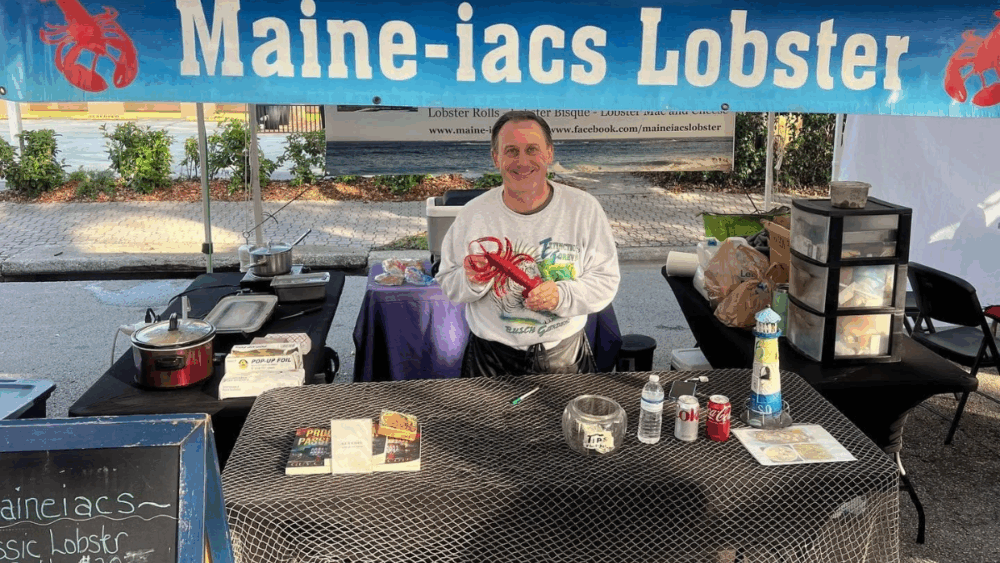
Guy Cote of Maine-iacs Lobster stands behind his booth at a Tampa Bay Markets event, smiling while holding a red lobster prop, with a banner reading “Maine-iacs Lobster” displayed above him.
Guy Cote, owner of Maine-iacs Lobster, says the Fulfill Your Destiny Vendor Grant helps small businesses grow.

The company’s Go Green campaign, created in partnership with the University of Florida and the University of South Florida, eliminates single-use plastics across all events.

Tampa Bay Markets draws visitors of all ages from across the region. Most attendees are active on social media, value local products and sustainability, and see the markets as both a shopping trip and a weekend experience with live music, food and family activities.

Another initiative, Kids Market, gives young entrepreneurs their own section to sell handmade goods. “We really have kids making things and selling things,” Ferrecchia said. “I just love it.”

Ferrecchia said the company is now focused on raising its own profile. “A lot of people don’t realize Tampa Bay Markets is the company behind the events,” she said. “We’ve been serving vendors for so long. Now we’re working to make sure the community knows all the cool things we do beyond just the markets.”

From tent to storefront

Markets have become natural incubators for brick-and-mortar success. Restaurants, bakeries and apparel lines have used the events to build followings before expanding to storefront locations.

“Gulf Coast Sourdough created a sandwich shop after starting with us,” Ferrecchia said. “It’s sad when they outgrow us, but it’s amazing to see their success.”

RELATED: Gulf Coast Sourdough spins off wholesale business to Bavaro Hospitality

The model works in reverse, too. Established businesses use markets to promote existing locations or introduce new products. “Back in 2010, Bavaro’s Italian restaurant sold sauces at our Hyde Park market,” she said. “It helped them get into Costco and Whole Foods.”
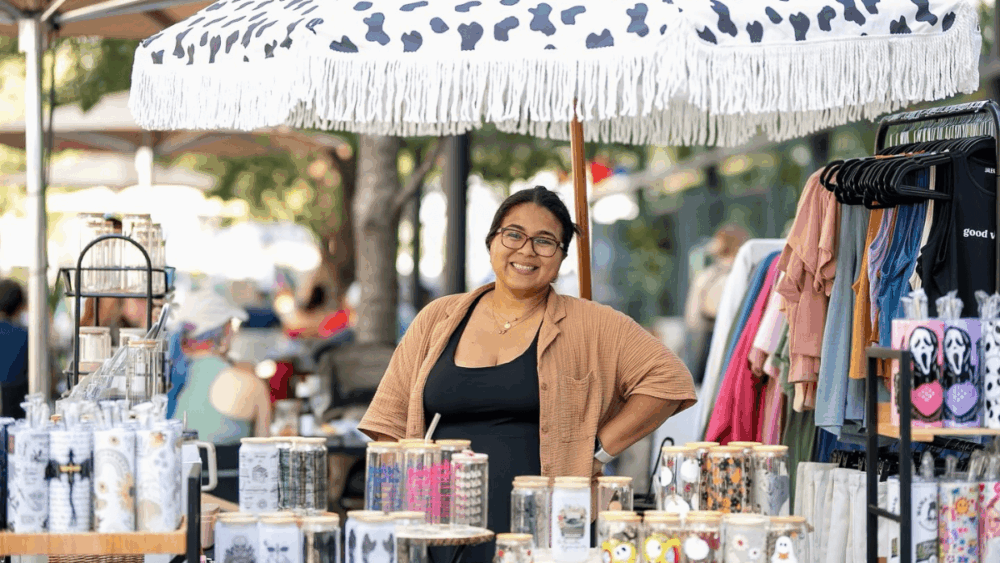
A smiling vendor stands under a fringed umbrella surrounded by handmade tumblers and clothing racks at the Fresh Market at Hyde Park Village, part of the Tampa Bay Markets network.
A vendor at the Fresh Market at Hyde Park Village, one of Tampa Bay Markets’ flagship locations.

The measurable impact

The last study on record, conducted by the University of Florida in 2017, found that Tampa Bay Markets generated a combined annual economic impact of $13.4 million. On average, shoppers spent $33,000 per market day at vendor booths and another $177,000 at nearby businesses.

The organization has since doubled in size, meaning the true impact is likely far higher. “I’m sure the impact now is so much more,” Ferrecchia said. “The study actually showed how a market impacts the local community and how much money is driven to the businesses because of the markets we operate.”

Human connections that scale

For vendors, markets are more than sales channels — they are communities that create opportunity and belonging.

“Being part of Tampa Bay’s market scene has been a huge part of Holy Guacamole’s growth,” said Joaquin Lazcano Anaya, owner of Joaquin’s Holy Guacamole. “The markets give us direct access to people. It’s more than sales. It’s about building relationships and being part of something that supports small business owners like us.”

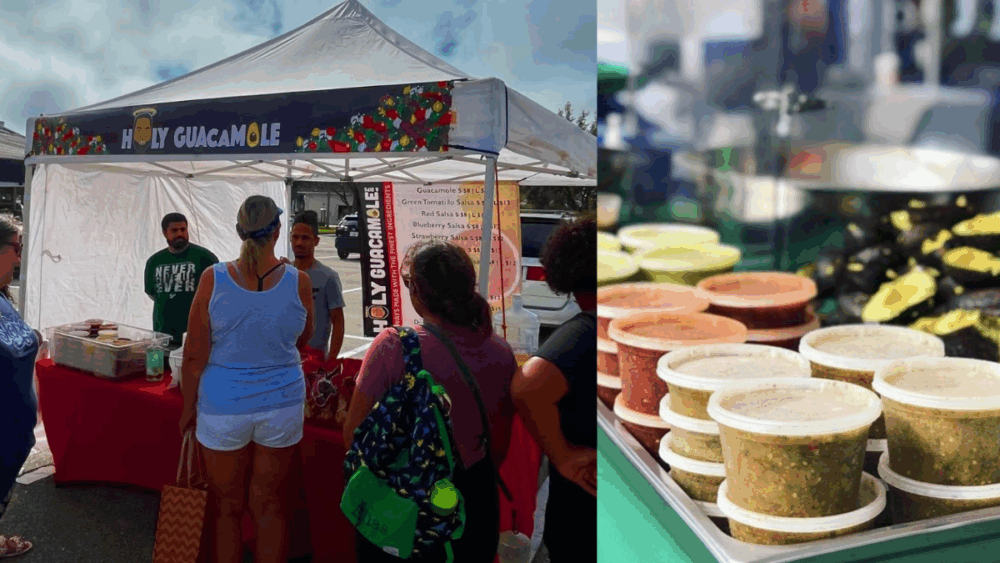
Joaquin’s Holy Guacamole draws crowds at Tampa Bay Markets events with fresh guacamole, ceviche and salsas made from scratch each week.
Customers line up at the Holy Guacamole booth during a Tampa Bay Markets event, where containers of freshly made guacamole and colorful salsas are displayed alongside ripe avocados.

At his market booth, Joaquín’s Holy Guacamole draws crowds with its signature guacamole and ceviche, made fresh for every event. The menu includes traditional and spicy guacamole, mango and tomatillo salsas, jalapeño garlic dip and spinach artichoke garlic dip, along with shrimp and fish ceviche served with plantain chips or pita.

READ: Clearwater’s Yo Mama’s Foods racks up 36,000 orders after GMA feature

Since joining, Lazcano Anaya has expanded into new markets across Tampa Bay and brought his business to new heights. “We’ve built a loyal following who look for us every weekend,” he said. “The energy and connection at these events are what keep us motivated.”

Ferrecchia said his story captures what Tampa Bay Markets was designed to do. “He’s been able to really expand his business under our umbrella, which is such a great thing for him,” she said.

Local spending, lasting results

Markets like those run by Tampa Bay Markets do more than fill sidewalks. They keep dollars circulating locally, foster new entrepreneurs and strengthen small businesses throughout the region.

“I think people see how they can have a full-time job but still make really great cookies or cupcakes,” Ferrecchia said. “They want to do something on the side, and the markets make that possible.”

Fifteen years after its first booth, Tampa Bay Markets has grown into one of the region’s quiet economic engines. Vendors may come and go, but the sense of community and the local momentum remain constant.

Visit Tampa Back Markets’ website to find the market nearest you.

Stay Connected

Sign up for TBBW’s newsletter

Follow TBBW on social media

Read more TBBW stories

You May Also Like
How a 2nd-gen entrepreneur revived his family’s Tampa liquor stores

Trey Lawson returned to Tampa to rebrand his family stores, grow Liquor Depot and build a community movement around bourbon and the $20 buzz.

Read More
Trey Lawson stands inside Liquor Depot next to a whiskey barrel.
Tampa hotels launch Plates with Purpose to fight food insecurity

Mainsail hotels are turning every entrée sold into meals for families facing holiday food insecurity.

Read More
Exterior view of the Epicurean Hotel at sunset, showing the multi-story building with illuminated windows, brick and stucco design, street traffic light trails and a Bern’s Steak House valet parking sign in the foreground.
St. Pete YMCA’s new CEO sets belonging as top priority

New CEO Nicci Bucher is leading the St. Pete YMCA with a focus on belonging, partnerships and community growth.

Read More
Nicci Bucher, newly appointed CEO of the YMCA of Greater St. Petersburg, stands outside a YMCA facility, smiling confidently. The YMCA logo is displayed beside her.
St. Pete Insurtech shows big profit on NYSE

Neptune CEO Trevor Burgess explains how AI, growth and a federal shutdown sparked his question: “Do we need the NFIP at all?”

Read More
Trevor Burgess and the Neptune Insurance team ringing the opening bell at the New York Stock Exchange on October 1, 2025.
Other Posts
Port Tampa Bay adds 2 new cranes from Ireland as Vision 2030 expands

Port Tampa Bay is adding two new cranes built in Ireland to support its Vision 2030 terminal expansion.

Read More
A container ship loaded with stacked refrigerated containers is berthed under green Liebherr ship-to-shore cranes at a modern cargo terminal.
New Chicken Salad Chick opening in Parrish on Dec. 16

Chicken Salad Chick opens in Parrish on Dec. 16 with giveaways and continued growth across Manatee County.

Read More
Three containers of Chicken Salad Chick’s signature chicken salad flavors arranged on a kitchen counter with crackers.
Holiday scams are surging. Here’s how to stay safe this season

The holiday season is here. It’s a time for celebrations, gift giving and year-end deadlines. While you’re juggling office events and covering for colleagues on long vacations, fraudsters are busy

Read More
A smartphone screen displaying a phishing warning with a fishing hook above an SMS alert icon, symbolizing text-message scam attempts.
Darryl Shaw sells 2 Ybor properties for $7.45M near Gasworx

Two Ybor properties sold for $7.45M as investor interest accelerates near Gasworx.

Read More
Three views of Ybor City development: the Pete’s Bagels building on 4th Avenue, a historic mixed-use building on 6th Avenue, and the nearby Gasworx construction site linking Ybor to downtown Tampa.