People often ask James Nozar how Water Street and Gasworx compare. Nozar, now president of development at KETTLER, led the launch of Water Street Tampa as its founding CEO.
On paper, both projects are large mixed-use districts. In reality, they feel nothing alike.
“Gasworx is very different than Water Street, but also similar in a lot of ways,” he says.
Water Street began as a blank slate. The team built tall buildings on open land, and the first phase came together as a cluster of 25- and 26-story towers.
Gasworx is the opposite. It sits inside a historic district and on top of what was once a gas plant, which is where the name comes from.
There is a brick building to restore, active rail lines to work around and surrounding streets that were never fully connected to downtown or the Channel District.
“Gasworx is going to have more of a neighborhood feel,” Nozar says. “It ties more into the history of Ybor City, which for me is a really fun, exciting opportunity.”
When he walks the site, the scale reminds him of the West Village in New York. The blocks are tight. The buildings are lower. The streets feel made for walking.
“It feels like you are in an existing neighborhood instead of something created all at once,” he says.
A park, three buildings and a lot of work underground
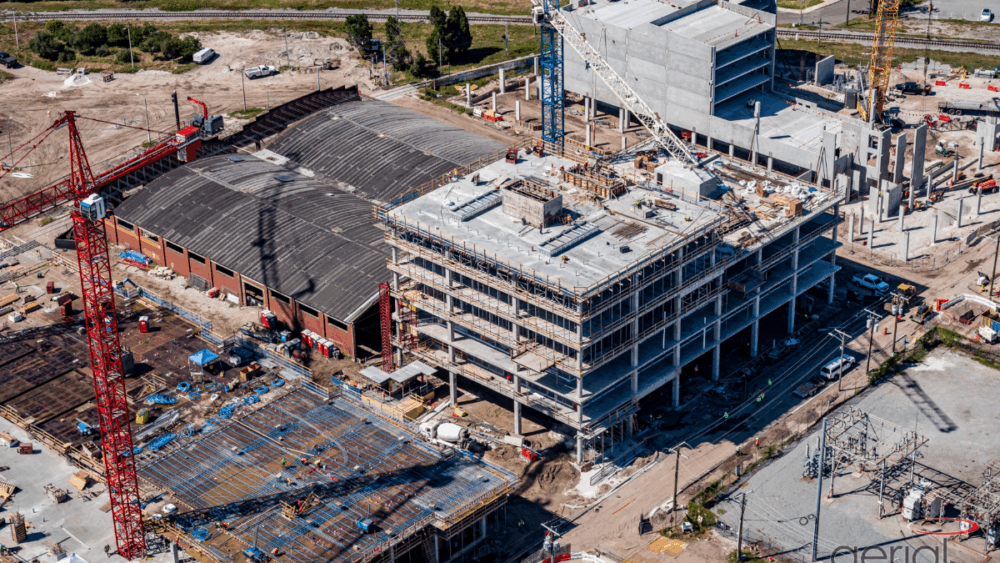
Right now, three new buildings and a park sit at the center of the current phase of Gasworx. When you walk the site, it feels like everything is moving forward at the same pace. The buildings are being built side by side, and the one-acre park will soon take shape in the middle like a shared backyard.
This phase adds about 1.5 million square feet across four buildings. One is a stand-alone market building. One is an office building with ground-floor retail. Three are residential buildings, also with ground-floor retail. All five encompass the park, which will act as the main gathering space once the area opens.
“The park is a really critical part of Gasworx,” Nozar says. The team wants the buildings and the park to open together so the space feels active from day one.”
KETTLER recently shared the names of the three residential buildings: The Luisa, Olivette and The Stevedore. Each name comes straight from Ybor’s history.
- The Luisa honors Luisa Capetillo, the only recorded female lector in Ybor’s cigar factories.
- Olivette is named for a steamship that once connected Tampa to Havana.
- The Stevedore pays tribute to the dockworkers who powered Tampa’s early port.
Gasworx renderings
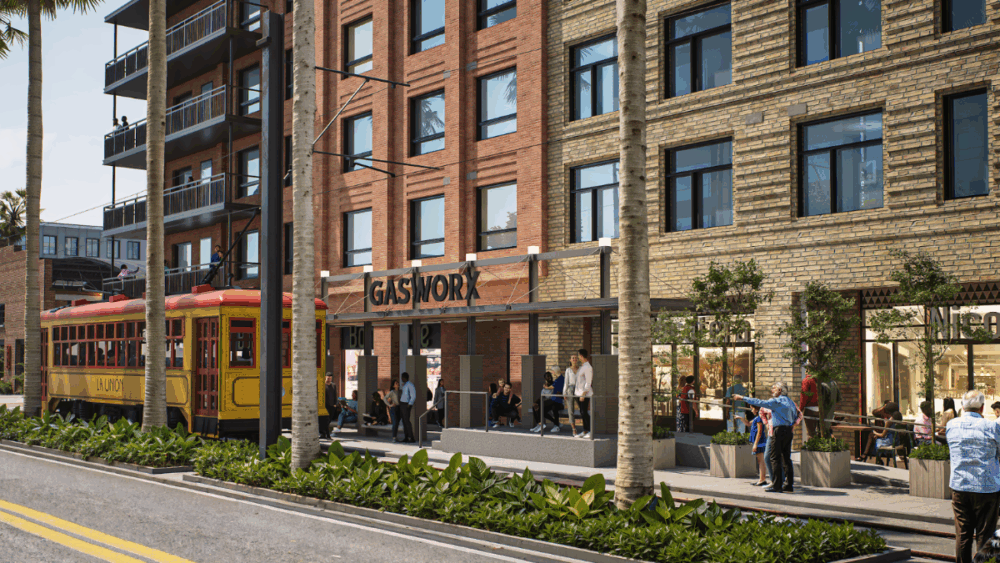
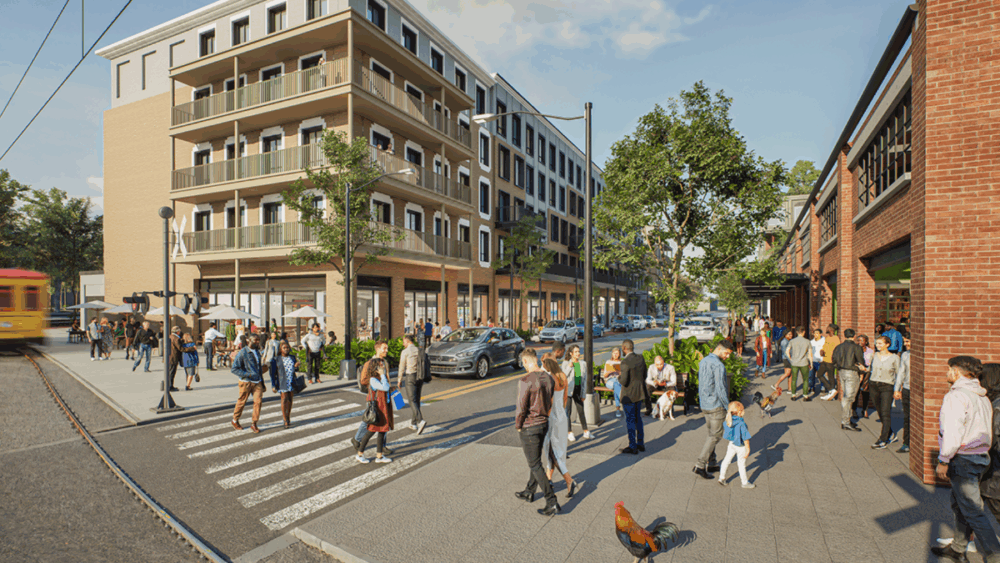
The names give the district a sense of place. They make the buildings feel connected to the neighborhood instead of dropped into it.
All three buildings are under construction. The Stevedore is scheduled to open in early 2026. The Luisa will follow in spring 2027, and Olivette in summer 2027.
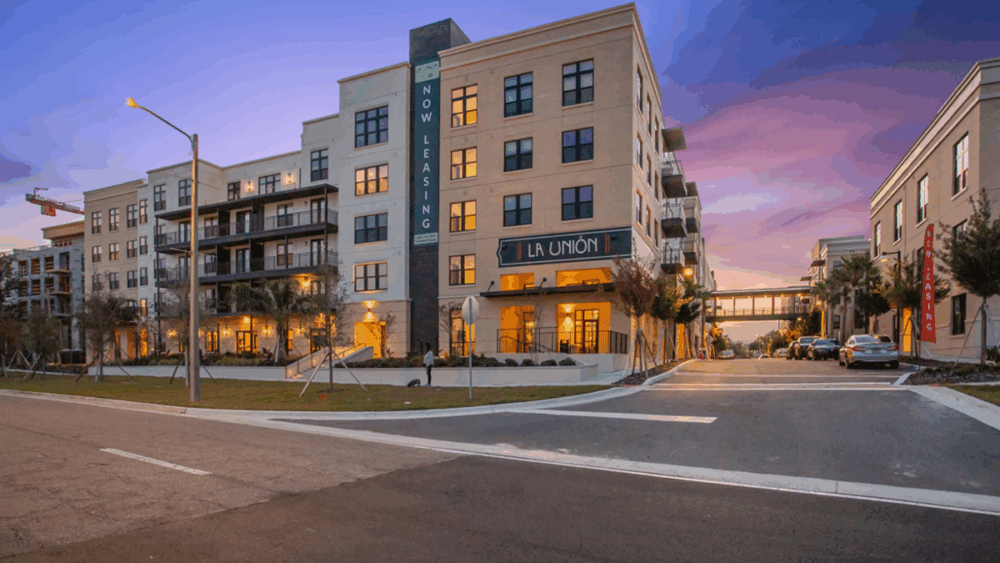
La Union Residences & Social Hall, which opened in 2024, set the tone for the district by honoring La Unión Martí-Maceo, an Afro-Cuban social hall that once stood on that site.
These pieces fit into a larger 15-block plan. One block is open. One is close to opening. Three more are under construction. Ten blocks remain.
Those future blocks will likely include a hotel, condominiums, more office space and more housing. The goal is not to split the district into separate zones for work, living and dining. The goal is to blend everything together.
“It is very mixed,” Nozar says. “We want to have additional uses to create more of a daytime and seven-day vibe, including the hotel.”
Under the surface, the team is doing the work that most people do not see, but everyone will feel. They are moving power lines, replacing sewer and stormwater systems and building new streets through land shaped by old rail lines and the footprint of a former gas plant.
“There are just a lot of challenges,” Nozar says. “The infrastructure to be able to recreate the road network and the road grid to be able to go vertical.”
If you’re near the site today, you can see things taking shape. Roads that never connected will soon be linked. The pads for the buildings are set. The park will soon start to look like a place people will actually use. Even the building names make the area feel grounded in something bigger.
It still has a long way to go, but you can see the neighborhood it’s becoming.
Why it matters
- It fills a major missing link between Ybor City, downtown and Channelside
- For decades, these neighborhoods sat close on a map but felt far apart on foot. New roads, sidewalks and bike routes will finally close that gap.
- It adds the kind of mixed-use density Tampa has been missing
- The district brings new homes, offices, retail and daily services into one place instead of spreading them across the city. That creates real street life and supports small businesses.
- It keeps Ybor’s history visible instead of erasing it.
- The building names, the preserved structures and the design choices tie back to the people and stories that built the neighborhood more than a century ago.
- It gives employers another reason to choose Tampa.
- Office users who once preferred Westshore or suburban sites are now looking at Gasworx because it offers walkability, housing options, and neighborhood amenities within a single block.
- It expands the city’s long-term growth path.
- Gasworx sits next to Ybor Harbor, which holds millions of square feet of future development. Together, they extend Tampa’s urban core and support long-term job and population growth.
- It helps Tampa compete with cities like Austin and Charlotte.
- As more companies relocate or expand here, districts like Gasworx show the city can support modern, walkable, mixed-use neighborhoods at a scale that matters.
Takeaway
Gasworx shows how Tampa is changing. The city is growing, but it is also learning to grow intentionally.
The project brings new homes, new jobs and new streets, yet it also respects the stories that give Ybor its character.
Nothing about Gasworx feels rushed or generic. The design choices, the naming decisions and the careful mix of uses show a long-term view.
It is a district being built piece by piece, the way real neighborhoods form over time.
The work is far from finished. But you can already see what it wants to become: a connected, walkable place with history at its core and opportunity in every direction.