
Demand for affordable housing continues to outpace supply across St. Petersburg, putting pressure on redevelopment proposals to demonstrate delivery rather than intent.
Blake Investment Partners says its St. Petersburg 3.0 vision is designed to meet that test.
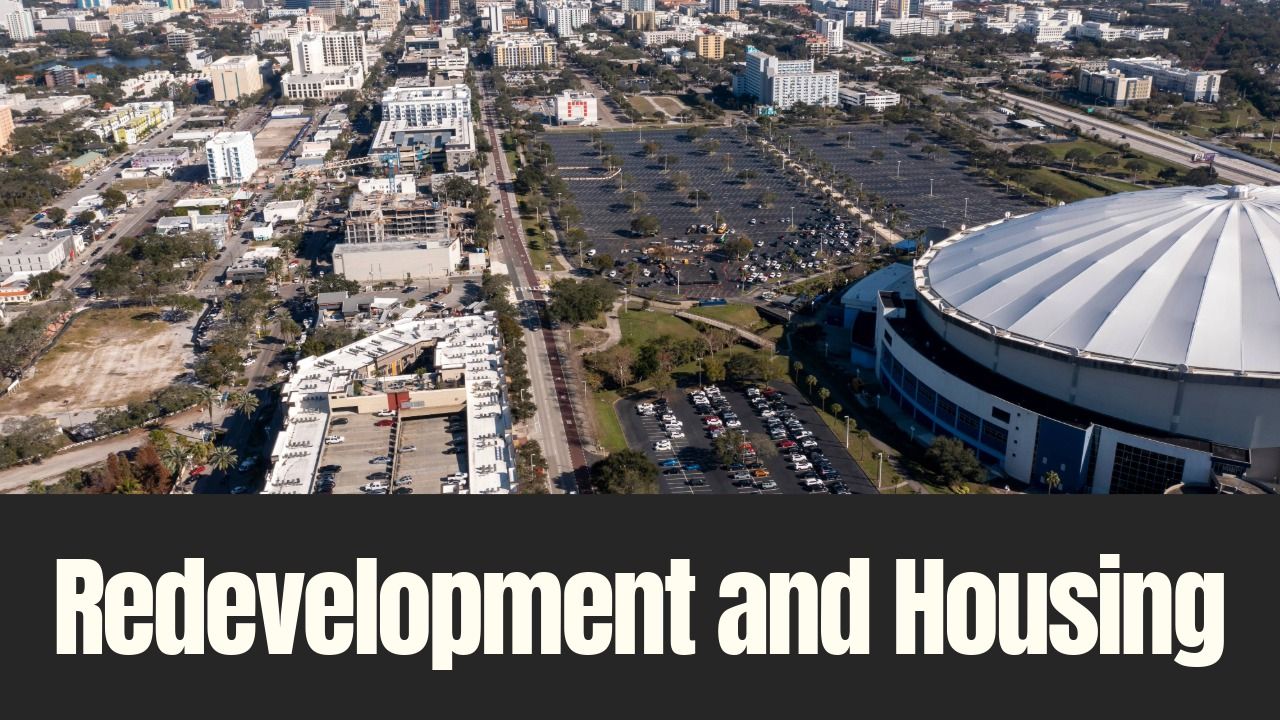
The firm’s housing strategy is tied to the Historic Gas Plant District, a 95.5-acre redevelopment site that includes Tropicana Field and is currently under review by the City of St. Petersburg as part of competing multibillion-dollar proposals.
In a recent St. Petersburg 3.0 video, Blake reaffirmed plans to deliver what it describes as the largest affordable and workforce-housing commitment tied to a single redevelopment effort in the city’s history.
The approach pairs on-site affordability within the Gas Plant District with additional housing investments across St. Petersburg.
To execute the plan, Blake has partnered with Blue Sky Communities, a Florida-based affordable and workforce housing developer with more than five decades of experience in the region.
A redevelopment model tied to housing delivery
St. Petersburg 3.0 is framed as a long-term redevelopment approach that prioritizes affordability, economic opportunity and sustained community benefit while acknowledging the site’s history.
Under the plan, Blake Investment Partners intends to deliver income-restricted and attainable housing both within the Gas Plant District and through additional projects citywide.
READ: TAMPA BAY BUSINESS NEWS
The structure is meant to extend housing access beyond the boundaries of a single redevelopment site.
“Commitments to affordable housing don’t mean anything unless you have a team in place to actually get it done,” said Scott McDonald, principal at Blue Sky Communities. “Our family of companies has been building affordable housing in St. Petersburg since the early 1970s and across Florida, we’ve helped develop more than 3,000 homes. At our core, we believe every person deserves a safe, affordable place to live.”
Partnering for scale and accountability
Blue Sky Communities brings decades of experience delivering income-restricted housing under federal and state affordability programs.
The firm has worked with local governments, housing authorities and public funding agencies across Florida.
Blake Investment Partners said the partnership is intended to combine national development capacity with local execution and long-term accountability.
READ: ST. PETERSBURG BUSINESS NEWS
“At the historic Gas Plant, we’re ready to deliver affordable and workforce housing not only within the district but across the city,” McDonald said. “This isn’t just another project. This is St. Pete. It’s our home.”
The joint effort emphasizes long-term affordability requirements, citywide impact and established local relationships rather than one-time commitments tied solely to redevelopment approvals.
Blue Sky’s recent St. Petersburg housing work
Over the past decade, Blue Sky Communities has delivered or preserved several affordable housing developments in St. Petersburg.
Those include SkyWay Lofts, a 131-unit family housing community in South St. Petersburg offering one- and two-bedroom homes. Bear Creek Commons provides 85 affordable units designed for seniors.
READ: TAMPA BAY REAL ESTATE NEWS
Brookside Square involved the rehabilitation of a 142-unit family housing property that preserves long-term Section 8 affordability.
Peterborough Apartments is a 150-unit senior housing community located in downtown St. Petersburg.
Together, the projects reflect Blue Sky’s ongoing role in income-restricted housing delivery across the city.
Framing what comes next
As St. Petersburg continues to grow, questions around affordability have become central to how major redevelopment proposals are evaluated.
Blake Investment Partners says its St. Petersburg 3.0 vision is built around execution rather than concept, relying on experienced partners to translate redevelopment into long-term housing outcomes.
Whether the model becomes a benchmark for future projects may depend on how quickly proposed units move from planning to construction and who ultimately benefits when they do.
For a city weighing how growth should serve existing and future residents, housing delivery has become a defining measure of credibility.