
Greystar Real Estate Partners has endorsed an unsolicited redevelopment proposal from Blake Investment Partners for the Historic Gas Plant District, adding a major institutional voice to a process already defined by competing visions and public scrutiny.
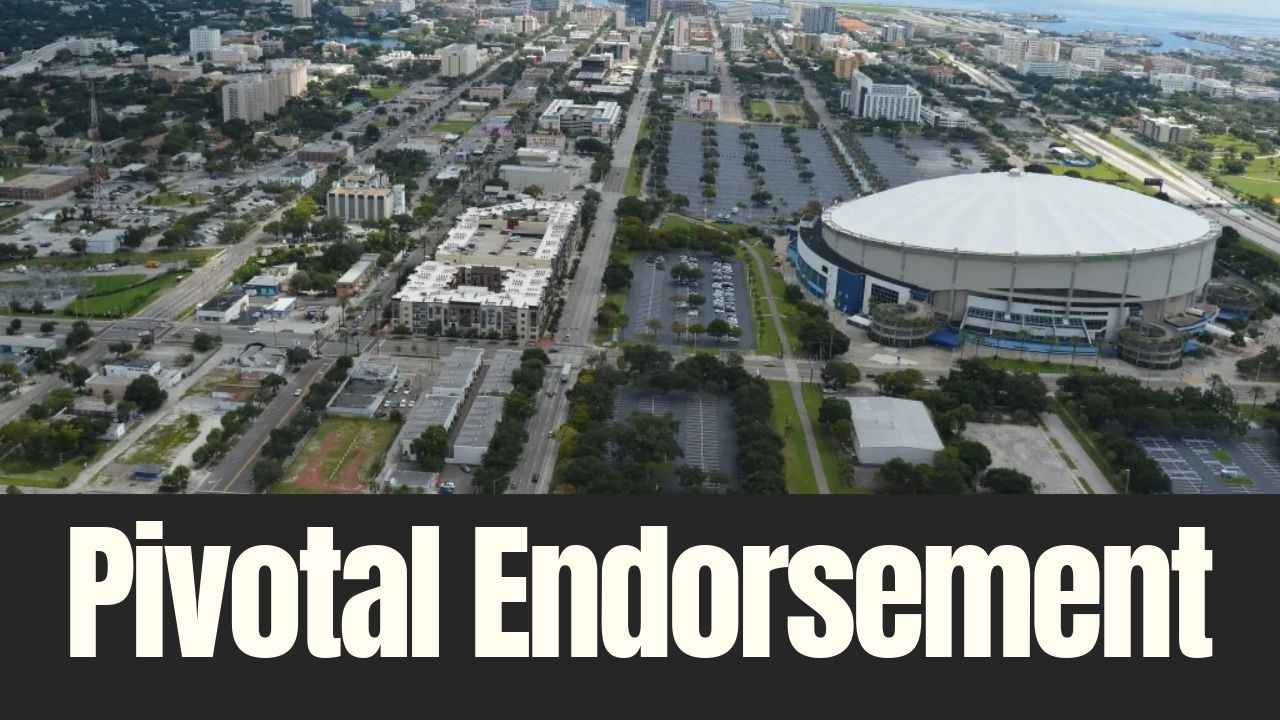
The endorsement arrives as St. Petersburg evaluates multibillion-dollar redevelopment proposals for the 95.5-acre site surrounding Tropicana Field, a district whose future has become central to debates over affordability, land use and long-term public benefit.
What the endorsement represents
Greystar’s support does not alter the city’s review process, nor does it resolve the broader questions surrounding the Gas Plant’s redevelopment.
It does, however, signal confidence in Blake’s development approach from a firm with extensive experience delivering large-scale projects.
Greystar has expanded its presence in St. Petersburg and the surrounding region through several major projects.
READ: TAMPA BAY BUSINESS NEWS
Those include the Ascent Apartments and AC Marriott Hotel downtown, the Marlowe Gateway Apartments and Gateway Logistics Center in North St. Petersburg and its current development, The Henry at Whitney Village.
The Henry is being developed in partnership with Blake Investment Partners and is converting part of the Jim & Heather Gills YMCA campus into a mixed-use project.
The developers say the project remains on schedule and on budget.
Execution as a point of comparison
In recent months, the Gas Plant discussion has shifted away from conceptual ambition toward delivery and accountability.
Greystar’s role in The Henry has been cited by Blake as evidence of execution capacity, particularly as city officials and residents weigh how redevelopment promises translate into built outcomes.
READ: TAMPA BAY REAL ESTATE NEWS
“Our collaboration with Blake Investment Partners has been defined by trust and a shared vision for St. Petersburg,” said David King, managing director of development for Greystar. “Following the success of our initial YMCA project, we are excited to support the Blake team on this proposal.”
The statement reflects alignment among the firms, though it does not address how the city or community stakeholders will ultimately assess the proposal.
Scale, experience and local context
Greystar operates a vertically integrated global platform overseeing approximately $320 billion in real estate assets worldwide, including about $78 billion under management through its investment and development business.
Blake Investment Partners, meanwhile, has emphasized its local roots and long-term presence in St. Petersburg as central to its redevelopment philosophy.
The proposed partnership combines national-scale capital and delivery infrastructure with local market familiarity.
Whether that combination addresses the district’s economic, historical and housing concerns remains part of the city’s ongoing evaluation.
How this fits into earlier reporting
As previously reported by Tampa Bay Business & Wealth, Blake’s proposal is anchored by a large, affordable and workforce-housing commitment tied to the Gas Plant District and additional housing projects elsewhere in the city.
READ: Blake Investment Partners pledges affordable housing at Gas Plant
That strategy relies on a partnership with Blue Sky Communities, a Florida-based affordable housing developer with decades of experience delivering income-restricted housing in the region.
Blake has framed this approach as a shift from aspirational planning toward execution, particularly as affordability has become a central measure of credibility in major redevelopment efforts.
What remains unresolved
The Gas Plant District is one of the most complex redevelopment sites in Florida, shaped by history, displacement and long-standing community expectations.
Greystar’s endorsement strengthens Blake’s position but does not settle the broader questions before the city: how redevelopment benefits are distributed, how affordability commitments are enforced and how long-term outcomes are measured.
As St. Petersburg moves closer to a decision, the distinction between proposal, philosophy and performance is likely to remain the central test.