
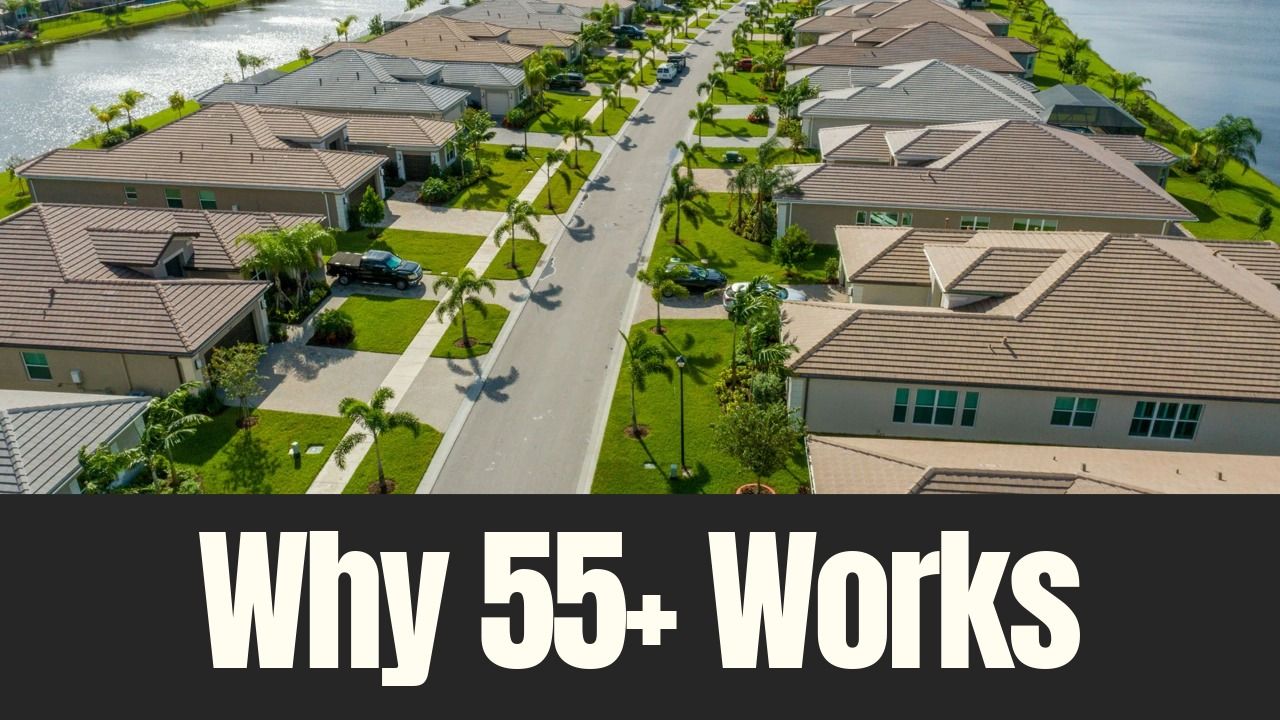
Florida’s housing market continues to attract demand, but that demand is no longer moving evenly across regions or buyer types.
People still want to live in Florida, yet many local homeowners are effectively locked in place, unable to move within their own counties as higher interest rates and pricing resets squeeze resale mobility.
That disconnect between desire and ability has quietly reshaped how builders think about risk.
For privately held companies focused on long-term value rather than quarterly volume, product strategy has become less about waiting for conditions to normalize and more about designing around how the market is actually behaving.
Patty Campbell, division president for GL Homes’ West Coast Division, said the company has responded by steering a larger share of its West Coast pipeline toward active adult communities.
For GL Homes, the shift is not a demographic bet or a branding play.
It reflects how buyers behave when borrowing costs rise, local sellers stay put and out-of-state demand becomes the primary source of movement.
“We actually switched two family communities to 55-plus communities on the West Coast in the last two years,” Campbell said. “With interest rates so high and the market’s slower than it had been, we find the active adult is less risky.”
A builder’s philosophy shaped by market whiplash
Campbell’s philosophy was not shaped within a single housing cycle. It formed across industries, recessions and expansions long before she ever ran a Florida division.
“I grew up in Fort Lauderdale, I went to FSU,” Campbell said. “My first job out of college was at Alamo Rent-a-Car, and I worked there for about 17 or 18 years.”
After 9/11, she said Alamo filed for bankruptcy and she moved to Burger King’s corporate headquarters in Miami, where she worked on the company’s sale.
“I worked on the sale of Burger King to Goldman Sachs, Bain Capital and Texas Pacific Group,” Campbell said.
She joined GL Homes in 2003 and moved west the following year as the company expanded beyond South Florida.
READ: TAMPA BAY BUSINESS NEWS
“They were getting ready to expand the company to the West Coast of Florida, and they were looking for a division president,” Campbell said. “So I moved over here in 2004 to create the West Coast Division for GL Homes.”
That move placed her at the center of Florida’s most volatile modern housing years, overseeing territory from Tampa to Naples as the state cycled through boom, collapse and recovery.
She described the 2007 and 2008 crash as uniquely severe in Florida.
“There was a lot of inventory, a lot of speculation sales, a lot of investors,” Campbell said.
She contrasted that period with the surge that followed the pandemic.
“Covid was insanity,” Campbell said. “Anything we had, we could sell with our eyes closed.”
Why GL is leaning into 55+ communities
GL Homes is not abandoning all-ages communities, but its West Coast mix has tilted more heavily toward active adult than it typically would.
“Usually it’s fifty-fifty,” Campbell said. “But with me moving two communities into active adult on this coast, we’re probably a higher percentage of active adults right now.”
She tied that adjustment directly to interest rates and the way higher borrowing costs have frozen local resale markets.
“What we’re finding in a lot of communities across Florida is the market within the county is stagnant,” Campbell said. “People can’t move, so nothing’s moving.”
That stagnation sidelines local move-up buyers, leaving out-of-state buyers as the primary source of activity.
READ: TAMPA BAY REAL ESTATE NEWS
“All we’re focusing mostly on are out-of-state buyers,” she said.
Since Covid, she said the buyer pool on Florida’s west coast has broadened dramatically.
“Since Covid, my communities on the West Coast have buyers from all 50 states,” Campbell said. “We’ve got buyers from Texas, from California, from everywhere.”
Campbell acknowledged pressures such as rising insurance costs but said the broader migration pull remains intact.
“Have we had some challenges over the last couple of years with insurance getting a little high?” she said. “Sure. But I still think Florida is the best place to invest.
Why Tampa keeps pulling buyers
Campbell said Tampa’s growth is driven less by lifestyle appeal and more by something harder to replicate: employment density.
“Tampa has jobs,” Campbell said. “Naples has no jobs. Fort Myers doesn’t really have any jobs.”
She pointed to the region’s military presence, corporate base and professional sports ecosystem as stabilizing forces.
READ: TAMPA RETAIL & HOSPITALITY NEWS
“It’s got the Air Force base, corporations, all sports teams,” she said. “It’s just got jobs.”
That employment base reinforces a familiar housing pattern.
“People want to live by their kids,” Campbell said. “If your kids live in Tampa because they got a job in Tampa, you go to Tampa.”
Company scale and the Valencia footprint
GL Homes is one of Florida’s largest privately held homebuilders, with annual revenue typically ranging from about $1.5 billion to more than $2 billion depending on the life cycle of its communities, Campbell said.
Sales volume fluctuates year to year based on openings and closings, but the company consistently ranks among the state’s most active builders, even in slower markets.
Campbell said GL Homes employs about 580 people statewide, with women holding roughly half of leadership and management roles.
READ: DOWNTOWN TAMPA DEVELOPMENT & REAL ESTATE NEWS
Much of GL Homes’ active adult strategy is anchored by its Valencia-branded communities, one of several product lines the company develops statewide, which now operate across five major Florida markets: Tampa, Naples, Fort Myers, Port St. Lucie and Boynton Beach.
Home prices across Valencia communities generally range from the $300,000s to more than $2.5 million, depending on location, lot size and home design.
Campbell said the goal is not uniformity, but repeatable quality.
Each Valencia reflects its market, while the company applies the same discipline around pricing, amenities and long-term community value.
The GL Homes difference, in Campbell’s words
Campbell said GL Homes has built its reputation by resisting short-term pricing tactics that often surface when markets soften.
“We’re typically higher priced, and we can get it because buyers see the value,” she said.
She said the company avoids aggressive discounting because it erodes trust and damages long-term resale value.
“We’re not the builder where you buy a house and a week later someone else gets a totally different price,” Campbell said. “We don’t do that. We maintain the integrity of the community.”
Campbell said the company also sees strong repeat and referral buying, which she views as the clearest signal of long-term trust.
READ: MIDTOWN TAMPA DEVELOPMENT & REAL ESTATE NEWS
“Our entrances, our landscaping, our site plans are superior,” she said. “We have lakes and preserves.”
In active adult communities, she added, amenities are not a feature. They are the product.
“Our clubhouses are 30,000 to 40,000 square feet,” Campbell said. “Pickleball, tennis, bocce, restaurants. You’re living in a resort.”
She said the company also works aggressively to manage ongoing community fees, rebidding services annually to avoid turning active adult living into a country club cost structure.
She hears the social impact of that environment directly from homeowners.
“People tell me they were never social before,” Campbell said. “Now they have friends. They travel together.”
How GL protects value while giving buyers options
Campbell said buyers who enter early benefit most from pricing momentum.
“Pre-construction prices are lower, and we always raise prices,” she said.
GL Homes offers both customizable builds and inventory homes, depending on how involved buyers want to be.
READ: TAMPA INFRASTRUCTURE & DEVELOPMENT NEWS
“You can pick your lot, pick your plan, spend two days in the design center,” Campbell said. “But we also do inventory homes for buyers who don’t want that process.”
In Tampa, she said communities are organized into collections based on lot width and square footage.
“There are three collections,” she said. “Each has four to seven plans that fit across the lots.”
Private ownership and speed to change
Campbell said GL Homes’ ability to adjust quickly is tied directly to its private ownership.
“We’re very nimble because we’re privately owned,” she said. “We change things all the time.”
Without layers of shareholder approval, she said the company can respond faster to buyer feedback and market signals.
She cited a Naples project in which the company altered its site plan midstream.
“The community was originally going to include garden villas,” Campbell said. “After talking to sales teams and realtors, I switched it to all single-family homes.”
A long view, not a short bet
Campbell did not frame GL Homes’ strategy as a prediction about interest rates or a bet on a single buyer segment.
She framed it as a philosophy rooted in responding to real demand and protecting value after the sales office closes.
When rates rise and local sellers stay put, builders either wait or adapt.
GL Homes has chosen adaptation, leaning into 55+ communities not because they are fashionable, but because, as Campbell put it, “the active adult is less risky.”