
On a cold, rainy day in Tallahassee, a young Gary Hartfield stood at a payphone, his head bowed, tears streaming down his face. He was out of money, falling behind in classes and out of options. For months, the first-generation college student had tried to juggle a demanding engineering curriculum at Florida A&M University with the realities of living on his own. His grades were slipping. His bills were piling up. Going home to DeFuniak Springs, to the familiar streets and faces, seemed like the only answer. But he knew it wasn’t the right answer.
At the other end of the line was his mother, Norma Jean, the person who had always been his unwavering source of encouragement. He poured out his frustrations, expecting sympathy and maybe permission to quit. Instead, she gave him a sentence that would define the rest of his life.
“I want you to stand and after you’ve done everything you possibly could do,” she told him, “Stand anyhow.”
It was more than advice, it was a command to rise above excuses, to keep going when every instinct screamed at him to give up. In that moment, Hartfield says, he transitioned from a boy into a man. He reiterates that – that was the moment he grew up. He didn’t drop out. He figured it out. And in the decades since, those two words have shaped how he builds businesses, leads teams, serves his community and raises his children.
Today, Hartfield is the chief executive officer of Serenity Village Insurance & Consulting, a multimillion-dollar firm, and the leader of several other ventures spanning health care, insurance, education and real estate. An award-winning entrepreneur, philanthropist and 2024 Tampa Bay Business Hall of Fame inductee, he also heads the All Hart Foundation and serves on numerous influential boards across the region.
And now, he has shared his political ambitions. How did that boy on the pay phone in Tallahassee find his way to potentially run for Mayor of Tampa? Keep reading, it’s quite the tale!
Rural Roots to Big Dreams
Hartfield was born in Fort Walton Beach and raised in the small, north Florida town of DeFuniak Springs, the youngest of six children. His father was a machinist who made airplane parts for defense contractors and ran a side business providing janitorial and lawn services. His mother worked for a community action agency, running programs like Head Start and weatherization assistance.
It was an upbringing steeped in deep work ethic and service. “My dad made sure the family never wanted for anything,” Hartfield recalls. “If it was as small as a loaf of bread or as big as paying the mortgage, he handled it.”
By age 13, Hartfield was helping clean office buildings and churches after school, learning how to strip and wax floors and mowing lawns on Saturdays before the Florida sun rose too high. Those long days taught him the value of keeping commitments, especially when others are counting on you.
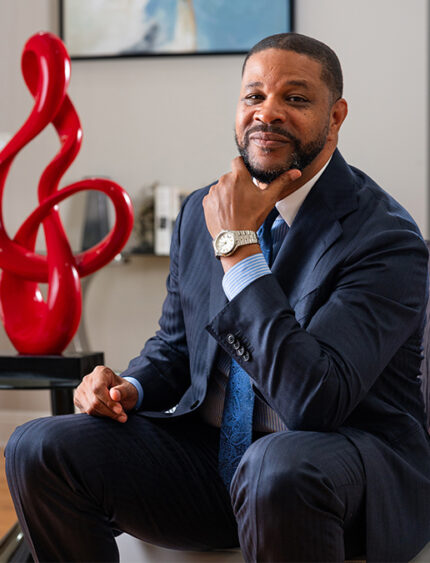
Life in Walton County offered both the security of a tight-knit community and the limitations of a rural school system. While the south end of the county was home to the million-dollar properties of Destin and Sandestin, the north end, where Hartfield lived, had a median household income around $40,000 at the time. Advanced classes were rare. Competing academically with students from wealthier areas, and later from across the state and country, meant playing catch-up from the start.
Through it all, his closest companion was his sister, Tammy. Just three years apart in age, the two navigated middle and high school together. Hartfield excelled in baseball and football, winning a Golden Glove his first year competing in baseball as well as a state football championship as a freshman, playing alongside several teammates who would go on to the NFL. But even then, he was thinking about life beyond the field.
“I wanted to be a psychologist,” he says, a career inspired by his curiosity about human growth and development. His parents, however, had other dreams for him. Neither of them had graduated from high school, let alone college, but they urged him to pursue engineering, a path they believed would lead to stability and success. Dutifully, Hartfield enrolled at Florida A&M as an engineering major.
What he didn’t anticipate was how hard the transition would be. He went from being the big fish in a small pond to struggling through calculus lectures that felt like a foreign language. Money was tight. He was the first in his family to navigate the complexities of higher education and the guidance he needed wasn’t there.
And that brings us to that cold, rainy day, standing at a payphone in Tallahassee, calling home and ready to give up. His mother listened quietly before offering the words that would shape the rest of his life: “Stand anyhow.”
Finding His Footing
The words landed like a challenge. Stand anyhow.
Hartfield hung up the phone, knowing his mother had stripped away his escape route. Going home wasn’t an option. If he wanted to succeed, for himself, for his young daughter, for the family name, he had to find a way to push forward.
But standing anyhow didn’t mean the path suddenly got easier. As a first-generation college student, Hartfield was figuring everything out on his own: registering for classes, managing financial aid, buying books. He had taken on a crushing 20–30 credit hours his first semester simply because he didn’t know the standard course load, stacking engineering, nursing and psychology classes out of sheer curiosity.
“I had no idea you were only supposed to take 12, or maybe 15, hours,” he says with a laugh. “I just signed up for everything that interested me, and it almost buried me.” Without a clear plan, his GPA slid from the 2.3 range to lower, and he found himself scrambling to keep up.
At the same time, life back home was unraveling. Several of his siblings were battling addiction, part of the wave of devastation caused by the crack cocaine epidemic in the 1980s and ’90s. That experience was the inspiration for his involvement in organizations like Live Tampa Bay, which mobilizes leaders to drastically reduce opioid deaths in our community. “I’d go home and have to lock my laundry in the car and sleep with my keys under my pillow,” he recalls. “That was the reality, trying to focus on calculus while worrying if my siblings would steal the few things I had, to feed their addiction.”
The pressure of school, family struggles and young fatherhood was relentless. Still, he found ways to adapt. “I learned to work the system instead of letting it work me,” he says. He began pairing tough courses like engineering math with subjects he naturally connected with, such as human growth and development. “That way, I could balance my GPA and keep moving forward.”
He figured out how to navigate financial aid and pick up summer work to cover gaps. And each summer, his daughter, Ashley, spent time with him on campus, early exposure to the college experience that would later inspire her to attend Florida A&M herself. “She got to see me in class, meet my friends, go to homecoming,” he says. “When she decided to go to FAMU, it was a full-circle moment.”
The lessons he carried from those lean college years — resourcefulness, balance and persistence — would later serve every move in his career.
After graduating from Florida A&M with his engineering degree, Hartfield didn’t head into the field he had trained for. In fact, he laughs when he shares, he’s never used that degree, not once. Instead, he took a role that aligned with his real passion: guiding others through the educational maze he had once struggled to navigate himself.
He accepted a position at Florida Southern College, in Lakeland, as an admissions counselor, making history as the first Black professional employee at the school. “There were Black staff members in the kitchen and facilities, but no one in a professional role,” he says. “I understood the weight of that and I wanted to make sure I represented well.”
Hartfield quickly earned a reputation for his work ethic, often arriving before anyone else and staying until the last prospective student left. “My mentor there, Dr. Thomas [Reuschling, president at Florida Southern College, at the time], told me, ‘Get there early and be the last to leave,’” Hartfield recalls. “I didn’t realize, at the time, he was teaching me visibility. The directors and deans would see me and when opportunities came up, they’d think of me.”
The job was demanding with long hours on the road recruiting, college fairs across the state, and it didn’t pay much. But it gave him a front-row seat to the admissions process, and he used it to help students avoid the pitfalls that had slowed him down. “I never wanted another kid to get to campus and not know how to register for classes, or how many hours to take, or when to buy books,” he says.
While working full-time, Hartfield also pursued his MBA at the University of West Florida, moving back to the Panhandle to finish it. It was a deliberate decision. “I knew I couldn’t juggle that program with a travel-heavy admissions job,” he says. “So, I went home, lived with my parents and knocked it out.”
That degree would become the springboard for his next chapter and a pivotal conversation with Tammy. She had been clean for several years and was working as a waitress, in St. Petersburg, when she called him with an idea: she wanted to start an assisted living facility.
“I was proud of her,” Hartfield says. “I wanted to give her something that was hers, something she could build a future on.” Armed with his MBA and a $30,000 signing bonus from a new corporate job, he began researching the industry and writing a business plan.
A Shattered Dream
By late 2002, the plan was in motion. Hartfield and Tammy had found a modest, eight-bed assisted living facility for sale in Seminole, just outside Largo. The property came with one and a half employees, eight residents and a price tag of $200,000. It wasn’t the 30-bed facility they had originally envisioned, but it was a start.
On December 21, 2002, they closed the deal. “It was one of the proudest days of my life,” Hartfield says. “We were building something together. I thought this was the beginning of her new chapter.”
The next morning, the phone rang. It was his father. Tammy wasn’t breathing. She had overdosed on OxyContin and gone into cardiac arrest, just hours after they had signed the papers. She was gone.
Hartfield remembers the shock, the disbelief, the way his mind kept insisting she’d been through rough patches before and always bounced back. “This time, she didn’t,” he says quietly. “We were supposed to be celebrating Christmas that week. Instead, we were planning a funeral.”
Even through his grief, he had a decision to make: walk away from the business or move forward, alone. In a way, it was another moment of, do I stand, or do I walk?
“I thought about the promise I’d made her, about the vision we shared,” he says. “I decided that quitting would dishonor everything we were trying to build. So, I had to stand anyhow.”
That choice launched a two-decade journey. The single facility grew into a network of group homes, eventually employing more than 100 people and serving 200 clients, a day, across Pinellas, Hillsborough and Polk counties. It also planted the seed for Serenity Village Insurance & Consulting, founded in 2012, after Hartfield recognized a gap in the industry. Many providers didn’t understand, or couldn’t access, the insurance coverage they were required to carry. So, he became a licensed agent, determined to bridge that knowledge gap while diversifying his own business portfolio.
Beyond Business
For Hartfield, running a successful company was never the finish line. “From day one, the mission has been about more than revenue,” he says. “It’s about service. It’s about creating opportunity where it didn’t exist before.”
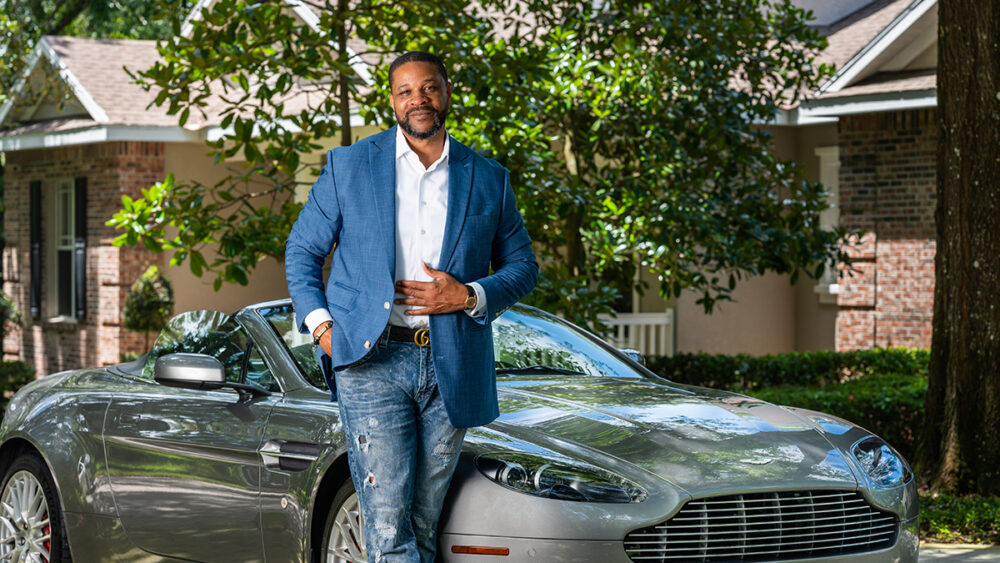
That philosophy has fueled an expansive list of advocacy and philanthropic efforts. In 2015, he founded Empower Florida, the state’s first advocacy organization for providers serving the intellectually and developmentally disabled, as well as elderly care communities. The idea came from a hard truth he observed over years in the industry. While state agencies enforced compliance, no one was helping small business owners build the systems they needed to sustain and grow.
“I wanted to stop just talking about the problems and start offering solutions,” Hartfield says. “That meant educating people about insurance requirements, payroll compliance, succession planning — all the things that can make or break a business.” The organization’s annual statewide conference has drawn hundreds of providers to training sessions on topics like workers’ compensation, property insurance and financial planning.
His work has also tackled broader social and economic challenges through the All Hart Foundation, which he founded to address disparities in mental health, financial literacy and physical well-being. One of its core missions: prepare communities for the largest transfer of wealth in recorded history, Hartfield says, and ensure that Black, Hispanic and other underrepresented families are not left behind. “We can’t solve these issues in a silo,” Hartfield says. “We have to bring everyone to the table.”
Hartfield’s influence extends through his service on numerous boards, including United Way Suncoast, BayCare Health System, CareerSource Tampa Bay, Live Tampa Bay, the Hillsborough Area Regional Transit Authority and the Transportation Planning Organization. Each role gives him a platform to advocate for equity and access, whether it’s fighting for workforce development funding or addressing the opioid crisis that claimed his sister’s life.
“My parents modeled service,” he says. “They showed me that you can work hard to provide for your family and still give back to your community. That’s the balance I’ve tried to strike in everything I do.”
Standing Proud
Two decades after that rainy day in Tallahassee, when his mother told him to stand anyhow, Hartfield stood on a vastly different stage. In 2024, he was inducted into the Tampa Bay Business Hall of Fame, joining a class of leaders that included billionaires, CEOs and civic icons like Lorna Taylor, Alex Sink and Betty Castor.
“It wasn’t just about the recognition,” he says. “It was about what it represented, years of hard work, sacrifice and staying true to a purpose bigger than myself. To be considered among that caliber of people was humbling.”
Some of his proudest milestones aren’t measured in awards, but in brick and mortar. In his hometown of DeFuniak Springs, he developed Norma Jean Hartfield Plaza, named in honor of his mother. In Tampa, he purchased his first commercial building, which now houses his businesses and several other local ventures.
“Having my mom there for the groundbreaking of Norma Jean Hartfield Plaza, that was special,” he says. “Those moments are more than real estate milestones. They’re symbols of how far we’ve come and the legacy we’re building for generations to come.”
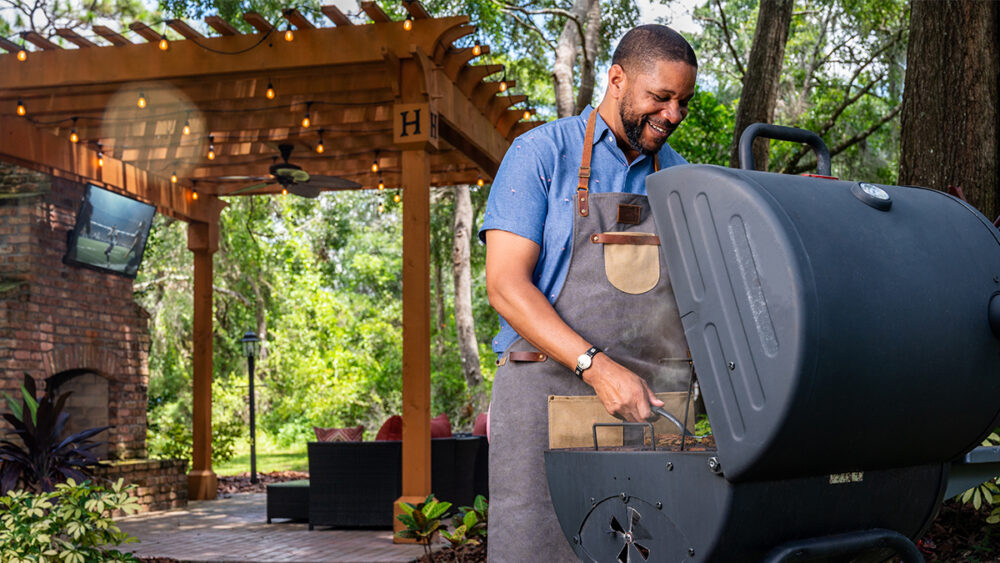
That focus on legacy, for his family, his community, and the city he calls home, is what’s now driving him toward his next challenge: a possible run for mayor of Tampa.
Yet, for all his titles and accomplishments, Hartfield says his most important role is being a father. His three children, daughters Ashley and Imani and son Garrett, have each been part of his journey in different ways.
Ashley, his oldest, was born when he was just 16. Raised with the help of her grandparents while Hartfield finished school, she’s now 38, with three children of her own.
Imani, his middle child, was a standout volleyball player at Southern Illinois University. After she completed her undergraduate degree, she enrolled at the University of South Florida for graduate school. She recently completed her first year of a master’s program in public health, with a 4.0 GPA, all while competing as a starting middle blocker for the USF Bulls, who recently won the 2024 American Athletic Conference regular season title.
Garrett, his youngest, is 13 and attends middle school, in Brandon. A strong student and athlete, he was inducted into the National Junior Honor Society last year.
Hartfield was married once, for six years, and is a divorced father balancing co-parenting with the demands of running businesses and serving on multiple boards. “Leadership starts at home,” he says. “If I’m not present and intentional with my kids, I can’t claim to be a good leader anywhere else.”
Mr. Mayor?
In August 2025, Hartfield confirmed what had been whispered in business and political circles for months: he’s considering a run for mayor of Tampa, in 2027. He’s already launched a political committee, Innovate Tampa, chaired by Valerie H. Goddard, to explore the path forward.
“I believe Tampa is at a turning point,” he says. “Our city is growing fast, but we’ve got to make sure no one gets left behind.”
If he runs, Hartfield says his focus will be on job creation, small business support, affordable housing and addressing rising living costs, including the property insurance hikes squeezing residents across the state. He’s also outspoken about the need for modernized transportation infrastructure, a priority he’s already had a hand in as a board member for the Hillsborough Area Regional Transit Authority and the Plan Hillsborough Transportation Planning Organization.
“These challenges didn’t happen overnight,” he says. “Some of them have been building for 50 years. We’re not going to solve them all in four years, or even eight. But what I can do is be honest with people about what it’s going to take, and start moving in the right direction.”
Supporters believe his mix of entrepreneurial grit, nonprofit leadership and boardroom experience could translate well to city government. “Gary represents the next generation of leaders we desperately need at the municipal, state and national levels,” said Hugh Campbell, founder of AC4S Technologies, in a statement from his announcement.
Hartfield, for his part, is clear on why he wants to be considered. “I’ve built something from the ground up,” he says. “I’ve seen what it takes to create jobs, to balance a budget, to bring people together who don’t agree on everything. I’m not looking to be a career politician. I’m looking to be a change-maker.”
For Hartfield, whether he’s navigating a tough semester, steering a company through market shifts or weighing a bid to lead Florida’s third-largest city, the lesson hasn’t changed since that rainy day on the payphone in Tallahassee. Stand anyhow.
“It’s about refusing to quit when things get hard,” he says. “If we can bring that same mindset to our city, to face the challenges, to find the solutions, to keep going no matter what, there’s nothing we can’t do.”