
Two years ago, Garrett Greco turned on a microphone to have a real conversation.
Real estate feeds were full of quick clips, but he preferred the slower kind of talk that lets people settle in and explain who they are.
It reminded him of the stories he grew up hearing at home and the way his great-grandmother described Ybor City from her window.
“I wanted deeper content. More meaningful conversations,” he told Tampa Bay Business & Wealth.
There was no script. No outline. He just sat down and talked.
READ: TBBW’S JANUARY COVER STORY
The podcast, Tampa Bay Developer, began as a way to support his residential brokerage, but it shifted almost immediately.
Episodes were recorded in long-form and published on YouTube and major podcast platforms, including Spotify and Apple Podcasts.
Guests drifted into history, growth and conversations about economic development and what Tampa needed next. Listeners followed.
“I thought I was the only nerd who cared about integrating the history and the growth,” he said. “I didn’t imagine as many people would listen.”
The show became more than content. It became a way for him to stay close to the city his family has lived in for five generations. It simply fit.
A city in his blood
Garrett grew up with stories about Tampa that most people only read in books.
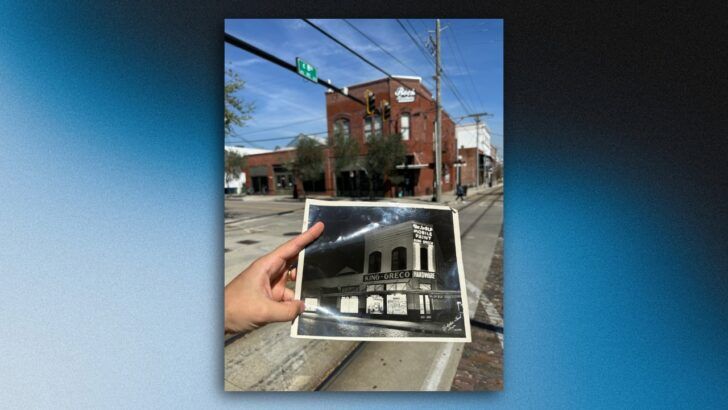
His great-grandmother was born in a small house in Ybor City in the early 1900s. She told him how lamplighters walked down Seventh Avenue each evening to light oil lamps.
She talked about King-Grego Hardware, which was incorporated in 1926, and how every family in the neighborhood passed through its door.
His grandfather swept the floor of that store as a boy and later became the youngest mayor in Tampa’s history.
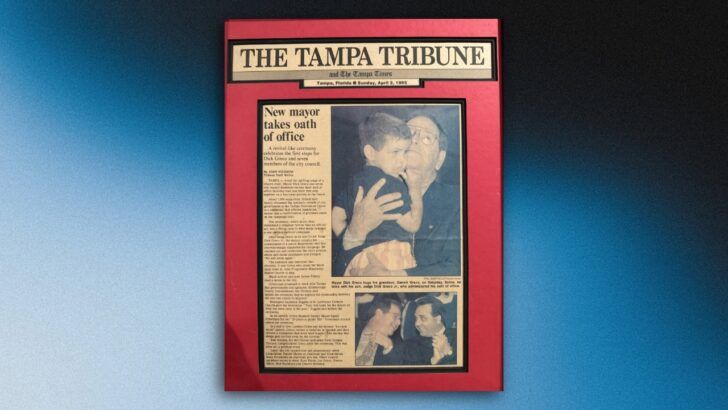
His father grew up in the same culture and served as a judge for 20 years.
Those memories shaped how Garrett sees the city. When he sits down with guests, he brings that history with him.
“My great-grandmother told me stories of the lamplighters and the way the community was so well connected,” he said. “I come to the table with that knowledge. It is close to my heart.”
He does not use his family’s past as a credential. He uses it as context.
The name
The name Tampa Bay Developer existed long before the podcast.
Garrett started the Instagram page to share renovation projects and properties he was investing in.
He typed in names he assumed were unavailable and was surprised to see Tampa Bay Developer open and unclaimed. He claimed it immediately.
For years, he shared simple thoughts about the city and where he thought Tampa was headed. Nothing polished. Nothing planned. Just ideas.
READ: TAMPA BAY BUSINESS NEWS
When he launched the podcast, he knew it needed its own identity, but he wanted it to feel like him. The Instagram page already carried his voice, so he kept the name.
“It all fell into place,” he said.
It was not branding. It was not a strategy. It was a natural extension of a family that had always paid attention to Tampa’s progress.
When the show shifted
Garrett expected the podcast to stay close to residential real estate. That lasted one episode.
He invited a historian. Then the author of Cigar City Mafia. Conversations moved from early Tampa to modern growth, transportation, planning and business development.
“What started out as the idea to have a conversation around brokerage quickly veered off course,” he said.
He followed it.
The subjects felt familiar. His family had spent generations connected to Tampa’s progress, so hearing guests talk about the city’s past and future felt like stepping into a story he already knew.
Listeners responded to the honesty. The audience grew because the conversations were genuine.
That was the moment Tampa Bay Developer became its own thing. It was no longer a marketing tool. It became a place for the city to hear itself think.
The breakthrough
Every show has a moment when the host realizes the audience is larger than expected.
For Garrett, that moment came during an episode with Joe Faw, owner of Bay to Bay Properties. Faw built a company that generates $100M in annual revenue.
When he drove across the region to sit with Garrett for hours, it changed how Garrett viewed the platform.
READ: BIGGEST COMPANIES IN TAMPA
“I thought, wow, this guy wants to drive all the way over to Tampa and talk to me for a couple of hours,” he said. “This is so cool.”
That mindset carried him to episode 100 of the podcast, where he sat with Jeff Vinik.
His first episode was recorded in a small conference room with basic equipment. Less than two years later, he was talking with one of the region’s most influential business leaders.
“That was pretty amazing,” he said.
For Garrett, it was not about status. It was proof that the show had found its place in Tampa’s civic conversation.
Tampa’s identity
Some people say Tampa lacks a clear identity. Garrett disagrees.
“There is absolutely an identity,” he said.
He talks about Henry Plant, Hugh Macfarlane and D.P. Davis. He talks about immigrant families who shaped the city’s food culture and built businesses with what they had.
READ: TAMPA BAY REAL ESTATE NEWS
To Garrett, Tampa has always been shaped by ambition.
“If we want to maintain our identity as we grow, we have to pay attention to the history and remember where we came from,” he said.
The podcast gives him a way to do that.
Good development vs. bad development
Garrett thinks deeply about development because he has watched the city change across generations.
Good development, in his view, is intentional. It supports walkability. It brings homes and businesses together. It strengthens neighborhoods instead of overwhelming them.
Bad development ignores how people live.
He points to single-use apartment blocks that force residents to drive for basic needs.
“It only adds to the traffic,” he said. “It is not sustainable.”
On the show, he highlights projects that strengthen communities and questions those that do not.
The show’s influence
As the podcast grew, Garrett noticed its ideas echoing beyond the studio.
City leaders referenced topics discussed on the show. Clips circulated in meetings and group chats.
Conversations about parking, transportation, outdated planning codes and economic development followed.
Through long-form podcast conversations, the platform became a place where the city processed change around business and growth.
Garrett now serves on the Land Development Code Advisory Team, a group focused on modernizing Tampa’s planning code.
“I hope people can gather a very holistic approach to what is going on in our city and our region,” he said.