
Bill Lederer has lived through multiple technology cycles. He says this one will move faster and punish hesitation.
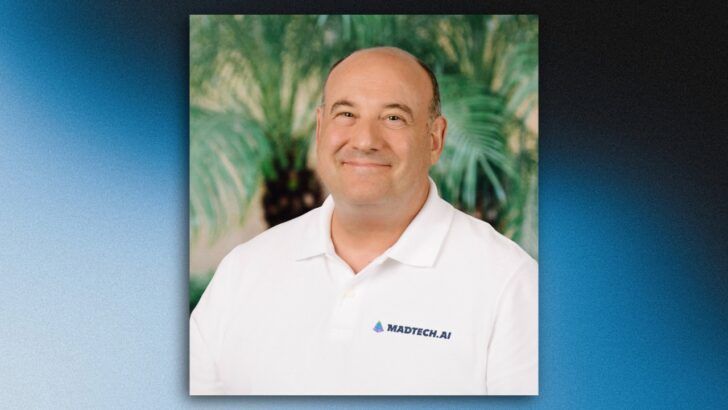
Lederer is the chairman and CEO of MADTECH.AI, a St. Petersburg software company spun out of his services firm, iSOCRATES.
He describes MADTECH.AI as a marketing decision intelligence platform built to answer questions marketers usually ask too late.
“In marketing analytics, there’s the nice to know and there’s the need to know,” Lederer said. “The need to know are things like, am I spending my money in the right areas to accomplish the goals that I’m seeking?”
The company was incorporated in December after Lederer came through the Tampa Bay Wave accelerator with little more than an idea.
“I came here with PowerPoint and Excel,” he said. “There was no business. It was a dream.”
Today, the company operates out of spARK Innovation Labs in St. Petersburg, which Lederer refers to as its “global headquarters.”
Built by an operator, not a first-time founder
Lederer has spent 27 years working in marketing, advertising and data-driven businesses.
He describes himself as a serial entrepreneur who has built and sold five companies. MADTECH.AI and iSOCRATES are companies six and seven.
Before launching iSOCRATES 11 years ago, he held senior leadership roles at some of the industry’s largest firms.
READ: TAMPA BAY BUSINESS NEWS
He was a divisional CEO at WPP, worked at Kantar, and served as a divisional president at Getty Images.
Earlier in his career, Lederer founded Art.com, an online prints-and-posters business he sold to Getty Images for a nine-figure valuation in 1999.
He became one of Getty Images’ largest shareholders after the sale.
That experience shaped how he thinks about acquisition cost and feedback speed. Waiting months to learn whether something worked, he said, is not survivable.
He also crossed paths with Jeff Bezos in the late 1990s when both were building early internet companies.
“What are you going to do when you turn 70 and look back?” Lederer recalled telling Bezos. “My level of regret would be unbelievably high if I missed this.”
From services to software
iSOCRATES started as a professional services firm.
Lederer said the team billed clients by the hour to solve marketing and analytics problems.
Over time, he said the same issues kept showing up.
Data was scattered. Reporting arrived too late. Decisions were made after the money was already spent.
READ: TAMPA BAY REAL ESTATE NEWS
“I thought it would be better and more useful if we made this a product instead of telling people, for hundreds of dollars an hour, I’ll solve your analytic problem for you,” he said.
MADTECH.AI is the product version of that work. It is a B2B SaaS platform.
Lederer said he bootstrapped both companies at first, then later accepted investors, including customers.
The shift changed the economics.
Instead of solving the same problems repeatedly for individual clients, the company could build once and scale access.
Solving the data problem first
Lederer said the biggest obstacle for marketers is not a lack of insight. It is getting usable data in the first place.
“Most of the data tends to be disconnected,” he said. “It’s sitting in silos and very often it’s heavily unusable.”
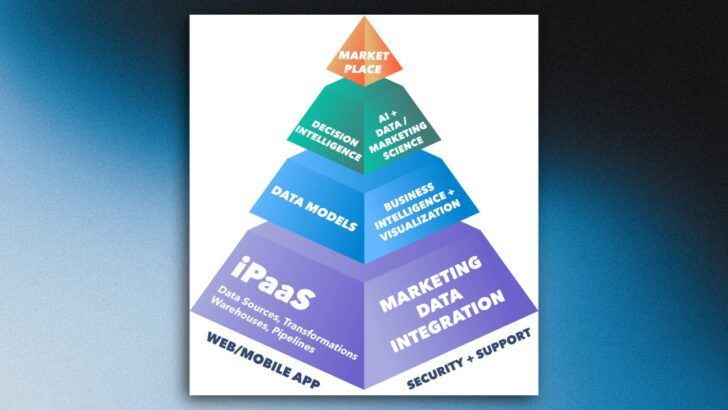
MADTECH.AI built more than 300 data connectors to pull information from common marketing tools.
READ: TAMPA BAY TECH
The system then cleans, maps and transforms that data before analysis begins.
That step matters because speed depends on it.
Lederer said a process that typically takes 6 to 9 hours to build a usable data pipeline has been reduced to about three minutes.
“With AI, we are 90 days away from reducing three minutes to 30 seconds,” he said.
For customers, that means fewer data engineers and less dependency on specialized technical labor.
The data pipeline product can be purchased separately for about $2,000 a month and is included for decision intelligence customers.
What the platform delivers
Once the data is unified, the platform runs hundreds of models and dashboards.
The output is written in plain English and paired with forecasts and recommendations.
“It tells you, here’s all the data, here are the metrics and here’s what you should do differently,” Lederer said.
READ: ARTIFICIAL INTELLIGENCE NEWS
Users interact with an AI assistant named Maddie. They can ask questions directly and export results into presentations.
The system is designed to work while campaigns are still running.
Lederer said it can predict outcomes and recommend changes across channels, including email, search, social and direct mail.
For example, the system might recommend shifting an email send from 9 a.m. to 4 p.m. on a Thursday, followed by retargeting recipients with banner ads three times over seven days.
It forecasts the expected lift and the incremental cost before changes are made.
The point is not reporting. It is intervention.
Proven ROI at lower cost
Lederer pointed to a client example from before MADTECH.AI was fully productized.
In that case, a large marketer improved email performance by a factor of ten within 90 days.
“That system sold for $615,000,” he said. “Our system today sells for $60,000.”
MADTECH.AI licenses its decision intelligence software for $60,000 per year. Lederer said the company expects to add 45 to 60 customers this year.
READ: TAMPA BAY ENTREPRENEURS
Advisors have told him the product is priced too low. He disagrees.
“I want to democratize insights for marketers,” he said. “I don’t want to raise a ridiculous amount of money, lose control of my company and then charge much higher prices.”
Lower pricing, he said, is not about discounting. It is about adoption speed.
A substitute for labor
Lederer is direct about what this kind of software changes.
“We are a substitute for labor,” he said.
He believes marketing will be one of the first industries to automate decision-making because it is pattern-based and data-rich.
Much of the displacement, he said, comes from eliminating manual data engineering and consultant-driven analysis.
READ: TAMPA BAY STARTUPS
Early-career roles are most exposed because much of that work involves manual analysis and delayed reporting.
He estimates that at least half of marketing jobs could disappear over the next decade as real-time systems replace slower workflows.
“If you’re very good at this, you’re going to be bigger, faster, more successful than your competitors,” he said.
A familiar comparison
Lederer compared MADTECH.AI’s role to Palantir, which provides decision intelligence to government and defense agencies.
“They charge millions or tens of millions per customer,” he said. “We’re doing decision intelligence for marketing.”
READ: TAMPA BAY TOP COMPANIES
The comparison is structural, not aspirational.
One system serves national security. The other serves commercial decision-making.
What comes next
Lederer believes marketing decision intelligence will eventually sit atop the entire marketing tech stack.
He described it as a single brain that collects data, makes decisions and sends instructions back to execution systems in real time.
READ: TAMPA HISTORY
“Today, analytics are spread across dozens of platforms,” he said. “The future is a unified brain.”
He expects consolidation. Large platforms like Adobe or Salesforce will acquire decision intelligence companies rather than see them remain independent.
A long view shaped by experience
He calls the current moment a bubble, with overcapitalization and inflated valuations.
“This is a bubble,” Lederer said. “People have bought into the dream, and it is transformational. But there is overcapitalization going on, and valuations are too high.”
He also points to AI’s resource intensity, including energy and water usage, as pressure points that will force a shakeout.
READ: ST. PETERSBURG BUSINESS NEWS
“It is unbelievably resource-intensive,” he said.
He expects a shakeout among startups and tighter pricing across B2B software.
“There’s only one thing that really matters,” he said. “The business value that you deliver to your customer.”
For him, MADTECH.AI is not about novelty. It is about reducing waste before it becomes institutionalized.
“Most marketing doesn’t work most of the time,” Lederer said. “If you can learn faster and act faster, the savings can be dramatic.”
To learn more about MADTECH.AI, click here.