
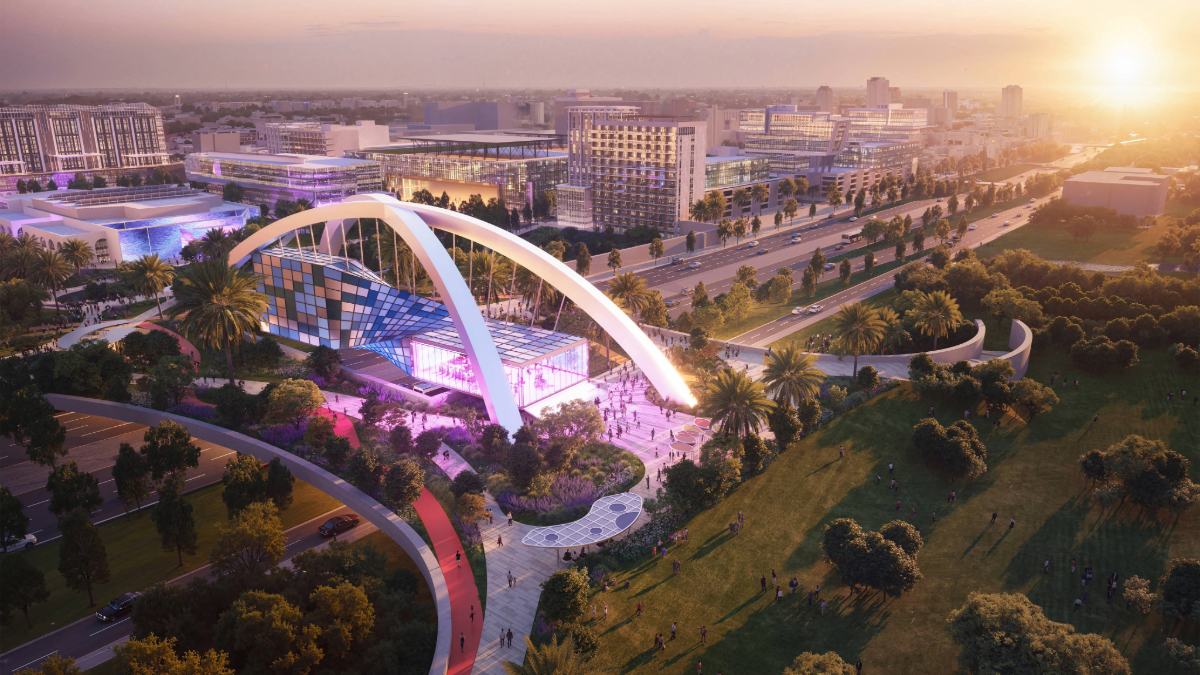
For 40 years, the promise lingered. The Gas Plant neighborhood, once home to hundreds of families and businesses, was razed in the name of progress, but renewal never came.
Now, a locally led development team is pledging to deliver on that long-delayed promise with one of the largest redevelopment projects in Florida.
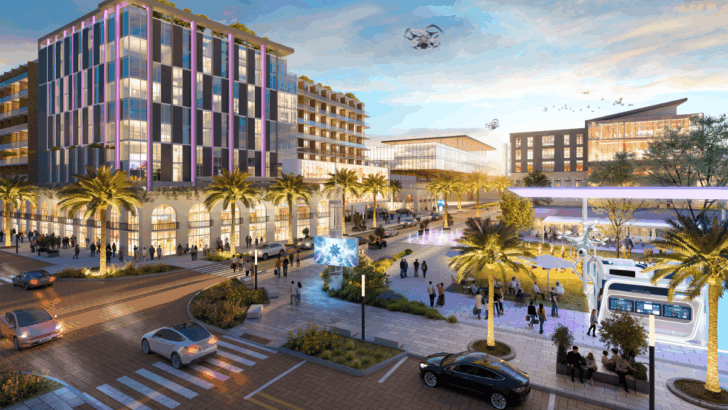
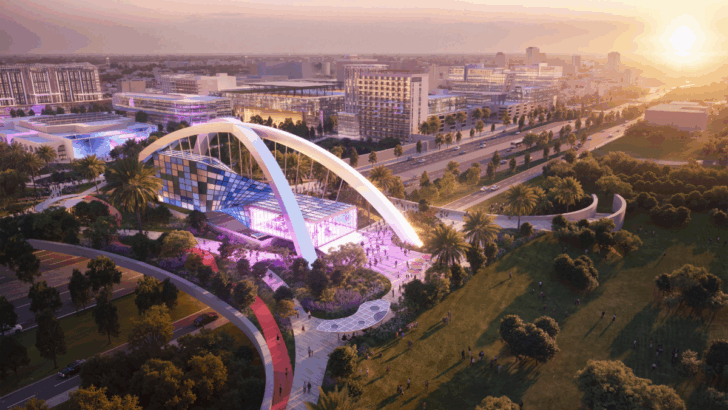
This week, ARK Ellison Horus LLC, a partnership between ARK Investment Management, Ellison Development and Horus Construction, unveiled a $6.8 billion proposal to transform 95.5 acres of St. Petersburg’s historic Gas Plant District, including the Tropicana Field site, into a hub for innovation, culture and community.
If completed, the project could reshape the downtown landscape and alter the city’s economy for generations.
Economic engine
The proposal projects an annual economic impact of $1.2 billion, $28 billion over 30 years and nearly 20,000 jobs, including construction and permanent positions.
READ: $187M luxury tower planned for Rocky Point waterfront
More than 1,900 affordable, workforce and senior housing units would be included, with 863 affordable, 618 senior affordable and 444 workforce units.
The plan spans 4 phases over 17 years, with flexibility to accommodate the Tampa Bay Rays if the team remains beyond 2028. Unlike prior stadium-focused plans, it emphasizes mixed-use development.
READ: Ybor City’s Gasworx: Inside the mind shaping its concepts
“St. Petersburg has a once-in-a-generation opportunity to build an economy powered by innovation,” said Cathie Wood, founder and CEO of ARK Invest. She said the district can seed “the next wave of world-changing companies” while keeping residents central to its growth.
Culture and community
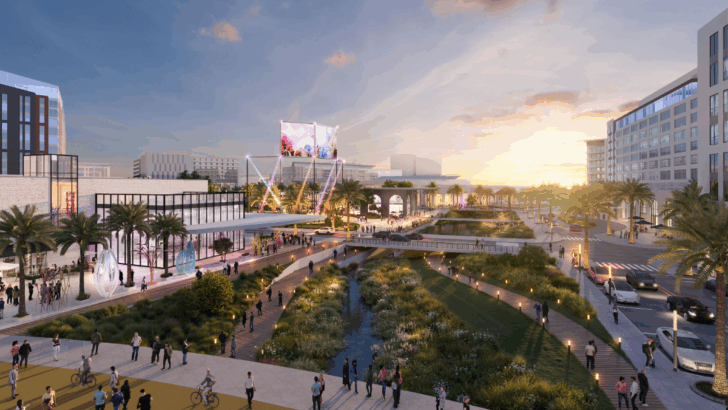
The proposal also includes cultural and historical elements. A new Woodson African American Museum of Florida would anchor the neighborhood alongside a performance theater. A restored Booker Creek Cultural Corridor would link Midtown, the Edge and the Innovation District with public art and history installations.
READ: Out-of-state capital backs $3.7M senior housing buy north of Tampa
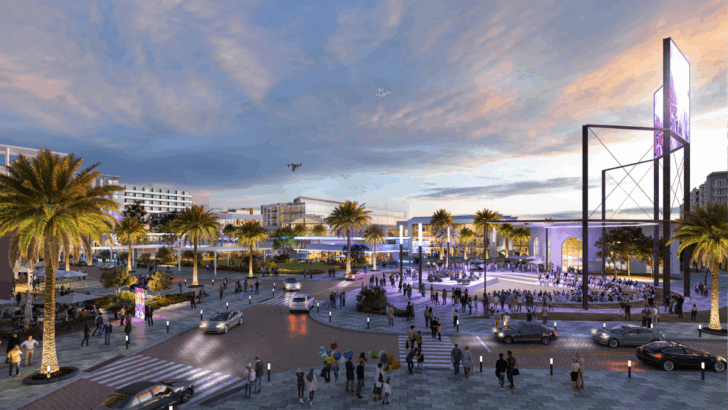
More than 30% of the site would be open space, including a 6.7-acre elevated park connecting Campbell Park to the Gas Plant neighborhood. The plan also includes a 4,000-seat indoor music hall, a 1,500-seat outdoor amphitheater and more than 1,500 hotel rooms.
“Our team lives here, works here and has already invested here,” said Casey Ellison, CEO of Ellison Development. “This project will be designed, built and programmed with the community, not just for it.”
Education and workforce
Education programs are central to the proposal.
The Superintendent School would train future construction leaders. The Horus Academy would provide trade education for youth and advanced training for adults and small businesses. The Future Forward program would expand re-entry and workforce readiness. The Horus Scholars Program, which has already delivered $140 million in scholarships, would continue to support higher education and career mobility.
“This project is about more than buildings; it is about people,” said Jonathan Graham, president of Horus Construction. “By prioritizing education and workforce development, especially for underrepresented communities, we are ensuring that the opportunities created here reflect the full diversity of St. Petersburg.”
READ: Clearwater’s Yo Mama’s Foods racks up 36,000 orders after GMA feature
Innovation hub
The plan calls for 500,000 square feet of innovation hubs and labs, a 200,000-square-foot conference hall and a research center expected to create nearly 900 specialized jobs. The development would connect directly to the St. Petersburg Innovation District, home to the ARK Innovation Center.
Rather than rely on a single corporate anchor, the design emphasizes a network of labs, startups and events.
“From startup accelerators to cultural festivals, this district will attract the entrepreneurs, scientists and artists who want to build what’s next,” Wood said.
Restorative effort
The development team has committed at least $202 million in payments to the city. Of the 95.5 acres, 53.5 acres would remain open space or cultural and civic use. Public infrastructure costs, projected at $239 million, would be covered by multiple sources.
READ: Ybor City’s Gasworx: Inside the mind shaping its concepts
Supporters said the project represents more than numbers. For many, it carries the weight of restorative justice for a neighborhood displaced in the 1980s.
“The Gas Plant District will be designed and programmed with the community,” Ellison said, “ensuring every brick laid is a step toward prosperity and lasting pride for generations to come.”
Stay Connected
Follow TBBW on social media