
In the emergency department, David Crabb began noticing delays that medicine alone could not explain.
Patients cleared for CT scans often remained on their stretchers even after radiology confirmed the machine was ready and the hallway between departments stood open.
“On average, that patient’s going to wait 63 minutes to go down the hall,” Crabb said.
The delay did not signal a medical failure or a failure by the transport staff. Staff continued working, patients remained stable and tests were available.
Hospitals simply faced more transport work than their teams could absorb.
As the pattern repeated, Crabb began treating it as a systems problem rather than an isolated inconvenience.
An emergency room physician, Crabb founded Rovex Technologies Corporation in Gainesville in 2024 to focus on hospital logistics through autonomous robotics. The company aims to reduce routine transport delays that slow care and strain clinical staff.
In February, Rovex opened a base at spARK Labs by ARK Invest in St. Petersburg to support its first planned deployment in the Tampa Bay area.
“When you have active hospital deployments, you need to be close,” Crabb said. “You need to be able to maintain equipment and respond quickly.”
The St. Petersburg base places Rovex near the hospital systems it expects to serve first.
A physician trained to read flow
Crabb grew up in Lake Mary and attended the University of Florida for undergraduate studies, medical school and an emergency medicine residency.
He stayed in Gainesville after residency and later completed a fellowship in clinical informatics, a field that examines how data, workflow and infrastructure shape patient care.
That training changed how Crabb watched hospitals operate. He paid attention to where patients slowed down, where staff filled gaps and where small delays multiplied across a shift.
“I worked on the operations in our hospital, especially in our ER,” Crabb said. “I tried to see what holds us from taking good care of patients.”
READ: TAMPA BAY BUSINESS NEWS
One constraint kept resurfacing. Patient transport touched nearly every department and created bottlenecks across the system.
A patient awaiting imaging could not proceed. A patient waiting for a bed could not leave the emergency department. A patient ready for discharge could not go home when no one could move them to the next step.
Crabb said hospitals deliver advanced medicine every day and rely on a labor-intensive model to move patients through buildings, a system that strains under volume. That work carries a cost most patients never see.
“My goal is for us to provide logistics solutions so that health care workers can get back to the bedside,” he said.
Hospitals struggle to staff patient transport
Hospitals rely on patient transport staff to move people safely through the building, from imaging to inpatient floors to discharge. Crabb said that work becomes more difficult when hospitals face higher volumes and tighter staffing.
He emphasized that delays do not reflect a lack of effort. He described the issue as a capacity problem inside a system that depends on constant movement.
Rovex wants to automate routine transport
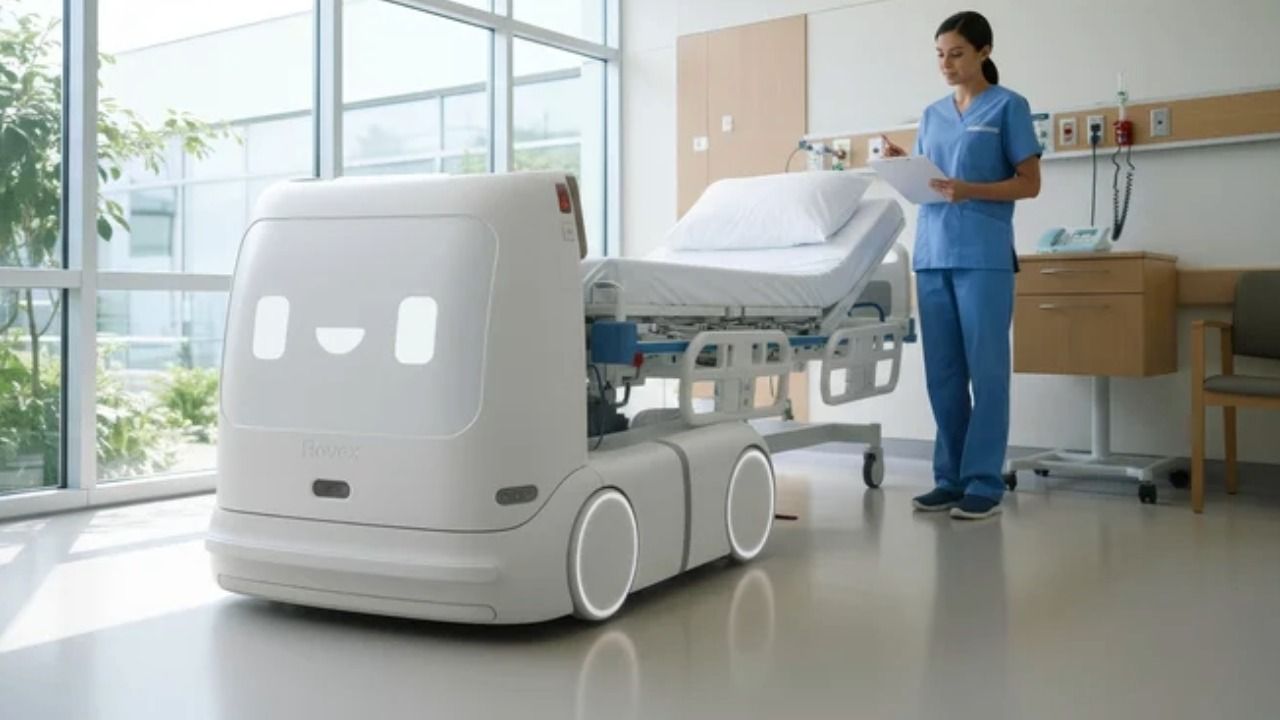
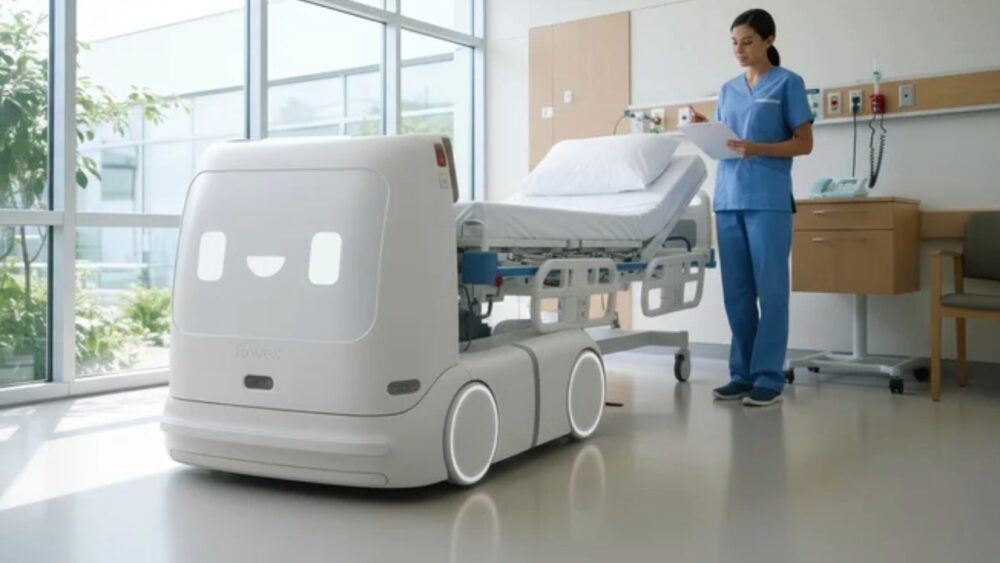
Rovex’s first product is Rovi, an autonomous mobile robot that attaches to a hospital stretcher and tows it through a facility.
Crabb designed the initial use case for low-risk, non-behavioral health patients who can remain still during transport. He estimated that group accounts for about 60% to 70% of patients.
Rovi moves at about two miles per hour and can stop quickly. Rovex also built teleoperation into the system so a human can take control when the robot reaches an edge case.
READ: TAMPA BAY REAL ESTATE NEWS
Crabb designed Rovi with the patient experience in mind. The robot includes a front-facing screen that displays the destination and expected trip time, and the system allows staff to monitor the patient during transport.
“We want to be friendly and disarming because people are in a vulnerable state in the hospital,” Crabb said.
Rovex has not yet deployed inside a hospital.
Tampa Bay became the first target market
Crabb said the health systems in the region helped steer Rovex toward Tampa Bay as its first planned deployment market.
Florida’s aging population continues to increase demand for care, and hospitals feel that pressure in daily operations through crowding, longer waits and slower bed turnover.
READ: TAMPA BAY TECH NEWS
The St. Petersburg base supports that effort. Crabb said hospital deployments require proximity, fast response and hands-on maintenance.
“When you’re deploying robots in hospitals, you need to be close,” he said.
Teaching a robot the building
Crabb said Rovex begins each deployment by creating a digital model of the hospital. The team uses sensors to build a digital twin of the facility, and Rovi trains in that environment before entering live operation.
Crabb wants the robot to learn hallways, elevators and traffic patterns before it tows a stretcher through the real building.
Crabb built safety into the design. Rovi moves deliberately, stops quickly and keeps a human in the loop. Crabb said Rovex designed the system to fit into existing clinical workflows without adding extra steps.
“The last thing I want to do is add extra steps to someone’s workflow,” he said.
A business built around existing equipment
Crabb said Rovex built Rovi around what hospitals already own.
“In a single ER, you might have 117 stretchers,” he said. “Most of the time, those stretchers are sitting still.”
Rovex designed Rovi to tow existing stretchers rather than replace them. Crabb said a small fleet of robots can serve many stretchers, thereby improving utilization and reducing capital costs.
Why the hour still matters
Crabb returned to patient care when he talked about impact.
“Patient care comes first,” he said.
He also spoke about career longevity for health care workers. He has watched colleagues train for years, then lose time in their careers because routine physical tasks took a toll.
“If I can help them get home healthy and safe every day from their job,” Crabb said, “that would be a huge impact.”
Stay Informed
Stay up to date on Tampa Bay business news, executive profiles and the companies shaping the region.