
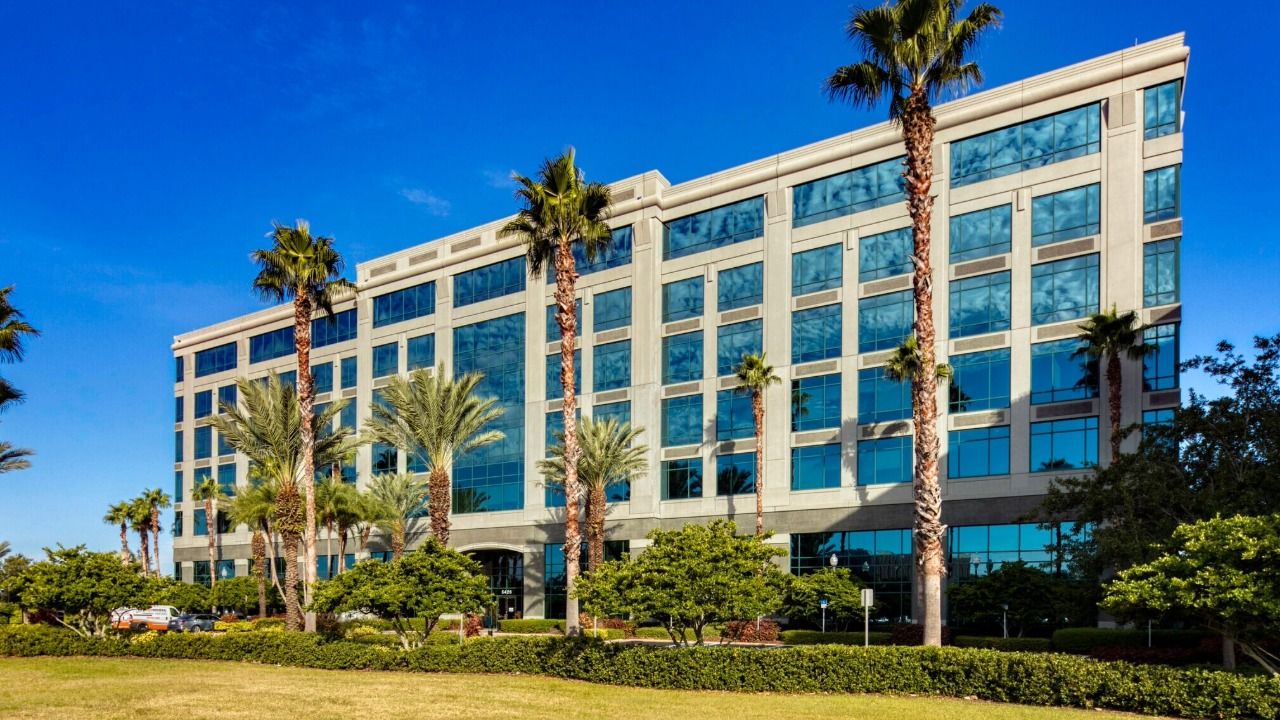
Tampa Bay’s office market posted its strongest vacancy improvement in more than four years to start 2026, as steady tenant demand and limited new construction reduced available space.
The region’s overall vacancy rate fell to 18.2% in the first quarter, down 110 basis points from a year earlier and the lowest level recorded since the end of 2021. Net absorption remained positive for a second consecutive quarter, totaling nearly 115,000 square feet, as tenant move-ins outpaced new supply.
The market has now recorded four consecutive quarters of net absorption above 150,000 square feet, underscoring a sustained period of occupancy gains.
This reflects a stabilizing market, not a rapid expansion. Leasing activity has returned to a more typical pace after elevated deal volume in 2025, and many tenants continue to renew or modestly expand rather than relocate. However, demand has remained consistent enough to reduce vacancy even as new deliveries in recent quarters added space to the market.
Class A space continues to drive that recovery. Vacancy in higher-quality buildings declined over the past year, while demand concentrated in newer or upgraded properties. Data shows trophy and Class A assets accounted for more than 200,000 square feet of absorption in the first quarter, tightening availability and reinforcing a flight to quality. By contrast, older Class B properties have lagged, although total available space in that segment has declined as some buildings have been removed from inventory through conversions or demolition.
Read the latest Tampa news and updates
Submarket data shows similar trends. Hillsborough County vacancy declined to 18.7%, while Pinellas County improved to 16.5%, with both contributing to the region’s overall gains. Westshore, one of the region’s core office hubs, recorded a quarterly improvement, with vacancy dropping to 16.0% following earlier deliveries. At the same time, downtown Tampa and St. Petersburg remain among the tightest parts of the market, with vacancy rates below 10%, limiting options for tenants seeking downtown space.
Development remains limited. Only one office project was underway during the quarter, and most future space is already committed before delivery. In addition, more than 1 million square feet of office inventory has been removed from the market over the past year through redevelopment and conversion. As a result, new supply has not kept pace with demand, allowing vacancy to decline steadily.
Leasing activity remained stable but selective. Total leasing volume reached about 563,000 square feet in the first quarter, down from the unusually high levels recorded a year earlier but consistent with long-term averages. Larger transactions continued to shape activity, including a 56,000-square-foot lease by Philip Morris International in Westshore, as well as several deals above 20,000 square feet. In addition, long-term renewals by major tenants in the central business district point to continued commitment to the market.
As vacancy declined and supply tightened, asking rents increased. Overall, asking rents reached about $33 per square foot, with Class A rents rising faster due to limited availability of high-quality space. Premium buildings in core submarkets are commanding some of the highest rates in the region, reflecting both demand and the scarcity of large, contiguous blocks of space.
Companies continue to reassess long-term space needs, leading to smaller footprints and a greater focus on flexibility. As a result, leasing activity remains steady but measured rather than expanding rapidly.
Tampa Bay’s office market is entering a more balanced phase. Vacancy is declining, rents are rising and demand remains consistent. However, the pace of change reflects adaptation to new workplace patterns, not a return to prior cycles of expansion.
Read More Tampa Bay Business News
Explore the latest Tampa Bay business news, real estate deals, development projects, executive moves and company updates shaping the region.