Hillsborough College’s District Board of Trustees voted unanimously Tuesday to approve a nonbinding memorandum of understanding.
The action allows formal negotiations to begin on a proposed Tampa Bay Rays stadium and mixed-use redevelopment at the Dale Mabry campus.
The vote authorizes college staff to move from informal discussions into a structured negotiation phase tied to a potential Major League Baseball stadium and surrounding development.
It does not approve construction, financing or a final site plan and can be terminated by the board at any time.
The decision centers on process rather than outcome.
A vote about governance, not construction
Agenda materials presented to trustees emphasize that the memorandum is designed to establish negotiating terms and preserve institutional control as talks advance.
Approval allows the college and the Rays to begin drafting binding project agreements for future board consideration. Any final deal would require additional public votes.
College leaders stressed that the framework reflects a philosophy of optionality.
READ: TAMPA BAY REAL ESTATE NEWS
The college retains the right to walk away if negotiations fail to meet its academic, financial or community priorities.
No economic impact is projected at this stage. The Rays have proposed reimbursing the college for costs associated with preparing draft agreements.
Public comment highlights competing priorities
Public speakers during the hearing reflected a mix of optimism and caution tied to the scale of the proposal.
Joe Robinson of the West Tampa Community Development Corporation urged trustees to view the project as an economic engine capable of reshaping the Drew Park area and generating long-term investment.
“This is an opportunity to create a destination point in Tampa,” Robinson said. “We need destinations, and this could be one of them.”
Robinson also called for a community benefit agreement to ensure neighborhood participation and accountability as plans evolve.
Other speakers focused on institutional stewardship and affordability.
READ: TAMPA BAY BUSINESS NEWS
Karen Gerrish, a longtime Hillsborough County resident and parent of former students, urged trustees to slow the process if needed to fully evaluate land value and long-term risk.
“This is a public-private partnership,” Gerrish said. “Often the public carries the risk while private entities capture the reward.”
Faculty concerns centered on student impact.
Josh Corson, a full-time faculty member and alumnus, pointed to income and housing data that he said raise questions about affordability near large mixed-use developments.
“Our students face food insecurity and transportation challenges,” Corson said. “We need to consider who this really serves.”
Rays outline early vision for Dale Mabry site
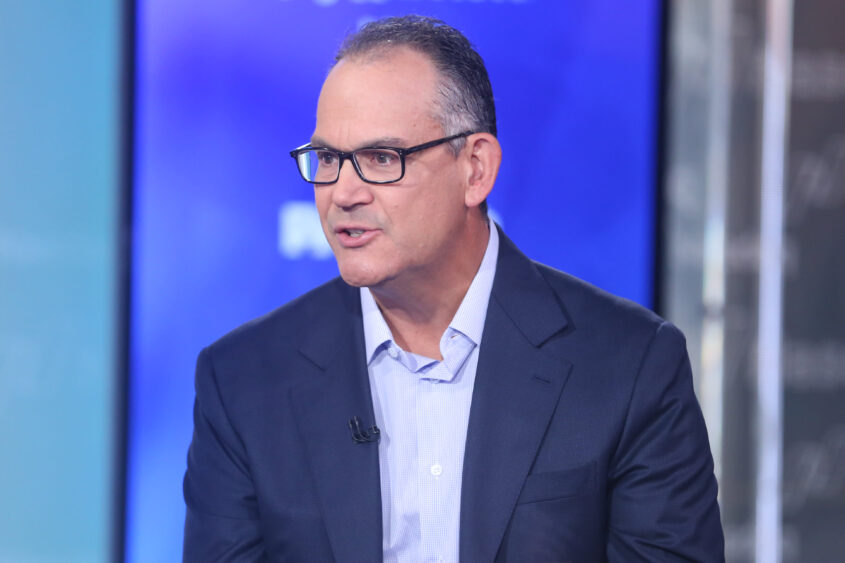
Tampa Bay Rays CEO Ken Babby addressed trustees and the public following the comment period, framing the proposal as an early milestone rather than a finalized plan.
“This is a step in a longer process,” Babby said. “It’s about starting a conversation around a potential partnership.”
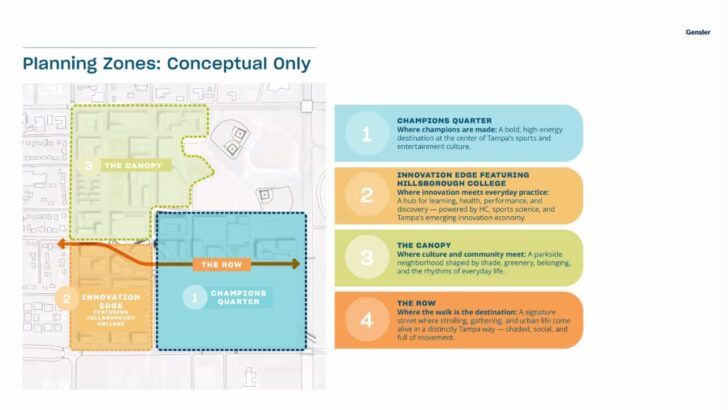
Babby presented conceptual renderings developed with Gensler’s Tampa office showing a reimagined campus anchored by a Rays ballpark and a mixed-use district that integrates academic space, residential uses and commercial development.
READ: TAMPA RETAIL & HOSPITALITY NEWS
He described the effort as a partnership between the college, the Rays, the state and the broader region.
As envisioned, the project could span roughly 130 acres and include workforce development initiatives tied to Hillsborough College programs.
Babby cited preliminary estimates of thousands of jobs and long-term economic activity, noting that details would be refined through negotiations.
“We agree this needs to be a community conversation,” Babby said. “We’ll be sharing more as that conversation continues.”

What the vote changes and what it doesn’t
Tuesday’s unanimous vote moves discussions into a formal negotiation framework.
It does not approve a stadium location, commit public funding or authorize redevelopment of the campus.
Trustees retain authority to amend or terminate the memorandum at any point.
The structure reflects a governance philosophy increasingly used by public institutions facing large private development proposals.
Process approval allows exploration without surrendering control.
For Tampa Bay business leaders and regional stakeholders, the vote signals institutional openness to evaluating a transformative project while preserving oversight.
Further negotiations and additional board votes would be required before any binding agreement could take effect.