
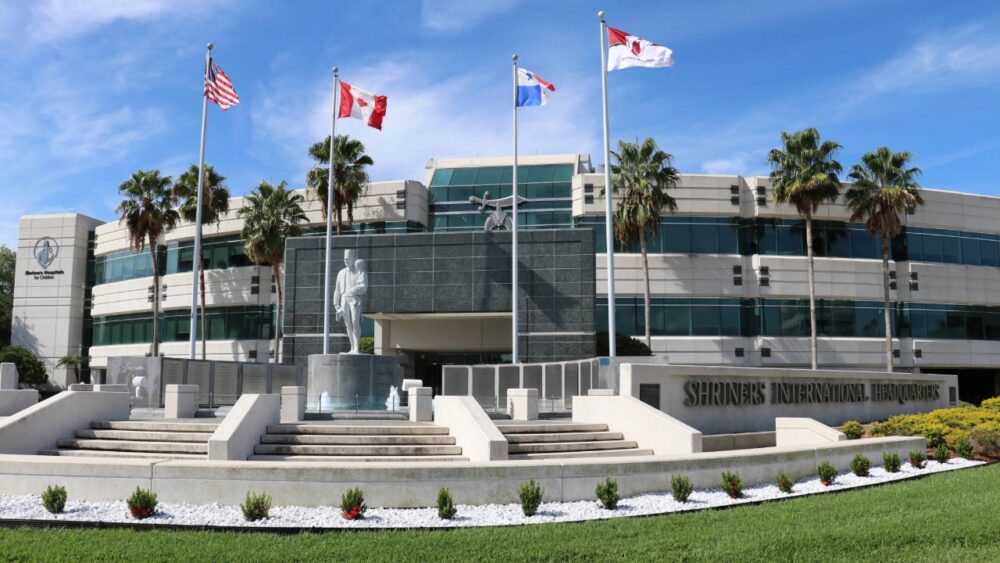
Shriners International has kept its headquarters in Tampa for more than 40 years, operating out of its Rocky Point office at 2900 N. Rocky Point Drive.
From that building, the organization oversees a national pediatric health system that treats about 200,000 children a year, along with the fraternal organization that helped build it.
Mel Bower, Shriners International’s chief marketing and communications officer, said the headquarters houses two connected operations: the Shriners fraternity and Shriners Children’s, the pediatric specialty health system founded in 1922.
While the fraternity remains part of the organization’s identity, most of the work coordinated through Tampa supports the health system.
Shriners Children’s operates 20 brick-and-mortar facilities across North America. The network includes 18 locations in the United States, including Hawaii, plus sites in Montreal and Mexico City.
Patients travel in from every U.S. state, and the system also extends care through global outreach, including work in countries such as the Philippines and Cyprus.
Two organizations, one Tampa headquarters
Shriners International’s Tampa headquarters houses both the fraternity and the health system. The fraternity, founded in 1872, is the organization many people recognize from parades and community events.
Shriners Children’s came 50 years later, created as the fraternity’s philanthropy.
Bower said that structure still shapes how the organization operates today.
“The Shriners are still on our board,” she said. “The chairman of our board of directors, every member of our board of directors, we’re all Shriners.”
A pediatric system built around four specialties
Shriners Children’s focuses on four service lines: orthopedics, pediatric burns, spinal cord injury and cleft lip and palate. The system does not operate as a full-service children’s hospital.
“We are only working in those specific service lines,” Bower said.
READ: TAMPA BAY REAL ESTATE NEWS
Shriners Children’s medical group includes more than 300 providers. Bower said the system handles cases ranging from routine to rare across its specialty areas, including common orthopedic conditions that require long-term care.
Treating the child for the life of the child
Shriners Children’s began during the polio epidemic, when children often received care in adult hospitals.
Bower said the founders saw quickly that pediatric patients needed different treatment plans because their bodies were still growing.
“That was really the core impetus behind founding Shriners Children’s,” she said. “The idea that children do have unique treatments.”
READ: TAMPA BAY BUSINESS NEWS
That approach shaped the system’s later work in pediatric burns, which began in the 1960s. Bower said burn care becomes more complex for children because grafts and mobility outcomes change as children grow.
“We have really specialized in treating the child for the life of the child,” she said. “Keeping in mind that if a burn victim is seven years old, they’re going to need a number of treatments throughout their adolescence.”
Prosthetics, sports and what insurance does not cover
Orthopedics remains Shriners Children’s largest service line. Bower said the system’s work includes a prosthetics and orthotics division that provides devices to children, including those who want to stay active in sports.
As children grow, they often need multiple prosthetic devices. Bower said traditional insurance can limit how often children receive prosthetics and what types of devices are covered.
READ: TAMPA RETAIL & HOSPITALITY NEWS
Shriners Children’s fills those gaps through its mission-based model, allowing clinicians to focus on what a child needs instead of what will be reimbursed.
“We don’t limit our treatment options based on insurance reimbursement,” Bower said. “It’s really a much broader view of what is best for the child and what’s going to help them to live their best life.”
A national footprint with global outreach
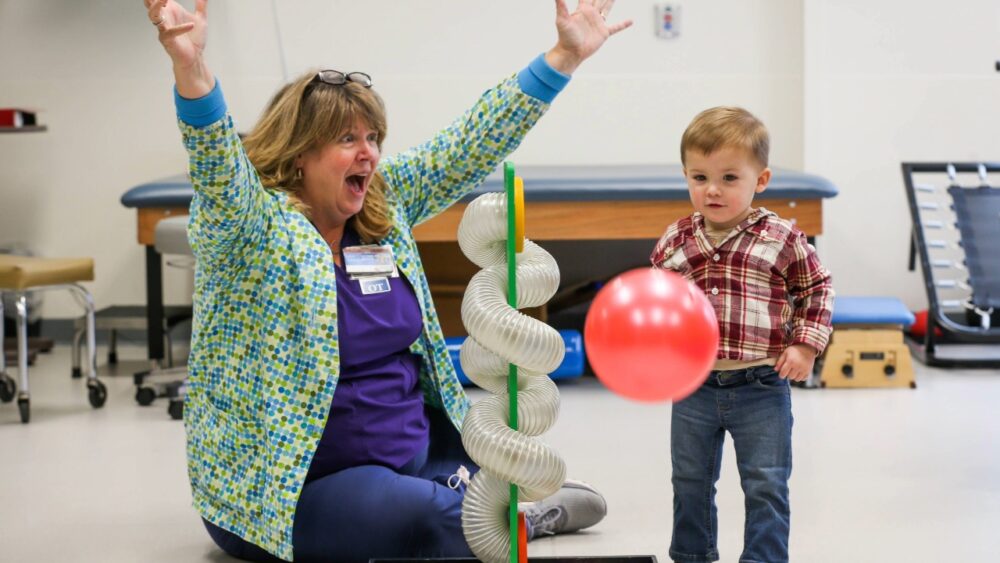
Shriners Children’s serves patients in every U.S. state, including regions without a local facility. In some cases, families travel across the country to reach specialty care.
Bower said the organization also helps families access treatment when care is available only through Shriners Children’s. That can include supporting travel and helping a parent stay with a child during care.
“If the treatment or the care that they need is only available to us, then yes, we will bring them to the U.S., including a family member to support them,” she said.
New diseases and new injuries
Shriners Children’s continues to face new challenges. Bower pointed to acute flaccid myelitis, or AFM, a condition that can appear after a virus and affect a child’s ability to walk.
She said Shriners Children’s has become a leader in treating the orthopedic impact of AFM, including nerve transfer procedures designed to help restore function.
The system has also tracked burn injuries tied to online trends. Bower said some social media challenges have led to serious contact burns, including injuries caused by microwaved foods and heated toys.
“We’ve seen more recently some of these TikTok challenges,” she said. “They’re mimicking things that they see, not realizing a lot of that’s not real.”
AI research and a Georgia Tech partnership
Shriners Children’s has expanded its use of artificial intelligence in research.
Bower said AI helps the organization process large volumes of patient data faster than manual review, allowing researchers to identify patterns across similar conditions.
“It’s really exciting to be able to use that technology to take the data and the information that we have and apply it in a more meaningful way,” she said.
Bower said the organization has built that work through academic partnerships, including Georgia Tech. She said Shriners Children’s plans to open a new Shriners Children’s Research Institute on the Georgia Tech campus.
Donors keep the model running
Bower said donations allow Shriners Children’s to operate differently than a traditional health system, especially when insurance does not cover the full scope of what a child needs over years of care.
“They really make what we do possible,” she said. “Because we’re able to operate in a completely different sphere than traditional health care, because of the generosity of those donors.”
Stay Informed
Stay up to date on Tampa Bay business news, executive profiles and the companies shaping the region.


Thanks for consistently showing up with content that matters to real human beings