
It is no secret that medicine is changing at a pace more rapidly than ever before. Advances in technology, surgical innovation and our understanding of diseases are transforming how physicians diagnose, treat and care for patients—often in ways that would have seemed unimaginable just a decade ago.
Urology is one of the specialties at the forefront of that rapid evolution. From increasingly sophisticated robotic and minimally invasive procedures to a deeper understanding of conditions that uniquely affect women, the field is expanding both what is possible in the operating room and how patients experience care in the office.
At Florida Urology Partners, Dr. Anisleidy Fombona, a Cornell and University of Pittsburgh graduate, and Dr. Stephanie Stillings, a graduate from both the Universities of Miami and Florida, represent a new generation of highly trained urologic surgeons practicing at the intersection of complex medicine, advanced surgical technology and highly personalized patient care.
Their work is technically demanding. It can involve cancer, reconstruction, robotic surgery and intricate pelvic procedures. But for these two physicians, the complexity of urology is only part of the story. The other part is making sure patients—particularly women—understand that they do not have to accept certain symptoms as simply part of getting older.
“There is a common misconception that many urologic symptoms in women are simply a normal part of aging,” Dr. Fombona says. “In reality, a wide range of effective treatment options exist.”
That distinction matters.
Women experience many of the same urologic conditions as men, including kidney stones and cancers of the urinary tract. They also face conditions uniquely or disproportionately affecting women, including urinary incontinence, pelvic organ prolapse, overactive bladder, pelvic floor disorders and genitourinary symptoms associated with menopause.
Yet many women wait years before seeking care.
Dr. Stillings sees firsthand how easily symptoms can become normalized. “Women are incredibly good at adapting,” she says. “They stop jumping or running because they leak. They map out bathrooms everywhere they go. They wear pads every day.”
Those adaptations may seem minor, but collectively they can represent a significant reduction in quality of life.
The message from both physicians is straightforward: women should not have to reorganize their lives around a medical condition that may be treatable.
And there is another reason their voices matter.
As women increasingly enter highly specialized surgical fields, they are helping change the patient experience from the inside out. For many female patients, discussing urinary leakage, pelvic health, sexual health or menopause-related symptoms can be deeply personal. Having a woman surgeon leading those conversations can help eliminate some of the barriers that have historically kept patients silent.
But the significance of Dr. Fombona and Dr. Stillings extends well beyond their work with female patients.
Urology is among the specialties at the forefront of robotic surgery, and the technology is rapidly expanding the scope of minimally invasive procedures. Robotic platforms can provide surgeons with enhanced visualization, precision and access, allowing increasingly complex procedures to be performed through smaller incisions.
“Robotic surgery in urology is rapidly expanding beyond prostatectomy,” Dr. Fombona explains. She points to applications including partial nephrectomy, ureteral reconstruction, pyeloplasty and complex pelvic procedures.
For patients, technological advancement is ultimately measured not by the sophistication of the equipment, but by what it means on the other side of the operating room: less pain, shorter recovery, fewer disruptions and a faster return to life.
“The goal is always to achieve an excellent surgical outcome while minimizing pain, recovery time and disruption to a patient’s life,” Dr. Stillings says.
That philosophy reflects a broader evolution taking place throughout health care. Patients are no longer passive recipients of treatment. They want to understand their options, participate in decisions and receive care that reflects their individual circumstances.
Both physicians have built their practices around that principle.
Dr. Fombona says one of her greatest strengths is recognizing that “the standard treatment plan isn’t the right plan for every patient.” She takes into account a patient’s needs, environment, support system and goals before determining the appropriate course of care.
Dr. Stillings similarly emphasizes shared decision-making. “There is rarely one universal ‘correct’ answer in urology,” she says. The right treatment may be education, pelvic floor therapy, medication, a minimally invasive procedure or surgery—depending on the individual patient.
That approach is more than good bedside manner. It is a reflection of where health care is headed.
The future of medicine will demand physicians who can master increasingly sophisticated technology while never losing sight of the individual sitting across from them. It will require specialization without losing accessibility, innovation without losing empathy and clinical excellence without losing the patient’s voice.
Dr. Fombona and Dr. Stillings embody that balance.
Their presence also sends an important message to the next generation of women entering medicine: there is a place for women in the most technically demanding corners of health care, including the operating room. And their presence sends an equally important message to women patients: your concerns deserve to be heard, investigated and treated.
About Florida Urology Partners
Drs. Anisleidy Fombona and Stephanie Stillings are highly trained and skilled urologists and surgeons with Florida Urology Partners, one the nation’s top specialty health systems. Centered in the Tampa Bay Region, Florida Urology Partners has twenty locations spanning Pinellas, Hillsborough, Pasco and Hernando Counties. With nearly sixty Providers, Florida Urology Partners is steeped with highly trained urologists and radiation oncologists to meet the needs of the patients and the communities in which they serve. To learn more about Florida Urology Partners, please visit www.floridaurologypartners.com
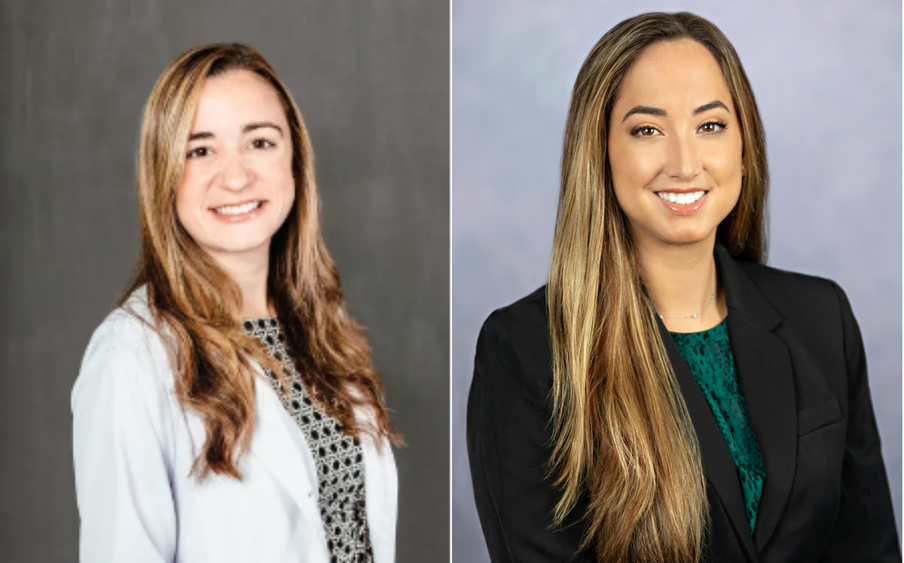
Dr. Anisleidy Fombona, M.D., Urologist, Florida Urology Partners
Dr. Stephanie Stillings, M.D., Urologist, Florida Urology Partners