

John Bell arrived at Tampa Theatre in 1985, at a time when downtown Tampa was quiet, uncertain and largely empty after business hours.
Four decades later, he is preparing to retire in 2026, leaving behind an institution that has not only survived seismic changes in entertainment but grown stronger because of them.
Bell’s decision to step away comes as Tampa Theatre prepares for major restoration work ahead of its 100th anniversary on October 15, 2026.
But his story is not just about longevity. It is about a philosophy of stewardship, adaptation and experience that helped a historic theater remain relevant while many others disappeared.
“I never imagined I would be in one place for more than 40 years,” Bell said. “But walking into Tampa Theatre never gets old. There is something intangible about it.”
Arriving at a different Tampa
Bell’s first day on the job was November 1, 1985. He had come from Greensboro, North Carolina, where he managed another historic theater.
Tampa appealed to him for two reasons. The building mattered, and the city felt like it was on the edge of something.
“At the time, the theater had already been saved,” Bell said. “On the surface, it looked successful. But there were cracks forming that you could not ignore.”
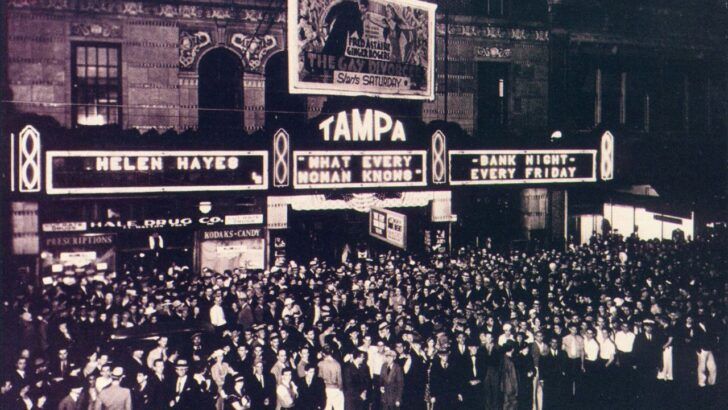
Downtown Tampa in the mid-1980s looked nothing like it does today. The Straz Center was still under construction.
READ: TAMPA HISTORY
The old convention center sat where Curtis Hixon Waterfront Park now stands. Few people lived downtown, and retail was leaving.
“The theater was this lonely beacon of light in a pretty desolate downtown,” Bell said. “I feel fortunate to have had a front-row seat to the transformation of both the building and the city.”
Technology pressure and a turning point
The challenges Bell faced early on were not architectural. They were technological.
When he arrived, Tampa Theatre primarily showed repertory films. Classic movies played intermittently, and the calendar was sparse.
At the same time, cable television, VHS tapes and home entertainment systems were beginning to change how people consumed movies.
“There was a time when if you wanted to watch Casablanca without commercials, you had to come to a theater like this,” Bell said. “That was no longer true.”
By 1988, Bell and his team made a pivotal decision.
READ: TAMPA BAY BUSINESS NEWS
They shifted from a repertory model to booking first-run arthouse films, committing to daily screenings and regular box office reporting.
The change dramatically increased activity inside the building.
“We went from about 120 events a year to nearly 500,” Bell said. “That switch filled the calendar almost every day.”
It was not a rejection of tradition. It was an evolution rooted in philosophy.
“The classic film program had enjoyed success,” Bell said. “But the world had changed. If we didn’t adapt, the theater would slowly fade.”
A programming philosophy built on experience
Tampa Theatre’s physical limitations shaped its programming philosophy.
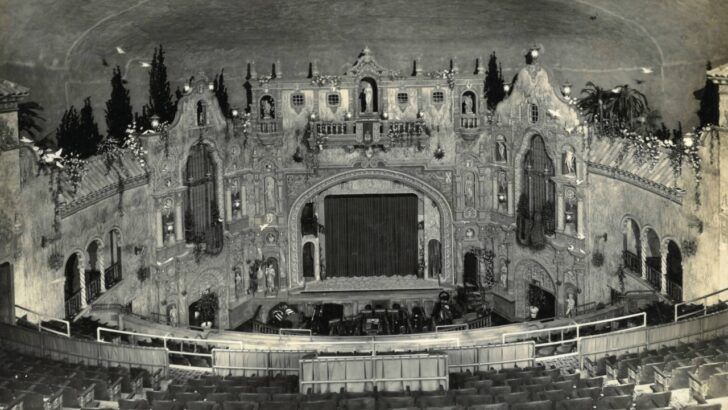
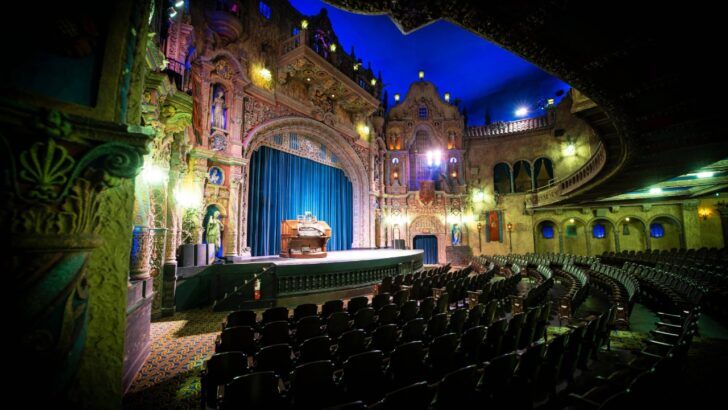
Unlike many ornate movie palaces built in the 1920s, Tampa Theatre has an unusually small stage, making large theatrical productions impossible.
“That forced us into film by default,” Bell said. “But it also pushed us to think creatively.”
Over time, concerts, comedians and special events became a larger part of the mix.
In recent years, the theater has hosted 45 to 50 touring artists annually, along with about 80 rental events.
READ: TAMPA BAY REAL ESTATE NEWS
A major shift came in June 2024 with the opening of a second screening room that seats just 43 people.
“That small room changed our entire business model,” Bell said. “It freed up the historic auditorium for more events while allowing us to maintain strong relationships with film distributors.”
The change reflects Bell’s broader philosophy: scale does not determine impact. Intention does.
Why the experience still matters
Bell is candid about the challenges facing movie theaters nationwide.
Ticket sales are declining. Streaming is convenient. Home systems are sophisticated.
“I’m more concerned about the future of commercial cinema than I am about Tampa Theatre,” he said.
His reasoning is simple.
“Going to a multiplex is a mundane experience,” Bell said. “Coming to Tampa Theatre feels like an occasion.”
READ: DOWNTOWN TAMPA DEVELOPMENT & REAL ESTATE NEWS
Bell cited a telling statistic. In 1929, about 90 million movie tickets were sold each week in the United States, when the population was roughly 130 million.
Today, weekly ticket sales hover around 19 million, despite a population of more than 330 million.
“The trend line is clear,” he said. “It takes something special to get people off their couches.”
That belief shapes everything from programming to preservation. It is also why classic film series continue to sell out year after year.
“I once asked a patron why he came back every year to see the same movie,” Bell said. “He told me, ‘This is as close to time travel as I can get.’”
The nonprofit model as strategy
Tampa Theatre’s nonprofit status plays a critical role in its resilience.
Without investors or shareholders, profits are reinvested directly into the building and operations.
“We’ve posted profits for 15 consecutive years, including during Covid,” Bell said. “Some years that profit might be $6,000. Other years it’s $600,000. Either way, it goes right back into the organization.”
Bell is clear that financial discipline still matters.
READ: BUSINESS INNOVATION STORIES
“The numbers have to work,” he said. “Making money is not our mission, but it is a desirable operating condition.”
Attendance, however, remains the primary measure of success.
“Our mission is to get people in the door and give them an experience,” Bell said. “Attendance tells us if we’re doing that.”
Emotional capital and community memory
Bell describes Tampa Theatre’s relationship with the community as a love affair built across generations.
“People came here with their grandparents,” he said. “Then they bring their children. That emotional connection is real.”
He believes the building’s rescue in the late 1970s created a lasting sense of civic pride.
READ: TBBW COVER STORIES
“There was intense development pressure,” Bell said. “Many theaters like this were demolished. The fact that Tampa chose preservation says something about the city.”
That choice, he said, still resonates.
“There’s a reason the sign spells Tampa,” Bell said. “It reinforces that this place belongs to the community.”
Legacy as people, not buildings
When asked how he hopes to be remembered, Bell does not point to architecture or programming decisions.
“The only thing I really take credit for is hiring brilliant people,” he said.
Bell credits his staff and board for carrying the institution forward. He describes his role as more of a stage manager than a spotlight figure.
“You can have ideas all day,” he said. “But without the right people, nothing gets executed.”
That perspective reflects the philosophy that has guided his tenure.
“All of us are temporary custodians,” Bell said. “This building always belongs to the next generation.”
As Tampa Theatre approaches its centennial, Bell believes the future is well-positioned.
“The work of preservation is never finished,” he said. “But the philosophy remains the same. Create an experience worth leaving home for. Take care of the people. Respect the past while adapting to the present.”
Then he added, simply, “That’s how this place survives.”