Lately, it seems that everyone is eager to share financial advice. Social media is full of people promising countless “financial hacks” while hustle culture tells us to work nonstop, and the viral stories we see in our feed make wealth look quick and simple.
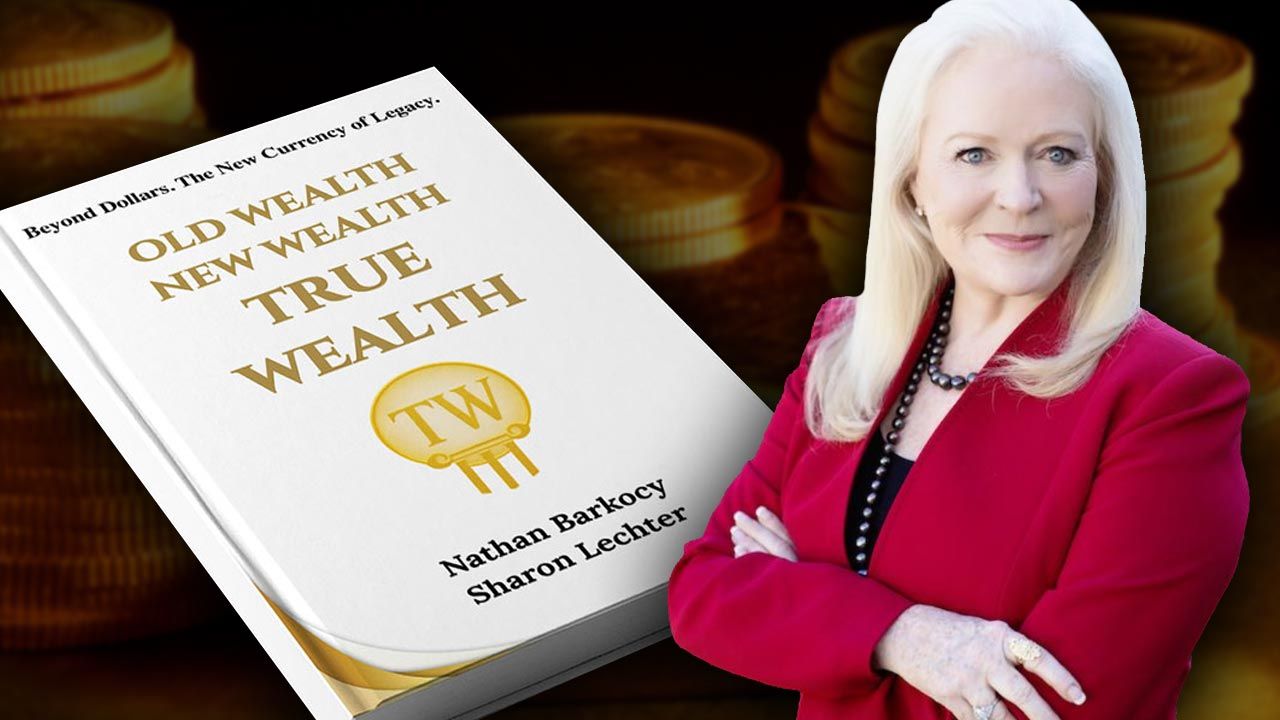
But in Old Wealth, New Wealth, True Wealth, a book written by financial powerhouses Sharon Lechter and Nathan Barkocy, we get a very different perspective. They remind us that wealth is not just about how much money you make. It is about who you become along the way.
As someone who has spent years, both studying and experiencing business success and failure, I can tell you this truth is often ignored. Lots of people find that they’re great at making money but few build real meaning.
This book challenges readers to aim higher.
A powerful story built on loss
One of the strongest parts of this book is Barkocy’s personal story.
At just sixteen years old, he was already a nationally ranked athlete with Olympic dreams when a cycling accident nearly killed him. This left him in a coma and partially paralyzed.
Lying in a hospital bed, he faced a painful question: If this is the end, he thought, was it enough?
I felt that in my soul because I faced a similar experience when I was hit by a vehicle while on my motorcycle, and spent months in bed recovering.
That question, “was it enough,” changed everything.
His recovery wasn’t just physical—it was also mental and emotional. He shifted his intense discipline away from sports and toward learning about money, business, and personal growth. Following that approach, he became a multimillionaire by the age of twenty five.
But here is what matters most: he says the money was not the goal. It was the result of something deeper. He calls that deeper goal “True Wealth.”
Barkocy’s accident could have defined him in a negative way, but instead, he used it as leverage.
That lesson applies to every entrepreneur. Challenges are not the end. They are turning points. Economic downturns, business failures, and personal setbacks can push people to rethink their priorities. The key is not avoiding hardship, but rather using them.
The authors frame adversity as a refining fire. It strips away shallow goals and exposes what truly matters. That perspective is valuable for anyone building a career or business today and that idea runs through the entire book.
Identifying the three types of wealth
Lechter and Barkocy explain wealth as a spectrum. They break it into three parts: Old Wealth, New Wealth, and True Wealth.
Old Wealth stands for stability and structure. It values safety, strong foundations, and long-term thinking. It respects tradition and legacy. This form of wealth often focuses on protecting what has already been built.
New Wealth represents speed and innovation. It is about startups, social media influence, rapid growth, and big visibility. It reflects the modern world where technology can create success almost overnight.
Dr. David Phelps, noted financial expert and founder of Freedom Founders, says, “For most of my career, I watched successful professionals chase what I call ‘New Wealth.’ Bigger practices, bigger balance sheets, bigger lifestyles, only to discover they had less time, less margin, and less peace. Old Wealth was about stability and stewardship. New Wealth became about scale and optics. But True Wealth is optionality—the ability to choose how you spend your time, who you serve, and when you’re done. If success costs you your freedom, it was never wealth in the first place, and this book breaks that concept down perfectly.”
Both Old Wealth and New Wealth have value. But both can also fall short.
Old Wealth can become too cautious. It can focus so much on safety that it forgets to live.
New Wealth can become too flashy. It can chase attention and growth without building something that lasts.
True Wealth blends the best of both. It includes financial success, but it also includes values, family, health, faith, and service to others. It looks at money as a tool, not an identity.
That is a powerful shift.
The parable of the three brothers
To explain their ideas, the authors share a modern parable about three brothers who inherit land. Each brother builds a different future.
The first brother chooses security. He builds carefully and protects his assets. He creates safety but forgets to enjoy life. His world is stable but cold. The second brother chases attention and success. He builds something flashy and impressive. People notice him. But his foundation is weak. Over time, what he built cannot last. The third brother listens to mentors. He thinks long term. He builds with purpose and balance. His life becomes not only prosperous but also warm and strong enough to pass down to future generations.
This story forces readers to ask themselves tough questions. Which brother am I becoming? Am I focused only on money? Am I chasing applause? Or am I building something that will outlast me?
I believe this is where many leaders get lost. They measure quarterly profits but ignore personal cost. They track revenue but neglect relationships. This parable brings those blind spots into focus.
Using mentorship as leverage
Lechter’s presence in the book adds weight and wisdom.
She is widely known as the co-author of Rich Dad Poor Dad and other best-selling financial books. Earlier in my career, I devoured the wisdom presented in these books. And for decades, she has worked to improve financial education around the world.
And I’m not alone in that. David Richter, founder of Simple CFO says, “Sharon has been a mentor to me through her books for the last 20 years, and in the last 3 years I’ve been honored to call her my friend. Financial literacy is not just her mission but a way of life, and that resonates with me. As soon as I heard about her new book collaboration, I knew I needed it. I love the explanation of True Wealth in their book and hope as many people read the book to escape their own rat race and pursue True Wealth.”
In this collaboration, she represents experience. Barkocy represents youth and drive.
Their partnership models what they preach. Mentorship matters. Shared wisdom multiplies success. It acts as leverage to help you achieve more, faster.
In business, I have seen this over and over again. The fastest path to growth is not trial and error alone. It is learning from someone who can help you avoid making the mistakes they’ve already seen others make or even made themselves.
The book includes “Mentor’s Corner” prompts that push readers to think deeply about what kind of wealth they are building.
That interactive style makes the book more than a story. It becomes a guide.
Money should never be your identity
One of the clearest messages in the book is simple: money is important, but it is not everything.
Financial literacy matters. You need to understand how money works. You need to know how to earn, invest, and protect it. But financial skill without personal alignment leads to burnout. It leads to emptiness. It can even lead to fragile success that collapses under real pressure.
True Wealth includes time freedom. It includes being present with family. It includes health. It includes faith and service. It includes the ability to help others rise.
In today’s culture, success is often measured by followers, cars, and houses. The authors argue for a wider lens.
In my own work advising entrepreneurs, I often ask one question: If your business doubled tomorrow, would your life get better or worse?
Many people hesitate before answering.
That hesitation reveals the gap between financial growth and personal growth. This book encourages readers to close that gap.
Don’t prioritize speed over direction
We live in an era obsessed with speed. Start fast. Grow fast. Exit fast.
But direction matters more than speed.
You can climb a ladder quickly only to realize it is leaning against the wrong wall.
Old Wealth, New Wealth, True Wealth calls readers to slow down long enough to choose the right wall.
It challenges validation-driven ambition. It pushes readers away from short-term highs and toward long-term thinking.
That does not mean avoiding success. It means redefining it.
Building on a philosophy that withstands the test of time
This book is not a step-by-step guide to picking stocks or launching a startup. It is something deeper. It is a philosophy of wealth.
It speaks to entrepreneurs, investors, leaders, and young adults who want more than a paycheck. It speaks to anyone who wants their success to mean something.
I find this message refreshing. Old Wealth reminds us to build strong foundations. New Wealth reminds us to innovate and move boldly. True Wealth reminds us why we are building in the first place.
I believe that last question is the most important because if we can’t answer why, the what and how will never matter.
Money can buy comfort, open doors, and create options, but only purpose can create peace.
Derek Carlson, a real estate broker who built one of the top 100 U.S. brokerages in terms of sales volume, and the current president of Realty ONE Group MVP, says, “I built a big business and I lost it. And when it was gone, I had to rebuild more than revenue. I rebuilt my faith. I rebuilt my marriage. I rebuilt my health. Then I rebuilt the business. That season taught me something I will never forget. Money can create momentum, but it cannot fix what is broken inside you. Only purpose can do that. If success is only about dollars, it will eventually feel hollow. But when it is rooted in faith, alignment, and the people you love, it becomes something no market cycle can take away. Old Wealth, New Wealth, True Wealth gives readers a blueprint to find and leverage their true purpose.”
In a culture focused on image, this book calls for substance. In a race focused on speed, it calls for direction. And in a world chasing wealth, it reminds us that the richest life is the one built with meaning.