
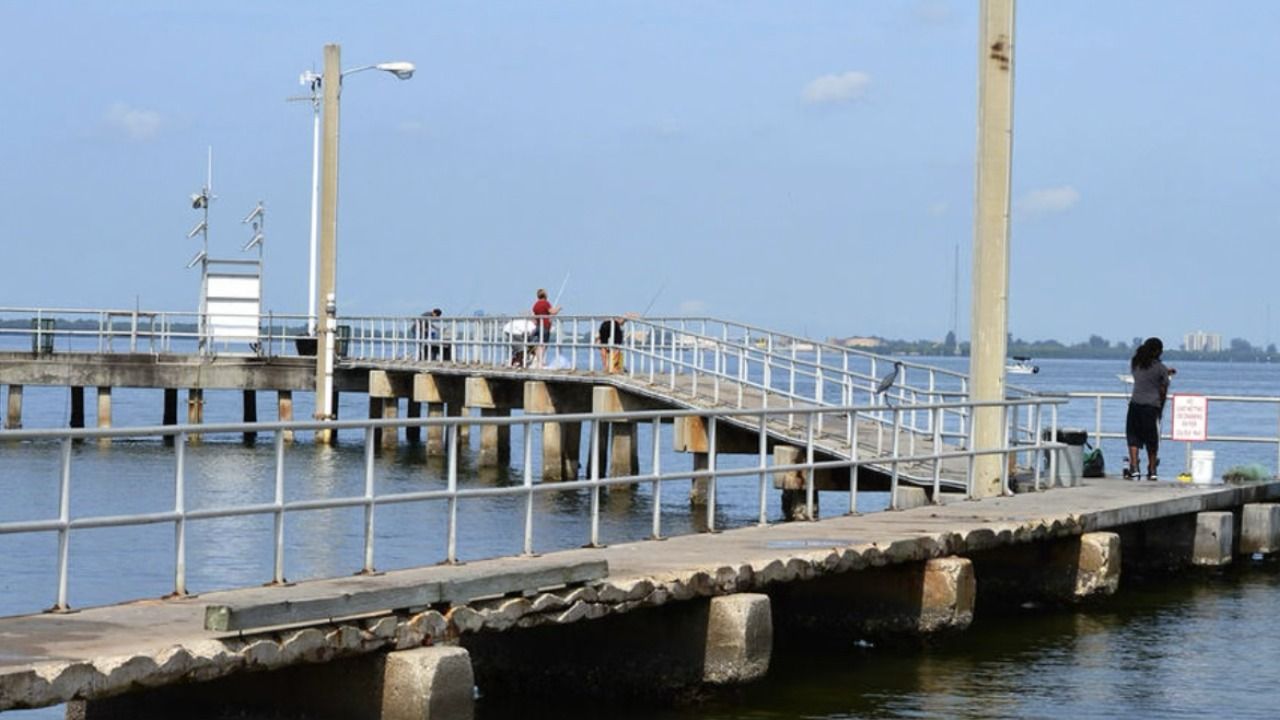
Tampa is moving toward a coastal resilience project at Picnic Island Park that could add living breakwaters, reinforced dunes, oyster habitat and a living shoreline aimed at minimizing erosion and reducing flood risk for nearby Port Tampa City.
The Tampa City Council is scheduled to consider a $1.999 million agreement with HDR Engineering to refine, engineer and permit a series of nature-based shoreline improvements while producing final construction documents and cost estimates. The contract would cover site analysis, engineering, permitting and bid-ready plans, but not construction.
Preliminary concepts include two 750-foot living breakwaters designed to reduce incoming wave energy and provide suitable substrate for oyster recruitment, a 650-foot living shoreline, three 500-foot longshore bars or intertidal reefs and two reinforced dunes measuring approximately 750 feet and 500 feet.
The plans also contemplate placing about 380,000 cubic yards of material in underwater dredge holes across 7.5 acres to reconnect shallow habitats separated by deeper water while improving habitat.
The project could extend beyond the park into Picnic Island Bayou, a 394-acre city-owned property where grant documents say mosquito and drainage ditches allow storm surge and rising water to penetrate farther inland. Concepts for that area could include wetland restoration, upland plantings, a vegetated horizontal levee and a trail connecting the park and bayou. Together, the city says the improvements could enhance 492 acres of habitat while potentially reducing flood risk for both Port Tampa City and nearby MacDill Air Force Base.
Before selecting any final design, HDR would conduct topographic and bathymetric surveys, monitor water levels and boat wakes, drill as many as 12 geotechnical borings and document seagrass, mangroves and coral colonies. The firm would also investigate potential archaeological, historic and maritime resources.
HDR would then model how waves, storm surge and flooding move through Tampa Bay and around Picnic Island under current conditions and future sea-level-rise scenarios. That work would produce as many as three alternatives for up to two shoreline areas, allowing the city to compare the expected performance, environmental effects, permitting requirements, construction approaches and costs of each option.
The features identified in the grant documents remain conceptual and could change through engineering, environmental review, community input and permitting.
Of the total contract, about $1.1 million is allocated to engineering and design, $633,191 to site assessment, $174,979 to permitting and $89,794 to community engagement. HDR would prepare 50% and 100% design packages, technical specifications, phased bid documents, increasingly detailed construction estimates and ultimately 100% construction plans and specifications.
The project grew out of Tampa’s 2021 Sea Level Rise Study, which identified Picnic Island Park, Picnic Island Bayou and surrounding areas as vulnerable to sea-level rise, high-tide flooding and storm surge. The city’s grant application says Port Tampa City lies entirely within a FEMA AE flood zone and sits about a mile from the park.
The design may also incorporate trails, beach-access paths, site furnishings, dog park improvements and green infrastructure. Parking lots, restrooms, the disc golf course, pier and dock are excluded from the current scope.
The consulting work is funded through the city’s Parks and Recreation Grants Capital Projects Fund under a grant agreement with the Florida Department of Environmental Protection’s Gulf Coast Resiliency Program. Tampa has described Picnic Island as a demonstration project whose designs could be adapted for other vulnerable shorelines around Tampa Bay and elsewhere in Florida.
Three firms pursued the contract: HDR Engineering, Moffatt & Nichol and WSP USA. Tampa selected HDR through Florida’s qualifications-based Consultants’ Competitive Negotiation Act process. The city’s summary sheet allows 458 consecutive calendar days for the work.
The city has not identified a construction budget, funding source for construction or construction schedule. HDR’s assignment is to produce the engineering, permitting and construction documents needed should the city decide to move the proposed shoreline improvements from planning into construction.
Explore More Tampa Bay Real Estate News
Stay up to date on commercial real estate deals, development projects, office, industrial, retail and multifamily news from across the Tampa Bay region.