
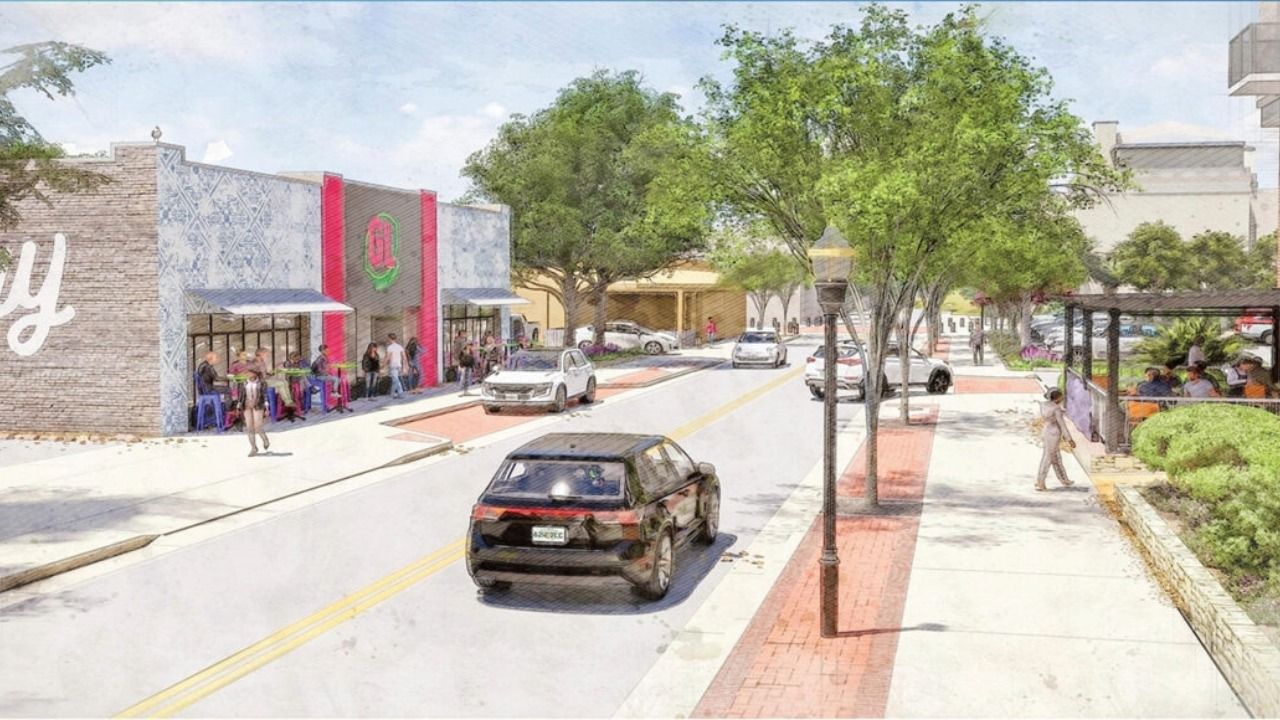
Tampa City Council approved the $100.4 million South Howard Flood Relief and Streetscape Project Thursday, clearing one of the city’s largest stormwater projects for construction after years of planning and a final fight over its cost, the flood relief it promises and what four years of work could do to South Howard businesses. The 4-3 vote puts Kimmins Contracting Corp. in line to begin work this fall on a massive drainage system running from Hillsborough Bay through South Howard Avenue toward flood-prone Parkland Estates and Palma Ceia Pines.
Chairman Alan Clendenin and council members Lynn Hurtak, Charlie Miranda and Luis Viera voted yes, while Guido Maniscalco, Bill Carlson and Naya Young voted no. The split carried forward the questions that had followed the project into Thursday’s meeting: whether Tampa had settled the CSX railroad crossing, whether South Howard businesses could survive years of construction and whether committing so much stormwater money to one corridor would leave other parts of the city waiting longer for relief.
David Laxer, owner and president of Bern’s Steak House, tied nearly 300 employees to the corridor, including workers who have spent 20, 30 or 40 years with the family business. He estimated tipped and hourly employees could see income fall 25% to 50% during three to four years of construction — his estimate, not the city’s — but his larger concern was what happens after customers spend years finding somewhere else to go.
“No one knows their business like a business owner, and to tell them otherwise is disrespectful. To state that the pain will end after the construction is complete is also false. Our customers will develop new dining patterns and group business will settle into other restaurants, other hotels, and those years of goodwill will be lost. To say I’m disheartened by all this is an understatement. What I’m feeling is betrayed by the city and by this council if this passes.”
Michael Disser came to the dispute from both sides. The former Parkland Estates resident has experienced storm-related property damage near Audubon and Swann avenues and later sold his Parkland home to put more money into South Howard. He valued his real estate there at about $24 million and said his businesses represent 162 employees.
“I sold that house to buy more commercial real estate on South Howard Avenue. This impacts me significantly because people that go to Epicurean, go to Bern’s, go to AVA, go to whatever, and then trickle up the street to my businesses. People that live in estates that are impacted or flooded can sell. Businesses can’t just sell randomly. It’s closed, small markets by businesses like us — restaurants, bars, hotels, doctors’ offices.”
Michael Stewart, the 20-year South Howard restaurateur behind AVA and the newly opened Landon, focused on where traffic goes once part of the corridor closes. The Selmon Expressway, railroad tracks, one-way roads and dead-end streets already narrow the options, and Stewart said he has watched a much shorter Swann Avenue closure back traffic toward Henderson Boulevard.
“I don’t want to be sitting here two years from now going, ‘Oh, I told you so,’ because that doesn’t make my life any easier. But I can tell you now, on record, there is absolutely no way that you’re going to get the traffic through these neighborhoods. I’ve seen Swann close for four hours one day, and I was backed up all the way to Henderson.”
Anthony Chicklowski, representing CRG, said the businesses employ about 600 people and have operated on South Howard for roughly 30 years.
“We have an event called Noodles and Network that I’ve raised over $100,000 for people in this community that are less fortunate. We’re doing community work. I’m very passionate about this, and this cannot happen,” he said. “We have too many employees. We have too much to lose. This is very personal to me. It really is. If this stops, I’m not able to do my events, and that’s all I want to do — help people.”
Tampa’s answer Thursday was that the engineering had advanced far enough to move. The biggest remaining question involved CSX, whose railroad tracks cross the route of the new drainage system and whose final permit is still needed for a new 60-inch pipe beneath them.
Staff told council CSX had responded to Tampa’s proposed crossing with four requirements and indicated the design would meet its technical standards if those requirements are satisfied. Kimmins’ $92.71 million guaranteed maximum price still assumes that trenchless crossing — a 72-inch casing containing the 60-inch pipe — and staff did not report a change to the contract price Thursday.
At $100.44 million, the project combines $7.73 million in previously authorized design work with Kimmins’ $92.71 million construction price. Tampa’s budget records separately show a $50.32 million transfer and reallocation among stormwater and capital accounts for the project.
Kimmins would install roughly 7,000 feet of stormwater conveyance, including a box culvert about 10 feet wide and 10 feet tall beginning near Bayshore Boulevard and running north beneath South Howard to Swann Avenue, then west toward Audubon Avenue before turning north toward Parkland Estates and Palma Ceia Pines. The project also replaces or upgrades about 11,800 feet of water mains and relocates roughly 3,200 feet of gravity sewer.
Tampa designed the system around 5.3 inches of rain falling over eight hours and projects it would cut flooding about 95% during that five-year design storm. During a Hurricane Milton-type event, the city projects structural flooding would fall about 70%, with roughly 230 homes and businesses avoiding structural flooding.
Staff said the city studied 24 alternatives before settling on the South Howard route. The project still puts nearly four years of construction through the corridor, but Tampa plans to divide the work into 24 zones of roughly 400 to 600 feet, restoring and reopening completed sections as crews move north.
Parkland Estates and Palma Ceia Pines will not see the full benefit immediately. Staff acknowledged the neighborhoods could keep flooding during the first years of construction because the larger downstream outlet has to be built before more water upstream has somewhere to go.
Tampa says it will maintain business and pedestrian access as work moves north, with vibration monitoring, delivery coordination and a four-person team assigned to help South Howard businesses through construction.
Cost remained another dividing line Thursday, particularly whether South Howard would consume money needed for stormwater projects elsewhere. Staff disputed that characterization. Tampa’s $50.32 million budget action draws from several stormwater bond, assessment, grant, future-debt and capital accounts.
Thursday’s vote starts the construction clock. Kimmins’ $92.71 million guaranteed price expires in October, with utility relocation expected to begin in November and major drainage work starting near Bayshore Boulevard next spring. Construction is expected to run through 2030.