
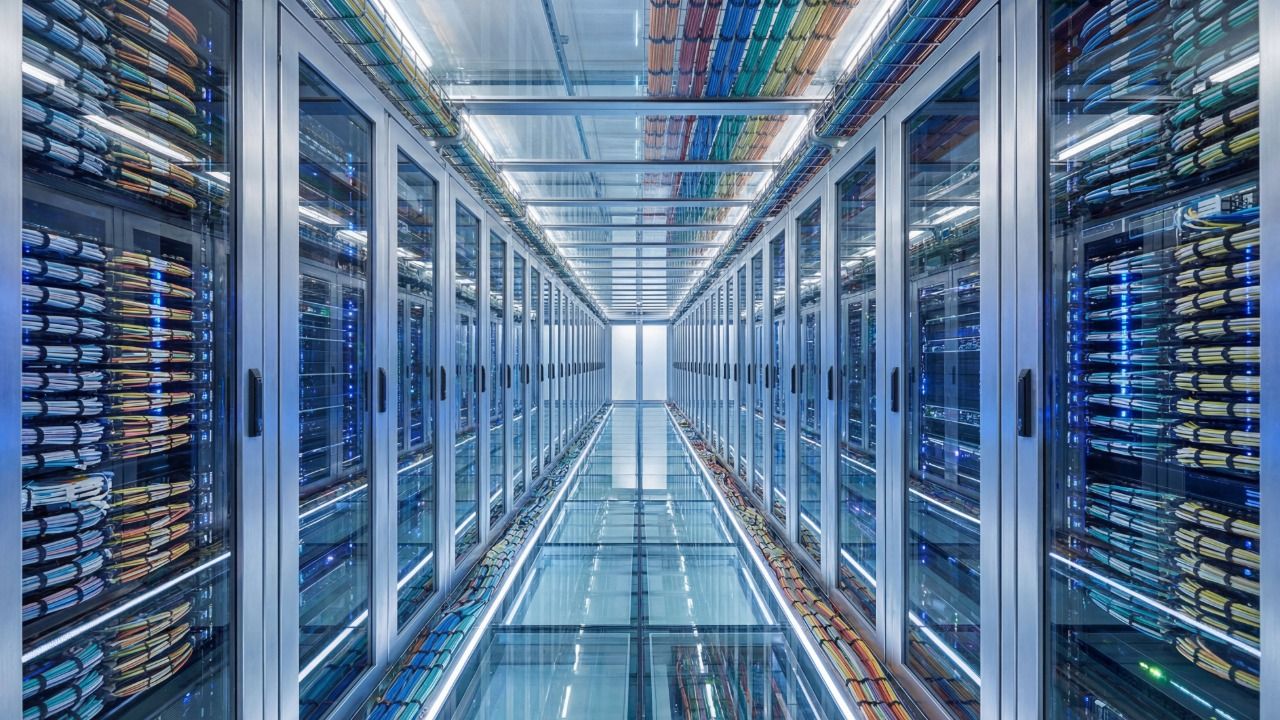
Tampa Electric is planning more than $1 billion in battery projects as data centers and other large power users consider West Central Florida, where the utility says prospective customers could add roughly 1,000 megawatts of demand. TECO has not named the companies, but says its estimate is based on customer interest, economic development activity and talks with prospective customers.
The interest has become a significant part of the job for Archie Collins, president and CEO of Tampa Electric, even before TECO knows which proposed projects will actually be built.
“I spend 50% of my day dealing with this issue,” Collins said on the Tampa Bay Developer podcast. “I understand that these larger, much larger data centers are causing some anxiety. There’s sort of a fear of the unknown, and so it’s easy in that moment to assume there are some monsters under the bed, whether it is power consumption, power rates, grid stability, water consumption, noise. There’s a whole litany of them.”
Four 150-megawatt battery projects planned between 2029 and 2032 would cost about $1.05 billion, although TECO has not picked the sites and would not start building until customers sign contracts. The utility would also add transmission equipment and use 600 megawatts from its planned modernization of Big Bend Unit 4.
The $2.5 billion Big Bend project, already in the works to serve growth across TECO’s customer base, would nearly triple the Apollo Beach unit’s generating capacity. TECO plans to reserve 600 megawatts for large customers, but says the modernization will move forward even if that demand never materializes.
Under the new tariff TECO filed with state regulators Sept. 30, data centers and other large users would pay for the power system work needed to serve them instead of shifting those costs to existing customers. They would also have to commit to at least 20 years of service.
A single large customer could require generating capacity TECO otherwise would not need, which is why Collins says the customer creating that demand should bear the cost.
“If some new customer comes in who is a large consumer, that, as you’re saying, is eating into the supply that was for these customers, well then something new has to be built,” Collins said on the podcast. “To the extent that investments need to be made to support the demands of a single new customer, all of those costs need to be paid for by that customer.”
TECO is planning around 1,000 megawatts of potential demand without saying who wants the power or where they want it, even as its transmission estimates assume customers will connect at “select locations” in its territory. Neither the companies nor the locations are public.
Those projects are not guaranteed to land here, and Collins sees the decisions being made now as part of a broader competition for data center investment that Florida could lose to other states.
“There’s just this real, meaningful GDP growth,” Collins said on the podcast. “As a region, we’re trying to do everything we can to responsibly engage with these investors who are looking to place data centers in West Central Florida. I think it’s really important data centers are done the right way. I also think it’s important for the state to send a signal that it’s open for business when it comes to this, because otherwise the investment will be made.”