
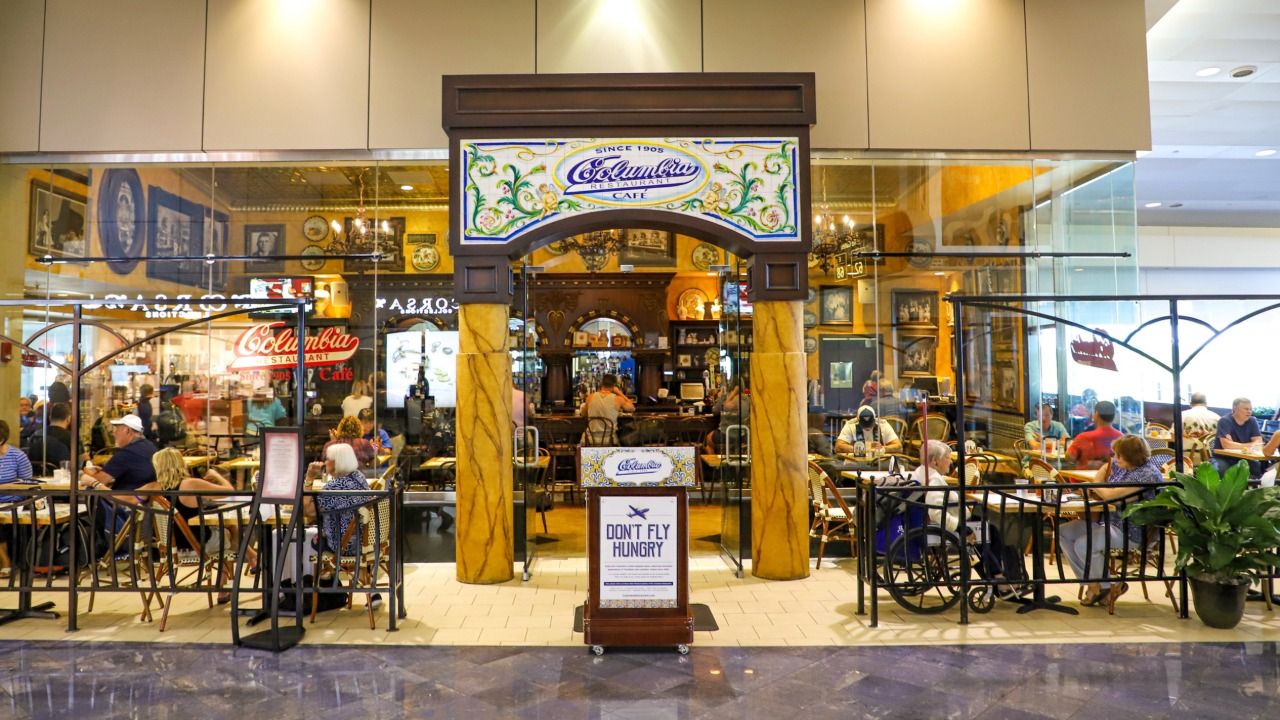
Tampa International Airport plans to rebid its concessions program as part of a broader overhaul tied to a new airside terminal, with the first solicitation expected by the end of 2026.
The reset comes as current concession contracts approach expiration between 2028 and 2031 and will reshape who operates one of the region’s largest airport retail and dining programs.
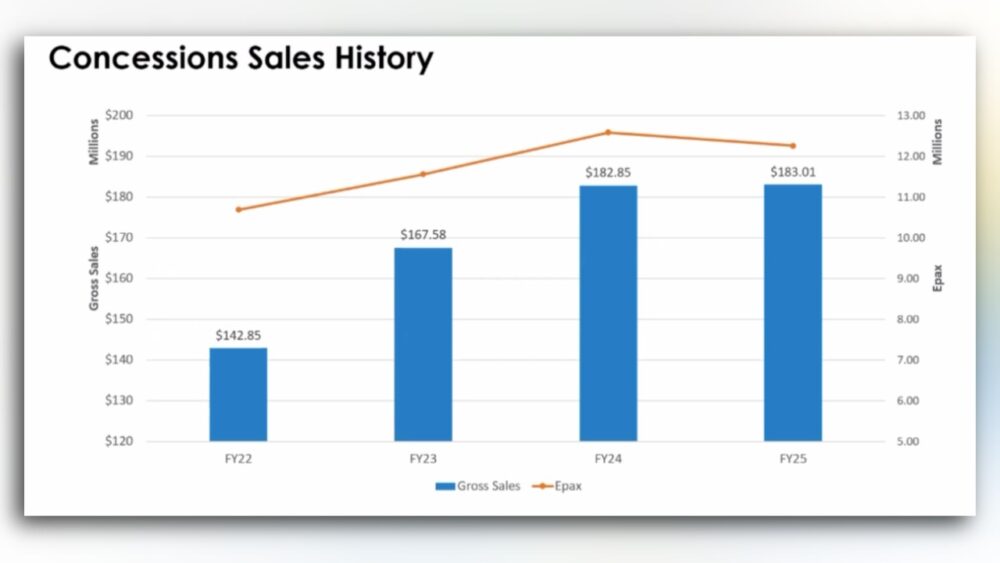
The stakes are material. The airport’s concessions generated $183 million in sales in fiscal 2025 across 66 locations totaling about 107,000 square feet. The rebid will determine which operators capture that revenue in the next contract cycle.
It will also open the program to new competition, putting incumbent operators at risk of losing space.
Shift toward dining and convenience
Airport officials are restructuring the program around how passengers use the terminal today.
Travelers are spending more time in the airport and are shifting their spending toward food, convenience and quick-service formats. Nearly 60% of passengers spend one to two hours in the terminal, with another 27% staying longer.
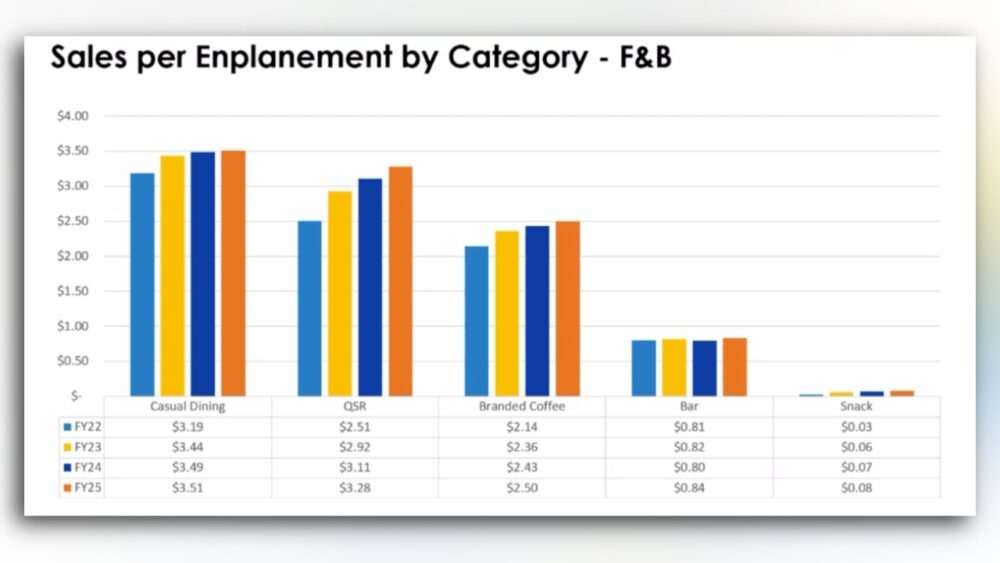
That behavior has already reshaped sales performance. Food and beverage categories continue to grow, while specialty retail has weakened.
“We started out with the passengers,” said Laurie Noyes, vice president of concessions and commercial parking. “What we found was that passengers are looking for more food and beverage. They’re looking for convenience. They’re looking for grab-and-go.”
The next phase of the program will expand dining and introduce formats such as gourmet markets that combine prepared food, packaged goods and convenience retail. The airport is also studying hybrid retail concepts that blend traditional categories.
New airside anchors overhaul
The overhaul is anchored by a new airside terminal scheduled to open in 2029, adding roughly 23,000 square feet of concession space along with lounges, retail and dining.
Airport officials view the expansion as an opportunity to rebalance the entire concessions footprint.
“With this new airside, it is a major part of our long-term strategy allowing us to modernize, rebalance concessions across the airport,” said Stacey Nance, director of concessions.
READ: TAMPA BAY BUSINESS NEWS
Tampa International handled just under 25 million passengers in fiscal 2025 and expects traffic to grow more than 4% in 2026. The airport ranks as the 27th busiest in the U.S. and generates more than $11 billion in regional economic impact.
Beyond the new terminal, the airport plans to reconfigure existing concourses by consolidating concessions in higher-traffic areas and shifting dining closer to gates, where passengers spend the most time. Retail will move closer to checkpoints and main circulation paths to capture impulse purchases.
Contracts and competition
The structure of the program will remain consolidated. The airport’s 66 units are currently grouped into 11 contracts, and future solicitations are expected to bundle multiple locations into single awards.
That model favors larger operators capable of managing multiple units across different terminals.
“Our selection process is not the typical leasing process,” Noyes said. “It will be a public procurement process.”
Operators will compete through a formal request-for-proposals process, with awards approved by the Hillsborough County Aviation Authority board.
Running a concession inside the airport also carries different economics than a street location. Operators must staff from the first flight of the day through the last and navigate security, logistics and centralized delivery systems, along with rent structures tied to minimum guarantees and percentage-of-sales agreements.
Small business participation in flux
The rebid comes as federal changes reshape how small and disadvantaged businesses participate in airport concessions.
“The program is in flux because of comprehensive changes to the certification process,” said Lalita McMillan, assistant general counsel overseeing business opportunity programs.
New participation goals have been paused nationwide while firms undergo recertification. Tampa International will begin its own review May 1, with a 60-day evaluation period.
Airport officials said they intend to maintain small business participation once federal requirements stabilize.
“Our goal is to continue to include opportunities for small businesses,” McMillan said.
The airport is finalizing merchandising plans and financial models ahead of the release of its leasing strategy.
The first request for proposals is expected by year-end, marking the start of a multiyear reset of one of the airport’s largest revenue streams.
Stay Informed
Stay up to date on Tampa Bay business news, executive profiles and the companies shaping the region.