

Moez Limayem had spent years working in higher education when visits to colleges with his children placed him on the other side of the system, listening to campus presentations, calling administrative offices and sometimes being redirected from one department to another without finding the answers his family needed.
“I remember once, at one of the universities — I’m not going to mention the name — I was at a campus tour and I fell asleep. It was so boring because it was just talking heads. And I told my daughter, ‘It’s really interesting because I used to be the one who put people to sleep in these tours.’ Sometimes you’re in the system and you don’t see the flaws and the inefficiencies, but when you’re wearing a different hat, you see things,” Limayem said.
The institution Limayem now leads has approximately 50,000 students and 16,000 employees, with separate offices responsible for admissions, employment, research and the administrative work that accompanies years of university life. Limayem became president of the University of South Florida in February 2026 and brought those experiences into an examination of how the university serves people seeking an education, building careers within its departments or remaining connected long after graduation. John Townsend, a financial-services executive and USF alumnus, will become the university’s first chief experience officer on Nov. 30, taking responsibility for work across academic and administrative operations to improve how people navigate the institution.
Universities exist to educate students, advance knowledge and prepare people for lives and careers that extend far beyond campus, yet fulfilling those responsibilities also requires an institution capable of helping people through the many ordinary procedures that accompany them. Those responsibilities fall to different departments, but the people seeking assistance encounter them as parts of one university.
USF’s vision through 2035 calls for the university to develop practices that other institutions can study rather than rely entirely on approaches established elsewhere. Limayem’s business background has drawn his attention to organizations that devote considerable resources to the ways people receive services, particularly Disney’s guest-service practices and the work major health care providers undertake to improve patients’ experiences.
“To be a model, you have to be innovative. You have to be creative. You have to set audacious goals. You have to rethink the way we do business. And as part of that vision for the future, we want our students, faculty, staff, alums and donors, among others, to have the best possible experience in higher education,” Limayem said.
An offer of admission begins another process: students must pay an enrollment deposit, activate university accounts, verify residency, register for orientation and apply for financial aid and scholarships before their first semester begins. Medical information must also be submitted, and those planning to live on campus have a separate housing application to complete, with instructions and deadlines administered by different university offices and some requirements dependent on the completion of earlier steps.
Students must then accept financial aid, register for classes and obtain identification cards, sometimes waiting for information or approval from one department before another can complete its work. The university’s requirements become part of a family’s preparations for college, alongside decisions about where the student will live, how the move will be organized and what assistance will be needed before classes start.
“I think it goes beyond that student coming in, especially at the undergraduate level. It goes back to their family. As a father of three who have gone through the college gamut, you’re riding along with that student, helping them make decisions in many cases. It goes beyond the nuts and bolts we see on the surface. It begins that emotional connection with the university that lasts a lifetime,” Townsend said.
Limayem heard questions about those procedures during conversations with thousands of employees, graduates and community partners, including how new employees begin their jobs, how faculty members submit grants and how outside organizations find someone authorized to help them. The chief experience officer’s work extends across USF’s campuses in Tampa, St. Petersburg and Sarasota-Manatee, as well as USF Health, connecting the departments responsible for those services while leaving their academic and administrative decisions under existing authority.
He moved to Tampa Bay in 1994 and spent much of his career in financial services, holding executive positions at T. Rowe Price, FuturePlan and Inspira Financial that involved customer service, business operations and technology. His own education brought him to USF’s Muma College of Business, where he earned a Doctor of Business Administration degree, and his subsequent roles included teaching as an adjunct professor, chairing the college’s Tampa Executive Advisory Council and returning to campus to recruit graduates for employment.
“I’ve been a student, onboarding. I’ve been an adjunct professor, onboarding. I’m now a full-time administration person, onboarding. I have been a heavy consumer of USF talent. I’ve tried to navigate ways into the university from the outside in. While it’s been good, there are certainly points where I feel like I don’t know where to go, how to get there,” Townsend said.
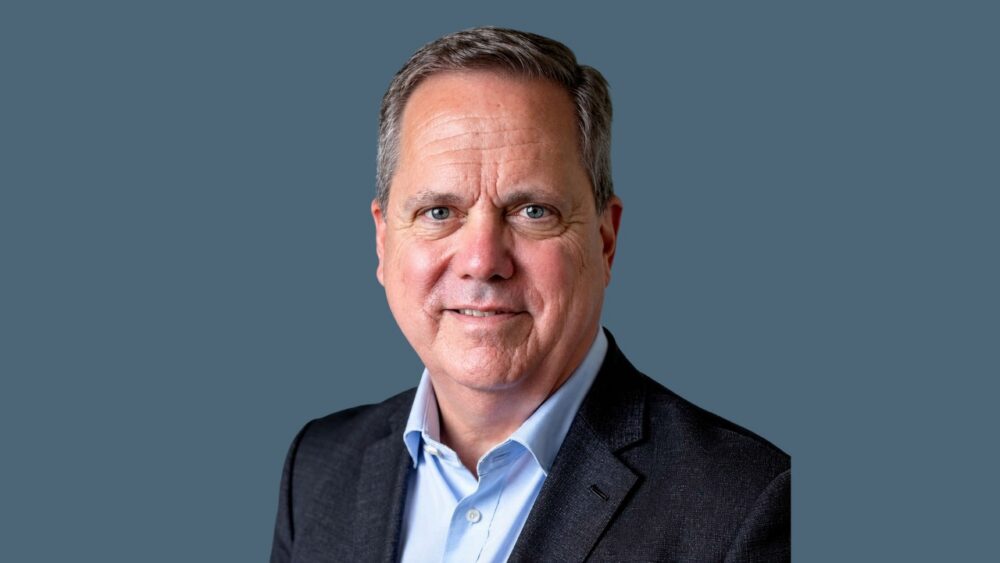
His doctoral studies at USF introduced him to systems thinking, an approach that follows work across an organization and examines how decisions in one department affect people and processes elsewhere. The concept had a practical connection to his career in financial services, where a customer might receive assistance from one employee while depending on many others who maintain records, operate technology, process information and complete the work necessary for the service to function.
“I’ve also been in back-office roles where the work we do off camera and behind the stage has a direct implication for outcomes, for people being happy and satisfied, and for growing your business. I see that opportunity here within the university,” Townsend said.
The breadth of USF’s new position distinguished it from the university jobs Townsend researched after seeing the opening. Positions concerned with the student experience already existed in higher education, but USF’s proposed responsibilities reached across academic programs, administrative departments, employment, alumni relations and organizations working with the university.
“When the job was first posted, I was like, well, that’s interesting. I looked into it, and there are other chief experience officers at universities, but when you read up on the scope and scale of their mission, it’s almost predominantly focused on student success, which is a great outcome. But with my background in business, and also from an academic perspective, I understand systems, and you cannot just treat one part of the entire system and expect outcomes, especially outcomes that last,” Townsend said.
The position reports to Brian Verkamp, USF’s senior vice president and chief administrative officer, and gives Townsend responsibility for assembling a team, working with employees across departments and developing ways to measure whether changes improve services. Lean, Six Sigma and human-centered design appear among the approaches identified in the university’s job description, along with performance measures and reporting systems that allow administrators to examine results.
“I won’t run their businesses. Each team, each college will run theirs. The administration will run their silos, their pieces. But my opportunity is to see and connect because the resources are here. So I hope it’ll be complementary,” Townsend said.
Its approach to guest experience and employee training has influenced Limayem and Townsend as they consider how a university-wide office can work alongside established departments, with Townsend drawing an additional connection from his own family. Two of his children work for Disney in Orlando and have completed the company’s employee introduction program, giving him a personal view of how workers are introduced to an organization’s culture and expectations.
“They love being part of [Disney]. They’re feeling the experience. They’re living the brand. We want to replicate that here and do something as Disney has done, something as distinct and noticeable around the world. We want that same kind of outcomes here at USF,” Townsend said.
Academic departments and colleges will continue deciding which faculty members receive tenure, reviewing their teaching, research and service under established standards. Admissions officers will still determine which applicants qualify for enrollment, and instructors will remain responsible for assigning grades, including failing grades to students who have sought assistance. Townsend can examine how applicants receive decisions, how faculty members navigate university procedures and how students obtain help, but the authority to make those academic judgments will remain with the people already responsible for them.
Student interns are part of Limayem’s proposed approach, following university instructions, contacting offices and recording the difficulties they encounter as mystery shoppers. An intern could begin with the information available to a prospective student, follow the directions for completing a requirement and document whether the office reached provides the answer needed, refers the inquiry elsewhere or leaves the person waiting for assistance. Other assignments could test whether departments give consistent instructions and whether completing one requirement actually allows someone to proceed to the next.
The records gathered through those assignments would give Townsend a way to compare university procedures as employees understand them with the steps people actually follow.
“I think this is a great opportunity for our students to use a lot of student interns to test different experiences. And that’s how everybody wins. They get that experiential learning. Because I really believe, with AI now, that customer experience will be more important than ever in business, corporate, nonprofit,” Limayem said.
USF has not announced specific performance targets, leaving the office to develop methods for determining whether administrative changes reduce delays, improve communication and help people complete the tasks that bring them to university offices. The work also involves technology, especially administrative activities such as processing employee records and completing routine tasks in human resources, where artificial intelligence offers ways to make existing procedures faster and more accurate.
“Have you ever been frustrated by a bot that never answers your questions and always refers you to something that you don’t need? That’s not what we’re talking about here. You might replace a person with a bot. No. Nothing should get in the way of a great, enjoyable, productive experience and interaction,” Limayem said.
His conversations with leaders at major banks have exposed him to questions about how organizations evaluate their use of the technology and what they receive from it, while the university’s work also includes preparing students and faculty to use emerging tools in their own professional and academic fields.
“I think we’re at a really interesting point in the AI hype cycle. Coming from corporate, it’s been in people’s budgets now for a couple of years, and everybody’s got their bumper stickers and their coffee mugs. They might be applying it, but … I’ve had firsthand interviews with some of the nation’s biggest banks, for example, where they’re now knee-deep into it and they’re not getting the data,” Townsend said.
USF’s planned on-campus football stadium will bring ticketing, entry, public safety, facilities and communications into the same game-day operation when it opens in 2027. Home games will move from Raymond James Stadium to campus, where spectators will encounter several university services during a single visit and the departments responsible for those activities will need to coordinate their work.
Townsend’s work in athletics will involve Rob Higgins, USF’s CEO of Athletics, whose responsibilities cover the athletic enterprise while the chief experience officer examines how people attend and participate in university events. Higgins joined USF in September 2025 after more than two decades leading the Tampa Bay Sports Commission, where he helped bring Super Bowls, a College Football Playoff national championship and other major sporting events to the region.

The two executive appointments are part of USF’s plans for the institution through 2035, with Limayem expecting additional leadership positions that depart from the titles and organizational structures traditionally associated with public universities. Their responsibilities differ, but the appointments place experienced executives over activities that require coordination across numerous departments, from university athletics to the administrative work affecting students, employees and the public.
“We have the very first CEO of Athletics. We have the very first chief experience officer. And expect more of these nontraditional positions to make us a true model because, going back to the vision, we have to be a model, a new-generation university,” Limayem said.
The student who once needed an enrollment deposit processed and an orientation scheduled may return to USF years after graduation as an employer recruiting students, a collaborator working with faculty researchers or a graduate contributing to an academic program.
Fundraising is one part of that relationship, but Limayem has questioned the practice of contacting graduates primarily when universities seek donations. Alumni who return to recruit students or collaborate on research remain involved in the institution’s work regardless of whether they make financial contributions, while donors who support scholarships and academic programs have continuing interests in how their gifts are administered, acknowledged and used.
“For our alums, most universities have no experience with the alums other than when we hear that they start making money, we go and ask them for money. Is that a good experience? Donors, how’s the donor experience? How do we announce a gift? How do we do the stewardship of that gift so that people can come back and invest more?” Limayem said.
Privately funded scholarships offer one way for donors to support students beyond the year in which a gift is made. The USF Foundation Scholarship Office administers nearly $13 million in scholarships annually, including awards supported by endowed gifts whose investment earnings can provide funding for successive generations of students.
“What I loved about this, and what intrigued me from the get-go, and I remember talking to my wife about it, was this chance to look at the entire USF system, all angles, all stakeholders, all outputs,” Townsend said. “I firmly believe that when you think systemically like that, you will have far greater chances of success because everybody wins together, as opposed to some winning and some getting left behind.”