
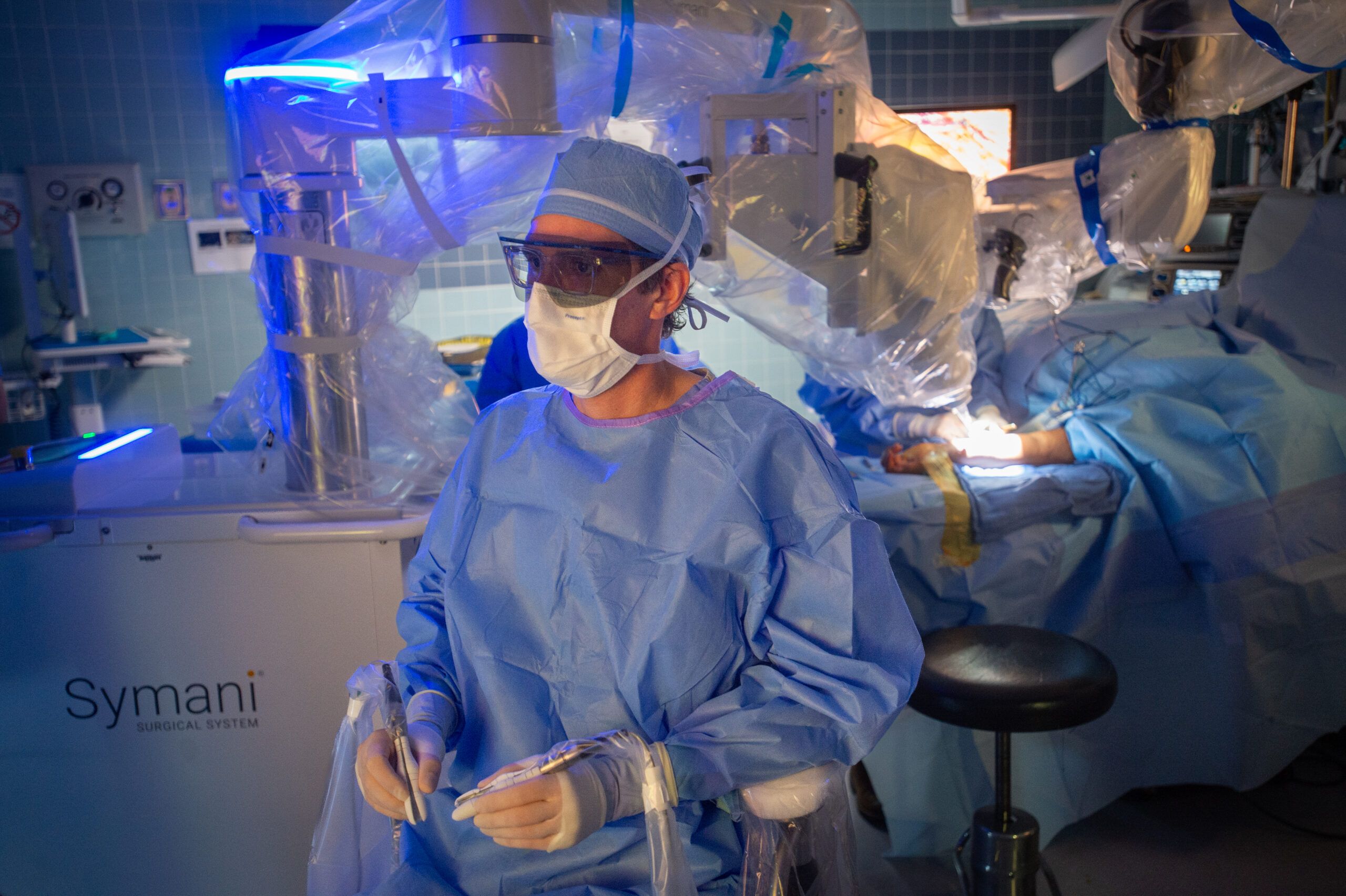
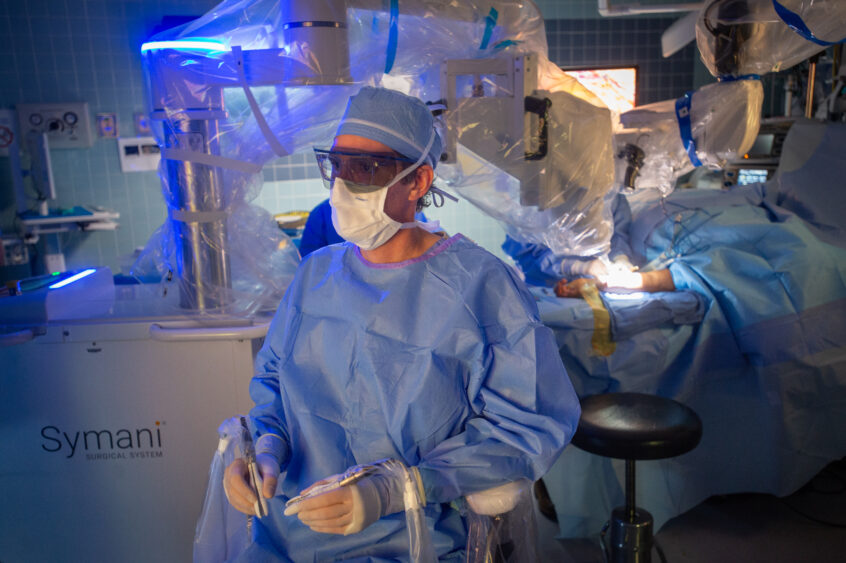
Tampa General Hospital became the first medical center to offer new robot-assisted lymphatic microsurgery in January 2025. Oncology patients with, or at risk for, lymphedema benefit from the technology, which can suture tiny vessels and nerves as small as 0.2 mm in diameter — as thin as a human hair.
“This Symani robotic microsurgical technology allows us to treat disease with an accuracy and precision that leads to better outcomes,” said Dr. Nicholas Panetta, chief of the TGH Plastic & Burn Surgery Institute and chair of the Department of Plastic Surgery at the USF Health Morsani College of Medicine. “We can now intervene with surgery earlier in a way that halts disease progress or leads to complete recovery.”
Lymphedema is a chronic condition characterized by the accumulation of lymphatic fluid, leading to swelling, discomfort and functional impairment in affected areas, typically the arms or legs. It occurs when the lymphatic system is unable to properly drain fluid, resulting in persistent swelling. Individuals with lymphedema may experience pain, restricted mobility, increased risk of infection and significant emotional distress.
Cancer-related lymphedema often arises following the removal of lymph nodes or radiation therapy, both of which can disrupt normal lymphatic drainage and lead to fluid accumulation. Patients who undergo a mastectomy or lumpectomy with axillary lymph node dissection for the treatment of breast cancer, as well as those receiving radiation therapy to the underarm area, are at higher risk of developing breast cancer-related lymphedema (BCRL).
Symptoms can include swelling, tightness or heaviness, restricted range of motion, thickening or redness of skin, discomfort or pain, and an increased risk of infection. The condition can manifest months or even years after treatment.
Expanding precision microsurgery to other specialties
The new robotic microsurgical technology allows physicians to treat lymphedema before it progresses, when the channels are delicate, using unprecedented precision to stitch vessels together. The surgery may help patients by reducing the impact of cancer-related lymphedema, leading to fewer additional future treatments.
Using the new robotic surgical system, surgeons can control the smallest wristed instruments ever created, which are paired with significantly improved video visualization of microscopic structures, to perform the lymphatic reconstructions. Utilizing 3D monitor technology and robotic instruments, surgeons are able to suture with a high degree of precision while reducing natural hand tremors.
“It allows us to really suture in a way that was not previously possible,” Panetta said. “The robot allows me to reduce my movement in space to 1/20th of what it would be otherwise.”
Breast cancer patients are currently the primary beneficiaries of this technology, but the potential applications are broad. About one-third of breast cancer patients require lymph node intervention, putting them at risk for BCRL. In addition to treating patients who have developed cancer-related lymphedema, plastic surgeons collaborate with surgical oncologists to reconstruct lymphatic channels during cancer surgery, reducing the patient’s risk of developing lymphedema altogether.
Patients undergoing pelvic lymph node surgery, including colorectal and gynecologic procedures, as well as head and neck surgeries, may also benefit from this approach. Tampa General is training physicians across multiple specialties to expand access to this advanced microsurgical technology.
“This technology has the ability to expand the pool of surgeons available to help patients in need,” Panetta said. “It’s exciting to be part of defining the future of care and expanding access to life-changing procedures.”
Read More Tampa Bay Business News
Explore the latest Tampa Bay business news, real estate deals, development projects, executive moves and company updates shaping the region.