
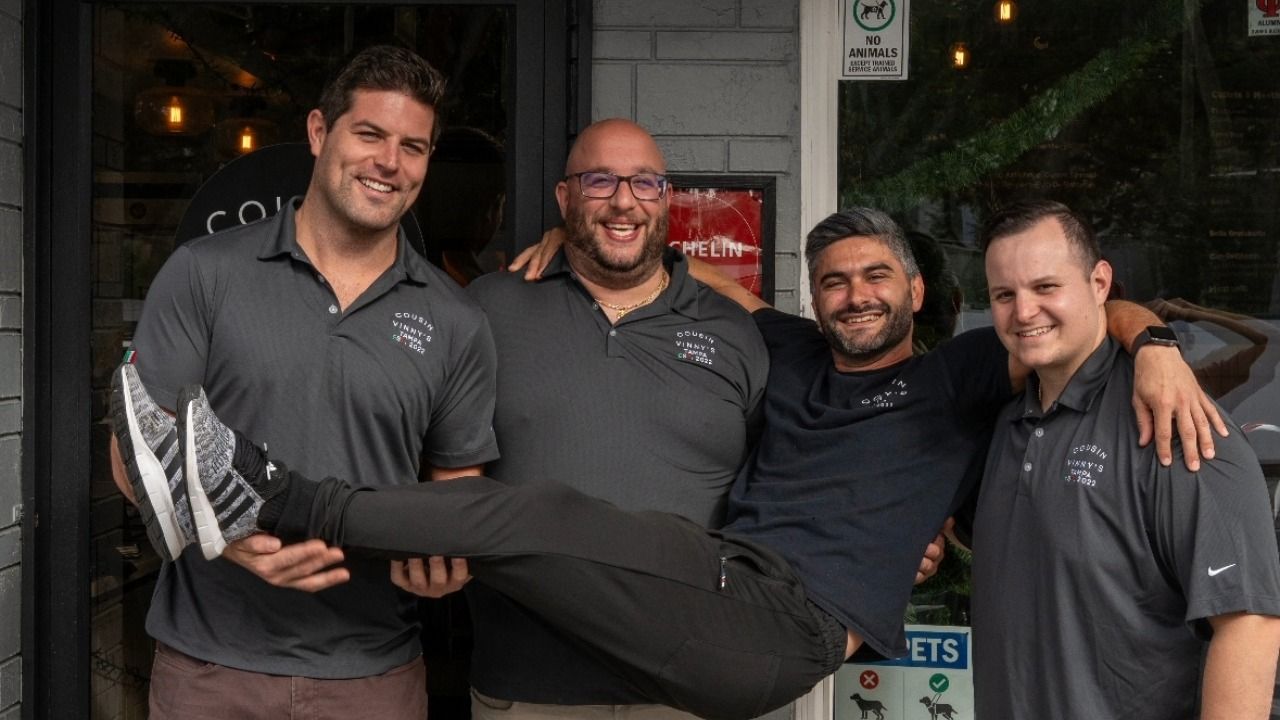
Within two years, Cousin Vinny’s earned a Michelin Guide recommendation, appeared on Guy Fieri’s “Diners, Drive-Ins and Dives” and began expanding across Tampa Bay. The road there was far messier than the success suggests.
Russell Leone was 13 when he began bussing tables in his cousins’ restaurants outside Syracuse. By 17, he was running locations for the family, a job he held until he was about 22.
A childhood friend and future business partner, Anthony DeSimone, eventually called from Florida and told him, “You can make more money down here. Just give it a shot.” Leone drove south, walked into Green Lemon one evening looking for work and left with a job before the night was over. The owner became a mentor, and a bartender later told Leone about an opening at one of the first Fresh Kitchen locations.
Leone took a second job making sauces. When a kitchen manager struggled, he told his supervisor, “I can run this kitchen.” He got the job, held it for about a year and was then sent to Sarasota as Fresh Kitchen’s managing partner. “That store blew it out of the water, made it extremely profitable,” Leone said. The company later transferred him to Boca Raton to do the same thing there.
At Fresh Kitchen, equipment placement, labor deployment and prep schedules determined whether a kitchen could keep pace through a lunch rush. “Production was huge,” Leone said. “Definitely a lot of similarities in the way that we operated.”
The work also taught him how to open restaurants into immediate demand. Fresh Kitchen already had a following, so each new location had to increase production, reorganize prep and adjust staffing as orders climbed. Asked later whether Cousin Vinny’s rapid rise felt familiar, Leone did not hesitate. “Oh my God. Yeah, absolutely,” he said.
Project managers, chefs and line cooks Leone met at Fresh Kitchen later joined him at Cousin Vinny’s. “I got project managers that have been with me,” Leone said. “I had people that were chefs for me and working the line at Fresh Kitchen that are probably working here for me right now.”
After turning around Sarasota and Boca Raton, Leone returned to Tampa burned out on restaurant operations. He moved onto DeSimone’s couch and stepped away from the industry for a series of sales jobs. The work paid well and gave him the flexibility to visit his family, but after several years, he still felt directionless. He “wasn’t really fulfilled,” he said, and “didn’t know what I wanted to do.”
Vincent Andriotti came to Tampa for college, studied finance at the University of Tampa and moved back to New York after graduation. He later entered fine dining, where he learned the techniques and standards of professional kitchens, but another fine-dining restaurant eventually stopped feeling like a new challenge.
Outside work, Andriotti spent months developing sandwiches, sauces and spreads in his apartment, gradually convincing himself the recipes could become a business. His finance background gave him another way to test the idea. He would later use what he had learned to prepare financial projections, demonstrate that the concept could work and attract investors.
By then, Leone and Andriotti were approaching the same decision from different places. Leone had walked away from restaurant operations without finding another line of work that fulfilled him. Andriotti had developed the food and the financial case but had not built a restaurant around either one.
Rolling the Dice
Russell Leone called Jacob Schmidt because he thought he wanted to get into real estate. Leone told him, “I want to be able to work on what I want. I want to travel the world and do my thing.”
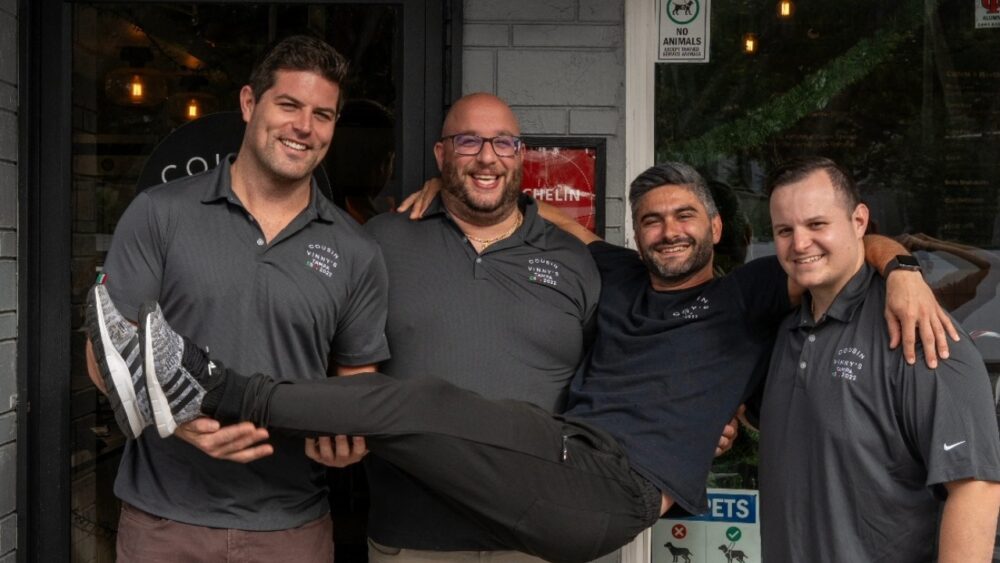
Schmidt already knew Vincent Andriotti and believed each man had the experience the other lacked. Andriotti could develop the food, while Leone knew how to organize a quick-service kitchen around heavy demand. “Nah, because you got to meet Vinny,” Schmidt told Leone. “You belong running a restaurant. That’s what you’ve done for your whole life.”
When they met for breakfast, Andriotti said he wanted to open a deli. Leone asked what was on the menu. “Just let me cook for you,” Andriotti said. “Come to my house tomorrow at 2.”
Leone arrived the following afternoon with DeSimone, the childhood friend whose couch he had slept on after returning to Tampa. DeSimone worked in software and professional services and remained in his day job as the restaurant took shape.
At Andriotti’s house, the two men began tasting sauces and dishes he had been developing. Andriotti placed a spoonful of sauce into Leone’s mouth without first saying what it was, then asked, “What’s that make you think of? What’s that make you feel like?”
Leone immediately thought of his grandmother. Andriotti wanted to know whether the sauce could produce a memory before Leone knew what he was eating.
Andriotti approached food with the same intensity he once brought to wrestling. He had competed at a high level and learned to repeat the same movements until they held up under pressure. Losing gave him something specific to correct. “If you beat me one time, then the absolute worst match in life is going to be the next time you have to see me,” he said.
He worked through recipes the same way, changing an ingredient or adjusting a technique until the result matched what he had in mind. “I was locked in my apartment for 16 months every single day making these recipes,” Andriotti said. “I did it with a smile.”
He considered recipe development his most distinctive skill. Friends could describe food they remembered from home without measurements or written instructions, and Andriotti would work backward from the description. When Leone told him about Utica Greens, a regional dish from central New York, Andriotti developed his own version. Leone considered it better than the versions he remembered eating as a child.
DeSimone came to see that Andriotti did not reserve that intensity for wrestling or recipe development. “How you do one thing is how you do everything,” DeSimone said. Andriotti applied the same attention to the ingredients he purchased, the food he served and the standards he expected other people to meet. He did not know another way to work.
Leone and DeSimone tried the rest of the food and were “super impressed,” DeSimone said. He walked outside, called Schmidt and asked what they should do. “Let’s roll the dice,” Schmidt said. “Let’s figure it out.”
Within roughly two weeks of the tasting, the group had found a ghost kitchen and begun putting money into the concept. The idea took shape during fall 2022, and the partners gained access to the kitchen around mid-December.
Andriotti controlled the food and used his finance training to prepare projections showing how the concept could work. Leone took responsibility for operations and production. DeSimone remained in his outside job while helping the group with decisions beyond the kitchen. Schmidt watched the numbers, supplied capital and worked behind the scenes to solve problems. The partners pooled their money, prepared the financial case and began bringing in the support needed to move forward.
A permanent restaurant would have required a lease, construction, equipment and more employees before the partners knew whether enough customers wanted the food. The ghost kitchen allowed them to begin with weekend pickup and delivery orders while limiting what they had to spend upfront.
Andriotti found the space inside a large catering kitchen in Seminole Heights. He walked into the building, obtained the landlord’s number and rented roughly 100 square feet. Their section became a narrow assembly line running from one wall to the other. They used the larger kitchen’s hot line to cook, carried the food back to their section, placed it on heaters and assembled orders there.
The partners spent the next several months cleaning, moving in equipment and organizing the line. They also filmed a promotional video and began building an audience online before starting weekend service in mid-March 2023.
They believed Tampa’s growing population of Northeastern transplants remained underserved even as the fast-casual market added poke bowls, build-your-own concepts and tacos. Andriotti wanted parents arriving from Long Island, New Jersey or upstate New York for graduation weekend to eat there, shake their hands and say, “This place could last up at home. You got it right.”
Explore More Tampa Bay Real Estate News
Stay up to date on commercial real estate deals, development projects, office, industrial, retail and multifamily news from across the Tampa Bay region.
The partners traveled to New York and visited roughly 20 delis in three days, eating enough that they later joked they had not brought enough Tums. They compared bread, meats, spreads, portions and presentation across established sandwich shops.
At one stop, they carried sandwiches to Washington Square Park. Leone thought the food was good, though messy. Andriotti focused on what he would change, saying he could improve both the spreads and the presentation. After returning to Tampa, he developed several variations for the partners to taste. Leone said the results exceeded what they had eaten in New York.
One influence was Al’ Antico Vinaio, the Florence sandwich shop known for filling schiacciata with meats, cheeses and spreads. Andriotti liked the idea of treating a sandwich as a complete recipe rather than a stack of familiar ingredients. Instead of serving a conventional prosciutto sandwich, for example, he added a roasted garlic and artichoke spread that brought creaminess and another layer of flavor without overwhelming the meat.
The partners brought in bread from Staten Island and planned to pull mozzarella fresh each day. Andriotti selected San Marzano tomatoes that he said could be traced to the field where they were grown beneath Mount Vesuvius. Because many products marketed as San Marzano tomatoes are grown elsewhere or labeled “San Marzano style,” he wanted to know who supplied each ingredient and where it came from rather than relying on the name printed on the package.
Once weekend service began, Andriotti would come into the kitchen on Saturday and find 20 to 30 orders already scheduled for pickup. “I never would’ve expected coming in on Saturday,” he said, “and there were 20 to 30 preorders.”
The demand gave the partners evidence that the concept could support a permanent restaurant, but the ghost-kitchen menu included more sandwiches than the small operation could efficiently produce. Beef, pork and chicken appeared across the menu, while some ingredients required separate preparation for a single item that might sell only a few times. The result was more labor, more waste and more opportunities for the kitchen to fall behind.
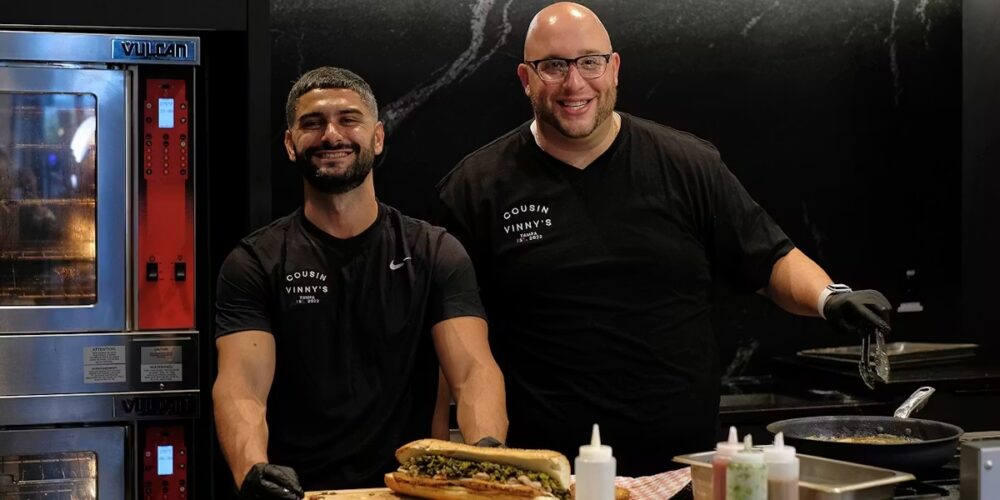
Andriotti began removing items and tracking which sandwiches sold, which ingredients went unused and which preparations slowed the line. Every addition could introduce another protein, sauce, spread or preparation step, so new items had to offer something different while fitting the production system and using ingredients that earned their place in the kitchen. He wanted the sandwich served on a slow afternoon to match the one a customer received at noon on Saturday.
The advance orders persuaded the partners that Cousin Vinny’s could support a storefront. Reaching one would cost far more and take much longer than they expected.
It Would Take 16 Months
An older maintenance worker told Leone that Blind Tiger Coffee Roasters was using the former Cass Street Deli building on Dale Mabry Highway as a commissary kitchen. The tip gave the partners a lead on a space that was neither listed for sale nor publicly marketed for lease but already contained much of the restaurant infrastructure they needed.
Schmidt called to ask whether the Palori family would sell the property and was told that the Paloris “do not sell,” so the partners began pursuing the lease still controlled by Blind Tiger.
DeSimone found the Blind Tiger owner on LinkedIn, sent him a message and arranged a meeting. Torres was willing to discuss transferring the lease but wanted to be paid for it, beginning what the partners later called a “tug of war” as the agreement approached expiration. DeSimone also established contact with landlord Michael Palori and began returning to the ghost kitchen with requests for particular sandwiches. “Vinny, I need a Louie and a vodka parm, the best way that you can make it,” he would say.
Andriotti asked who the food was for, but DeSimone answered with a stare, took the sandwiches and left. He delivered them to Palori while staying in contact about what would happen after Blind Tiger’s lease ended.
Andriotti later acknowledged that his own approach might have ended the conversation. “I’m your standard New York pitch man,” he said. “I’ll go to the point that I’m red in the face until you tell me to get off my soapbox.” DeSimone could speak with landlords and executives without pressing them in the same way, and Andriotti believed that difference helped them secure the building.
Before Blind Tiger’s lease expired, DeSimone had negotiated the partners’ agreement with Palori and prepared it for signature. They believed another operator could approach the landlord, compete for the building and drive up the rent once the space became publicly available. When the prior lease ended, they were ready to sign before anyone else entered the discussion.
Andriotti already knew the location from his college years, when he lived on Cypress Street and passed the building regularly without imagining that he would return roughly a decade later to open a restaurant there.
Because the former deli retained ventilation, plumbing and electrical service, the partners expected to complete the renovation within five to six months. Instead, architectural plans took more than five months, permitting stalled and inspections produced additional work as the project stretched to nearly 16 months. Every week, they unlocked the front door expecting visible progress and found the same trench floors and exposed walls.
Poor vendor choices and the partners’ lack of commercial construction experience also contributed to the delay. The real estate experience within the group had not prepared them to evaluate restaurant plans, ventilation requirements, construction codes or the sequence of inspections needed to open. During one meeting, an architect spread the plans across a table and asked whether they approved them. Leone stared at pages filled with dimensions, symbols and technical notes before answering, “It looks good to me.”
Inspectors requested changes, contractors explained unfamiliar requirements and each meeting produced another list of tasks. “You’d walk in every week,” Leone said, “and the place would look the same.”
Expecting the permanent restaurant to open quickly, the partners spent the ghost kitchen’s revenue on social media rather than paying themselves because they believed the attention would carry directly into the storefront. When the schedule slipped, they kept spending because stopping risked losing the audience they had already built, even though they still could not tell customers when the dining room would open. “We pumped all the money that we made back into social media,” Leone said. “We didn’t even take a paycheck until January when we started here.”
Andriotti and Leone eventually left their jobs and worked on the restaurant without regular income, while DeSimone and Schmidt remained in their outside careers and continued contributing time and money. Their wives also absorbed the financial consequences and helped with the work as the founders’ households supported an operation that had yet to return anything to them. “Not a single dollar” went into their pockets for months, DeSimone said.
Money came in through the ghost kitchen and went back out through food purchases, equipment, construction and promotion. Leone described the cycle as “getting our money, giving out money, giving out money and not knowing what was going to happen on the other side.” DeSimone said they had no clear line of sight to whether the restaurant would ever open because weeks passed without visible change and each approval could reveal another problem. “The inch by inch was during the entire construction process,” Leone said. “Every day we tried to make an inch forward. That inch turned into a mile.”
Egos and combative conversations surfaced during the early months because each founder wanted to leave his mark on the business. As the work continued, the responsibilities established at the ghost kitchen became more defined, and DeSimone took responsibility for landlords, vendors, documents and unresolved tasks that might otherwise slip past the group.
When Andriotti entered Leone’s area of responsibility, he learned to change his tone rather than tell him how to run operations. He could offer an opinion, but he acknowledged that the decision belonged to Leone. The founders continued crossing into one another’s areas because the problems rarely remained confined to one part of the business, but distinguishing between direction and advice allowed them to solve shared problems without treating every disagreement as a contest for control.
DeSimone remembered clocking out of his regular job in downtown Tampa and driving to the Seminole Heights commissary because Andriotti needed help preparing chicken cutlets for the weekend. “I don’t cook like that,” DeSimone said, but he still stood inside the warehouse breading chicken after a full day of work because the orders had already been placed and the cutlets had to be ready. “We just knew we had to do it.”
At an industry event, Andriotti listened to Chon Nguyen of Proper House Group, Jeff Gigante and Nick Reader speak, introduced himself to Nguyen and asked for his phone number. Nguyen responded when Andriotti called and walked him through questions in detail despite having no obligation to help. Gigante offered advice about evaluating locations, negotiating leases and approaching restaurant development, while Jason, whom the partners described as their facilities person, answered calls at almost any hour and came to the property when something broke or required attention.
Andriotti later described himself as “a baby in this space” and relied on operators who had already made the mistakes he was trying to avoid. Those operators did not treat Cousin Vinny’s as a threat because, Leone said, they understood that “there’s enough mouths to feed.”
When the partners ran out of money near the end of construction, their friend Phil paid for the flooring, allowing the build to continue when they could not cover another major expense themselves. Nearly 16 months after signing the lease, the fire department approved the building and cleared the final major obstacle to opening.
The partners no longer had to wait on drawings, permits, contractors or inspections. They had to turn the approved space into an operating restaurant. Everything began moving “a thousand miles an hour,” Leone said. The partners looked around and asked one another, “All right, what do we do now?” Andriotti answered, “Let’s start cooking.”
They ordered food, filled refrigerators, stocked shelves, tested equipment, organized stations, built prep lists and trained employees. Before the official opening, people were already walking through the front door to ask whether the restaurant was serving. The partners sometimes handed them food to try before telling them to return after the opening. Some did.
The first night of friends and family service brought local media, influencers, restaurant operators and others who had supported the business. During the second service, also intended for friends and family, roughly 60 people entered within five minutes, filling the ticket board while more customers continued arriving.
Andriotti was working expo when a cook told him he had to leave for another job, forcing him to abandon a full board, move to the line and take over a station that had not been prepared for him. He spent several minutes gathering bottles and resetting the workspace before he could begin cooking as tickets continued accumulating.
DeSimone began slicing lettuce. Leone took over preparation that had fallen behind. Their mothers worked inside the restaurant, Leone’s father swept the front, his sister helped elsewhere and their wives filled other jobs as the line continued through the building.
Within the first 15 minutes of opening-day service, Andriotti sliced his own hand on a mandoline while preparing eggplant. He lowered his voice and asked Leone to wrap it quickly because the kitchen could not absorb another interruption, then returned to work while tickets continued printing.
Out front, he called for “unrelenting hospitality,” directing employees to hand fried ravioli and water to customers waiting in line so they knew the restaurant had not forgotten them. In the kitchen, he gave different instructions. “Indomitable will,” he told the team. “Do not break. This is what we asked for.”
The Email
Russell Leone began shouting Andriotti’s name from outside the kitchen. Andriotti heard the urgency in his voice and assumed someone had been hurt. He ran out and found Leone holding his phone.
The email said Michelin was preparing its 2025 Florida guide and wanted to speak with Cousin Vinny’s. Andriotti assumed it was spam. He tapped the sender information, checked it again and saw the Michelin Guide address. “It was one of those moments that everything just stops,” he said.
Neither Andriotti nor the other partners knew Michelin inspectors had visited. They did not know who had come in, what had been ordered or when the meal had taken place. They knew only that someone had walked through the front door like any other customer.
One of Andriotti’s former University of Tampa finance professors happened to be eating in the dining room that afternoon. The two had recently reconnected after Andriotti showed her the pro forma income statements he had built to raise money for the restaurant. He carried Leone’s phone to her table and showed her the email.
The message confirmed Cousin Vinny’s would appear in the guide. Andriotti and his former professor stood in the dining room crying as he told her, “I was always listening. I applied what you taught, and then I did my thing back there.”
The recognition changed the restaurant almost immediately. Travelers began arriving with rolling suitcases because they had come directly from Tampa International Airport before checking into their hotels. They leaned their luggage against the wall, ordered sandwiches and explained that they had found Cousin Vinny’s in the Michelin Guide. Others planned entire trips around restaurants listed in the guide and added Cousin Vinny’s to the itinerary.
The recommendation also raised the standard customers expected every time they walked through the door. The opening crowds had already pushed the restaurant to its limits, but Michelin accelerated the pace. Sales climbed, the dining room stayed full and, as Andriotti put it, “it very quickly went from a demand to just expectation.”
The partners still do not know who the inspector was. They know only that someone walked through the front door unnoticed, ordered lunch and left without saying a word. That uncertainty reinforced a philosophy Andriotti had already been preaching to the staff. If any customer could be the Michelin inspector, then every customer deserved the same experience. The sandwich leaving the kitchen on a quiet Tuesday afternoon had to be prepared with the same care as one served during a Saturday lunch rush.
As the line stretches toward the door, Andriotti still reminds the staff of the principle that carried Cousin Vinny’s through its opening week and continues to define it after Michelin: unrelenting hospitality.