
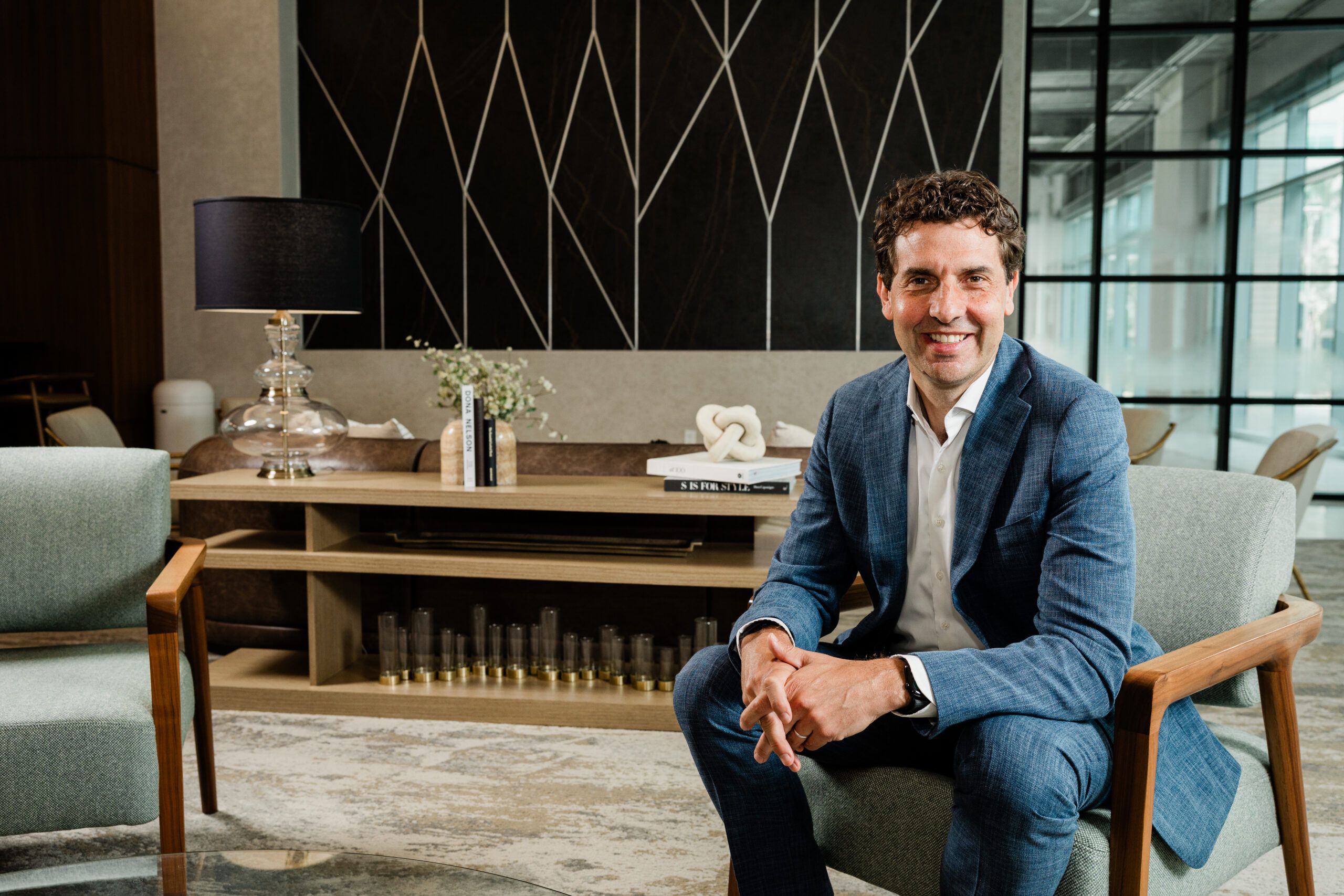
For Nick Haines, CEO of Bromley Companies, real estate development means recognizing when conditions change — then deciding what comes next.
Haines doesn’t dwell on abandoned plans. Ask him about Tampa Bay One, the ballpark or the millions spent on drawings, engineering and permits, and he moves on.
One of Bromley’s most consequential projects came down to a matter of minutes. Four nights before Super Bowl LV, NFL referees were already arriving at Midtown Tampa — and the new Aloft and Element still could not legally let them upstairs. Inside the seven-story hotel, the city fire inspector was finishing the last signoff Bromley needed to open.
“We opened the hotel about ten minutes before our guests moved in for the Super Bowl,” Haines told me. “People are checking in at 6:00, the fire guy’s here at 5:50 doing the final signoff.”
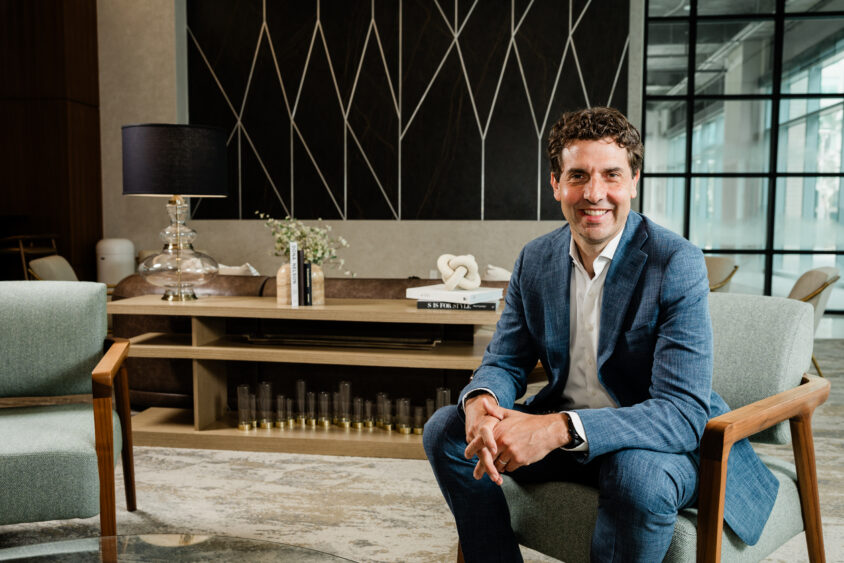
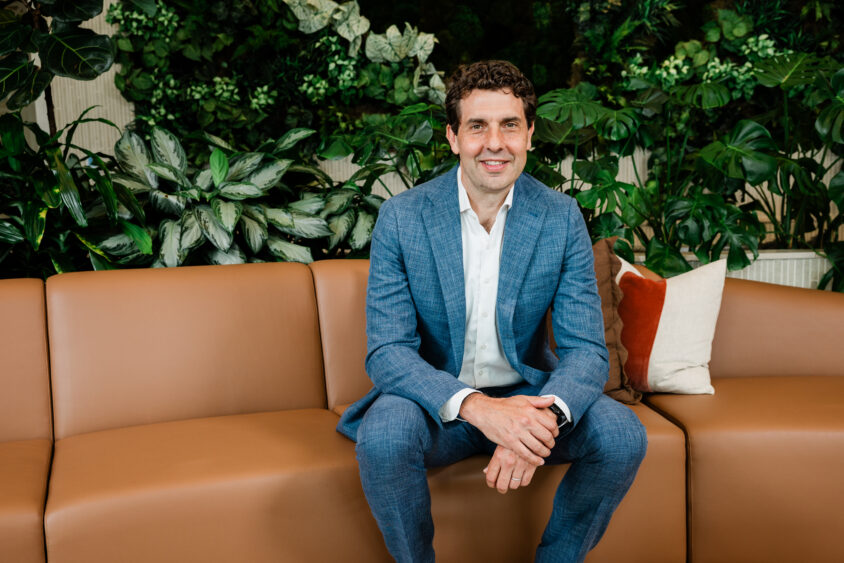
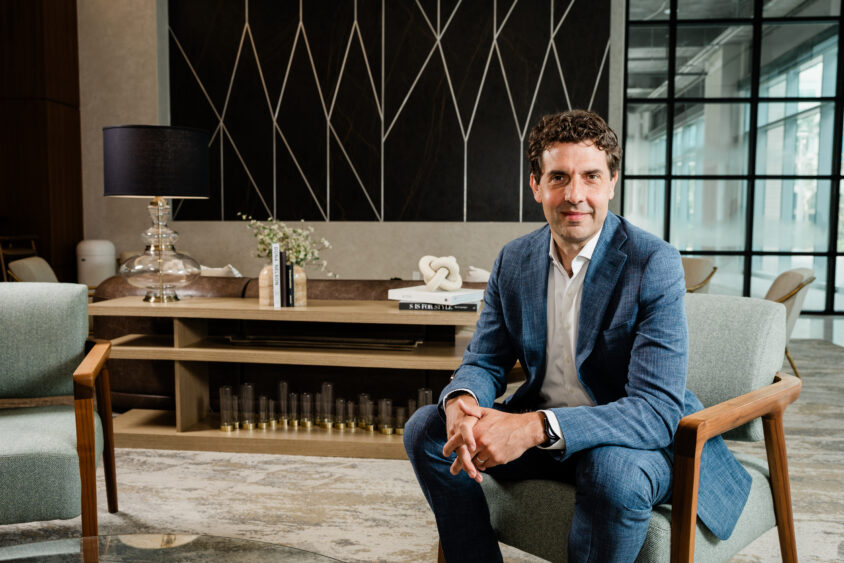
The hotel was built on land Bromley had assembled over roughly 25 years around its first Tampa property, the five-story Progressive Building near Dale Mabry Highway and I-275.
More than 50 years after Bill left Tishman Realty in 1972 and borrowed the company name from a Vermont ski mountain, people still mistake Bromley for the family name. “There’s a security guy today who still calls me Mr. Bromley,” Nick said. “I try to correct him.”
The World War II books his mother brought home became Haines’ first doorway into history. “My mother worked at Time-Life and Fortune, and she would bring home all these great books about Churchill, D-Day and the war,” he said. “I was already playing with toy soldiers, and from there I became really interested in the history behind it. It was kind of a natural progression.”
On rainy Saturdays, Nick sometimes followed Bill to a mostly vacant loft building on Lower Fifth Avenue, where his father was trying to lease empty space. The same stretch would remain in Bromley’s portfolio decades later, including a 1909 loft gutted and expanded behind its historic façade for tenants such as Microsoft and eBay. For Nick, though, the vacant floors offered a different kind of opportunity.
“He was sweating bullets trying to find a tenant,” Haines said. “What did I do? I’d go there on a rainy Saturday and roller-skate around the vacant floors. As a kid, you’re like, ‘Oh, this is so fun. I’m just in a roller rink. It’s raining outside.’ Meanwhile, he’s thinking, ‘I haven’t been able to lease the space.’”
Haines wanted out of New York and the Northeast for college, and Duke put enough distance between him and both. He arrived after writing his college essay about Tour de France winner Greg LeMond, a childhood hero from his days biking through upstate New York, but once he got to Duke, basketball took over.
“I went to Duke for possibly the best four years you could go,” Haines said. “Grant Hill was my classmate. My freshman year, we upset undefeated UNLV. My sophomore year was the Christian Laettner shot against Kentucky and another national championship. Then my senior year, we lost to Arkansas in the final.”
One memory still makes him laugh: “When I was graduating, I lined up to get my cap and gown, and my mom ran right by me and went straight to Grant Hill to take his picture,” he said. “Those years were a ton of fun, and basketball certainly shaped the social experience at Duke.”
After four years at Duke spent reconstructing the transatlantic slave trade from old ship logs and primary records, Haines knew considerably more about archival research than balance sheets. Brown Brothers Harriman changed that, followed by an eight-person Merrill Lynch private-equity group investing the firm’s money in smaller companies across emerging markets.
“It was a really small group, there were maybe eight of us at the time,” Haines said. “It was one of these all-hands-on-deck jobs, and, as a 25-year-old, I had a ton of responsibility. They had me trying to network to find new business, which is kind of rare for a 25-year-old. And it really a great adventure.”
The work carried Haines through the Philippines, Turkey, Brazil and China as markets long difficult for Western investors opened to global capital. He learned to understand companies through numbers, investment thesis and transactions, but two years on the investor’s side exposed the blind spot: after the money changed hands, somebody still had customers to win, employees to manage and a company to run.
“One of the things about private equity is there’s something kind of very intangible about it, shuffling financial assets,” Haines said. “I really was intrigued about actually working at a company that made something or did something, something that’s a little bit more tangible.”
Merrill wanted him to stay, but Haines wanted to learn what happened after the deal. Stanford, which had rejected his undergraduate application, finally took him in 1998 just as Silicon Valley’s first Internet boom was reshaping campus. Classmates bounced among startups, internships and ventures while established industries watched the Internet upend their businesses.
“My first year, there was a little job fair in the cafeteria for summer internships, and these two guys were sitting at a table trying to find interns,” Haines said. “It was Larry Page and Sergey Brin, the founders of Google. I wish I had. But even in my graduate class, there were a ton of search engines—Yahoo, Excite, Lycos. I kind of thought search engines were already done. We had one woman in our class who went to work at Google, so she had the last laugh on all of us. She was employee number 80 or something like that.”
By graduation, stock options from Haines’ E-Loan internship had fallen from roughly $50,000 after the online mortgage company went public to about $2,000. His attention had already shifted to wireless, and he joined Mobile Logic, a roughly 40-person New York software company trying to squeeze corporate applications onto Palm devices and early BlackBerrys — some still needing bulky add-on sleds just to reach a network.
In his late-20s, unmarried and without children, Haines mostly enjoyed the chaos. Three or four reorganizations moved him from partnerships to marketing to sales, each giving him another piece of the answer to a larger question: What did a well-run company actually look like? If the thing blew up, another job would come along.
Then Mobile Logic’s New York operation began shrinking, eventually going from roughly 100 employees to just one. Haines was offered the opportunity to move to Boston, but he chose to stay in Manhattan. He was suddenly without a job, but looking back, the seemingly varied turns in his career had each made sense at the time and were beginning to point him toward what came next.
“There was definitely no master plan,” Haines said. “I started to go where my interests took me. I never felt like I was destined to be one particular thing. I was experiencing different opportunities, trying to get the most out of them and enjoy them, while also building skills and finding interesting mentors along the way.”
Haines expected another private-equity job, but his Manhattan apartment was a poor place to spend the day making calls and taking meetings, so he borrowed an empty office at Bromley while he searched. A few doors away sat work tied to the company’s Tampa foothold: a used-pallet business near the Florida State Fairgrounds, where Dell and Brian Groene repaired damaged wooden pallets and Bill supplied the capital. Tampa itself was familiar to Nick from childhood spring breaks fishing around St. Pete Beach, where his maternal grandparents wintered.
The pallet operation grew to roughly 40 or 50 locations across the Southeast, repairing and recycling pallets for customers including Walmart and Tropicana. When the pallet company came up for sale, Nick was already sitting a few doors away with exactly the M&A and financial-analysis experience Bill needed. He helped with the deal, drifted into real-estate meetings and within about three months had mostly stopped looking elsewhere.
Inside Bromley’s 12- or 13-person shop, where some employees had worked beside Bill for 20 or 30 years, a Stanford MBA and Merrill Lynch pedigree bought Nick only so much. Development demanded everything at once: finance, sales, persuasion, construction, design, creativity and execution.
“There’s a whole other language you have to learn in real estate,” Haines said. “Take a lease. Your average lease might have 50 clauses, and you have to understand what each one means. There was so much to learn that, at first, it almost felt like a foreign language.”
So Haines focused on listening and learning. He worked closely with his father and longtime members of Bromley’s team, including the CFO and director of construction, absorbing what he could about everything from financing and leasing to design, architecture and construction.
“I just tried to be a sponge,” he said. “I wanted to be in the room and learn. I certainly wasn’t coming in as a know-it-all because I knew nothing, and I was self-aware enough to know that.”
After learning leases, financing, design and construction from Bromley’s longtime staff, Haines had a different view of credentials. “Fancy degrees only mean so much,” he said. “You still have to learn the business.”
Bill — the son of an upstate New York farmer who had entered real estate without a family company behind him — kept passing the five-story Progressive Building near Dale Mabry and I-275, its time-and-temperature sign perched on top. An insurance company liquidation put it within reach, though $10-a-square-foot rents left him wanting something closer to $12.
Tampa banks wouldn’t give the unfamiliar New York buyer the roughly $2 million he needed to close, so Bill called Peter D’Arcy, a banker he knew back home. D’Arcy flew down and made the loan. Decades later, D’Arcy’s longtime colleague Gino Martucci would be at Valley Bank when it helped finance Midtown on the same property. Bill later joked that December probably helped — convincing a New York banker to inspect Florida real estate in winter was not his hardest sales job.
“He had a 20,000-square-foot tenant ready to take half the building, and he thought the deal was done,” Haines said. “He brought the tenant to the top floor, and the guy said, ‘You know what? I just don’t want to be here.’ My father said, ‘Why? It’s a great location. Your employees can get here easily, you’ve got great visibility and your sign would be on top of the building.’ The guy said, ‘I just don’t want to look out every day at all these little industrial buildings.’
“My father came home deflated that night and started buying some of those properties. He wasn’t trying to build Midtown. He was trying to lease his office building and create some additional parking.”
By 1999, Bromley owned 23 properties around the Progressive Building — roughly 16 acres assembled one reluctant seller and odd-shaped parcel at a time. What started as a search for extra parking had become enough land to draw streets, buildings and a public square.
West Shore in 1999 gave Bromley every reason to think corporate. Offices and hotels dominated the district; residential barely registered. So Bromley drew for the market in front of it: office towers, a Westin, stores and a circular public square with a fountain that could disappear when the space became an amphitheater.
“We had fully permitted construction drawings, and we spent several million dollars doing this, but we never could quite find a big enough office tenant to kick it off.”
Bank of America showed interest, but Bromley hit a Catch-22: lenders wanted office commitments before financing construction, while tenants wanted a building before committing. Drawings, permits and renderings could only take it so far.
Even while Tampa Bay One stalled, simpler opportunities were showing up at the property. “We believed in the site so much,” Haines said. “Whole Foods had wanted to relocate out of Walters Crossing for a number of years, but they were looking for a basic store on their own site. Costco was desperate for the site, too.”
Those opportunities offered Bromley a simpler path forward, even as several million dollars already invested in drawings, engineering and permits for the original plan remained unused.
Then came the 2008 crash. Falling property values created an opportunity for Bromley to acquire surrounding parcels at prices that had seemed out of reach just a few years earlier. Development had slowed, but Bill and Nick kept buying.
The Tampa Bay Rays’ ballpark search opened another possibility. Bill — by then a Palm Bank founding shareholder and director, with Bromley increasingly rooted in Tampa — worked with Nick, team executives and consultant Dave LeFevre on a stadium facing the skyline, surrounded by hotels, retail and other development. But it required hundreds of millions in public financing, and as real estate recovered, waiting became harder to justify.
“As the real estate market started improving, I thought, ‘We have something here we can do that doesn’t require hundreds of millions of dollars of public bonding,’” Haines said.
More than two dozen purchases — auto shops, a lumber yard and other parcels — eventually put 22 contiguous acres under Bromley’s control, enough to rethink the streets, utilities and site as a whole.
Controlling 22 contiguous acres gave Bromley the freedom to rethink the site, but only if it let go of the plans already attached to it. “For so many years, it was, ‘We invested in this project, we invested in these plans, we invested in the architecture, we have permits,’” Haines said. “We needed to get that out of our heads, clear away every plan we had put together and start asking, ‘What could this site be?’”
Starting over meant abandoning several million dollars in drawings, engineering and permits. Haines traveled to Santana Row in San Jose, Mosaic outside Washington and Avalon near Atlanta, watching how people moved, how uses worked together and what made them stay.
“The thing I really got out of studying these projects was how each use made the others more valuable,” Haines said. “If you’re an office tenant, it’s not just that the location is easy to get to. Your guests can stay at the hotel and walk across. You have Whole Foods, restaurants for lunch and corporate apartments nearby. Each piece makes the others more useful and more interesting.”
Four thousand cars could have swallowed Midtown whole, so Bromley spent roughly 18 months studying when office workers, residents, shoppers and diners needed spaces — not simply how many. One stall could serve an employee by day, a shopper later and a restaurant customer at night, letting Bromley hide garages behind buildings, put apartments above stores and close streets for events without turning 22 acres into asphalt with architecture sprinkled around the edges.
Prospective tenants did not always see what Haines saw in the 22 acres between Tampa’s established districts. “South Tampa was considered south of Kennedy, so this was a little bit like no man’s land,” Haines said. Bill’s test was simple: explain the location in three or four words. Midtown became a 22-acre bull’s-eye roughly three miles from downtown, between West Shore, the airport and a region of roughly 3 million people. Once Bromley stopped treating it like another Westshore office development, that midpoint became the pitch: employers could reach workers, retailers could reach customers and the geography did some of the selling. Whole Foods committed to a Midtown store nearly twice the size of its Walters Crossing location, and REI followed with its first Tampa Bay store.
To move apartments, offices, retail and a hotel forward at once, Bromley spread Midtown across several banks, equity investors, law firms, advisers and construction companies rather than handing the build to a single general contractor.
“We knew we could hire one general contractor to do the whole thing, but that felt too risky,” Haines said. “You might get the A-team on the first project, the B-team on the second and the C-team on the third. We wanted the A-team from several contractors. It spread the work around and diversified the risk.”
By early 2020, five massive crawler cranes were moving above 10 buildings and Bromley had hundreds of millions committed to the ground. Midtown One topped out March 15; the hotel followed 11 days later. COVID arrived between them — emptying offices, restaurants and hotels while Bromley built a district around all three.
Bromley had spent years designing for proximity. Halfway through construction, proximity became dangerous. The cranes kept moving.
“COVID happened maybe halfway through construction, and that was another moment when you kind of take a breath and think, ‘Oh my God, we waited 20 years to build this,’” Haines said.
Eleven months later, the hotel opened with a fire inspector still finishing the final signoff as Super Bowl guests arrived downstairs. Then Midtown started filling in: REI in March, residents in April, Shake Shack in June and Whole Foods in July, putting actual people where Bromley had spent years looking at renderings and projections.
“In the beginning, you go to other markets and you think it’s going to happen,” Haines said. “But you never really know until you know, and you’ve made hundreds of millions of dollars of investments in a place.”
Once Haines could stop studying Santana Row, Mosaic and Avalon and start studying Midtown itself, its gaps became clearer: residents, hotel guests and office workers wanted better breakfast options, while yoga drew 70 or 80 people to the green. CorePower Yoga replaced Casper, and Pura Vida Miami replaced Joffrey’s with an all-day café.
“You open things and not everything is perfect, and you start asking, ‘What does this place really need?’” Haines said. “I really want the feedback. Maybe the parking signs need to be better, maybe we need a breakfast place, maybe we need more fitness. You start listening to the people who live there and work there.”
Office became an even bigger test. Bromley delivered roughly 650,000 square feet just as remote work was changing where companies wanted employees to work. Haines says the buildings still reached full occupancy at some of Tampa’s highest rents.
Raising money for Midtown, Haines brought New York bankers to Tampa who still heard Florida and thought Miami. He drove them through neighborhoods, restaurants and new development — sometimes stopping at Oxford Exchange — to show what projections could not. By then, the family that once needed a New York banker to finance its first Tampa building had spent years building relationships here.
“Ten years ago, I could go into a meeting with New York banks and start talking about Tampa, and it was all Miami: ‘We only do Miami. I do the East Coast of Florida,’” Haines said. “Five years ago, when I started Midtown, it completely changed. People would say, ‘Nick, aren’t you working on a project in Tampa?’ Capital wants to flow to Tampa now. Banks want to be in Tampa. Equity wants to be in Tampa.”
That growth also changed the competitive landscape among Tampa’s major mixed-use districts. Haines believes that in 2001, the market might not have been large enough to support several projects of this scale at the same time. Today, he sees a much deeper base of residents, employers and demand.
“If you asked me in 2001, if we were starting and Water Street and Armature were starting at the same time, I think it would have been more of a zero-sum game,” Haines said. “There just wasn’t enough demand. But Midtown and Water Street were completed basically at the same time, and they’ve both been successful. The office space is largely leased, the retail is doing well, and Tampa is now big enough and growing fast enough that multiple projects can succeed.”
“Candidly, that’s why we’re embarking on the Stetson project,” Haines said. “I believe in the market’s overall growth. If you can deliver great, compelling spaces, people will come to them and want to experience them.”
After seeing Midtown, Stetson approached Bromley about its one-story Tampa Law Center, left with excess space after the Second District Court of Appeal moved out. Roughly 200,000 vehicles pass the downtown site each day, according to Haines, yet the building still manages to disappear.
Bromley plans to build upward: a more visible law center, modern classrooms, continuing-education space and a hotel where lawyers, speakers and guests could stay and walk to class. Housing and other development on university land could help pay for the building while adding money to Stetson’s endowment.
Unlike the Dale Mabry assemblage Bromley spent decades creating, Stetson already has Water Works Park across the street, Armature Works and Tampa Heights nearby, and the Riverwalk delivering people along the water.
“It’s almost like the hole in the doughnut, because Armature exists, Tampa Heights exists, the Riverwalk exists, Water Works exists,” Haines said. “We don’t have to recreate Armature. Water Works Park is right across the street, right on the river. It’s the missing parcel. To us, it’s a north-south connection between the Heights and downtown, and east-west, it’s the gateway to downtown.”
Student housing has meanwhile returned to Bromley’s growth plans. The company still owns Bromley Hall at the University of Illinois, the property Bill bought after leaving Tishman in 1974 and one of the projects that first pulled him into real estate, and is adding roughly 430 beds there while Nick looks for opportunities to expand the business in Tampa.
Midtown’s plumbers and electricians kept telling Haines their cheap warehouses — places to park trucks, store tools and keep materials — were disappearing across Florida. Bromley began buying them: smaller industrial buildings with loading areas, roll-up doors and plenty of pavement, not giant e-commerce boxes. Working through the tenants at one roughly 200,000-square-foot Clearwater property, Haines found a business his father would have recognized immediately.
“Ironically,” Haines smiled, “it’s got a pallet company.”
Bill still works fulltime at Bromley, but the decisions Nick once watched him make increasingly belong to Nick.
“There’s a whole new relationship that gets unlocked when you go from a father-son relationship to a professional relationship,” Haines said. “You see your parent in a different way. You see the difficult decisions and the risky decisions you have to make. It can be lonely as the CEO or owner of a company. You’re making a bet on a project, and there are financial dimensions to it, but there are human dimensions with your employees, too.”
Raising Lucas and Dean with his wife, Jesse, gave Haines another measure of Bill. “He was very involved. He went to every basketball game,” Haines said. “He did a much better job than I do sometimes of going home and leaving work behind. Sometimes I come home for dinner with my wife and kids, I’m hot on something, and I just can’t not talk about it.”
“I’m very quantitatively focused, so I’m thinking about the pro forma right off the bat: ‘How are we going to finance it? How are we going to build it?’” Haines said. “He’s got the vision of, ‘I know this is going to work. I’m not quite sure how it’s going to work, but I know it’s going to work.’ He has that developer’s-developer mentality. I’ve tried to take some of that from him and shut off my quantitative side sometimes.”
Without Nick’s transition into Bromley, Haines said, his father eventually would have faced a very different decision.
“You sell off the projects or the existing assets, or you manage them, reduce the staff and eventually wind down the business,” Haines said. “For him, having continuity for the company, this thing he built, this brand he built and this set of experiences he built, and being able to transition it has meant a lot.”
As the longtime CFO, construction director and other veterans who had taught Nick the business began retiring, Haines rebuilt Bromley with people from larger real estate companies who understood institutional capital, complex financing and large-scale construction, while trying to preserve the entrepreneurial culture that had defined the firm.
Lucas, 16, and Dean, 13, are growing up with something Nick never had at their age: a family business where their father and grandfather still work. Nick would give them the same freedom Bill gave him — no grooming as heirs and at least five years building careers where the Haines name carried no weight before joining Bromley.
Haines — a history major who moved through private equity, the dot-com boom and wireless software before borrowing his father’s spare office — never had much use for a master plan. Neither did Midtown: the 22 acres around Bill’s difficult-to-lease Progressive Building became Tampa Bay One, then a Rays ballpark concept, before Bromley cleared the plans and started again.
One of those acres now holds the hotel Bromley opened during Super Bowl week, with a fire inspector completing the final signoff at roughly 5:50 p.m. as NFL referees were arriving to check in.
Haines can still change the tenant mix, rethink another parcel or decide that some part of Midtown should work differently. What he no longer has to do is explain Midtown through a rendering.
“The thing I think is most cool about it is that it has changed an entire city,” Haines said. “We’re sitting here in a building that we built, that will hopefully be here forever. You can come up with a vision on a piece of paper, which is what Midtown was, and create this place that people like to – love to – live at or work at. That’s permanent. It’s really fulfilling.”