
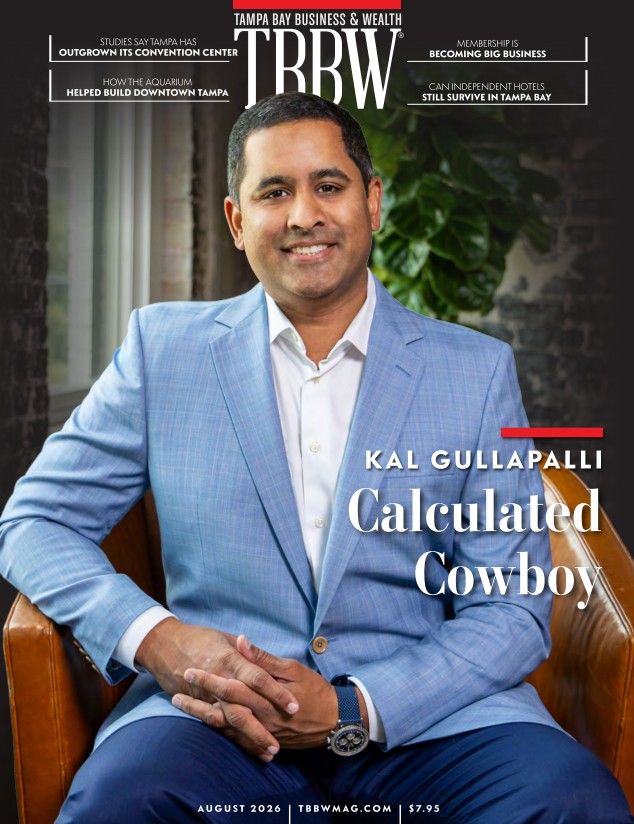
Tampa Bay Business & Wealth
Digital Edition August
The August issue of Tampa Bay Business & Wealth features Built Different Brands CEO Kal Gullapalli alongside reporting on Tampa’s hospitality industry, commercial real estate, restaurants & more.
Kal Gullapalli and The Business of Building Businesses
Kal Gullapalli was in eighth grade when he told his mother he wasn’t going to medical school because he had already decided he wanted to become an investment banker, even though nearly every adult in his family practiced medicine.
His parents immigrated from India in the early 1970s, recruited by American hospitals during a nationwide doctor shortage, and settled in suburban Detroit, where both built medical careers. Gullapalli visited India only twice before turning 18 because most of his extended family had already settled in the United States and after his grandparents died young, there was little reason to return regularly.
“When you’re in that type of ecosystem, my uncles, my aunts, everybody is a doctor. My cousins are all doctors,” he said. “So I was kind of the black sheep.”
His mother was distraught when he told her he wanted to become an investment banker instead, then spent years asking whether he might still change his mind. “For like 10 years,” Gullapalli said. “But I think over time she’s like, ‘All right, he’s doing what he loves.’”
Gullapalli now runs Tampa-based Built Different Brands, which generates about $120 million in revenue from more than 80 locations across several states through a portfolio that includes Marco’s Pizza, Dave’s Hot Chicken, PopUp Bagels, Restore Hyper Wellness, VIO Med Spa, Sandbox VR and Hand & Stone Massage. The company plans to open 15 to 17 locations this year and as many as 24 next year as Gullapalli pursues $500 million in annual revenue within fi ve years.
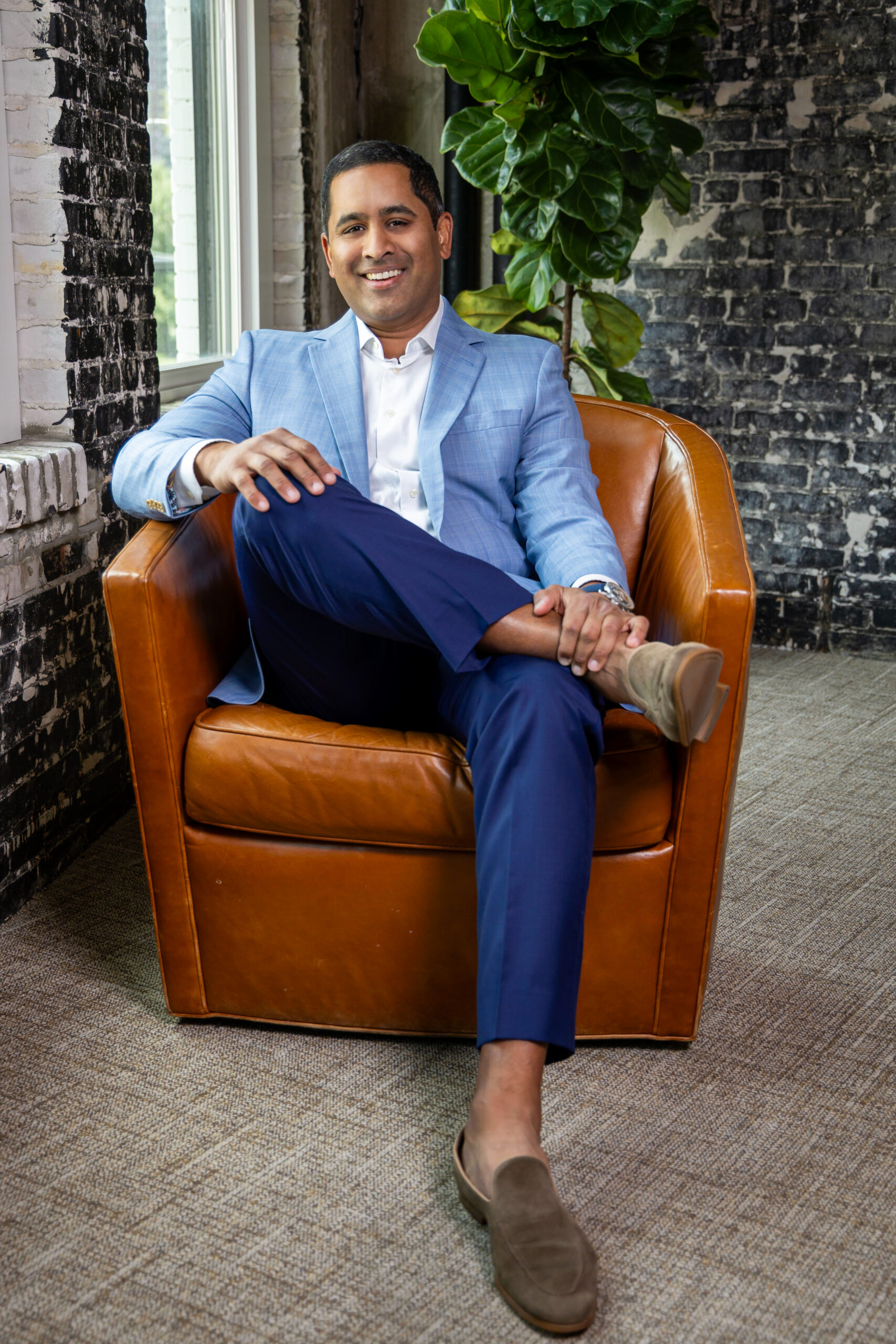
His parents left for work around eight every morning, returned home for dinner and expected their children to fi nish whatever they started, whether that meant homework, basketball practice or another commitment. His mother often reminded him, “If you’re sick, just go to work. Work as hard as possible because that’s how you’re going to get ahead in life.”
“They had that immigrant mentality that, ‘We’re blessed to be here, and you’ve got to work as hard as possible because you’ve got to prove you deserve to be here,’” Gullapalli said. “But they also believed we had to assimilate to the culture. They didn’t just hang out with the folks that came over.”
His parents spent time with doctors from their hospitals and private practices because, as he put it, “We’re going to be here forever. We’re going to have our lineage here.”
“I’ve always been kind of a reserved person, shy,” Gullapalli said. Basketball and golf introduced him to people beyond his immediate circle, and more than 25 years after graduating from high school, six classmates from the Class of 2000 still take the same annual golf trip together. Many of the people he considers his closest friends are former high school teammates. “As I played sports and met a lot of people, it helped me build confi dence and talk to different people.”
After he was caught using a fake ID to gamble at Windsor Casino during his freshman year of college, his parents gave him what he remembers as a serious lecture and responded similarly when his grades slipped. “I’ve always been a pretty responsible kid,” he said. “They always saw that I’d get back in line.”
Gullapalli graduated from high school with a 3.6 GPA, earned varsity letters in basketball and golf and enrolled at the University of Michigan, where investment banking remained the only career he had seriously considered. “Too much fun,” he said with a laugh. “A lot of drinking and other extracurriculars.”
His grades kept him out of Michigan’s Ross School of Business, where investment banks recruited heavily and students spent months preparing for technical interviews together, so he remained in the College of Literature, Science and the Arts as an economics major.
“I realized that if I’m actually going to become the investment banker I told my mom I was going to become, I had to fi gure out how to get better grades and at least create a better résumé so people would actually interview me.”
His parents paid tuition and living expenses but encouraged him to get hourly jobs to understand the value of a dollar. While classmates drove luxury cars around Ann Arbor, Gullapalli drove a Toyota Camry. “They said, “but they didn’t give me so much that I lost my hunger.”
While he was at Michigan, he began dating his now-wife, Krishna, whom he had known for years as the cousin of his best friend and college roommate and who arrived at Michigan as a freshman while he was a sophomore.
His fi rst interview for a Merrill Lynch investment banking internship went badly because Ross students had spent months practicing technical questions together while Gullapalli arrived without that preparation and left without an offer. He found someone inside the fi rm, volunteered to work for free if necessary and earned another opportunity.
Once he arrived, he walked from associate to associate and vice president to vice president each day asking for more work. “I’d go to every associate and every vice president every day and say, ‘What can I do for you?’” he said. “I’d stay as late as possible because I really wanted that job.”
By the end of the summer, Merrill Lynch had offered him a full-time position after graduation.
Merrill Lynch’s investment banking analysts rarely left the offi ce before midnight. Client meetings fi lled the daytime hours, but the work usually arrived after 6 p.m., leaving analysts to rebuild fi nancial models, revise pitch books and prepare presentations before the next morning. For two years after graduating from Michigan in 2004, Gullapalli worked those hours six days a week.
“You work your butt off,” he said. “Sometimes you’re just doing face time. But the work always comes at 6 p.m., and you’ve got to stay until you fi nish it.”
He regarded Wall Street as “a means to the end” and a vehicle for learning how businesses were fi nanced and building relationships he could carry into ownership. “I really enjoyed the people I worked with. I mean, still to this day, friends of mine,” he said. “I never enjoyed the work.”
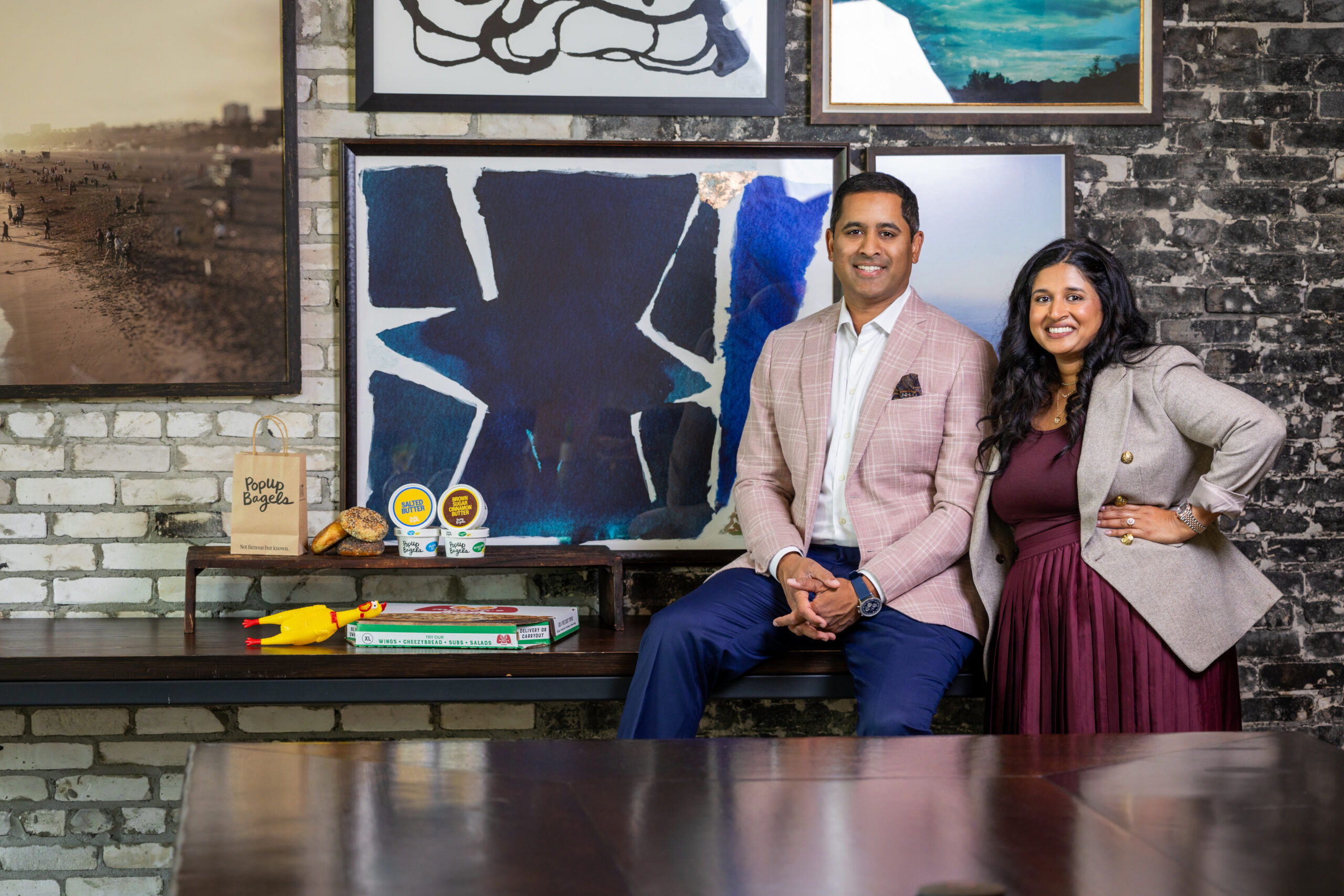
His wife joined him in New York after graduating from Michigan a year later and began her own investment banking career at Jefferies while Gullapalli continued building relationships inside Merrill Lynch.
Those relationships led him to the fi rm’s internal hedge fund in 2006, where Merrill Lynch invested its own capital instead of advising clients. Portfolio managers handed him companies to analyze, sending him through fi nancial statements, debt agreements, legal fi lings and capital structures before deciding whether the fi rm should invest. “We were more focused on the credit side, the downside,” he said.
The fund invested in high-yield and distressed companies, where Gullapalli had to understand balance sheets and the legal structures governing how companies were built. “Nothing was learned from school,” he said. “Everything was taught to me by mentors.”
In investment banking, a managing director named Dave Iwan insisted Gullapalli work on his deals, expected him to move quickly and, unlike many senior bankers, tried to get him home before another midnight whenever he could. “He was the guy that was like, ‘I want to get you out of here by 8, so get this done,’” Gullapalli said.
At the hedge fund, he worked under Mike McEvilly, who later left Merrill Lynch with him to launch an independent fund. Nearly two decades later, they still speak.
After Bank of America acquired Merrill Lynch, Gullapalli and McEvilly chose to leave and start an independent hedge fund rather than spend the next two years liquidating Merrill Lynch’s proprietary trading portfolio. McEvilly’s reputation helped the group raise roughly $40 million to $50 million, but institutions had little appetite for a new fund in 2009 and 2010.
Gullapalli said their returns from Merrill Lynch’s proprietary trading desk were harder to document than those of traditional hedge funds with audited records. “Given the housing crisis of 2008, capital was just harder to raise,” he said.
After about a year and a half, Gullapalli decided to move on. He evaluated everything from gas stations to other Main Street businesses before buying a 50-year-old butcher shop on Long Island. “This just was a value play,” Gullapalli said. “The perception of that probably didn’t look great to Indian parents. But I bought a butcher shop.”
The previous owner, John Guardino, stayed for roughly two months after the sale, introducing him to suppliers, customers and employees who had spent decades behind the counter, while experienced butchers taught him the trade until, as he put it, “I became an intermediate butcher.”
Many employees had worked in butcher shops longer than Gullapalli had been alive. “I learned how to manage people that were much older than me,” he said. “Made a ton of mistakes. But I really enjoyed the process.”
The shop had belonged to Guardino’s family for decades, and employees relayed the questions longtime customers asked after the sale, including whether the new owner was “going to put curry in the marinades.” Gullapalli said the hardest part was convincing people he wasn’t going to change the business. He introduced himself to customers, explained why he had bought the shop and spent time visiting neighboring businesses throughout Malverne because, as he put it, “I got to get to know the community just like John did.”
Gullapalli added a prime beef selection and acquired a second butcher shop in nearby New Hyde Park. “That’s probably my fi rst mistake,” he said. “It wasn’t a scalable concept.”
The average butcher was about 55 or 60 years old, apprentices were scarce and replacing one employee often meant poaching an experienced butcher from another shop. The second location also lost much of its catering business during the ownership transition because it lacked experienced management. “I’m not a twostore butcher shop guy,” he said. “We had to fi nd a way to get to 500.”
After his wife accepted a job with Converse, the couple moved to Boston, where Gullapalli sold the butcher shops and bought Lisa’s Family Pizzeria in Woburn, Massachusetts. He worked six and sometimes seven days a week across the front and back of the house. Unlike the butcher shops, where replacing a skilled employee could take months, most pizzeria jobs could be learned quickly. “I could see the scaling nature of it,” he said.
He and a childhood friend opened a smash burger concept called WuBurger across the street from the pizzeria before opening a second location in Cambridge. The Cambridge restaurant opened in Inman Square, farther from Harvard and MIT than Gullapalli had expected and without a nearby train stop, leaving it with too little customer traffi c to remain open. “Real estate is 80% of the game,” Gullapalli said.
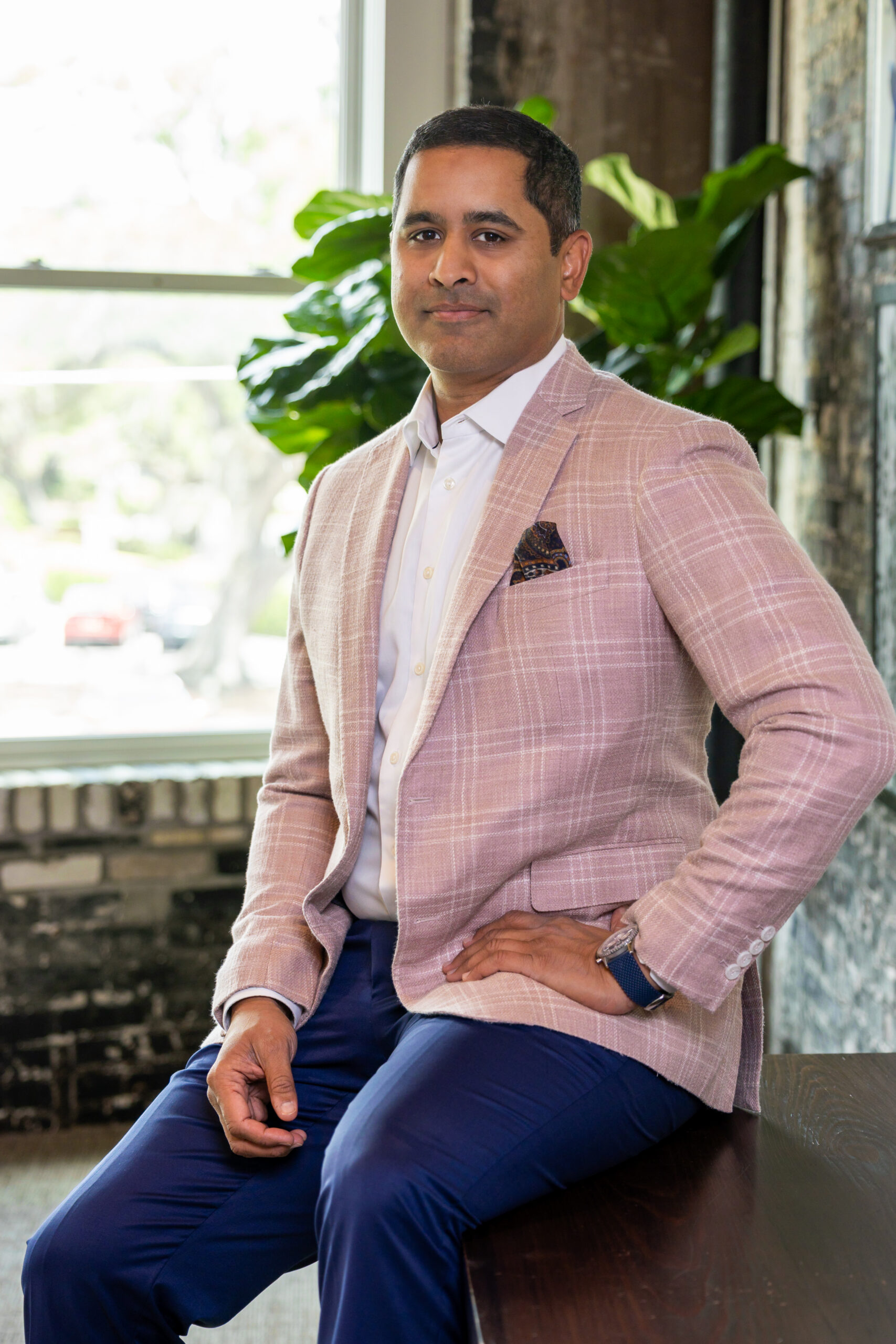
“The most important thing for all these local businesses,” Gullapalli said, “is being part of the community.” He joined chamber events, donated pizzas to schools and police departments, and supported neighborhood organizations when they asked for help. “When people in schools come for donations, make sure you take care of them,” he said. “Just taking care of everyone possible in the community.”
After gaining weight in the food business, Gullapalli joined an OrangeTheory Fitness studio, where after every workout he stopped in owner Paul’s offi ce to ask about memberships, operations and fi nancial performance until Paul began sharing the studio’s fi nancial statements.
“Every time I went to class,” Gullapalli said, “I’d stop by Paul’s offi ce and ask him a bunch of questions. He started showing me his fi nancials and being very transparent about everything. Memberships generated recurring revenue. Labor was predictable. Every studio looked the same. I’m like, ‘Shit, I’ve got to get into this. This is crazy.’”
Paul introduced Gullapalli to OrangeTheory’s leadership, and after securing development rights in the Boston area, Gullapalli sold Lisa’s Family Pizzeria, WuBurger and his remaining restaurant businesses before opening studios in Westford and Saugus in 2017.
“At fi rst I thought franchising was weird because you’re giving someone else so much control,” Gullapalli said. “Then I realized I’m actually not a brand builder. Give me a playbook and let me just scale it.”
“If I can have all my concepts that simple and do that type of volume, I’d love it,” Gullapalli said. “The franchisor sets the menu. They set how you create the products. They set how you serve them. We take their playbook and implement it.”
OrangeTheory was already in what Gullapalli described as the seventh inning of its national expansion, with only two development territories remaining in the Boston market. Gullapalli acquired both licenses and sold the two studios in December 2019, a few months before Covid shut down gyms across the country. “Thank God we sold when we did,” he said. “The behavior of the consumer, particularly in the Northeast, really changed. They left OrangeTheory and never came back.”
Before the OrangeTheory sale closed, Gullapalli acquired four struggling European Wax Center locations around Boston that shared one manager, where one manager oversaw all four stores and left him responsible for payroll, operations and nearly every other function. “The fi rst couple months I was drowning,” he said. “It was just me doing payroll, doing ops, doing everything.”
He called the company’s COO, who told him to hire managers for every store, close each location for three days, and Corporate would help retrain the staff. His portfolio expanded to 50 stores across multiple states, where he learned how to build a corporate team, integrate acquisitions and work with private equity.
The private equity investment closed in March 2020, when fear surrounding the emerging pandemic had reached what Gullapalli called “an all-time high.” European Wax Center closed its stores until June, and the private equity fi rm had to contribute additional capital almost immediately after completing the investment. “I wasn’t scared for myself,” he said. “I was scared that people would not come back to work after COVID.”
Gullapalli created a Facebook group and held video calls to keep employees connected while the stores remained closed. After the company received Paycheck Protection Program funding, it used the money to keep employees on payroll. “We followed the rules from day one,” he said. “In hindsight, we probably should have furloughed the team, let them collect government assistance and kept the company better capitalized.”
“The same thing that happened in fi tness happened in waxing,” Gullapalli said. “People went to laser. They tried different things. The routine changed. The demand didn’t come back the way people thought it would.”
Additional investment rounds reduced his ownership stake. “I realized my personal upside for my family wasn’t there anymore,” he said. “The opportunity cost was too high.” He gave the company six months’ notice, remained on the board and began investing in other franchises.
Gullapalli bought 17 Marco’s Pizza restaurants in South Carolina while he was still living in Boston. Much of the country’s population growth was shifting toward the Southeast, where rents were lower than in the Northeast, and, as he put it, “we wanted to make sure that when we deployed capital, there was a better return.”
As the portfolio expanded, he and his wife moved their family to Tampa in 2022. “The kids weren’t seeing their grandparents, and both sets live in Orlando,” Gullapalli recalled telling his wife. “I think it’s time to get closer to our assets, since most of our growth is down there.”
Marco’s ranked fi fth among the country’s largest pizza chains, behind Domino’s, Pizza Hut, Little Caesars and Papa Johns, and the South Carolina restaurants generated more than $1 million in annual sales apiece with about 15% store-level profi t before corporate expenses. The restaurants made dough inhouse and used freshly cut vegetables, giving Marco’s, in Gullapalli’s view, “the best of the fi ve in terms of quality.”
On his fi rst day, Gullapalli learned that some managers were drinking on the job, others faced sexual harassment allegations and the restaurants had far fewer operating procedures than he expected. “There was a lot that I had to clean up,” he said.
The company added 10 to 15 restaurants a year through acquisitions and new construction until the portfolio approached 50 locations. Gullapalli later called that pace his biggest mistake because it stretched both the balance sheet and the organization. A chief fi nancial offi cer urged him to stop acquisitions for nine to 12 months and rebuild the operating structure. “We had to stop,” Gullapalli said. “We had to rightsize the business.”
Marco’s same-store sales fell about 10% in 2025 as consumer spending weakened and competitors leaned harder into value promotions. Gullapalli said the pullback also underscored how much of the pizza business now runs through digital ordering, an area in which every major chain has had to keep investing to compete. “Marco’s.com or Domino’s.com is Amazon.com, and the stores are the Amazon delivery trucks,” he said. “You have to be so good at capturing orders.”
Over the following year, the company raised pay in some positions, revised incentives, made changes to its operating team and sharpened its own digital ordering execution. By mid-2026, same-store sales had rebounded about 6% to 7%, Gullapalli said, putting the company in position to resume expansion in 2027 if the improvement held.
Gullapalli signed with Dave’s Hot Chicken in 2022 and opened his fi rst restaurant the following year. The company now operates eight locations and expects to open about seven annually across South Carolina, parts of North Carolina and the Savannah and Augusta markets in Georgia.
He said he was drawn to what he called chicken’s “crazy renaissance,” pointing to Chick-fi l-A’s growth and the attention Popeyes generated with its chicken sandwich, while also wondering whether higher beef prices and changing attitudes toward beef helped push customers toward chicken. Dave’s narrower menu, he said, also made the restaurants easier to operate.
Customers were waiting outside PopUp Bagels’ Thompson Street shop in Manhattan when Gullapalli visited after an investor suggested he stop there. “I was thinking to myself, ‘This is ridiculous,’” he said. “They were able to open up a bagel shop in the bagel capital of the world and have these types of lines.”
He acquired development rights in December 2024 for Florida outside South Florida before later adding Ohio and Michigan. The agreements call for 45 locations, including 30 in Florida, eight in Ohio and seven in Michigan, with about seven openings required each year.
The fi rst Tampa location opened on Kennedy Boulevard in September 2025, followed by Carrollwood, Jacksonville, Viera and Winter Park. Strong opening sales persuaded Gullapalli to acquire development rights in Michigan and Ohio, although he expects subsequent restaurants in each market to generate less revenue than the fi rst.
“When you’re in that euphoric fi rst two weeks, you’re like, ‘This is unbelievable,’” he said. “I don’t want to fall into the trap that we found at OrangeTheory where we couldn’t expand.”
Even with that caution, he said, “It’s clear as day that in fi ve years we’ll have a $500 million company in franchising.”
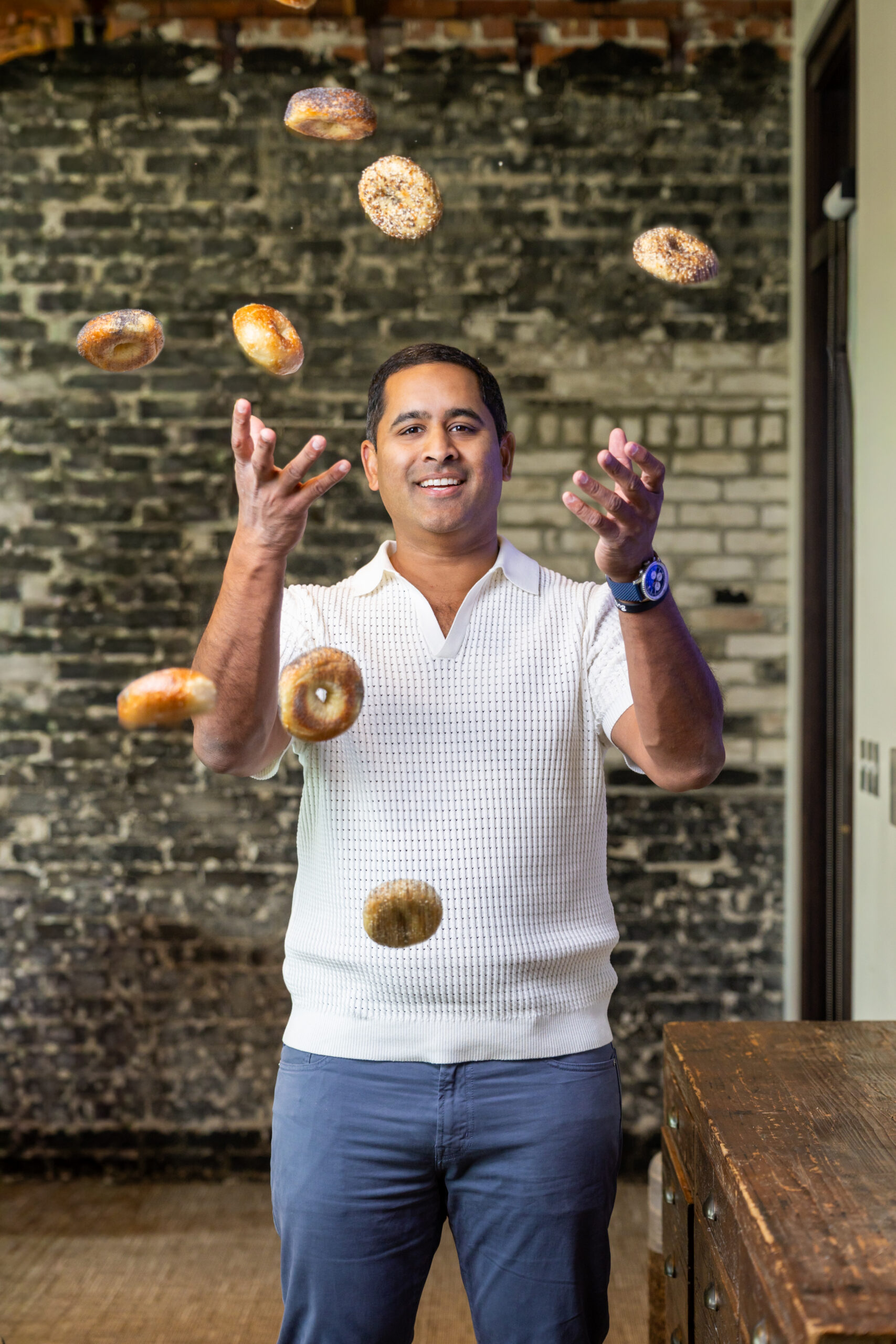
Each concept chases a different customer, and Gullapalli tailors both real estate and local marketing to match. Dave’s Hot Chicken looks for end-cap and freestanding sites and leans into high school athletics, betting on customers who will pay a few extra dollars for higher-quality chicken. PopUp Bagels clusters near Whole Foods, Life Time and boutique fi tness studios and partners with running clubs, chasing a health minded, higher-income shopper. Marco’s builds around families, sponsoring elementary schools because, as he put it, “Elementary kids are the ones who decide, ‘I want pizza on Friday.’”
“The food business is a game of pennies that add up to nickels,” Gullapalli said. “You have to be hypervigilant on every single cost.”
He said he does not naturally watch those pennies, preferring to hire executives who focus on the details. He has also turned to artifi cial intelligence to catch details people might miss.
Built Different Brands now uses AI to review leases, monitor construction and analyze operations across its portfolio. The company signs 25 to 30 leases a year, and The company uses AI to compare each lease against its letter of intent before attorneys begin their review.
“I’ll take the LOI and then I’ll take the lease and I’ll say, ‘Hey Claude, fi gure out what’s wrong with this based on all the leases that you’ve already worked on for me,’” he said. “Then it’ll create an issue list.”
Instead of replacing employees, he expects the technology to let the company keep growing without expanding its corporate staff at the same pace. “We’re a $120 million company now. When we grow to $300 million … we do not expect to triple our headcount,” he said.
The opening schedule places more pressure on the his team. “Right now we’re opening up 15 or 17 locations,” Gullapalli said. “Next year, we’re probably going to get to 22, 24. It’s making sure that I have the right team always to do it because it’s a lot of stress.”
The fi nance team is “always grinding,” he said, while the operations team is “pulling their hair out.” “When you scale this fast, it’s hard,” he said. “It’s really hard.”
“I’m naturally a cowboy,” Gullapalli said. “I love risk.” He and his wife personally guarantee much of the company’s debt, a level of leverage that still worries his parents. “They fi gured out that I am a bit crazy,” he said.
Can Independent Hotels Still Survive in Tampa Bay?
Independent operators face higher purchasing costs, fewer financial reserves and none of the loyalty programs that help national hotel brands compete, but Tampa Bay’s year-round visitor economy still gives them room to survive.
Hillsborough County hotels generated a record $121.5 million in taxable revenue during April, part of a tourism economy that produced $6 billion in direct visitor spending and a total economic impact of $9.5 billion last year. Leisure and hospitality employment across the Tampa-St. Petersburg-Clearwater metro reached a preliminary 172,600 jobs in May, about 5,200 more than a year earlier, according to the U.S. Bureau of Labor Statistics.
As the market expanded, national brands, soft brands and boutique collections claimed more of it, leaving fewer hotels entirely independent. Nilesh Patel has watched that change from both sides. His family operates Holiday Inn Express, Hampton Inn and TownePlace Suites properties while also owning Hotel South Tampa, one of the region’s remaining independent hotels.
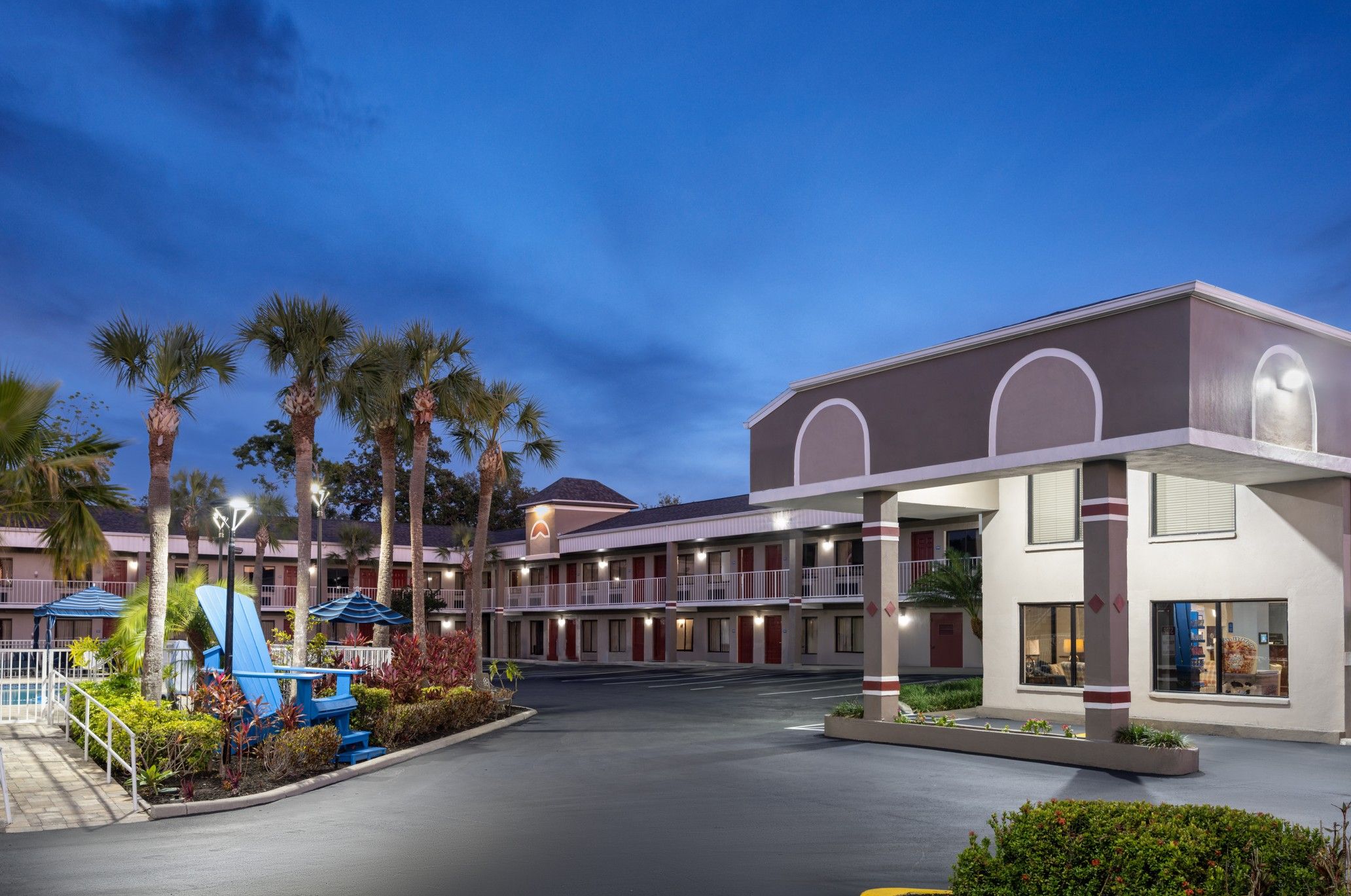

“The number of independents that are left out there that are actually only independent is not very high,” Patel said. At Hotel South Tampa, every purchasing decision begins from scratch. “We have to come up with everything at the independent property,” he said. “We don’t want the cheapest item. We want the best quality.” The hotel can buy the same mattress from the same manufacturer used at its Holiday Inn Express properties and still pay more because IHG negotiates contracts for thousands of hotels while the independent property negotiates for one.
The same imbalance extends beyond furniture. Patel said banks and insurers generally view branded hotels as lower-risk investments, making financing and insurance more difficult and often more expensive for independent operators.
Independence also comes with one financial advantage: Hotel South Tampa does not pay the franchise fees required by major brands. “We don’t have to pay the brand that much money,” Patel said. “Therefore we can give a portion of that savings to customers.”
“The number of independents that are left out there that are actually only independent is not very high.”
Nilesh Patel, Hotel South Tampa
The chains also give travelers benefits that a single independent hotel cannot match. “A guest earning Hilton Honors points in Tampa can use them on the next trip,” Patel said. “If they earn points here, they can only use them here.” Hotel South Tampa instead depends largely on Google, Booking.com and Expedia, where travelers compare review scores, photographs and nightly rates before making a reservation.
Each booking carries a commission, while Patel’s staff must build and maintain the listings by updating photographs, amenities, room descriptions and promotions. “It’s a lot of extra work to get to the same spot,” he said. Before TripAdvisor, Google Reviews and online booking platforms, travelers unfamiliar with an independent hotel were more likely to choose a recognizable brand. Online reviews have since narrowed that advantage.
Patel said a comparable branded room may command about $250 during peak periods, while Hotel South Tampa competes closer to $160 or $170. About 20% to 30% of the hotel’s guests are international travelers, many of whom book after comparing prices and review scores online.
Those higher purchasing costs come on top of inflation affecting hotels across the industry. Asked which expenses had risen the most, Patel answered without hesitation. “Insurance, utilities, payroll, food, maintenance, operating supplies,” he said.
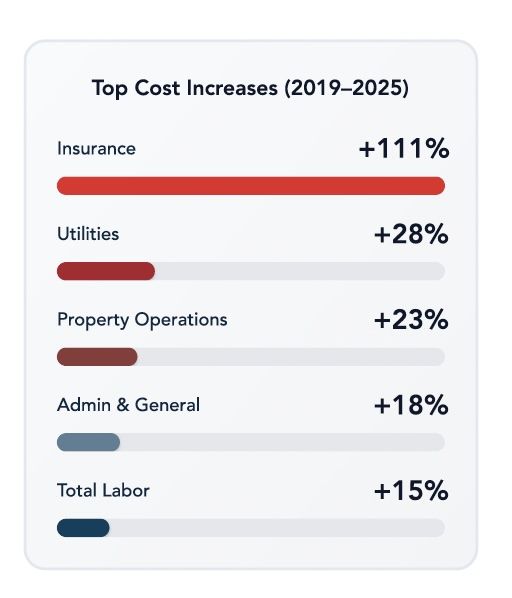
The American Hotel & Lodging Association found hotel operating costs are rising four times faster than revenue. Insurance costs increased 111% between 2019 and 2025, followed by utilities at 28%, property operations at 23%, administrative expenses at 18% and labor at 15%.
Those costs weigh differently on independent hotels, said Brooke Hansen, an associate professor of hospitality at the University of South Florida, because national brands can spread financial risk across hundreds or thousands of properties while smaller operators have fewer reserves.
“The big challenge in our area of Florida is some of our big operators are doing great,” Hansen said. “Our challenge is to pull up our mom-and-pop small and medium-sized enterprises.” Independently owned hotels face many of the same insurance, labor and borrowing costs as national chains, she said, with fewer reserves to absorb a hurricane, a sudden increase in interest rates or another disruption.
“Hilton can do that,” she said. “But your independently owned hotel doesn’t have those reserves of capital to weather all of these challenges.”
The broader industry reflects those pressures. CBRE reported hotel operating profits fell 2.7% as expenses outpaced revenue growth and expects inflation to continue exceeding gains in average daily rates through 2026 while occupancy remains under pressure.
Hansen said smaller operators help give destinations their own identity. “Small and medium-sized businesses are critical because they give our destinations a sense of place and difference,” she said. “Everyone doesn’t just want to go to a chain store everywhere they travel.” Patel has built Hotel South Tampa around that opening in the market, offering an independent property with the quality standards travelers expect from a branded hotel.
Hansen pointed to organizations such as Amplify Clearwater, along with cooperative purchasing programs, as examples of ways smaller operators can lower costs and strengthen their businesses.
“We need to think about more ways that we can support some of the smaller businesses that are fed by our tourism dollars,” Hansen said.
Even with those disadvantages, Patel believes Tampa gives independent hotels an opportunity that many markets do not. A steady stream of conventions, sporting events, military activity and leisure travel keeps visitors arriving throughout the year rather than during a short seasonal rush.
“Tampa’s pretty much year-round,” Patel said. “We’ve been very fortunate.” That consistent demand gives independent hotels room to operate without matching the occupancy or room rates of the largest brands.
Technology may reduce some operational disadvantages. Hansen said artificial intelligence gives independent hotels access to market analysis and tools that once required corporate research departments. An owner can ask an AI platform who is likely to visit over the next six months and receive a summary compiled from reports published by Booking.com, Expedia, Destination Analysts and other tourism organizations.
If those reports point to stronger business travel in June and July, Hansen said, a hotel can shift its advertising toward that market. She offered a hypothetical example of a Pinellas County hotel targeting construction companies in Minnesota rather than buying a broad campaign aimed at all travelers.
The technology can also reduce waste in hotels with food-service operations. Hansen cited Winnow, a system that uses a camera above a food-waste bin to record what servers discard, allowing managers to adjust orders when guests repeatedly leave certain items untouched. A manager reviewing the data might conclude, she said: “We threw away 500 pounds of peas yesterday. Guys, we’re not doing the peas anymore.”
Patel expects many of those tools to reach independent hotels through the reservation, pricing and marketing vendors they already use. “We’re all learning through these different vendors,” he said. “They’re starting first because they have all the technology that’s using it. And I think within a few years we’ll kind of know where that shakes out.”
Patel does not expect Hotel South Tampa to match Hilton or Marriott on occupancy or room rates.
“We’ve kind of figured out our place,” he said. “I don’t ever expect that we will outdo those brands as it relates to our rate and occupancy. But I feel like there’s a really healthy spot for independents.”
“I don’t see it as a competition,” Patel said. “There will be different lanes to play in. Luckily, Tampa is very fortunate to have a lot of customers coming. I think we can all fill a role in that hospitality market.”
How the Florida Aquarium Helped Shape Downtown Tampa’s Transformation
The waterfront institution opened before Water Street Tampa existed and became one of the anchors that helped make the district’s transformation possible.
When the Florida Aquarium opened on Tampa’s waterfront in March 1995, visitors arrived at the edge of downtown, not in the middle of a thriving neighborhood. The Tampa Convention Center had opened five years earlier, but beyond it stood warehouses, port facilities, industrial buildings and acres of surface parking. The Ice Palace, now Benchmark International Arena, was still more than a year away.
What is now one of the country’s largest urban redevelopment projects consisted largely of disconnected civic destinations surrounded by infrastructure designed to move cars and cargo rather than people. Three decades later, that same stretch of waterfront has become Water Street Tampa, a neighborhood of hotels, apartments, office towers, restaurants, medical facilities and public gathering spaces that welcomes millions of visitors each year, with the Florida Aquarium now sitting near its center.
Roger Germann, the President and CEO of the aquarium, believes the institution helped make that transformation possible, and he often returns to a conversation with Tampa Bay Lightning owner Jeff Vinik that took place before Water Street existed as either a master plan or a construction site.
“He sat over there at the arena and looked east and said, ‘Hey, there’s a world-class aquarium over there,'” Germann said. “He saw that vision of why you would build Water Street.”
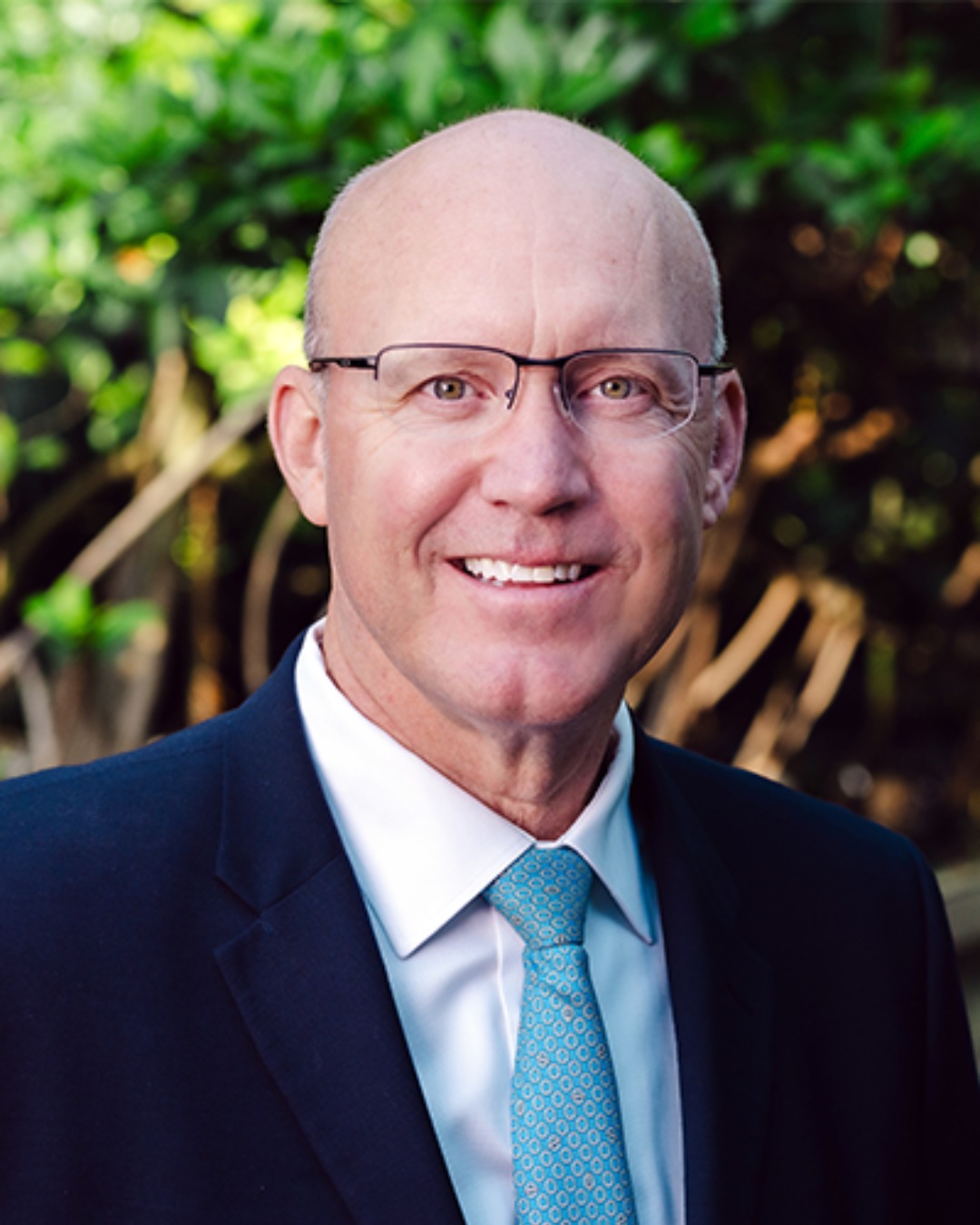
When Tampa established the Channel District CRA in 2004, officials were attempting to reverse decades of decline in what planning documents repeatedly described as an aging industrial warehouse district.
The city’s Finding of Necessity concluded that 63% of buildings were deteriorated, dilapidated or terminal, while 83% were more than 40 years old. 77% of surveyed properties exhibited excessive maintenance problems, 30% had histories of code enforcement violations and officials cited “general economic distress resulting in a diminished tax base and tax revenues.”
The report also described aging water, wastewater, and stormwater infrastructure with “questionable capacity for new development,” an obsolete street network that no longer accommodated modern vehicular or pedestrian traffic, fragmented property ownership, inadequate parking, potential environmental contamination, and a shortage of sidewalks, parks, and other public amenities.
During public hearings, one property owner reminded City Council that the Channel District had “always been a warehouse district,” adding that many streets “never had sidewalks to begin with,” before describing a future in which people could “live, work, shop and play.”
Fourteen years later, Strategic Property Partners unveiled Water Street Tampa with an initial master plan calling for more than 9 million square feet of residential, office, hospitality, educational, entertainment and retail space across roughly 50 acres, including 1,500 residences, approximately 50 retailers and restaurants, two luxury hotels and the first new downtown office towers in nearly a quarter century.
Even as it introduced an entirely new neighborhood, the company highlighted institutions that already occupied the waterfront, including then Amalie, now Benchmark International Arena, the Tampa Convention Center, the Florida Aquarium and the University of South Florida’s Morsani College of Medicine.
Before joining the Florida Aquarium in 2017, Germann spent years in Chicago, where institutions such as the Shedd Aquarium, the Field Museum and the Art Institute had become inseparable from the city’s identity.
“I saw what happened in Chicago when anchors like the Shedd Aquarium, the Art Institute and the Field Museum were so much part of the driving fabric to create a world-class city,” Germann said. “When I came here, I said, ‘We’re making no little plans at the Florida Aquarium.’ We’re going to build a world-class aquarium that will help attract and put Tampa and Tampa Bay on the map.”
His first drive to work passed the convention center, then Amalie Arena, a temporary Ferg’s, gravel lots and little else before ending at the aquarium. Today the same route winds through Water Street, Sparkman Wharf, new apartment towers, hotels, office buildings and the expanding medical district before reaching the aquarium.
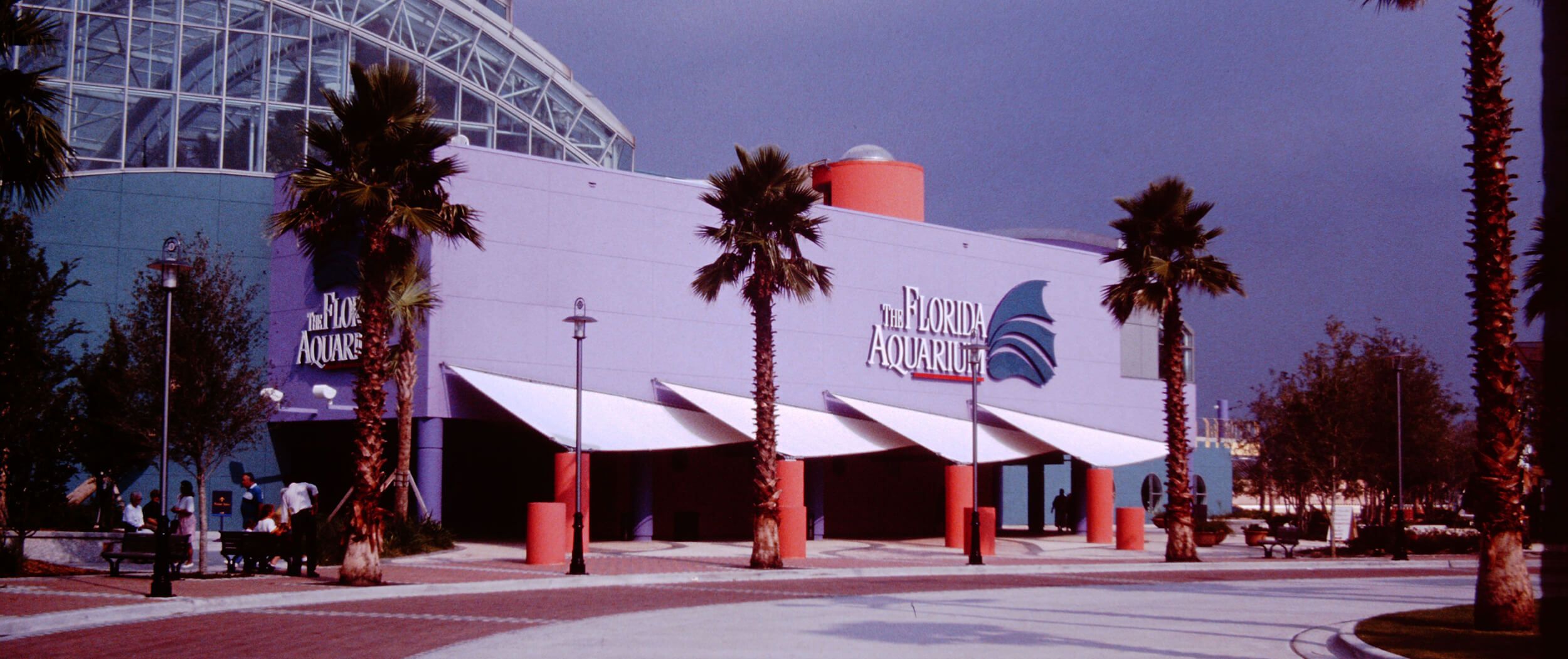
“My drive nearly doubled,” Germann said with a laugh. “I probably went from six minutes to 12 minutes. But the city skyline has just changed dramatically.”
“I think it’s a symbiotic relationship,” Germann said. “We benefit from our growth, but we’re also a driver for why people would want to come here.”
He said downtown’s growing residential population has begun changing how people think about the aquarium.
“We’ll see people say, ‘Hey, that’s my aquarium.’ They’ll wake up in the morning, grab a stroller and walk over because they live around the corner,” Germann said. “The other part of that is the work-life-play balance. With more restaurants, more people are coming downtown and saying, ‘Oh, there’s an aquarium.'”
The aquarium has also become part of how other institutions describe downtown Tampa. Tampa General Hospital includes it in presentations used to recruit physicians, researchers and life sciences companies to the Tampa Medical and Research District.
“They use us in a good way as part of the narrative,” Germann said. “You want to relocate your business here. You want to build this world-class medical district, and you have the Florida Aquarium that’s kind of in your neighborhood.”
Two decades after the CRA was established to reverse blight in the Channel District, it committed $15 million toward the aquarium’s $44 million expansion, with the aquarium raising the remaining funding through private philanthropy and corporate contributions.
The project represents the first comprehensive modernization of the aquarium since it opened in 1995, but Germann said the goal extends beyond adding new exhibits. The first phase converted former event space into the Mosaic Special Exhibit Hall, allowing the aquarium to host rotating traveling exhibitions instead of offering the same experience year after year. The second phase transformed underused second-floor space into a nationally recognized tide pool gallery, while construction beginning after Labor Day will add the country’s first two-story puffin habitat. A separate outdoor expansion will bring California sea lions, expanded penguin habitats and new presentation spaces by late 2028.
“It’s the first time that we’ve really taken, since we opened our building, a comprehensive look at the facility,” Germann said. “Once that whole entire project is completed, it’s transformational. It speaks to a world-class aquarium that this community deserves. It’s our responsibility to deliver on that.”
Since Germann arrived in 2017, annual attendance has grown from about 800,000 visitors to more than one million. He expects the completed expansion to establish a new baseline of roughly 1.1 million visitors a year.
Attendance growth has expanded the aquarium’s economic role beyond its own walls. A 2024 analysis by the Tampa Bay Regional Planning Council estimated that about 45% of aquarium visitors travel from outside the Tampa Bay area. Those visitors spent an estimated $83.8 million in Hillsborough County during 2023 on hotels, restaurants, transportation, shopping and other purchases associated with their trips, generating roughly $100.1 million in total economic output across the county.
Germann doesn’t believe downtown has reached the residential density envisioned for the district, leaving room for both the neighborhood and the aquarium to keep growing together.
“I think our best days are still ahead of us,” Germann said. “It’s still getting started.”
Tampa Needs a Larger Convention Center to Compete for Bigger Events, Reports Say
Tourism studies conclude Tampa is losing major conventions because its meeting space and walkable hotel inventory have not kept pace with downtown’s growth.
Downtown Tampa has added thousands of hotel rooms, new residential towers and a rapidly expanding waterfront district over the past decade, but multiple tourism studies conclude one piece of the city’s visitor infrastructure has not kept pace.
A February 2024 report by JLL concludes Tampa has reached a point where continued growth in the convention market depends on expanding the Tampa Convention Center while increasing the supply of hotel rooms within walking distance of the facility. The study estimates Tampa lost 161 convention leads representing more than 967,000 hotel room nights between 2023 and 2031.
Nearly 250,000 of those room nights were tied to groups that required either more exhibit space or larger blocks of nearby hotel rooms than Tampa could provide. More than half of those lost conventions required at least 1,200 peak room nights, and 68% came from just five market segments, suggesting Tampa is repeatedly losing the same types of events.
A separate tourism product analysis prepared by HCP Associates for Visit Tampa Bay reached similar conclusions, identifying convention center size and the limited supply of nearby hotel rooms as two of Hillsborough County’s primary tourism weaknesses.
JLL likewise ranked the convention center among 16 priority tourism investments alongside Brightline, Riverwalk improvements and Tampa International Airport’s expansion, concluding that meeting planners increasingly evaluate destinations as complete convention districts rather than individual facilities.
More than two years later, Tampa Convention Center Executive Director David Ingram echoed those findings during an April interview on the city’s Tampa Tea podcast, saying the facility is “busy to the point of you can’t get it” and that a recent feasibility study found “we just need to be a little bit bigger.” He said additional exhibit space would allow the convention center to host multiple events simultaneously while more walkable hotel rooms would help attract larger meetings.
The city has already begun planning for that expansion. Tampa hired Conventions, Sports & Leisure International to complete an expansion market feasibility study, and in July 2025 City Council reappropriated $471,545 for that study and a separate facility assessment after the funding carried over from the previous fiscal year. According to the agenda memorandum, the market study evaluates convention demand, expansion options, funding strategies and the number of additional hotel rooms needed to support a larger convention center. City officials describe the study as “the key component in developing a master plan” for the facility, while the companion assessment evaluates its mechanical, electrical, structural and fire protection systems to guide future capital improvements.
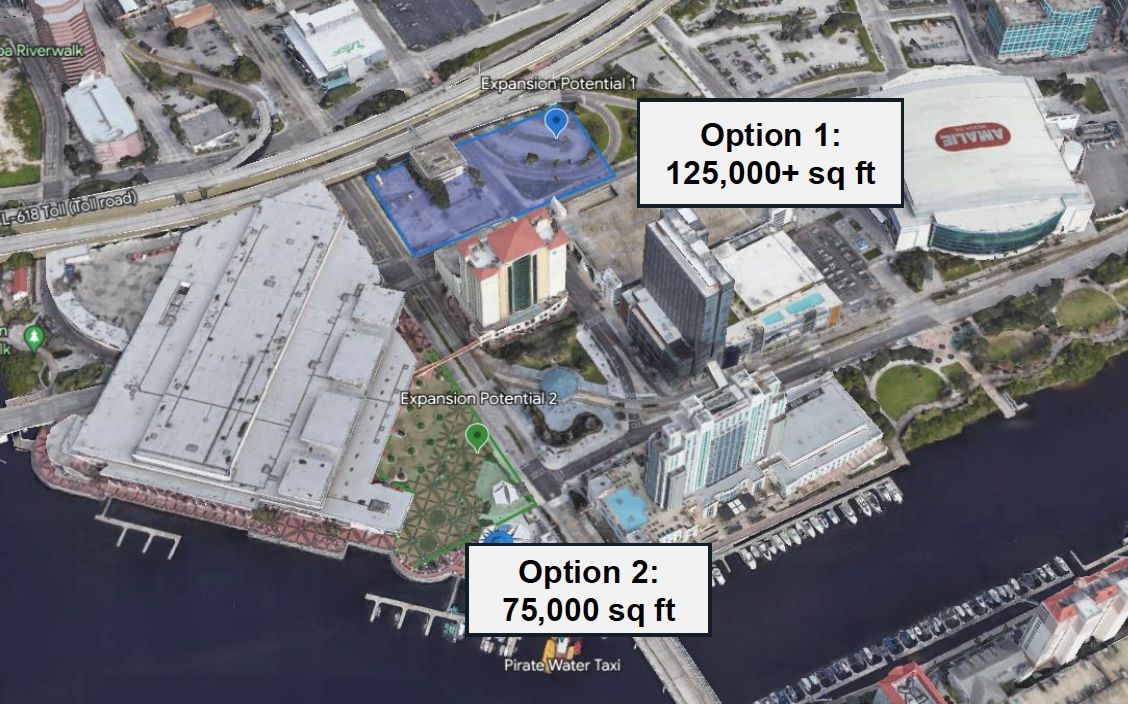
JLL recommends adding about 90,000 square feet of exhibit space, 35,000 square feet of ballroom space and additional meeting rooms, increasing the building’s rentable space by more than 125,000 square feet. The report also recommends a 1,000-room headquarters hotel connected to or immediately adjacent to the convention center, concluding the two projects must move forward together if Tampa hopes to compete for larger national conventions.
The Tampa Convention Center contains about 200,000 square feet of exhibit space and 36,000 square feet of ballroom space, compared with averages of roughly 369,000 square feet of exhibit space and 54,000 square feet of ballroom space among comparable convention destinations, helping explain why JLL recommends adding about 125,000 square feet of rentable space.
Meetings requiring 1,800 to more than 3,000 peak room nights account for only 17% of booked events but generate 36% of hotel room nights and nearly 40% of the convention center’s economic impact.
JLL identified 3,341 hotel rooms within one-half mile of the convention center across 10 properties, ranking Tampa near the bottom of a competitive set that includes Orlando, Nashville, Austin, San Antonio, Charlotte, Fort Lauderdale, Baltimore, Louisville, Milwaukee and Fort Worth. HCP likewise concluded the city’s walkable hotel inventory limits its ability to compete for conventions requiring more than 2,000 peak room nights.
During peak periods, downtown hotels reported making only about 37% of their inventory available for convention room blocks, leaving roughly 1,245 peak room nights despite more than 3,300 nearby hotel rooms. HCP found that allocation increases to about 56% during slower periods, illustrating that Tampa’s greatest constraint emerges when convention demand is strongest.
A connected headquarters hotel with a dedicated room-block agreement would change that equation by concentrating approximately 1,250 peak room nights across four hotels instead of requiring planners to coordinate blocks across roughly 10 separate properties. HCP estimates pairing that hotel with a convention center expansion could generate about 50,000 additional hotel room nights each year. Ingram said the convention center has access to approximately 20,000 hotel rooms countywide, but future growth depends on increasing the number within walking distance of the facility. “Nothing is off the board,” he said, referring to concepts that could include public-private partnerships and a headquarters hotel.
The tourism strategies also identify Brightline, Tampa International Airport’s master plan, Riverwalk improvements, Gasworx, Ybor Harbor, the TECO Streetcar, ZooTampa, the Florida Aquarium and additional downtown hotel development as complementary investments intended to strengthen Hillsborough County’s position as a convention destination rather than solely a leisure market.
Why Private Business Clubs Are Growing Again
Hybrid work is creating new demand for places where professionals can work, meet clients, build relationships and socialize under one membership.
Professionals are increasingly looking for a place between home and the office, and private business clubs are reshaping themselves around that demand by combining workspace, client meeting space, networking and social programming under a single membership. Hybrid work accelerated the shift by reducing the time many employees spend in traditional offices while increasing demand for places where they can work, entertain clients and build relationships throughout the week, a pattern that has helped membership-based clubs expand in major cities while established business and country clubs report rising enrollment among younger professionals.
Few local clubs illustrate that change more clearly than The Tampa Club, where membership has grown from fewer than 900 members to 1,245 since BNG Hospitality acquired the downtown property in 2019. As membership expanded, the average age fell from 56 four years ago to 47, while monthly enrollment climbed to roughly 25 to 30 new members, according to General Manager Alissa Costello and Membership Director Erin Stancick.
One of those members is Nick Homolka, a 30-year-old investment manager with Truist who first encountered the club through Tampa Bay Chamber events, then returned as a guest for breakfasts, lunches, dinners and drinks before deciding to join. Rather than paying for another coworking space, Homolka wanted one place where he could work between appointments, meet clients and spend time with people he hoped to know better, a combination he described as “work and play” within a “third place” outside the office and home.
“It’s not working or at home, but you have another place where people are trying to get to know each other in a laid-back setting,” Homolka said, describing the same familiarity Costello hears from members who compare the club to a neighborhood gathering place. “Many of our members call it their ‘Cheers’ bar,” she said. “We see people who work from home who are looking to engage with others. You invest in a private club because you want people who are on the same level or can help you grow your business.”
That familiarity developed for Homolka over several visits, when repeated invitations showed him that members used the club throughout the week rather than carrying the membership as a title or occasional status symbol. Watching friends return for meals, drinks and events helped justify paying for the membership himself, while the club’s intermediate category lowered the cost of joining early in his career and gave him more time to build relationships. The optional Palmer Advantage program, which provides reciprocal access to participating private clubs and golf courses around the country, extended that value beyond the downtown clubhouse.
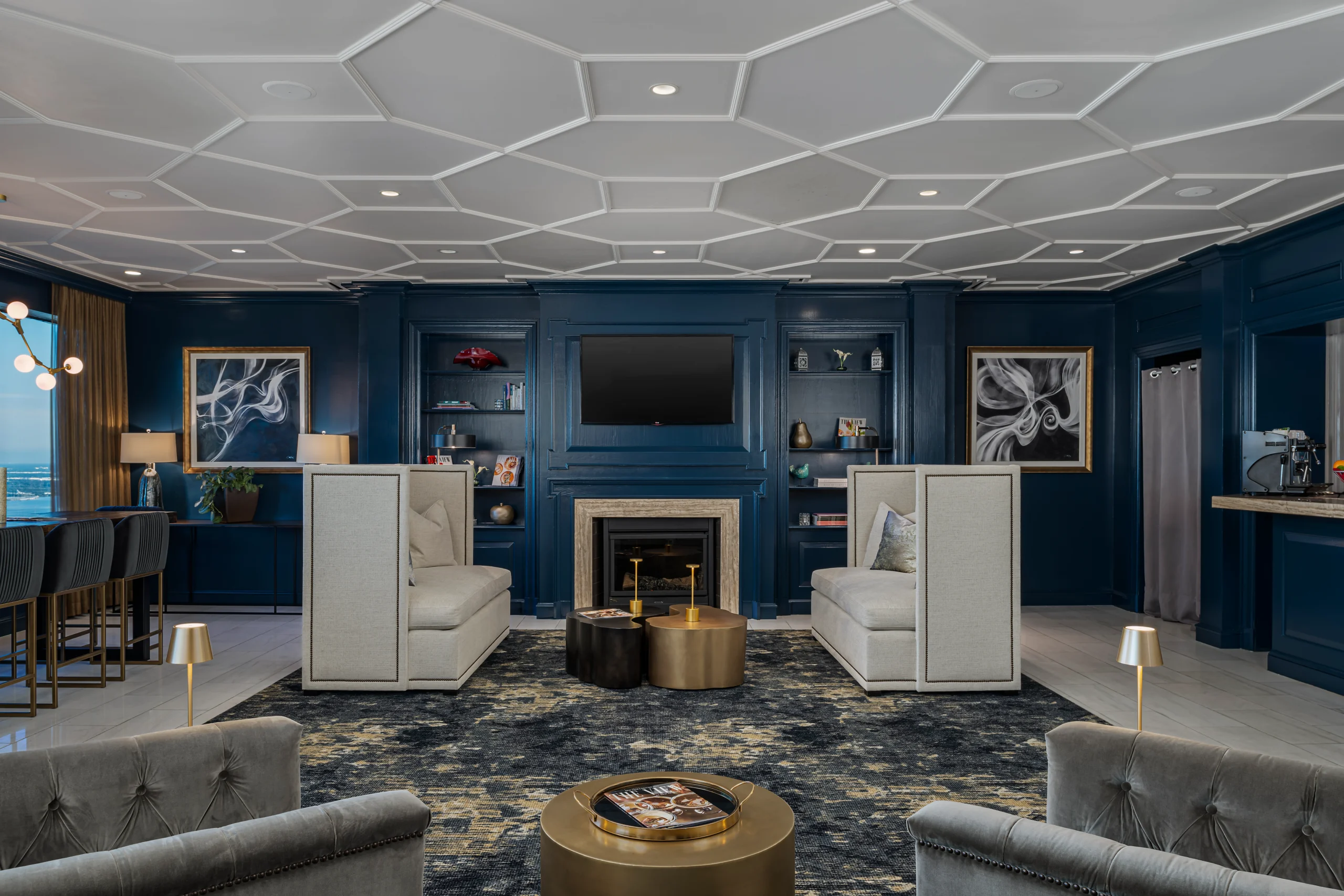

Employers are reaching the same conclusion, with companies increasingly paying for memberships that give employees a place to meet clients, network and work outside the office rather than reserving private clubs for senior executives. That demand has increased corporate membership sales at The Tampa Club from one or two each month to roughly five, led by law firms, banks and construction companies, while many corporate accounts begin with a single employee who later persuades the company to enroll additional workers. About 60% of members currently hold individual memberships, with the remaining 40% participating through corporate accounts.
“Companies are genuinely investing into the intermediate employees’ future,” Stancick said. “They want them to go out. They want them to network. They want to take clients where they know it’s going to be a proper environment to close business.”
That investment reflects how members use the club once they join, often moving through several parts of their workday without leaving the building. “It’s awesome to see a member do the full day,” Stancick said. “They come for breakfast, work remote, have a lunch meeting with a client and then bring their family in for dinner.”
Those repeated visits also changed Homolka’s view of the people he expected to meet, because he had assumed longtime members would already have established circles and little interest in someone younger. Instead, many senior members introduced themselves first and encouraged him to participate. “I originally thought it’d be tough to introduce myself,” Homolka said. “The more senior members there are really open to talking and helping you out. It really is a pretty casual atmosphere.”
That pattern of repeated use is what BNG Hospitality set out to create after acquiring The Tampa Club, one of six private clubs the company owns nationwide. Since 2019, BNG has invested about $3 million renovating the property while improving member retention by roughly 80%, according to Costello, whose management strategy centers on repositioning traditional business clubs as all-day destinations rather than places reserved for occasional lunches or formal dinners.
The strategy depends on members participating often enough for the club to become part of their routine, which is why prospective members are encouraged to return for dinner, networking programs or Cigars Under the Stars before deciding whether to join. “You get out of this club what you put into it,” Stancick said. “I’m happy to make introductions and I want people to connect, but I can’t do that if you’re at home on your couch.”
Once members begin returning regularly, Costello said, retention depends less on the physical amenities than on whether employees recognize them, remember their families and understand how they use the club. “Knowing everyone’s name the moment they walk in the door and understanding everything about their families,” she said, “I think that is really what defines luxury at this point.”
That attention extends the membership beyond business meetings as members who first arrive for client lunches later return with their families for Mother’s Day brunch, Brunch with Santa and holiday celebrations. “We genuinely care about the membership,” Costello said. “It’s not so much about a transactional business investment.”
The club’s emphasis on accessibility also reaches back to its founding in the 1980s, when it opened as an alternative to private clubs that excluded women and minorities. That philosophy has remained in place even as membership surpassed the former 1,000-member cap set in its bylaws and management became more selective about admitting new members. “We’re not using the word waitlist,” Costello said. “But we’re getting there.”
That rising demand has changed what the club sells, because members now expect more than access to a dining room or a prestigious address. “People think it’s just a space,” Costello said. “It’s not really a service. It’s an experience.”
For Costello, the club’s growth reflects its ability to preserve the personal service associated with traditional private clubs while adapting the space to professionals who work, network and socialize differently than previous generations. “Our greatest value right now in the community is bridging the gap between that old world hospitality and the new world,” she said.
The Hottest Amenity in Tampa Bay’s Luxury Condo Market? A Built-In Membership.
Developers are pairing new towers with recognizable brands, golf clubs and yacht clubs to sell both homes and a ready-made lifestyle.
Tampa Bay condominium developers are joining a global push to tie new towers to furniture brands, golf clubs and yacht clubs, betting that recognizable names and ready-made memberships will help sell expensive homes before construction begins.
Valor Real Estate Development used one approach when it launched sales for Roche Bobois St. Pete Tower, a planned 164-unit condominium that will become the French furniture company’s first branded residential project in the United States and St. Petersburg’s first designer-branded tower.
More than 1,000 brokers, prospective buyers, elected officials and invited guests attended the launch, which ended with a private Ricky Martin concert. Before the guests left, the developer said nearly 60 residences had gone under contract, putting the project more than 35% sold. Valor had also announced a $13.2 million penthouse sale that it said established a Tampa Bay condominium record of $2,727 per square foot.
Roche Bobois will lend its name to the tower, furnish its common areas and offer optional furniture packages for individual residences.

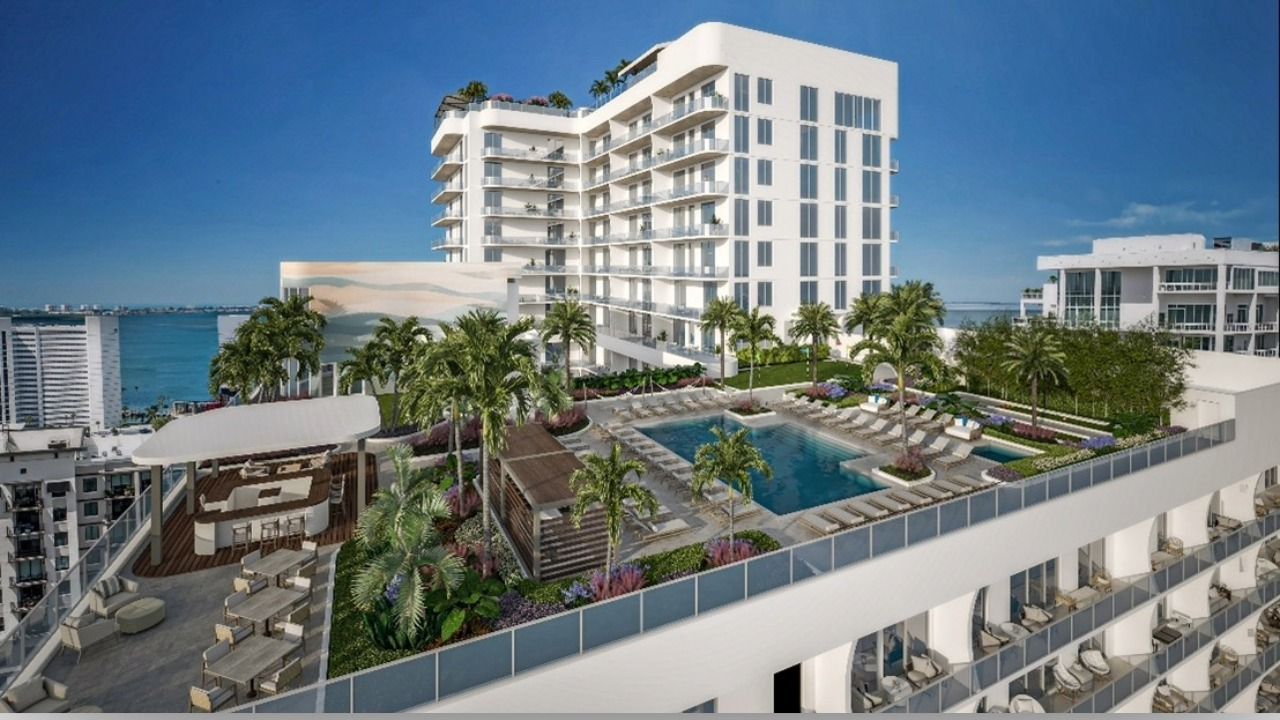
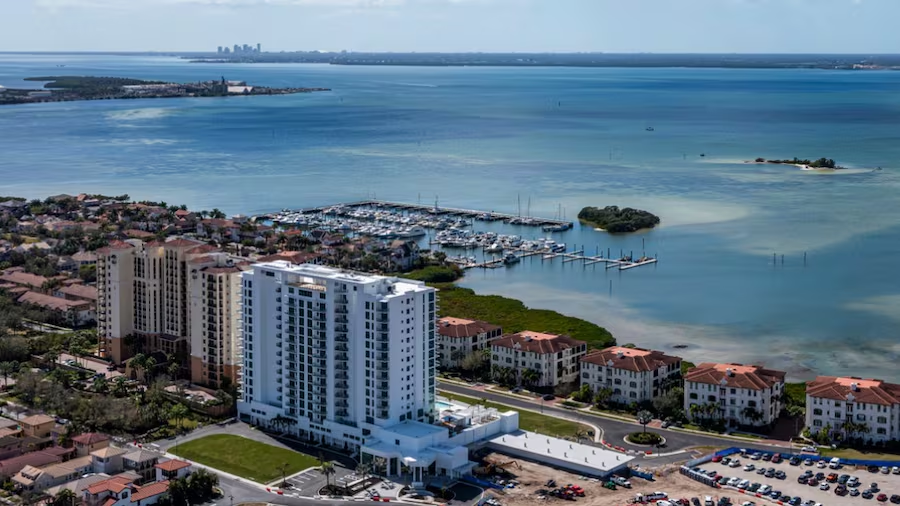
David Moyer, executive vice president of developer services at Smith & Associates Real Estate, previously told TBBW that recognizable brands and consistent service standards can reduce uncertainty for buyers, particularly those purchasing from outside the market. Buyers often commit millions of dollars years before construction is complete.
Baltimore attorney Andy Slutkin said the Waldorf Astoria name helped establish expectations for service, management and amenities, but it did not replace the due diligence he and his wife performed before buying a $4.4 million residence at Waldorf Astoria Residences St. Petersburg.
“As attorneys, we did a bunch of what I would call due diligence,” Slutkin said. “We looked at the long-term plan in downtown St. Petersburg to ensure that no one could take away our view.”
The Slutkins ruled out projects where nearby parcels could eventually obstruct their waterfront view. At Waldorf Astoria, the brand established a familiar operating standard, while the location and limits on future development gave them greater confidence that the view would remain intact.
Around 1,500 consumer-branded residences have been completed or remain under development worldwide, according to Savills data cited by The Wall Street Journal, and Savills expects the total to exceed 3,700 by 2040. The sector has grown about 180% over the past decade, according to EHL Hospitality Business School, with supply expected to double again by 2030.
Hotel companies such as Ritz-Carlton, St. Regis and Four Seasons built the original model by combining residences with established service standards and hospitality operations. Design, fashion, automotive and food-and-beverage brands now account for more than 20% of projects, expanding the category to names such as Porsche, Bentley, Aston Martin, Nobu and Cipriani. Clearwater-based Valor, for example, is pairing with both Roche Bobois in St. Petersburg and Aston Martin on a separate residential tower planned for Daytona Beach Shores.
The economics help explain the growth. Savills estimates that branded residences command an average premium of about 33% over comparable unbranded properties, with premiums averaging 27% in major global cities and 47% in emerging markets. Developers can also use presales to generate deposits and strengthen lender confidence before construction is complete.
In Sarasota, GSP Development is using a golf-club partnership rather than a licensed residential brand to market Saravela, its planned condominium tower.
Buyers receive a complimentary one-year sports membership at Heritage Golf Group’s TPC Prestancia, including access to dining, fitness facilities, social events, a pool and more than 20 racquet-sport courts. Heritage’s more than 75,000 members also receive preferred pricing and residence selection at Saravela.
“Many of our members have expressed interest in second homes in Heritage markets that offer rental flexibility,” Heritage Golf Group Chief Operating Officer Jim Oliver said when the partnership was announced.
GSP said it is also considering creating an owner- or member-only club at Saravela. The company has not disclosed how many buyers have come through Heritage members, what preferred pricing entails or what buyers would pay to continue their memberships after the complimentary year.
At AQUA at Westshore Yacht Club, the affiliation comes from the surrounding community rather than an outside brand. The 77-unit tower is more than 50% sold, according to the development team, and current buyers are being offered membership in the existing Bay Club, although membership is not required.
Carlos Avila, co-developer and marketing director for AQUA, said some buyers have become more skeptical of branded residences, particularly projects tied to companies with little experience operating homes or hotels.
“A lot of the brands that are coming in have nothing to do with hospitality,” Avila said. “A lot of the brands are starting to become kind of superfluous.”
AQUA instead points buyers to an operating yacht-club community with a 175-slip marina, restaurant, tiki bar, fitness center, spa and established social programming.
“This is a real club,” Avila said. “It’s a real functioning marina yacht club within the Westshore Yacht Club.”
Avila estimated that about 90% of AQUA buyers value the Bay Club component.
“People, rather than chasing brands, are really looking for that sanctuary, that lifestyle you really can’t get anywhere else than inside the Westshore Yacht Club,” Avila said.
The projects illustrate how Tampa Bay developers are adapting a global luxury real estate trend to local markets. Rather than relying solely on architecture or waterfront views, they are increasingly using established brands and membership communities to differentiate towers, attract presales and strengthen projects before construction is complete.
Forbici Serves Nearly 600 Meals on Opening Night in St. Pete
Next Level Brands opened its second Forbici in a 12,300-square-foot Sundial space built to serve nearly 400 guests and support a broader expansion strategy.
Nearly 600 meals were served on opening night at Forbici’s new Sundial location as Next Level Brands expanded the Italian restaurant beyond its original Hyde Park Village location.
The restaurant served 575 meals Wednesday night, drew about 200 walk-in diners and filled its 100-seat bar throughout the evening, according to founder and CEO Jeff Gigante.
Reservations for the second night were stronger than opening day, he said, even though late June is typically one of the slower periods for Tampa Bay restaurants.
“This is the brand that we’re looking to grow,” Gigante said. “We want the number two to perform to the metrics that number one is.”
Gigante said a third Forbici is planned near Wiregrass in Wesley Chapel within the next year to year and a half. If the first three restaurants perform to expectations, he said, the company believes the concept could ultimately expand to between 20 and 40 locations across the Southeast.
“We believe there can be anywhere between 20 and 40 of these concepts throughout the Southeast United States,” Gigante said.
The St. Petersburg restaurant is the second Forbici location after the original opened in Tampa’s Hyde Park Village and the largest restaurant Gigante has built.
The 12,300-square-foot restaurant occupies the former Sea Salt space at Sundial, with seating for nearly 400 guests, private dining space, live music and indoor and outdoor bars.
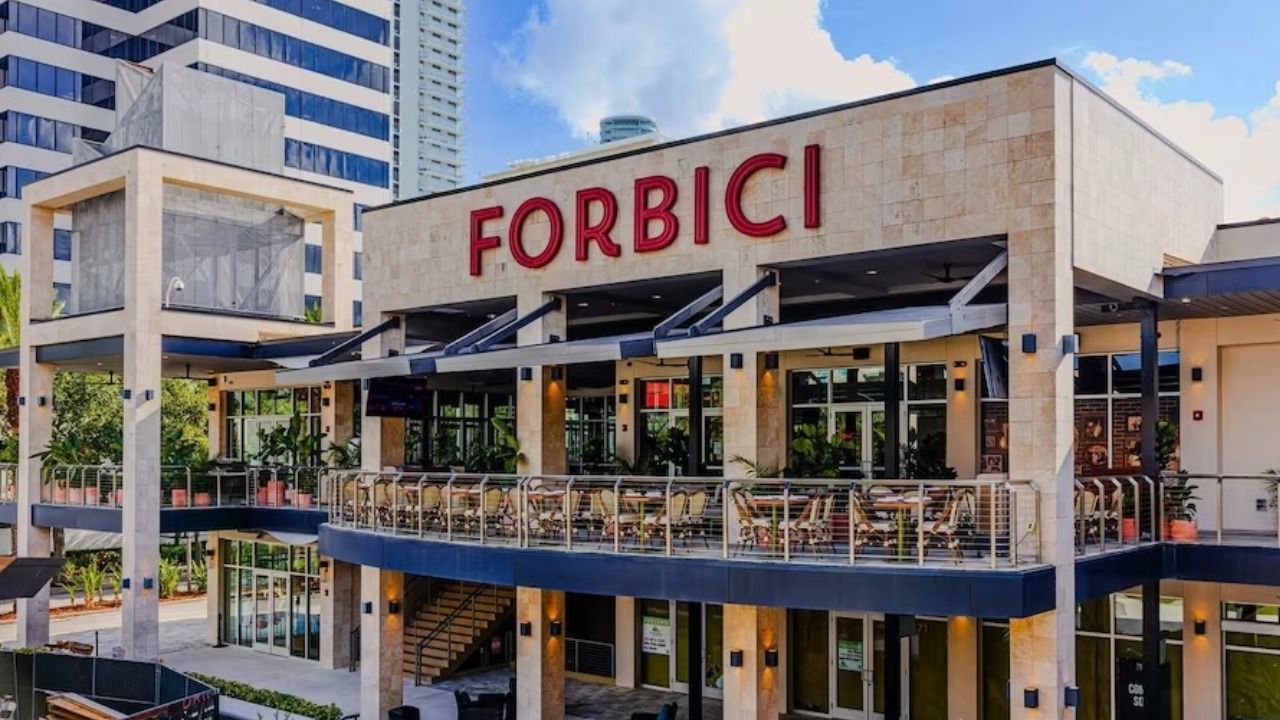
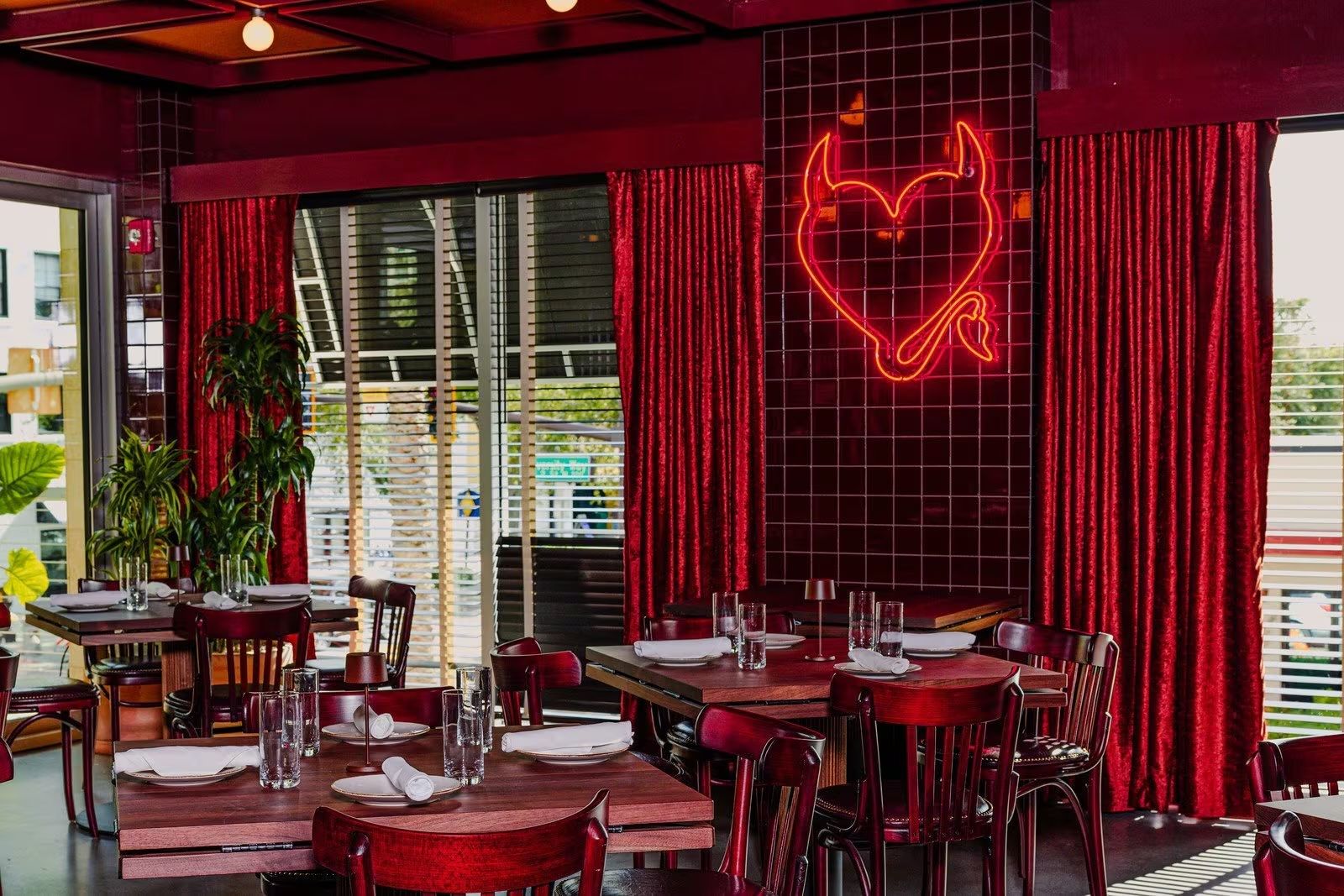
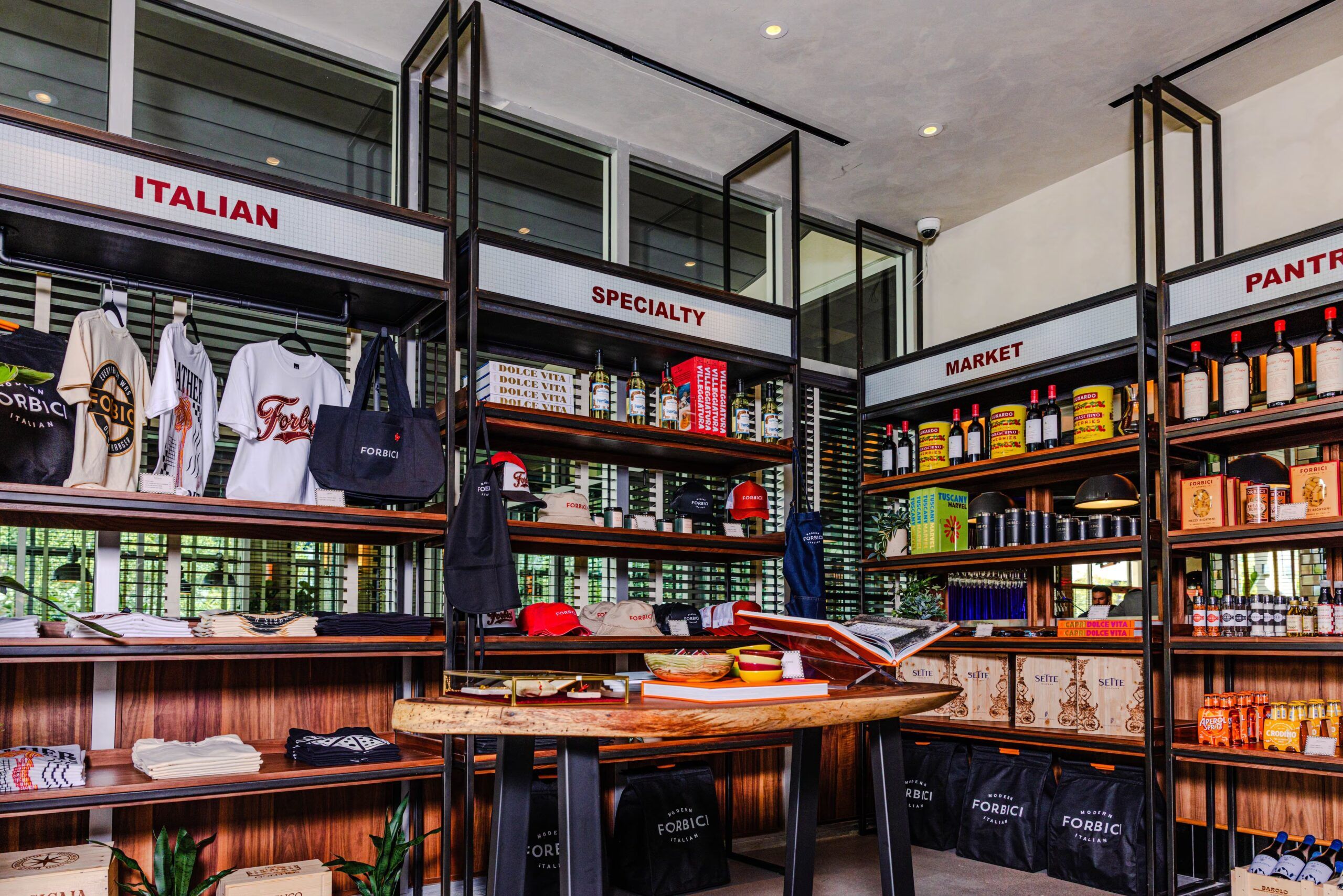
The opening follows more than two years of planning. Next Level Brands originally pursued another space at Sundial before litigation involving neighboring property owners changed the redevelopment plans.
The company ultimately secured the former Sea Salt space, allowing it to renovate the existing restaurant rather than build one from the ground up while gaining a larger footprint.
For Gigante, who grew up in St. Petersburg, the opening represents both a homecoming and a business expansion. Many of his childhood friends invested in the restaurant, he said, and opening week also drew longtime Hyde Park customers across the bridge to visit the new location.
Gigante said Forbici combines moderate pricing, live music and a nearly 400-seat dining room in a format designed to appeal to a broad range of diners.
Unlike the company’s higher-end concepts, he said, Forbici is intended to become part of customers’ weekly routines rather than a destination reserved for special occasions.
That operating model shapes the restaurant’s economics. Gigante said pizza and pasta keep ingredient costs relatively stable compared with restaurants that rely more heavily on proteins.
Portions are intentionally generous, prices typically increase only once or twice a year and the strategy is designed to encourage repeat visits rather than special-occasion dining.
“People are voting with their pocketbooks,” Gigante said.
“We’re looking to increase guest visits to two to three times per week,” he said. “You’ve got to really create the trust in your consumer where they’re like, ‘Every time we come here, there’s music playing, there’s great vibe, there’s energy, it’s good, the food’s consistent and we get a good portion.’”
Gigante said Next Level Brands documents construction, hiring and employee training before each opening, so customers become familiar with a restaurant before visiting for the first time.
“He who tells the best story wins,” Gigante said. “They take the ride along with us right through opening.”
Next Level Brands is already planning its next investment in St. Petersburg. Drift, a cocktail bar under development at Sundial, is expected to open later this year, and Gigante said additional concepts could follow.
“When we move, it’s with purpose,” Gigante said. “We’re here in such a significant way that it’s just natural that we’re going to be looking to do more brands in the area.”
Gigante said the region bears little resemblance to the Tampa Bay where he opened his first South Tampa restaurant in 1996. At the time, he said he often walked servers to their cars after work because there was so little around the neighborhood.
Population growth, downtown redevelopment and the expansion of technology, finance and cybersecurity have since created a much larger customer base for restaurants.
“People are eating out as part of their culture now,” Gigante said. “They’re not looking at it as just a commodity. They’re looking at it as their entertainment, their travel, their culture.”
Former TC Choy’s Building Reopens as Howard & Platt
Michael Disser has returned the longtime South Howard restaurant property to service with a concept designed for repeat visits from dinner through late evening.
The former TC Choy’s building on South Howard Avenue has reopened as Howard & Platt.
The restaurant comes from hospitality operator Michael Disser, whose South Howard portfolio includes Sunset Rodeo, Good Luck Chuck’s and Corner Bar. Disser said the building’s history helped shape the concept.
“South Howard has no shortage of energy, but we felt there was room for a restaurant that people could work into their regular routine,” Disser said. “This building has a lot of history, and we wanted to bring it back with something that felt elevated enough for the location but still approachable.”
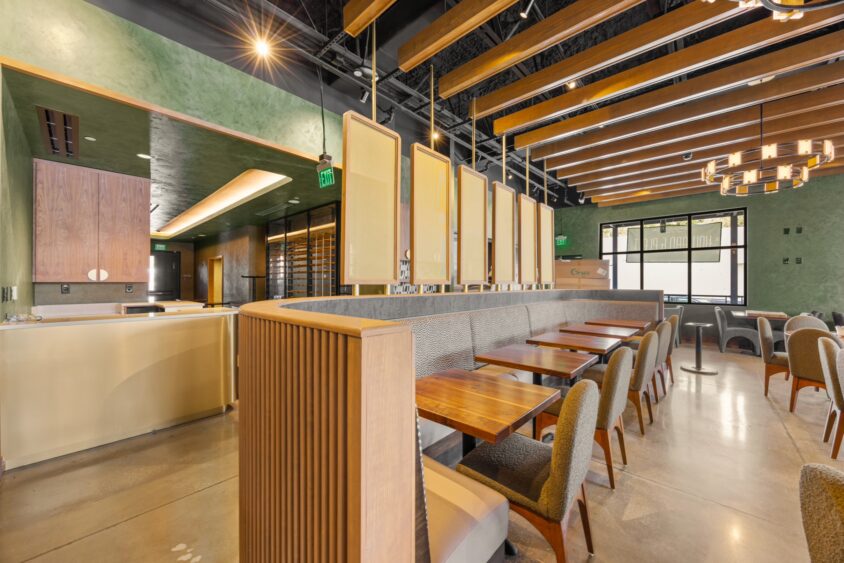
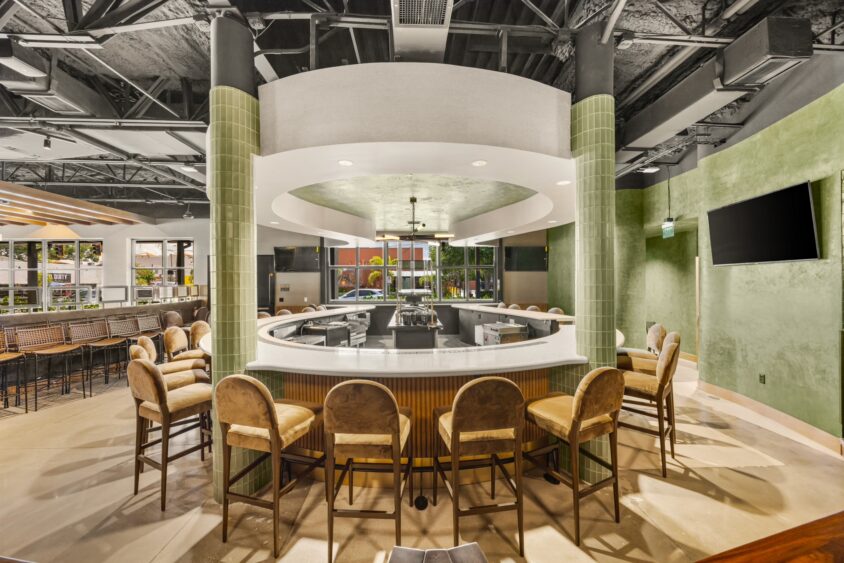
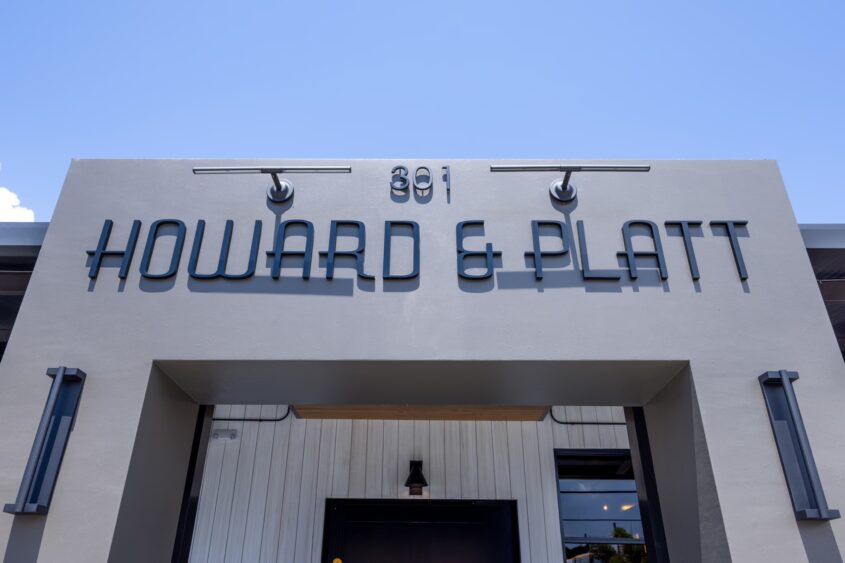
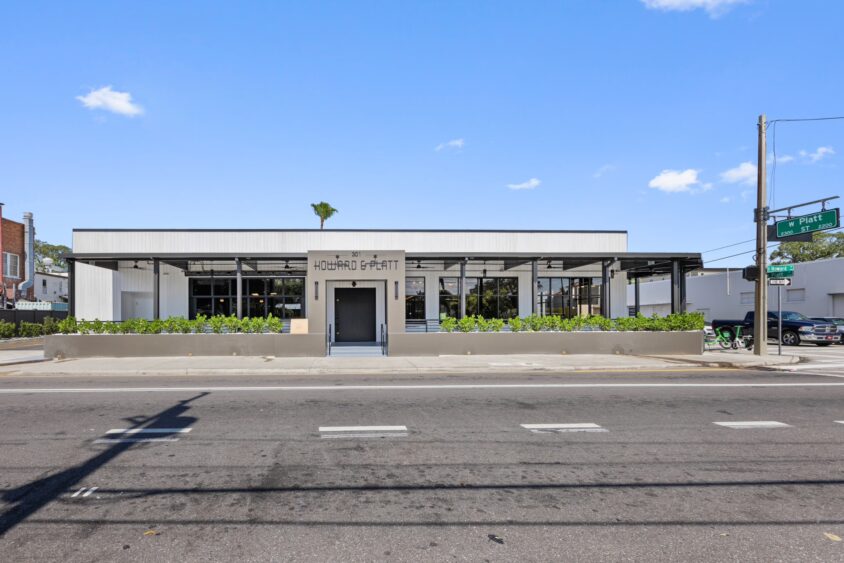
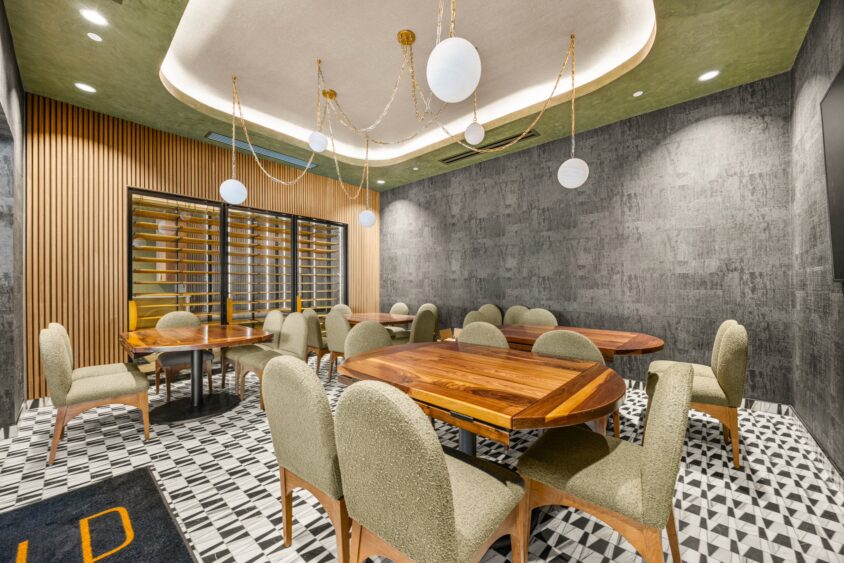
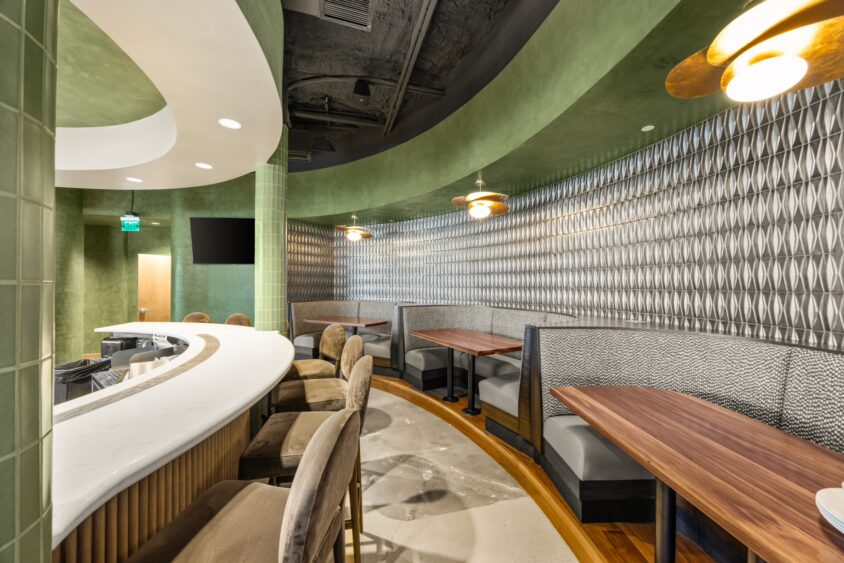
Howard & Platt includes a private dining room and a covered patio, and is expected to serve customers throughout the day and into the evening, from weeknight dinners and after-work gatherings to weekend brunches and the beginning of a night out along South Howard.
Disser said pricing is built around repeat visits, reflecting a concept designed for customers who may visit several times a month rather than only for special occasions.
“Howard & Platt is a restaurant first, but we do want it to have energy later in the evening,” he said. “South Howard already has a strong late-night rhythm, so it was important for this concept to connect dinner service with what naturally happens on the block after dark.”
The restaurant’s opening returned the former TC Choy’s property to restaurant use for the first time since the longtime South Howard establishment closed.
The Landon: Rising Above the Ashes
Michael Stewart and chef Robert Hesse turned loss, reinvention and decades of restaurant experience into a deeply personal South Howard dining room.
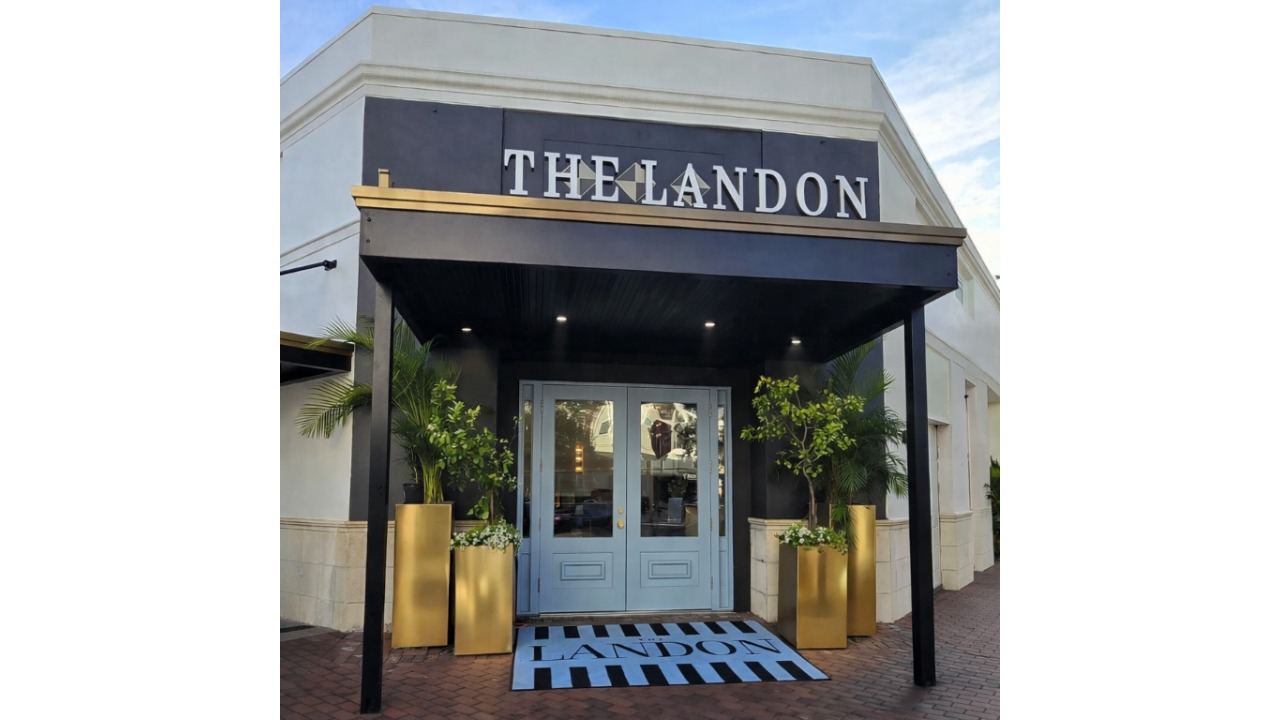
When flames forced the closure of 717 after more than two decades, restaurateur Michael Stewart faced a choice. He could rebuild the restaurant guests had known for years or create something entirely new. He chose the latter, opening The Landon in March 2026 and turning an unexpected loss into the next chapter of his career.
The opening expands Stewart’s presence along South Howard Avenue, where he and his wife, Lindsay, now own restaurants on both sides of the street. AVA Inspired Italian, named after their daughter, sits directly across from The Landon, named for their son, creating a pair of restaurants that reflects both the family’s hospitality and its roots.
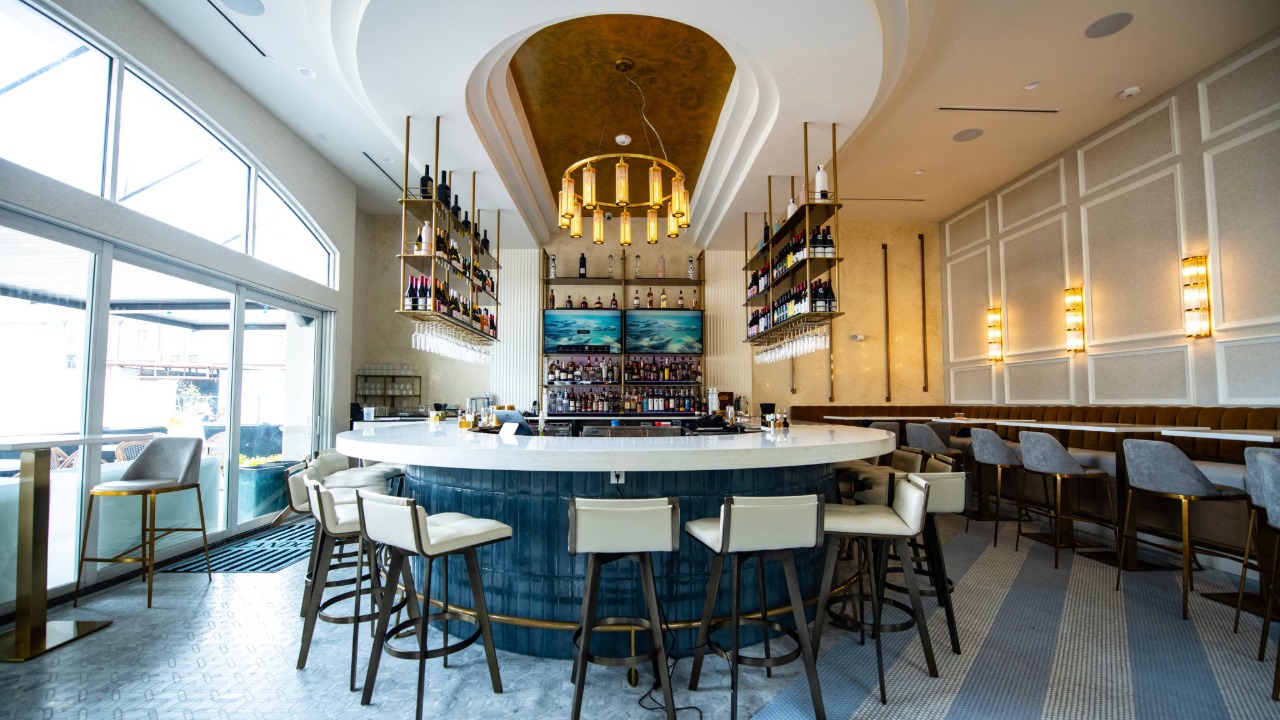
Stewart partnered with Kal Harris, Steve and Lindsay MacDonald and Lee Mezrah to bring the concept to life. Interior design firm Block created a 150-seat dining room centered around a striking bar, with custom booths that make even a full restaurant feel intimate. The restaurant opens daily at 3 p.m., with weekend brunch expected to follow.
General Manager Kal Harris tells his team to take care of one another first. His belief is that employees who feel supported naturally create better experiences for guests. Around The Landon, the preferred answer to almost any request is simply, “Yes.”
That approach extends into the kitchen, where Executive Chef Robert Hesse oversees a menu shaped by decades spent in some of the country’s most demanding restaurants.
Chef Robert Hesse: A Comeback Served One Plate at a Time
Executive Chef Robert Hesse has cooked in some of the world’s most respected kitchens, but his story began in St. Petersburg’s Childs Park neighborhood. After spending part of his childhood in foster care, Hesse left Florida at 17 for California, determined to build a different future.
His first job came as a dishwasher at Thomas Keller’s legendary French Laundry, where he learned that precision began long before a plate reached the dining room. The experience opened doors to kitchens led by Daniel Boulud, Eric Ripert and Gordon Ramsay, eventually carrying him through 36 states and four countries before he turned 35.
Hesse spent nearly a decade with Ramsay’s organization, including The London in New York and Maze, before television audiences came to know him during three seasons of Hell’s Kitchen. By then, however, most of his education had already taken place behind the scenes, where long hours and exacting standards shaped the chef he would become.
Professional success did not shield him from personal struggles. At one point Hesse weighed more than 650 pounds. Weight-loss surgery marked the beginning of his transformation, but he credits the years that followed, built through discipline, accountability and consistency, with changing his life. Today he reminds young cooks that no one else gets to write their story.
Hesse describes his work at The Landon as his “swan song,” a kitchen that reflects every lesson gathered throughout his career.
That experience shows up immediately on the plate. Every dish arrives with the polish of fine dining while remaining approachable enough to encourage diners to order what simply sounds good.
The Tuna Tartare Cannoli sets the tone. At first glance it looks like dessert, until the crisp shell gives way to bluefin tuna, avocado, caviar and bright citrus ponzu. The playful presentation immediately introduces diners to a menu that enjoys surprising them.
The famous $10K Scallops, the dish that earned Hesse a $10,000 victory on Hell’s Kitchen, remain one of the menu’s signatures. Perfectly seared scallops rest atop silky corn pudding alongside pork belly, a quail egg and rich veal demi-glace, creating a dish that is as satisfying as it is visually striking.
The Crispy Chicken offers another unexpected twist. Served with caviar ranch and truffle ponzu for dipping, diners can shift the flavor profile with every bite, transforming a familiar comfort food into something distinctly its own.
The Duroc Pork Tenderloin pairs tender pork with a cheddar grit cake, squash purée and bacon apple chutney, balancing smoke, sweetness and acidity while keeping the familiar flavors that make the combination so enduring.
Dessert provides a memorable finish. The vibrant purple Ube Tres Leches arrives at the table before warm ube and white chocolate sauce is poured over the cake tableside, adding just enough theater without overshadowing the dessert itself.
Stewart’s story and Hesse’s story begin in different places, yet they arrive at the same table. One rebuilt after losing a restaurant. The other rebuilt after nearly losing himself. Together they have created a restaurant that feels deeply personal without ever asking diners to dwell on the backstory. Instead, The Landon lets the experience speak for itself, one thoughtfully prepared plate at a time.
Big Brothers Big Sisters Targets Young Professionals as More Than 1,000 Children Await Mentors
The organization says four consistent hours a month can change a child’s life, but more than 1,000 children remain on its waiting list.
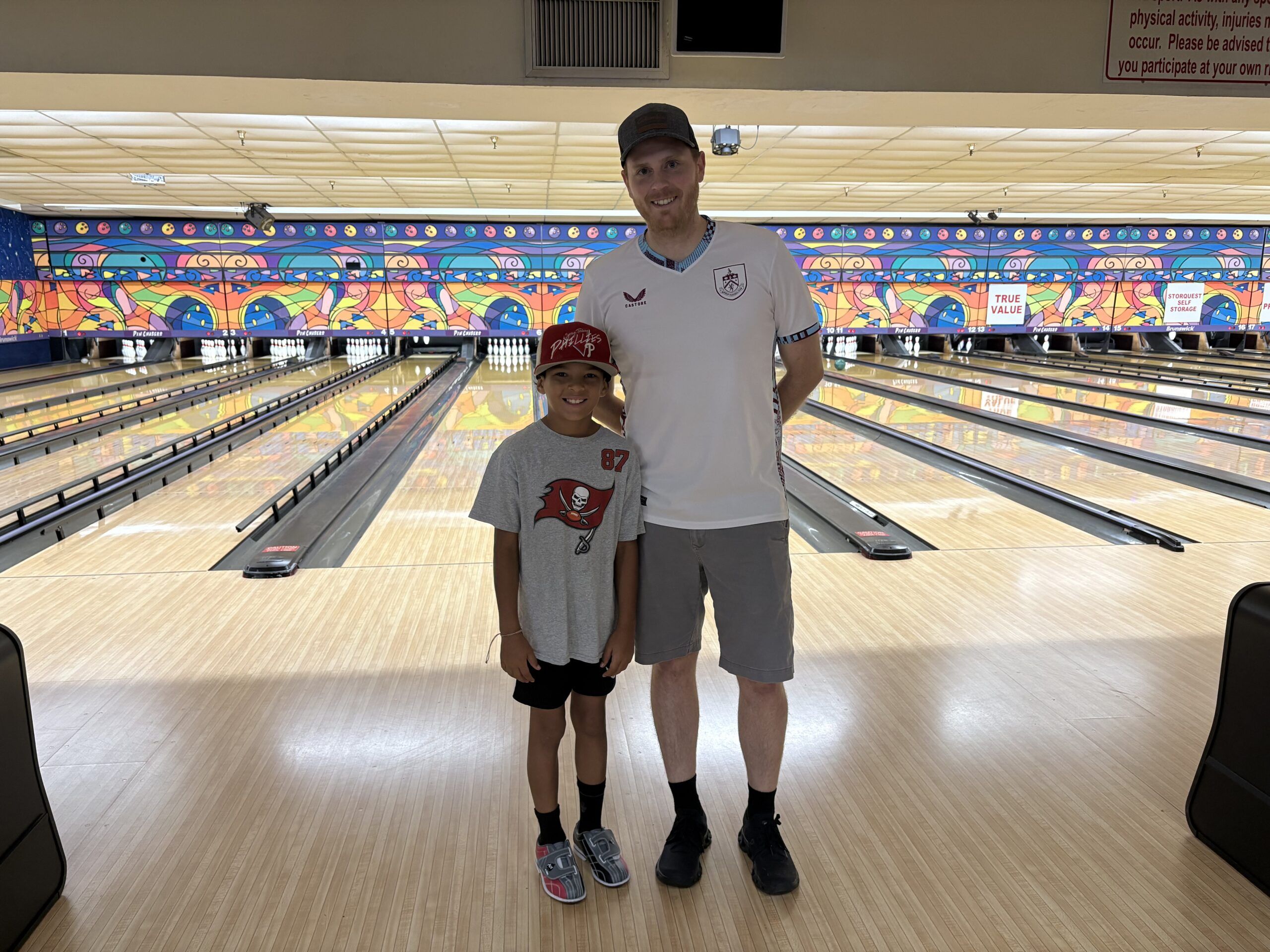
When Hannah Oliver was matched with an 11-year-old girl named Madison shortly after graduating from college, Madison was afraid to ride a bicycle. She was the only one among her friends who couldn’t ride and had become too embarrassed to keep trying.
The two started with a tricycle before working up to a bicycle. Many afternoons ended with Oliver walking beside the bicycle after Madison climbed off. Months later, Madison was riding on her own.
“Something that wasn’t huge to me was such a big deal to her,” Oliver said.
Oliver now helps recruit the volunteers she once became herself. Big Brothers Big Sisters of Tampa Bay increased the number of mentoring matches enough to earn a national growth award this year, yet more than 1,000 children across the organization’s nine-county service area are still waiting to be matched with a mentor. As the nonprofit prepares for an August volunteer recruitment campaign ahead of Big Brothers Big Sisters Month in September, Oliver said many adults simply assume they don’t have enough time to mentor.
“We’re always looking for dollars,” said Oliver, the organization’s senior director of marketing and communications. “But if we don’t have the volunteers in place, the dollars don’t really go that far.”
The organization will focus much of its recruiting on younger professionals. While many longtime volunteers have been retirees with more flexible schedules, Oliver said many working adults dismiss mentoring because they assume it requires more time than they can realistically give.
The commitment is about four hours each month. Outings can be as simple as taking a walk, attending a sporting event, visiting a museum or spending time together. Big Brothers Big Sisters also partners with local attractions, sports teams and businesses to provide discounted or complimentary activities that reduce costs for mentors.
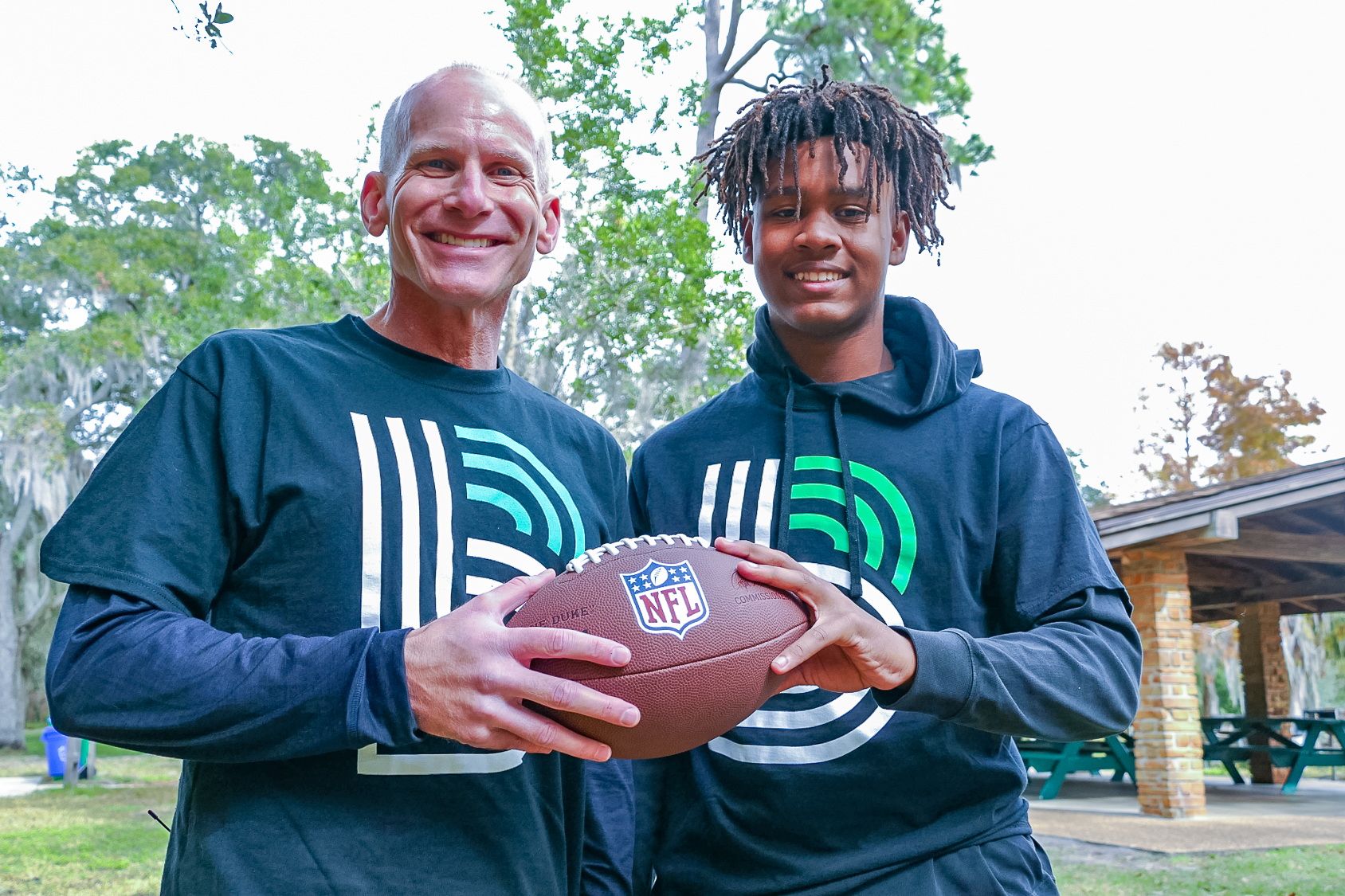
“I think probably the biggest misconception is that it takes so much more,” Oliver said. “It really is just consistently showing up.”
Many children in the program live in single-parent households or are being raised by grandparents, aunts or uncles.
“Kids are just looking for somebody to show up and be another consistent adult in their life,” she said.
Boys often wait longer because recruiting Big Brothers has historically been more difficult than recruiting Big Sisters, Oliver said. The organization is also seeking mentors from a variety of professions, age groups and backgrounds so children can see a resemblance to themselves in their mentors.
“We’re always looking for diverse mentors,” Oliver said. “We’ll never turn a Big away if they’re willing to give back their time.”
Parents are increasingly working two or three jobs simply to keep the lights on and food on the table, Oliver said, leaving them with less time than they would like to spend with their children. Summer magnifies those challenges as students lose access to school meals, daily supervision and the routines that come with the school year. Reading together, learning a new skill or simply getting a child out of the house for a few hours can make a meaningful difference, she said, particularly as concerns about mental health and social media continue to grow.
Big Brothers Big Sisters offers both community-based and school-based mentoring. Community mentors spend time with children outside school, while school-based mentors meet with students on campus during the school day. Oliver said the school-based option has attracted volunteers who want to mentor but are hesitant about transporting a child or coordinating activities outside school hours.
Oliver said the organization believes many of the children still waiting could be matched if more adults reconsidered what four hours a month can accomplish.
“Our biggest ongoing need is making sure that we’re consistently matching kids,” she said. “Ideally, we would love to have a waitlist for Bigs and not a waitlist for Littles.”
Good Life: New Luxury Retail Arrives in Tampa
LoveShackFancy opens at Hyde Park Village while International Plaza adds a new wave of luxury retail and dining concepts.
LoveShackFancy Opens First Tampa Bay Boutique at Hyde Park Village
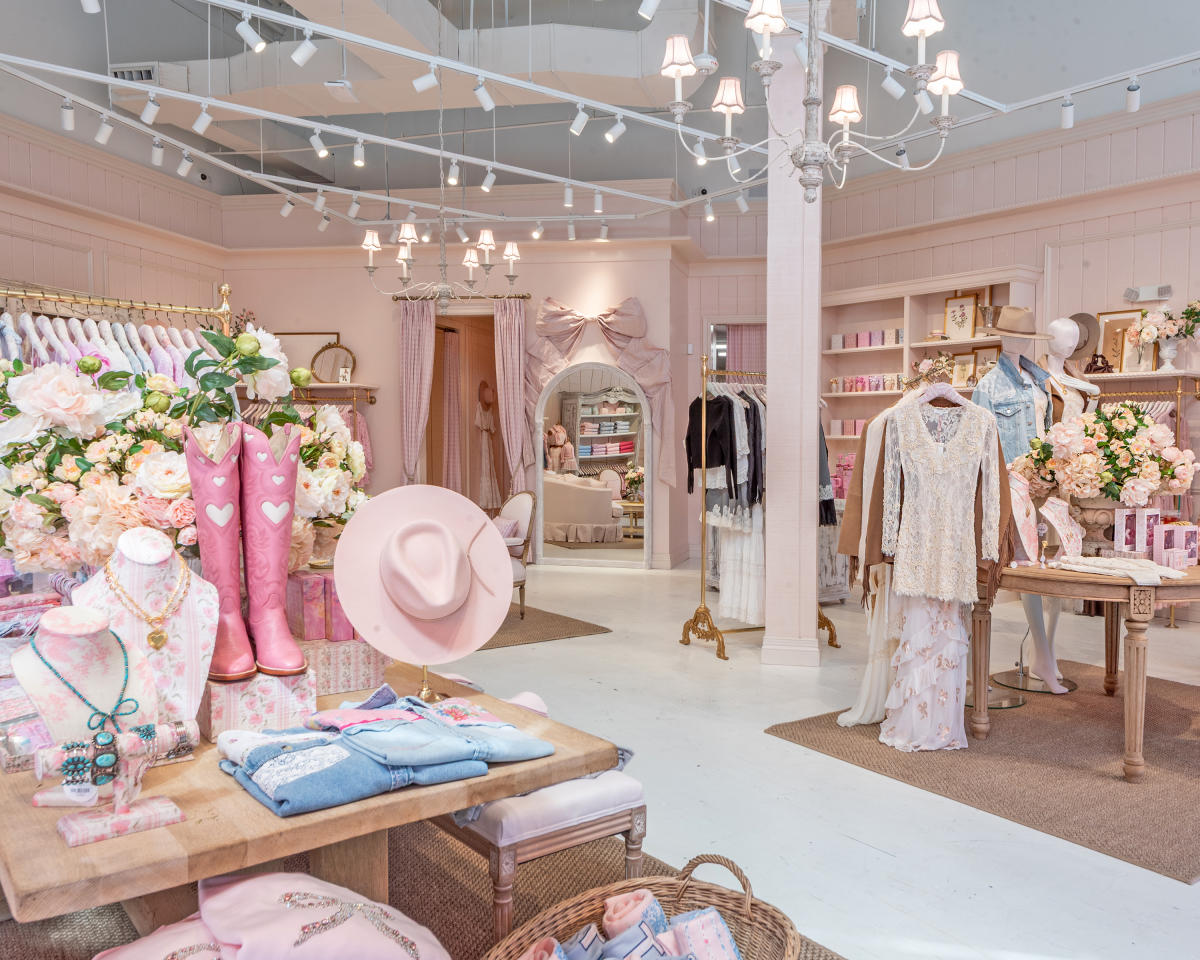
LoveShackFancy has opened its first Tampa Bay boutique at Hyde Park Village, marking the fashion brand’s third Florida location and first outside South Florida. The boutique occupies the former J. McLaughlin space at 1619 W. Snow Ave. and features blush grasscloth walls, decorative latticework and crystal chandeliers inspired by historic Palm Beach homes alongside the brand’s floral-inspired apparel, accessories and home décor.
The opening expands Hyde Park Village’s luxury fashion lineup under the ownership of WS Development, joining retailers including Zimmermann, Alice + Olivia and Veronica Beard. LoveShackFancy celebrated its debut with Tampa-exclusive merchandise, live entertainment and giveaways. “We always hoped that Hyde Park would be a place of discovery, of finding something hidden and special around the corner, and that’s exactly what LoveShackFancy brings,” said Samantha David, president of WS Development.


International Plaza Expands Its Retail and Dining Lineup
International Plaza is expanding its retail and dining lineup with new openings planned for 2026, including several brands making their Tampa Bay debut. The additions include Dolce & Gabbana, Vuori, Roberto Coin, Edikted, BRITTO, Bissinger’s Handcrafted Chocolatier, Rowan, Ceviche Tapas Bar and Restaurant, Kendra Scott, Pottery Barn and Pottery Barn Kids. BRITTO, Bissinger’s Handcrafted Chocolatier and Rowan are now open, while Vuori and Ceviche are expected to debut this summer. The remaining retailers are scheduled to open this fall.
Existing tenants are also expanding their presence at International Plaza. Kay Jewelers recently relocated within the property, while Montblanc and Designers’ Closet plan moves later this summer. Lululemon and David Yurman are expanding their existing stores. Located near Tampa International Airport, International Plaza is home to more than 170 retailers and about 30 restaurants and dining concepts.
Davis Islands Estate Lists for $21.999 Million
The 18,568-square-foot waterfront estate pairs open-bay views with resort amenities, expansive entertaining space and parking for nine vehicles.
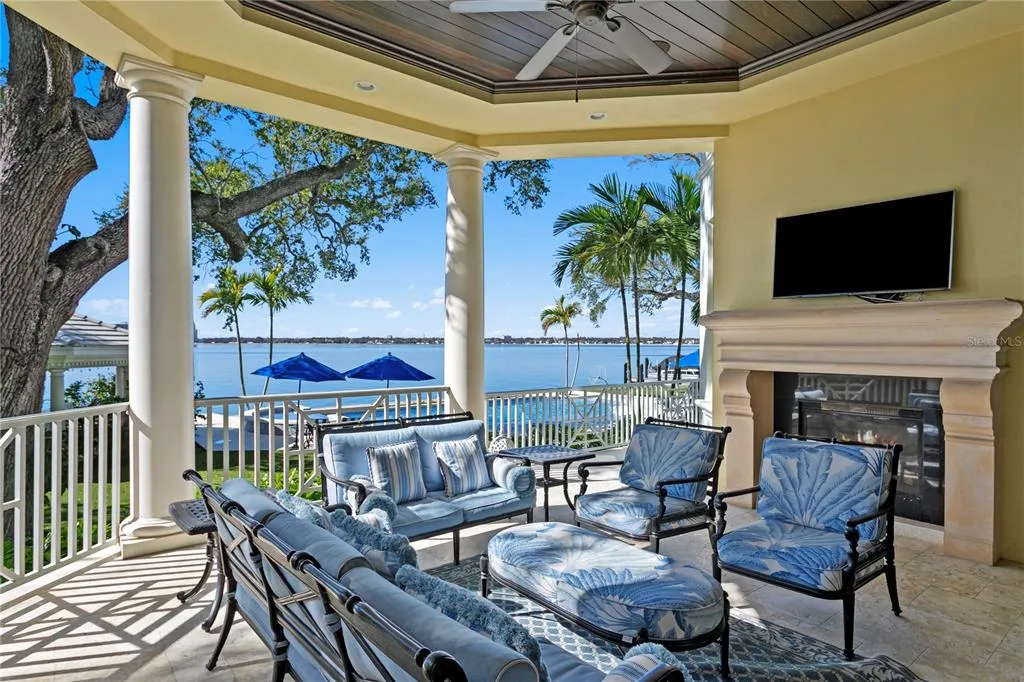
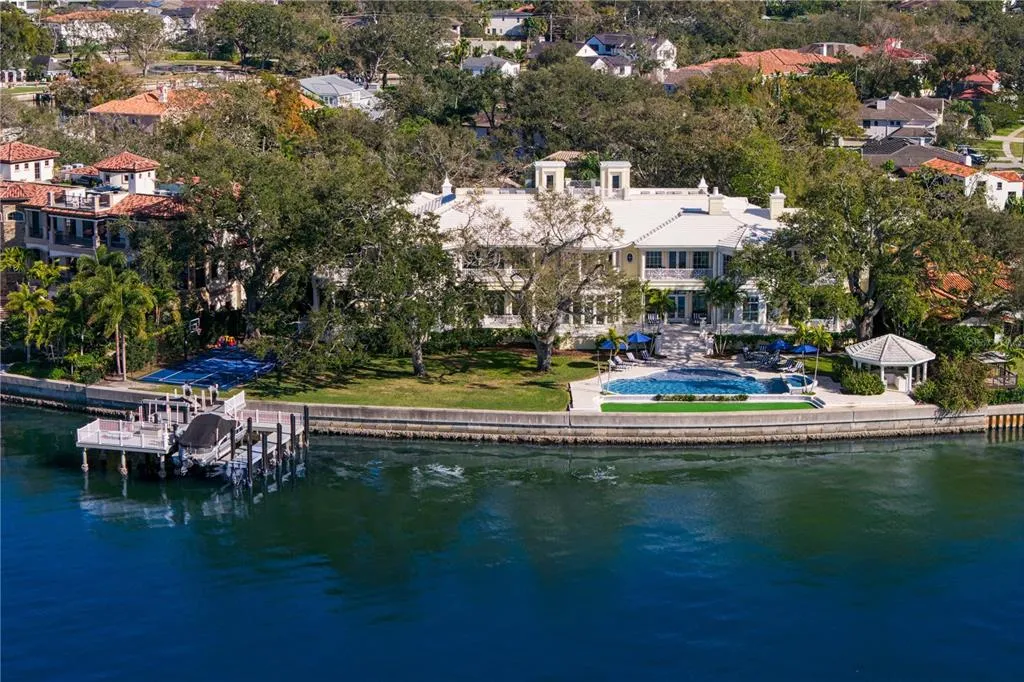
Davis Islands estate designed by architect Thomas Everett Lamb and built by Windstar Homes is listed for $21.999 million, bringing more than 18,500 square feet of living space to nearly an acre of open-bay waterfront overlooking Hillsborough Bay. Completed in 2016, the residence at 52 Ladoga Ave. was designed to maximize those waterfront views through expansive terraces, walls of glass and formal entertaining spaces.
The home spans 18,568 square feet on a 0.92-acre property and includes eight bedrooms, 10 full bathrooms and five half bathrooms, along with formal living and dining rooms, dual wine rooms, a theater, game room, gym, guest suite and a separate guest or nanny apartment with its own kitchen, living area and laundry.
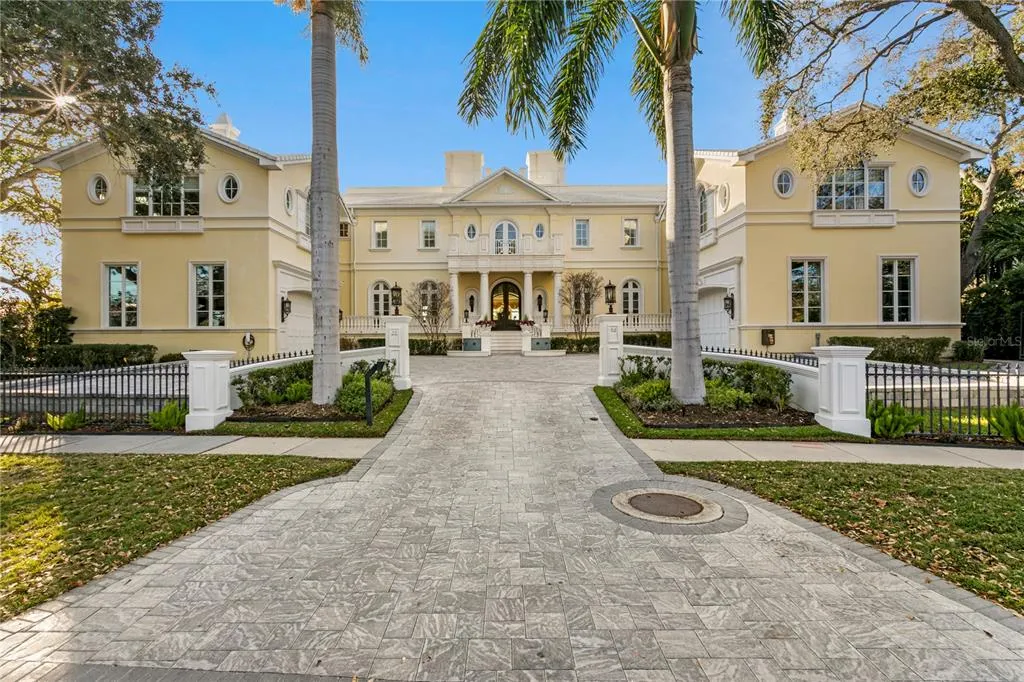
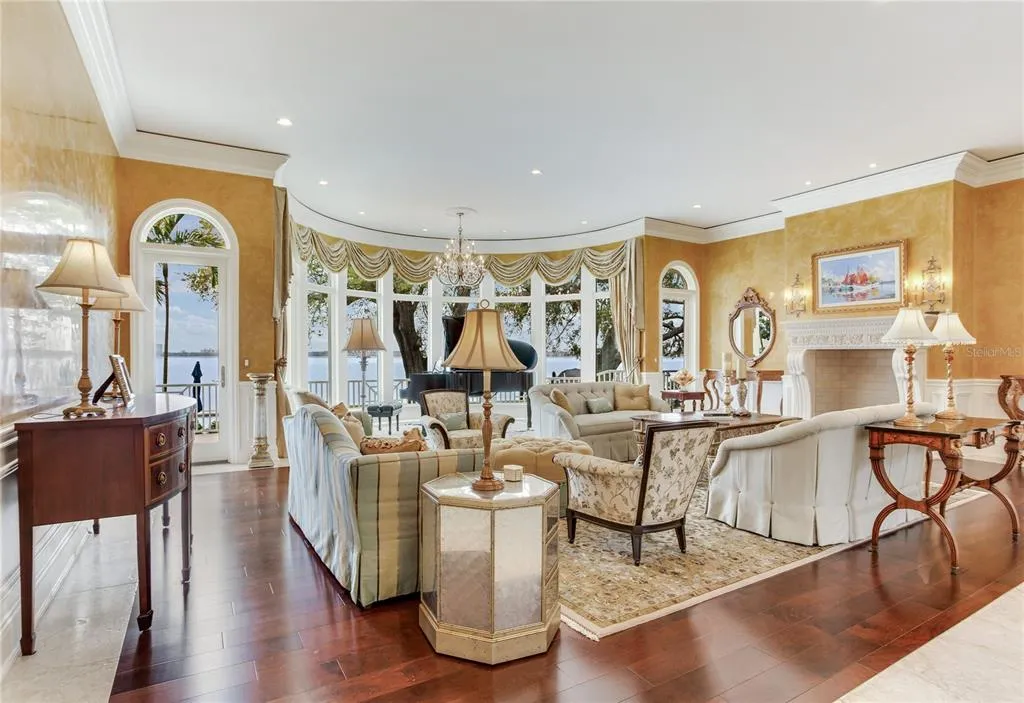
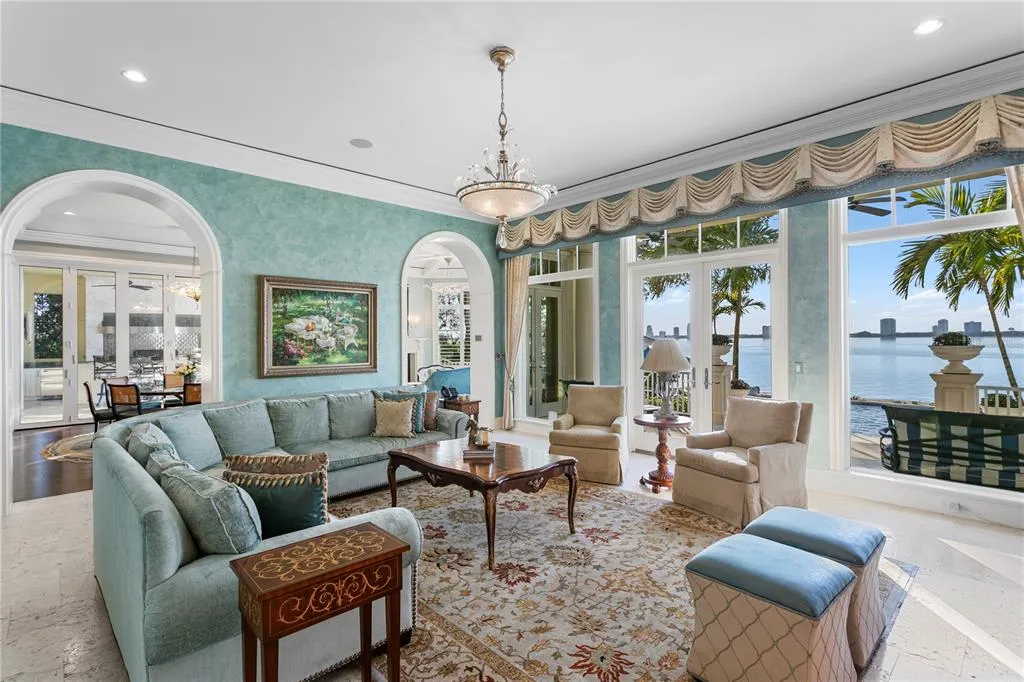
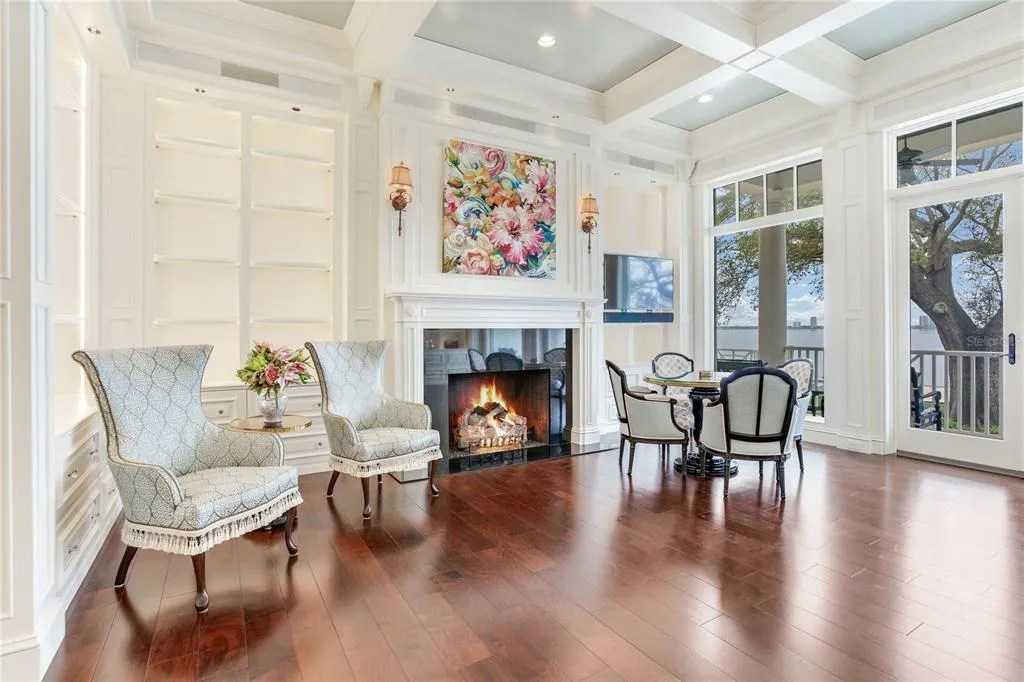
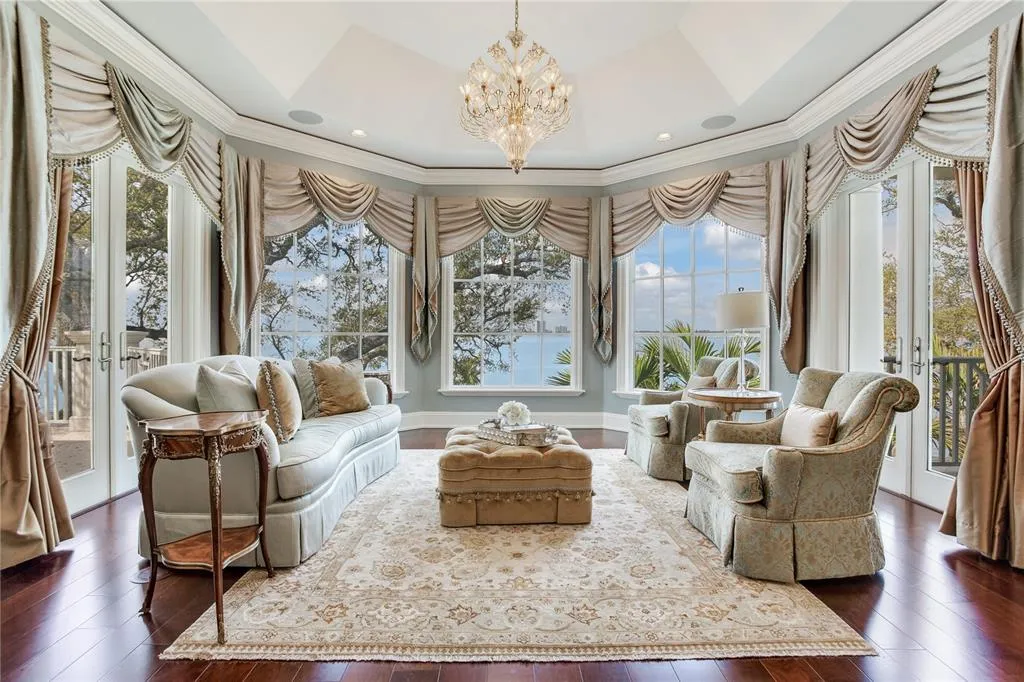
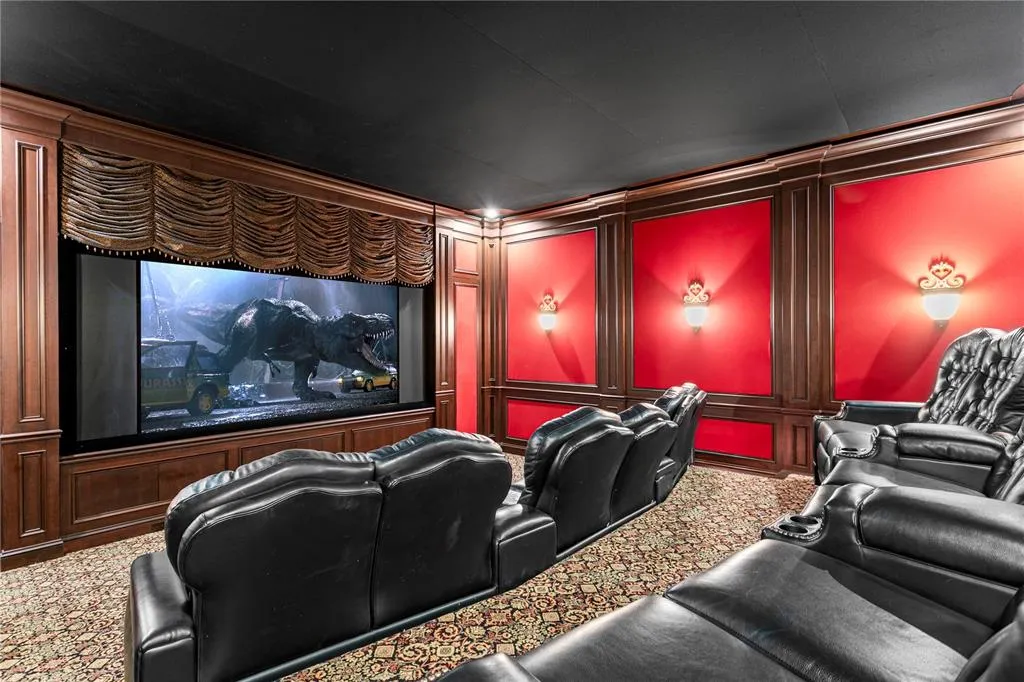
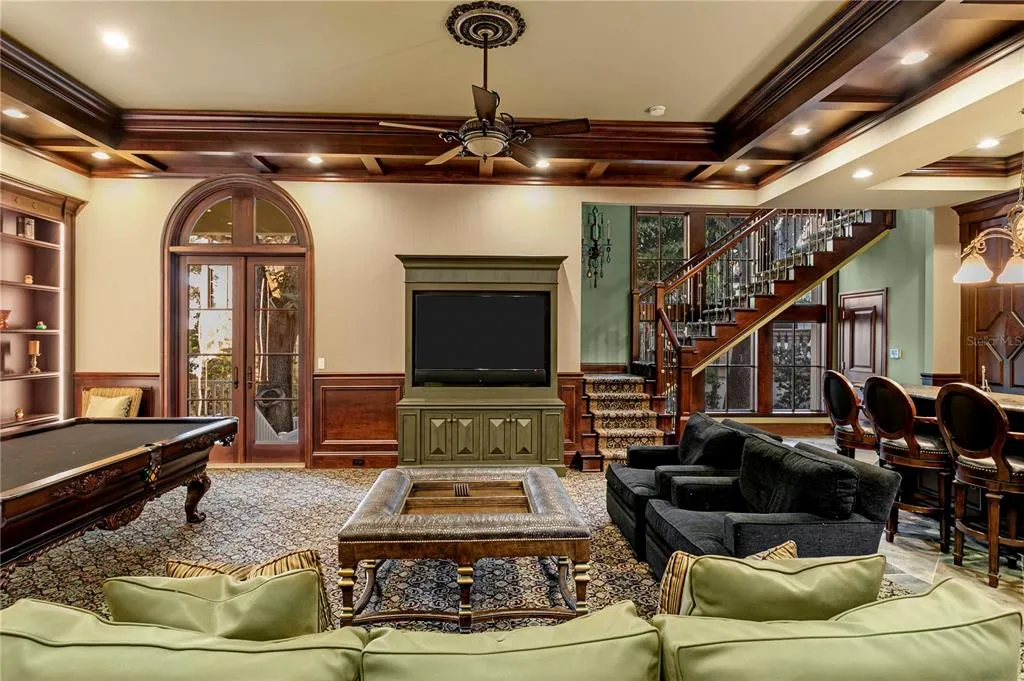
The property also includes parking for nine vehicles, a four-car garage and elevator access to all levels. The listing notes that Windstar Homes has received more than 100 industry awards for craftsmanship and architectural excellence.
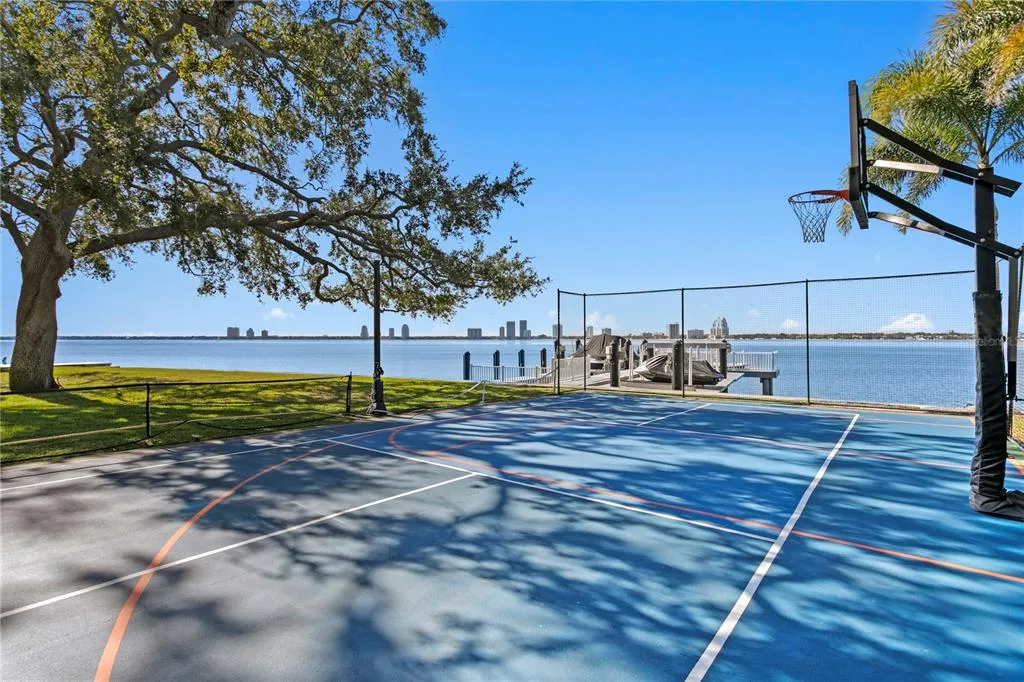
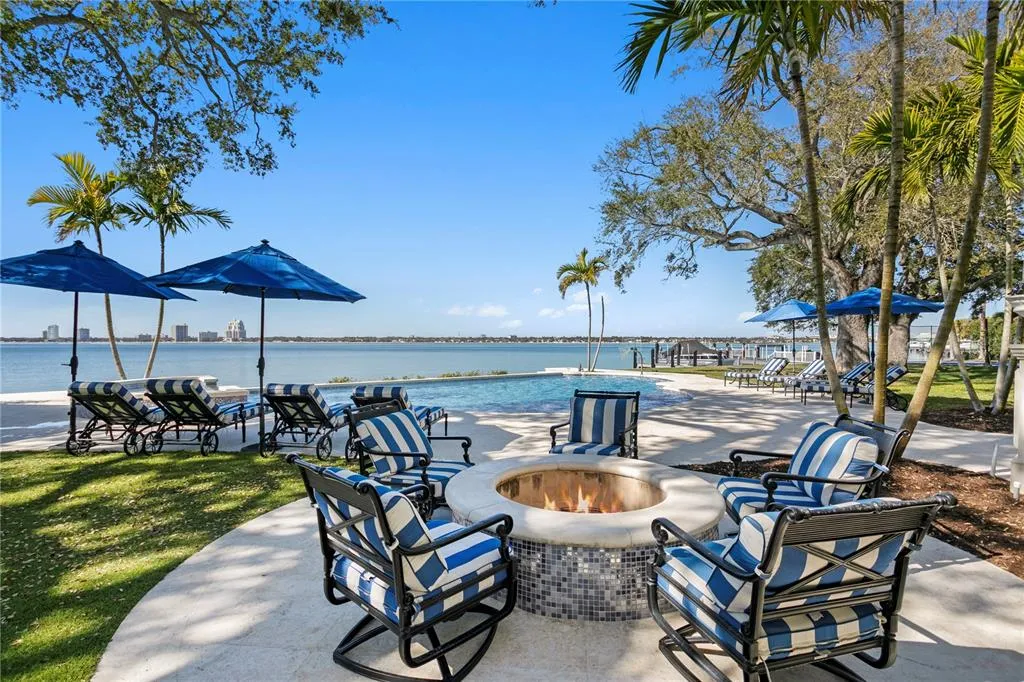
That emphasis on entertaining continues outdoors with a resort-style saltwater pool, outdoor kitchen, pickleball court, party dock, multiple terraces and unobstructed views across Hillsborough Bay, while the primary suite occupies nearly one-third of the upper level with dual walk-in closets, a sitting room overlooking the water and a spa-inspired bathroom featuring a steam shower and fireplace.
The property was listed for sale in April with a $21.999 million asking price after last changing hands in 2011, according to the listing history. Toni Everett of The Toni Everett Company and Gregory Margliano of Compass Florida represent the listing.
20 Questions With Jason Mathis
The CEO of the St. Petersburg Downtown Partnership discusses his career, habits, favorite local places and the advice he still carries.

Jason Mathis is the CEO of the St. Petersburg Downtown Partnership, a private, nonprofit organization dedicated to thoughtful growth and urban redevelopment.
The Partnership focuses on big-picture issues and building a shared vision for St. Pete’s future, inspired by national best practices and local sensibilities. Its priorities include walkability, urban management, resiliency and housing for all income levels.
Jason brings three decades of experience in nonprofit leadership, coalition building and public advocacy. He has a strong record of advancing high-profile initiatives in complex public settings and excels at uniting diverse stakeholders around a common vision.
In addition to leading the Partnership, Jason serves in board leadership roles with the St. Petersburg Innovation District, St. Petersburg Arts Alliance, Pinellas County Urban League and the Homeless Leadership Alliance of Pinellas. He was part of the 2019 Bloomberg Harvard City Leadership Initiative cohort and serves on the City of St. Petersburg’s Community Benefits Advisory Committee.
Jason is an inaugural Emerging Leaders Fellow with the International Downtown Association and a member of the Urban Land Institute’s national Public Private Partnership Product Council. He also founded Florida’s Downtowns, a statewide coalition focused on strengthening downtowns throughout the Sunshine State.
-
01
College alma mater?
I have a bachelor degree in communication and a master degree administration, both from the University of Utah. I also taught there as an adjunct faculty member.
-
02
First job?
I delivered papers for Salt Lake City’s afternoon newspaper, the Deseret News.
-
03
Favorite TV show of all time?
Ted Lasso. No contest.
-
04
Place in Tampa Bay where you do your best thinking?
Fort De Soto Beach.
-
05
Most used phone app?
Messages.
-
06
Wake-up time on workdays?
I get up at 5 a.m. with or without an alarm. Because I’m old. I also like to go to bed at 8:30 p.m.
-
07
Habit you rely on when your schedule gets overwhelming?
I learned this odd breathing technique from a Huberman Lab podcast called the “Physiological Sigh.” Two deep inhales through your nose followed by a long slow exhale through your mouth. It optimizes oxygen and triggers your nervous system to chill out.
-
08
First album you bought?
Chicago 17. Also the first concert I ever attended.
-
09
Local restaurant you recommend most often?
This one is tough because I genuinely love different restaurants for different reasons. I often recommend Allelo and Perry’s Porch on Beach Drive, but I usually eat at Cassis.
-
10
Last book you finished?
The Cloud Atlas by David Mitchell.
-
11
A decision you would make differently today?
I’m not sure this is a decision, but I would be more confident and take more risks if I had to do it all over again.
-
12
First cell phone?
A brick of a Nokia. Can’t remember the model.
-
13
Skill you had to learn the hard way?
Proofreading. I’m actually still learning this.
-
14
Most famous person you’ve met?
President Obama in the Oval Office.
-
15
Last thing that made you laugh out loud?
Something unintentionally funny my 83-year-old dad said.
-
16
Movie you will never watch again?
The Wolf of Snow Hollow.
-
17
Last place you traveled for fun?
Capitol Reef National Park.
-
18
Charity or cause you support?
Johns Hopkins All Children’s Hospital.
-
19
Something you were overly confident about early in life?
I thought that life was fair. It’s not. But once you accept that, everything becomes easier.
-
20
Best advice you still think about?
If people like you, they will go out of their way to help you and make excuses for you when you screw up. If people don’t like you, it doesn’t matter what you do, they will find a way to complain. It’s good to be liked. It makes everything easier.