
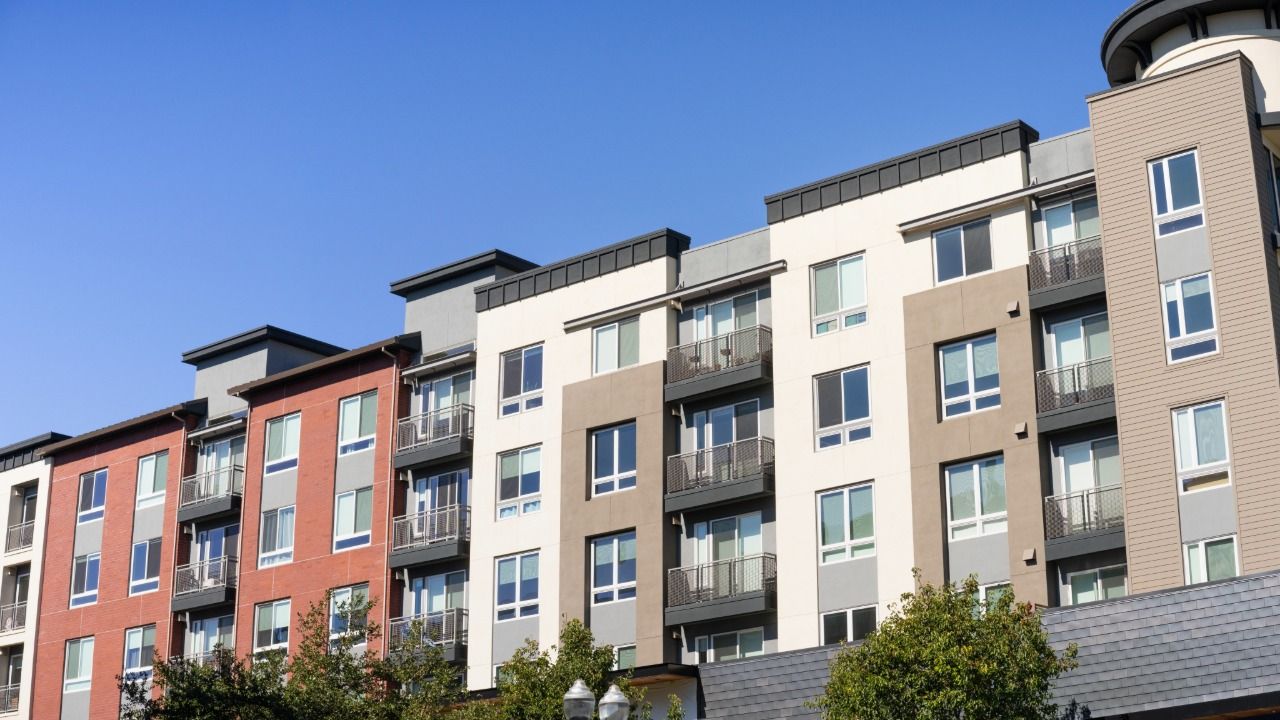
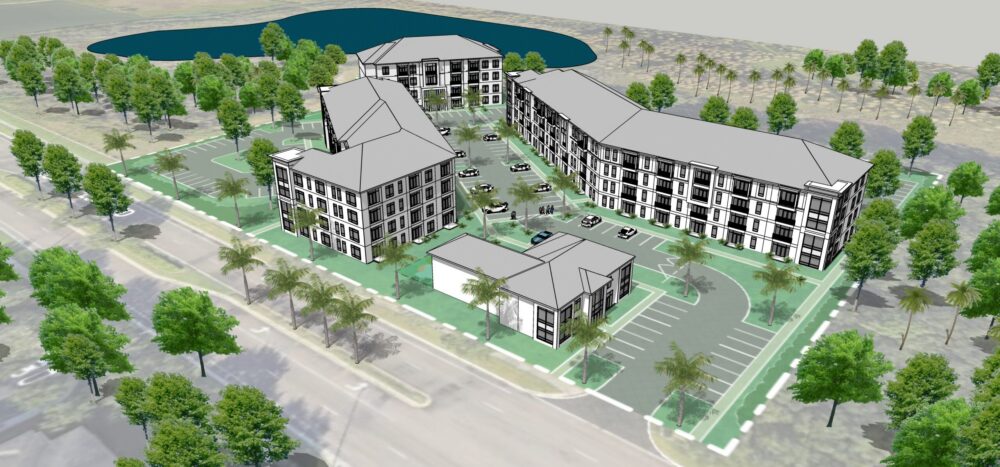
Tampa General Hospital is getting into employee housing, with plans to break ground this fall on 170 one-, two- and three-bedroom apartments near Falkenburg Road and the Selmon Expressway.
The health system will contribute five acres it already owns, while $14.5 million in state and Hillsborough County grants will help bring rents within reach of households earning between 80% and 100% of area median income.
Tampa General arrived at the project after housing problems began showing up inside the workplace, as employees reported rent increases of 30% to 40%, evictions and difficulty finding housing after moving to Tampa for a job.
Meagan Langdoc, senior vice president of total rewards and shared services, says more workers also turned to Tampa General’s team member emergency fund for help with rent and other housing costs, giving the health system another measure of how quickly the problem was reaching its workforce.
Tampa General responded by studying housing costs around its hospitals and offices and comparing rents and home prices with what employees in different jobs earned. Langdoc says those studies found combinations of job and location in which housing could consume roughly 40% to 60% of income, well above the 30% threshold commonly used to define affordability.
A few months after L.J. Tsunis joined Tampa General in January 2023 to oversee strategic assets and real estate, CEO John Couris asked whether the health system could build housing for its own employees, leaving Tsunis to determine where the apartments could go, what they would cost and whether Tampa General could finance rents below the surrounding market.
Making the 170 apartments affordable required Tampa General to remove costs before construction begins.
The health system will contribute the land, eliminating what Tsunis estimates could otherwise add $30,000 to $100,000 in acquisition costs for each apartment; another $14.5 million will come from state and Hillsborough County grants, and conventional debt will finance the balance.
Tampa General selected the Michaels Organization to develop and manage the property, but Tsunis says the project would not work at its intended rents without the free land and public funding.
“Market rate, conventional debt and equity does not equal affordable housing right now,” Tsunis says, citing interest rates, construction costs and other development expenses that require rents many workers cannot support.
Housing development remains outside Tampa General’s core business, and Tsunis says employers would have less reason to enter it if the housing market were producing enough units at workable prices. “If the public and the private sector were doing enough, I don’t think employers would have to do it,” he says, pointing to teachers, firefighters and health care workers whose jobs require them to report in person.
Leroy Moore, senior vice president and chief operating officer of the Tampa Housing Authority, puts numbers around the gap Tsunis describes. A worker earning roughly $48,000 may be able to afford $800 to $1,200 a month, Moore says, while the rent needed to support a heavily financed apartment project can reach $2,400 to $2,500.
Developers may assemble land, tax-exempt bonds, tax credits and private capital and still arrive several million dollars short, which is why Moore argues that local public money is most useful when it supplies the final dollars needed to move an otherwise viable project into construction.
Garet Marr, executive managing partner for national multifamily and affordable housing at Franklin Street, and Ian Brown, a multifamily and affordable housing specialist at the firm, add another cost to that equation: time.
They say affordable projects can spend years moving through land acquisition, entitlements, financing awards and preconstruction while borrowing and insurance costs continue accumulating. “These things are years in the making,” they said in a joint interview, describing roughly three years of work in some cases before construction can begin.
That time also gives developers more opportunities to move their money elsewhere. Marr and Brown say affordable-housing developers have become more willing since the pandemic to pursue projects outside their home markets, making it easier to abandon or delay a deal when the economics no longer work.
Tampa remains attractive to national developers, they say, but scarce sites, high carrying costs and the ability to hold a project for three, four or five years can narrow the field to organizations large enough to survive the process.
The affordability problem reaches beyond Tampa General’s lowest-paid jobs. Langdoc says some professional employees earn too much to qualify for state or federal housing programs while still struggling to afford market-rate housing near work, and Tsunis says Tampa Bay wages remain lower than in some competing parts of the country.
Tampa rents had nearly doubled by the time the city assembled its November 2025 Comprehensive Housing Needs Assessment. Using Zillow data through May 2023, the report found that typical rent reached $2,221, up 98% from May 2014 and 48% from May 2020 alone, while its 2021 baseline showed 52.4% of Tampa renters spending more than one-third of household income on housing, almost unchanged from 53.4% in 2010.
The pressure has eased since the pandemic’s tightest period, when Langdoc says some workers struggled to find housing at all. Units are more available now, but employees may have to search farther from work to find a price they can afford, which is why Tampa General discusses the local housing market with applicants before they relocate.
For employees traveling to the health system’s Davis Islands campus, a cheaper home farther away can shift part of the housing burden into gasoline, tolls or hours spent commuting. “You may find a housing unit in the suburbs,” Langdoc says, “but you may then also have gas and tolls.” Employees who rely on transit may need two or three buses to reach the hospital, she says, with trips that can take hours and shifts that sometimes end after bus service stops.
Moore says the Housing Authority can hold a resident’s housing payment to roughly 30% of income through subsidy programs, but it cannot control what that household spends getting to work. A family may save on rent and then spend more on a car payment, insurance and fuel. “We’re just transferring that cost burden away from housing onto that transportation,” Moore says.
Tampa’s housing assessment puts a number on those combined costs through the Housing + Transportation Index, which estimates that an average resident spends 32% of income on housing and another 21% on transportation, or 53% combined.
Those longer commutes push workers into a labor market where Tampa General already competes locally and nationally. Langdoc says Tampa Bay hospitals recruit from the same regional talent pool while imaging, surgical services and other specialties face shortages across the country.
Tampa General cannot say housing is driving employees to resign because the health system does not track it as a specific reason for leaving, and Langdoc does not describe housing as a major recruiting deterrent today, but the organization can see that lower housing costs increasingly may require a longer and more expensive trip to work.
Moore gives that relationship a broader name. “We’ve got to look at housing as infrastructure,” he says, arguing that affordable housing near major employment centers is part of the system required to keep workers connected to the jobs a region is trying to attract and retain.
The same distinction between theoretical supply and usable housing appears in Tampa’s long-range planning. The city assessment estimates that Tampa must provide capacity for at least 42,165 additional households by 2050 and concludes that enough vacant and redevelopable land exists on paper to accommodate them, shifting the question toward the economics of turning that capacity into housing.
Benesch tested those economics across Central Tampa, South Tampa, New Tampa, the USF area and Westshore/Tampa International Airport, using a 6.5% yield on cost as the assumed threshold at which a private project becomes financially viable.
Most of the market-rate scenarios fell below that benchmark, including a Central Tampa garden apartment modeled at 3.9% and a mid-rise project there at 5.1%. None of the five housing types modeled in Westshore/TIA reached 6.5%, while only New Tampa mid-rise development and South Tampa mid- and high-rise projects exceeded the threshold.
Those returns put Tsunis’ earlier land calculation in context. “If your land basis is zero or minimal, then you’re able to underwrite to a more affordable rent,” he says.
Public subsidies face another problem because new affordable units are arriving while restrictions on older ones disappear. Tampa added 1,306 subsidized units from 2014 through 2023, according to the city assessment, while 1,506 units lost affordability through expiring subsidies or planned redevelopment and more than 1,000 additional units were scheduled to lose restrictions over the following decade. The assessment separately concluded that meeting Tampa’s low-income housing need entirely through subsidized new construction would require billions of dollars.
Tampa continues to produce housing, but Tsunis says much of the new inventory consists of Class A apartments and condominiums that the average worker is unlikely to buy or rent. The city assessment recommends adding more housing near transportation and employment corridors by increasing residential density and allowing more housing types on existing land.
Marr and Brown say the useful local incentive depends on what is actually preventing a project from moving, rather than on whether another Florida city has adopted the same policy.
Developers active in Tampa may face different constraints than those building in Orlando, Jacksonville or South Florida, they say, so impact-fee relief, density changes or development-code revisions matter only if they remove a cost or delay holding up a real project.
Tsunis sees one of those opportunities in land already controlled by cities, counties and other public institutions. Contributing developable sites at little or no cost in exchange for affordability restrictions, he says, can lower the land basis before developers determine what rents a project must support.
Tampa General’s experience also shows how difficult employer-assisted housing may be to replicate. The health system has an internal real estate operation and enough financial and organizational scale to bring in an experienced multifamily developer, while Langdoc says smaller employers may face the same housing pressure without the resources to build their own response.
The 170 apartments will address only part of Tampa General’s need because their income restrictions will exclude some employees and the health system will continue connecting workers with outside housing and financial resources. Langdoc says housing costs also leave employees with less money for groceries, insurance and child care.
Moore says the employment consequence can come later, when workers who cannot afford housing near their jobs begin choosing jobs closer to where they can afford to live. Tsunis sees a larger risk if housing costs continue feeding labor costs and shrinking the practical recruiting pool, eventually reaching decisions about where companies choose to grow. “If this isn’t solved,” he says, employers may decide to “expand or relocate elsewhere.”
Tampa General will learn much sooner whether its own intervention works once employees begin moving into the Brandon development. Langdoc says the health system plans to see whether the apartments reach the workers they were designed for and, if they do, use that experience to decide whether similar housing belongs near other hospitals and facilities.
“I think the first step is to build it, see if it works, and then, if it does, use that as your blueprint to continue to expand,” Langdoc says.