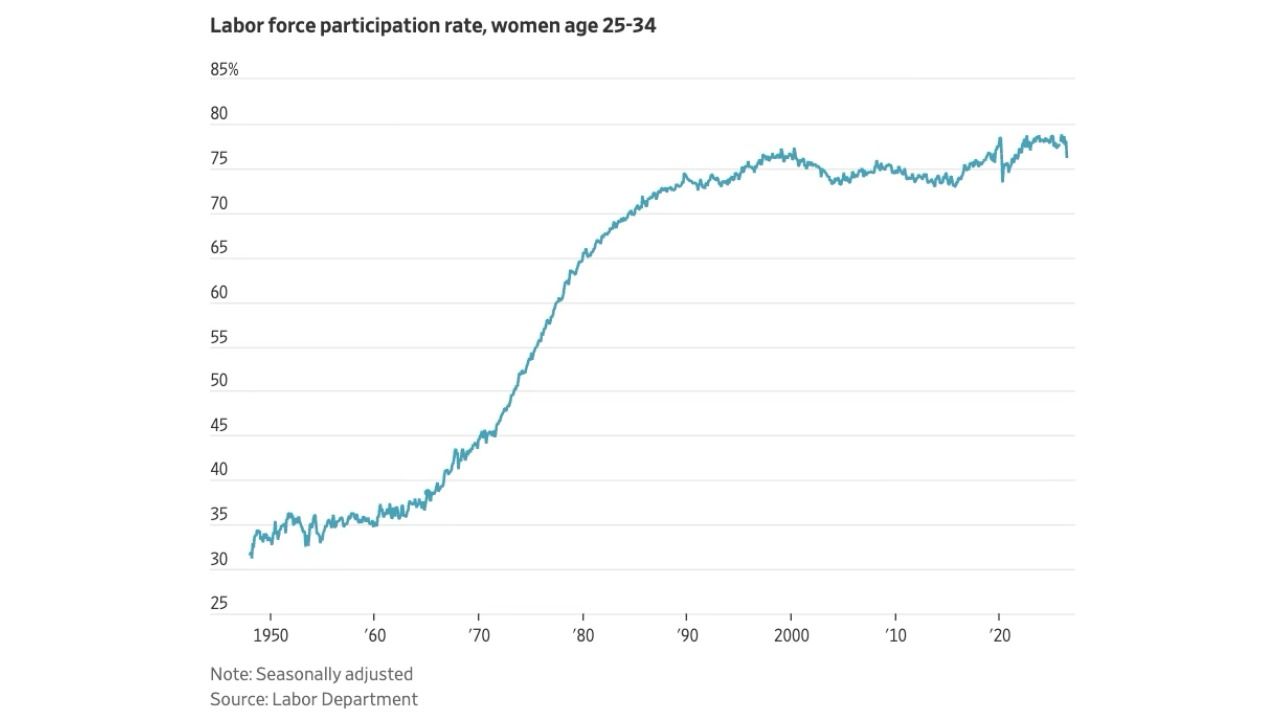
Three-quarters of the baby-boom generation has reached retirement age, and the enormous generation that spent decades expanding the American workforce is increasingly moving in the other direction. The shift is changing the arithmetic of an economy that can grow by adding workers, producing more with each worker or doing some combination of the two.
The U.S. labor-force participation rate stood at 61.8% in September, down from 62.5% a year earlier. The civilian labor force was about 1 million people smaller than a year earlier even as the working-age population grew by roughly 1.3 million.
The U.S. labor force will add just 9.1 million people during the decade ending in 2030, the smallest increase for a 10-year period since 1960, before shrinking by 2.1 million during the following decade, according to an analysis by demographer Steven Ruggles reported by The Wall Street Journal.
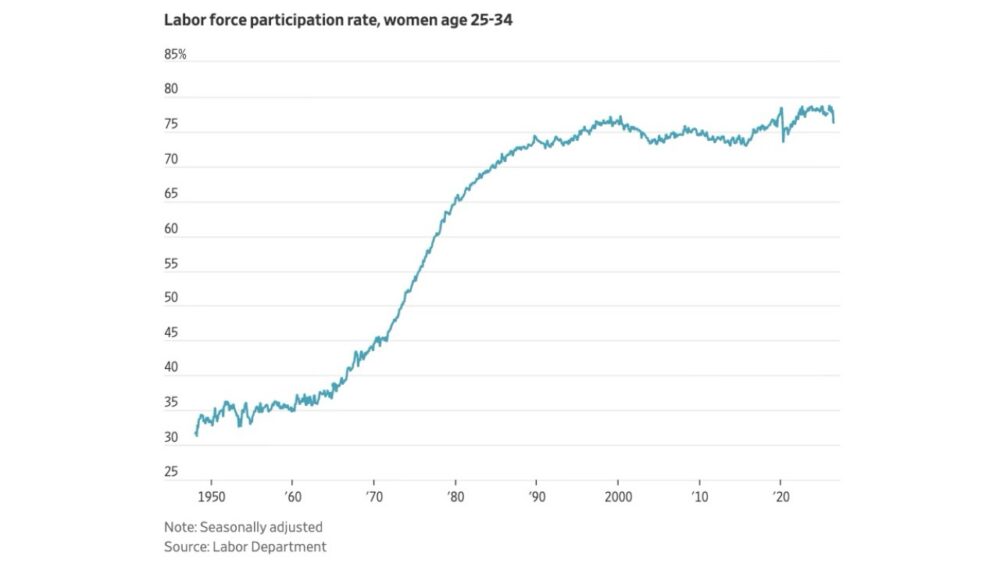
Florida is further into that demographic shift, with residents 65 and older projected to reach nearly one-quarter of the population by 2030 while the share between 25 and 54 falls to 36.2%. Tampa Bay is confronting that change after adding more than 15,000 small employers between 2012 and 2022, increasing the number of businesses competing for workers as the state’s prime-working-age population shrinks.
Tim Coop, Hancock Whitney’s regional president for Tampa Bay, expects that competition to change which workers command higher wages.
“If you don’t have enough participants in the workforce, wages are going to go up and costs will go up,” Coop said. “We have to make sure that the workforce is well trained for the jobs that are needed. I think sometimes there’s a mismatch there in terms of readying our young people for the workforce. It’s not just college degrees that are needed. I think there’s a renewed realization that there’s a need for vocations and trade schools, and those kinds of jobs will wind up paying more in the future relative to white-collar jobs.”
Retirement compounds that shortage in occupations where experience takes years to replace, while Florida’s population growth continues adding demand for HVAC technicians, plumbers, electricians and other skilled workers.
Older Americans are also working longer, with about 19.1% of Americans 65 and older working or looking for work in 2025, compared with 12.9% in 2000 and 20.2% in 2019. But baby boomers leaving the workforce include another group whose retirement can affect jobs beyond their own: business owners.
A 2024 survey of 8,754 small-business owners found that 42% expected to transition ownership within five years, up from 36% in 2019, while only 28% of owners planning a transition expected a family member to take over. Florida has nearly 3.5 million small businesses, including more than 517,000 small employers whose 3.8 million workers account for 39.6% of employment in the state.
Small businesses produced 139,887 of Florida’s 180,748 net new jobs from March 2023 through March 2024, raising the stakes when an aging owner reaches retirement without anyone ready to take over.
“A lot of businesses are tied up in their owner, and if that owner steps away, the value of the business goes away,” Coop said. “So making yourself dispensable is key, and that is not always that easy. Some business owners don’t want to think of their own mortality, so they wind up not planning for these things.”
Building a management team, reducing dependence on one or two large customers and improving financial reporting can make a company easier for someone else to value and operate. Those changes can take years, leaving owners who postpone succession planning with fewer options when retirement approaches.
“Some business owners wait too long to sell and the business deteriorates,” Coop said. “You’ve got something that’s worth more than you ever thought, and you hold out for more. The value can go down.”
Some owners are bringing the next generation into their companies, with the share of small businesses employing an owner’s young adult child doubling since 2018. Coop has also spent 38 years working with owners who discovered their children had different plans.
“I’ve seen business owners over the years who were disappointed that they didn’t have heirs who wanted to be involved in the business or weren’t capable of running the business the way that they did,” Coop said. “The key is preserving your options. If you’re sitting here 10 or 15 years away from retirement, start doing some things now that increase your optionality and allow you to pursue one of four or five paths depending on how you feel when you get closer to retirement.”
Those paths include transferring the company to family, selling it to employees, finding a strategic buyer or selling to private equity firms and family offices. Coop said private equity has been active in Tampa Bay for years, particularly in fragmented industries such as home services, while the region has also attracted more private equity firms, family offices and other investment groups.
John Hill Jr., managing partner and co-founder of Tampa investment bank Hyde Park Capital, has watched investors pursue HVAC, plumbing, roofing and other service businesses where large numbers of independent operators can be combined. Larger companies can consolidate accounting, technology and other fixed costs across more revenue and potentially command higher valuations.
Hill said a company producing roughly $5 million in earnings might sell for six to eight times that amount, while one producing $20 million could attract a multiple of 10 to 12 times. That difference gives investors an incentive to acquire smaller operators and gives retiring owners another potential buyer when family members or employees are not positioned to take over.
Consolidation can also change the market for companies that remain independent as former competitors become part of larger organizations with greater purchasing power and lower overhead per dollar of revenue. Hill compared the effect to Walmart entering a town, where scale allows a larger operator to compete at prices smaller businesses may have trouble matching.
For owners considering those offers, however, price may compete with what happens to employees and the company after the sale.
“I saw a company pass on big dollars because of the fear that long-term employees would be displaced,” Coop said. “Most people don’t make that decision, but this particular business owner did, and I think they wound up selling down the road for much less. I’m not sure what happened to those employees, but I do think you have to be satisfied in your retirement with the decisions you made in terms of how to transition your business.”
The same choice can carry consequences outside the company when a sale changes where decisions about employment and investment are made.
“If you’ve built your business here in Tampa Bay over the last 40 years, you love this region and you want to see it continue to prosper economically. If a company is being bought by an outside party and jobs can be lost and that economic impact locally is diminished, that may be a factor you consider, depending on what’s important to you,” Coop said. “The flip side of that is we have a thriving entrepreneurial capitalist society where you have new businesses starting up and growing constantly. You notice businesses cropping up all the time that are growing up underneath your feet that you didn’t know were here. So the ecosystem of growing privately held businesses generally renews itself.”
More than 100,000 small-business establishments opened in Florida from March 2023 through March 2024 while 85,944 closed.
As baby boomers leave the economy, Tampa Bay’s challenge is no longer simply whether it can continue adding businesses and jobs, but whether the companies and workers coming behind them can replace enough of the economic capacity that leaves with them.