
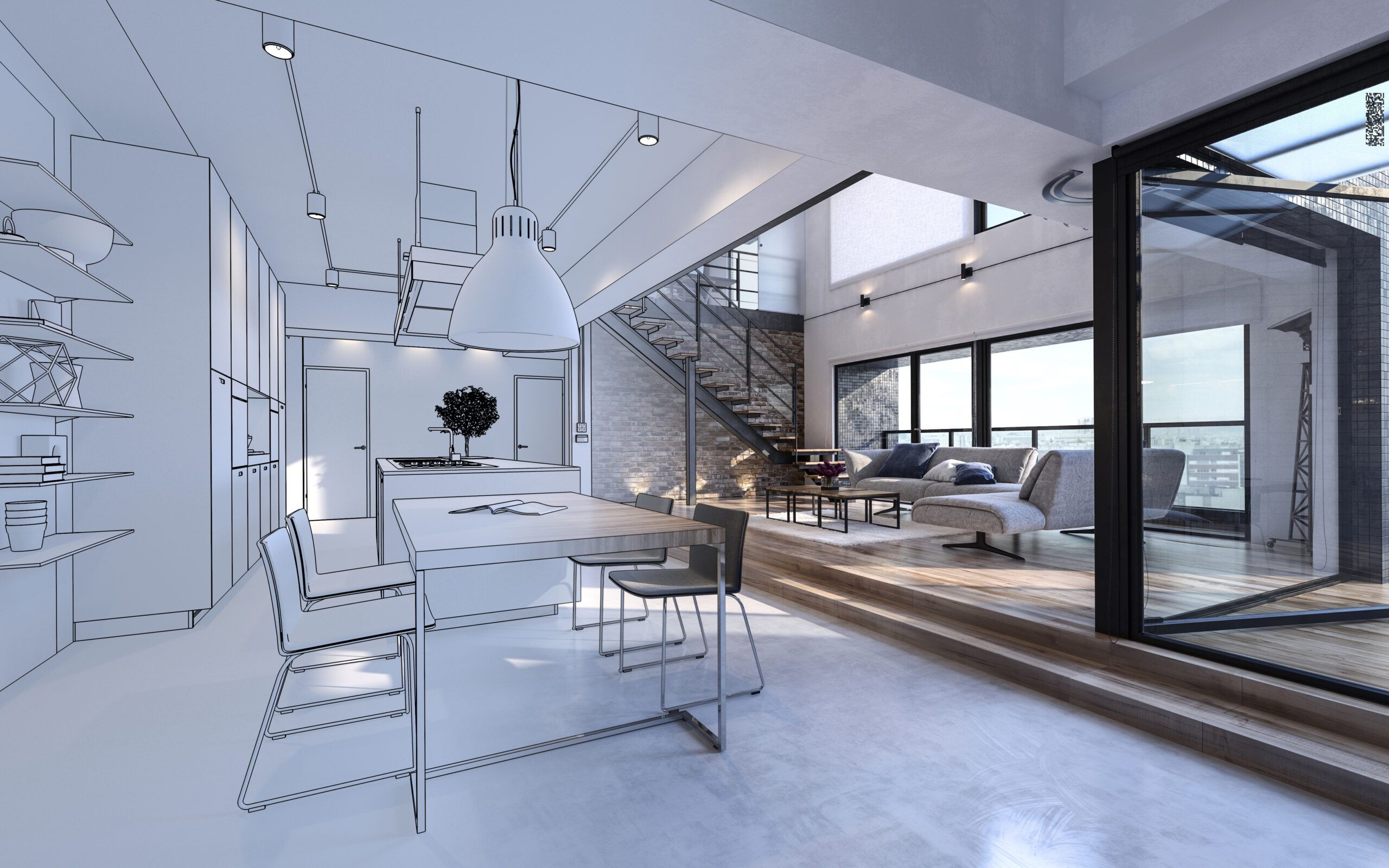
Interior designers say more clients are arriving with AI-generated images that look complete but often cannot be built. Those images, produced by widely available tools, present polished interiors with balanced layouts. They often ignore how materials actually perform, construction limitations and building codes, which means designers spend more time translating digital concepts into plans that work in real space.
“People bring in images that look finished,” said Johanna G. Seldes, lead designer at IDC/Interior Design Consulting in Tampa. “But once you start looking at them, you realize they don’t account for how a space actually functions. Then the conversation becomes what can work and how to get there.”
Seldes pointed to a common example she sees across AI-generated designs. Images often show an open fireplace placed directly below shelving or near a mounted television. At first glance, the composition can look dramatic and complete. In practice, heat, venting, materials and code determine what can actually be built and how those elements must be arranged.
The change reflects a broader shift in how projects move from concept to construction. Technology has expanded what clients can see at the start of a project while introducing expectations that do not always align with how buildings perform. Seldes said the sequence now matters more, with designers starting from a plan that accounts for structure, materials and use, then applying technology to refine and communicate that plan.
Virtual reality has helped improve that process by allowing clients to move through a space before construction begins. Instead of interpreting drawings, clients can see proportions, read the layout and experience how rooms connect, which helps them respond more clearly and make decisions earlier. Designers can also identify issues sooner and reduce revisions during construction.
The tool still depends on its design. If the underlying plan does not account for clients’ needs, buildability, the visualization reinforces the problem instead of correcting it. “I enhance drawings all the time for clients because then they can get it,” Seldes said. “But it originally didn’t originate in AI. It originated with a thought-out design.”
Artificial intelligence plays a different role by speeding up early design work. It can generate layouts, suggest materials and assemble concepts in minutes, which allows designers to explore more options and present ideas faster. It does not apply constraints or account for code requirements, material behavior or long-term use, so it can produce images that appear resolved without testing feasibility.
“You can create something that looks incredible,” Seldes said. “But it may not follow code, it may not handle heat correctly, and it may not work in the space. That’s where experience comes in.”
Because AI does not apply constraints, designers start with site conditions, structure and how the client will use the space before introducing technology into the process. Once a concept reflects those factors, tools like AI and VR can develop and communicate the idea. When that order reverses, designers spend time correcting assumptions before moving forward.
Clients still arrive with references rather than finished plans. They bring images that reflect what they like, even if they cannot explain why, and those references increasingly come from AI-generated sources. Designers interpret those inputs by connecting them to how a client lives, adjusting for layout, light and function while explaining where an idea will not hold up and offering alternatives that achieve a similar result within real limits.
That process depends on direct conversation, where designers read between the lines, pick up on preferences clients may not fully articulate and translate those into decisions that shape the space.
“Clients will say they like something, but they don’t always know what part of it they’re responding to,” Seldes said. “Our job is to understand that and translate it into something that works for their home and their life.”
That work remains central to the profession because it depends on conversation and observation rather than automation. AI can generate images and options, but it does not understand nuance, subtle preferences or how individuals actually live in a space. Interior design continues to center on how spaces function over time, with homes needing to support routines, adapt to change and hold up under use while meeting safety standards and construction requirements that do not appear in a rendered image.
Technology can support design work by improving speed and clarity, yet it cannot replace the judgment required to make decisions within those limits. As tools continue to evolve, designers expect them to expand what they can show and how quickly they can show it, while clients arrive with more options shaped by those tools. That shift increases the need for guidance, with designers filtering ideas, testing them against real conditions and shaping them into plans that can be built.
“You have to start with something that would realistically be able to be built,” Seldes said. “Then it can be flushed out, generated or enhanced. You can’t go the other way.”
This article was written for Johanna G. Seldes, lead designer at IDC/Interior Design Consulting in Tampa. For more information, click here.
Read More Tampa Bay Business News
Explore the latest Tampa Bay business news, real estate deals, development projects, executive moves and company updates shaping the region.