
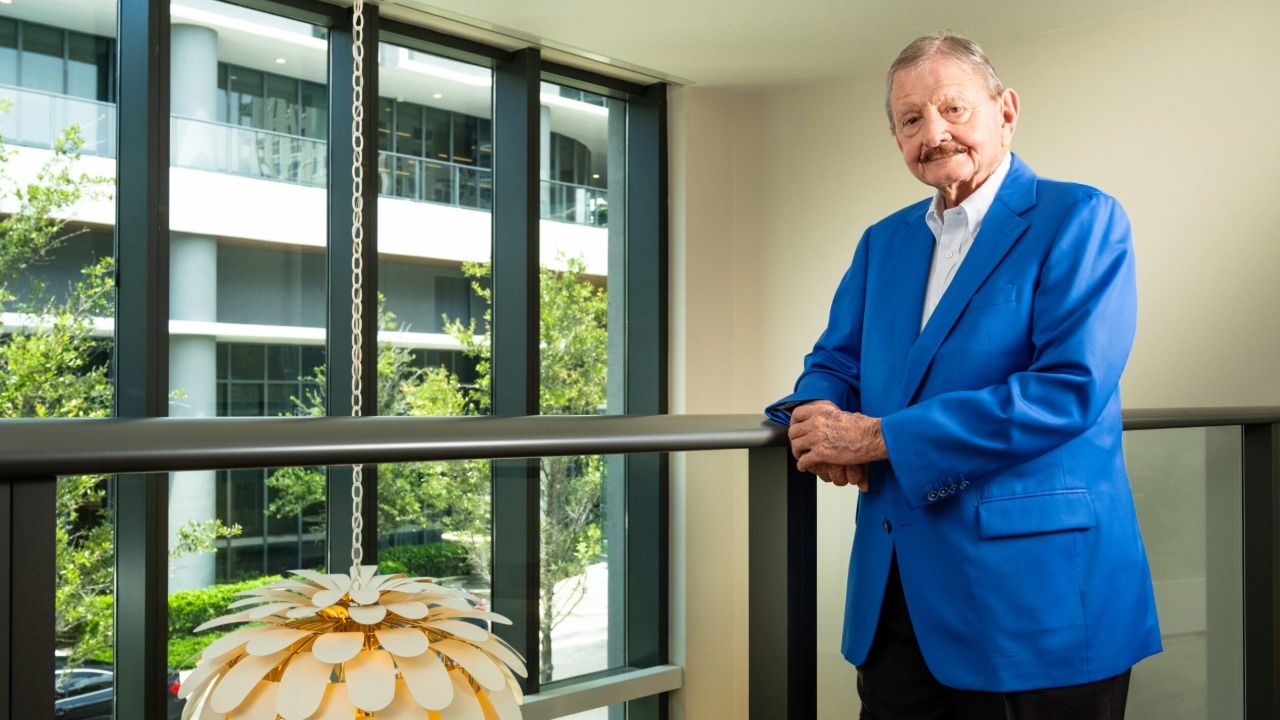
Before Bob Clark’s weekly lunch begins at the Columbia Restaurant in Ybor City, he decides where everyone will sit at Table 100. He may put a university dean beside a medical executive or place somebody looking for work near a guest who is hiring, then direct another guest toward the person three seats away. Business cards pass around the table, and Clark later sends photographs with handwritten notes, continuing conversations he arranged before anyone ordered. He has followed that routine since moving the lunch to the Columbia in November 2001, and this fall the gathering will mark 25 years there. Table 100 now carries a plaque with his name, while the bill Clark still pays has climbed from about $80 to more than $550 a week.
Clark moved the weekly lunch to the Columbia in November 2001, and this fall the gathering will mark 25 years there. Table 100 now carries a plaque with his name. Clark still pays the bill, which has climbed from about $80 to more than $550 a week.
The lunch had begun several years earlier at the Seabreeze Restaurant because Suzy Holley needed a better job. Clark introduced her to Paul Cato, who hired her full time, then introduced her to Jeff Swanigan, who was running the Florida Aquarium. Holley and Swanigan married. “Mission accomplished,” Clark says. The lunch outlasted the problem that started it, and when the Seabreeze closed, Clark moved the original group of about eight people to the Columbia. As he continued bringing people into the room, the gathering required a larger table and eventually made space for 15 or 16 when everyone squeezed together.
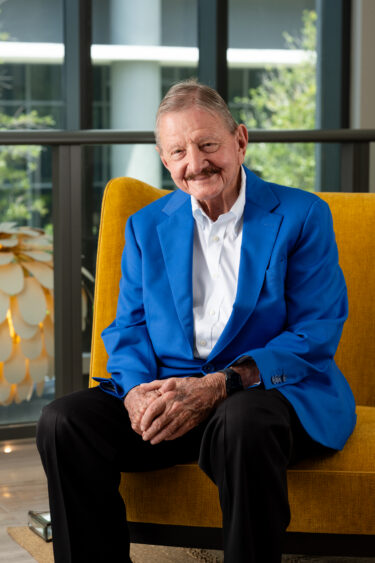
Holley was one of many people whose place in Clark’s life expanded from an introduction. Julie Serovich became a regular while serving as a dean at USF, and Clark encouraged her to join the Tampa Bay Chamber and Leadership Tampa before committing $250,000 to scholarships in USF’s College of Behavioral and Community Sciences. His daughter’s pageant years drew him into Miss Tampa, where he remained involved after she aged out and began bringing young women from the program to lunch so they could meet people in Tampa’s business community. His support also reached the University of Tampa business school, although Clark resists describing any of it as repayment to the city. “I don’t feel like I’m giving back. I feel like I’ve participated in supporting my friends,” he says. “I mean, in Tampa we’re all supporting each other.”
The city Clark first knew had no interstate running through it. Downtown, the port, rail lines and industrial waterfront occupied much of the city’s working geography, while open land remained close to neighborhoods now surrounded by metropolitan Tampa. The 1940 city map measured distance outward from the courthouse; an aerial photograph from the same year shows downtown gathered along the Hillsborough River and Garrison Channel, with Davis Islands filling much of the foreground.
Clark was born in 1936, the son of Robert Julian Clark, who left Georgia during the Depression, worked the Texas oil fields, picked fruit in Florida and operated equipment on the federal levee around Lake Okeechobee before arriving in Tampa around 1941. The family moved enough during those years that some of Clark’s earliest stories sound borrowed from somebody else’s biography. He remembers his parents going to see Gone With the Wind in Palm Beach while he was left with a babysitter whose husband, Clark says, was chauffeur to Joseph Kennedy, father of the future president.
Wartime shipbuilding eventually brought Robert to McCloskey’s Hooker’s Point yard in Tampa, where welders, riggers, machinists, electricians, pipefitters, crane operators and sheet-metal workers built ships for the war. After World War II, Robert bought a welding machine and a used truck, mounted a boom on the back and started erecting steel wherever he could find a job. One early customer paid its final bill with a grocery bag full of half-dollars, quarters, dimes and nickels. Robert brought the bag home, and when his children needed spending money, he sent them to the bag.
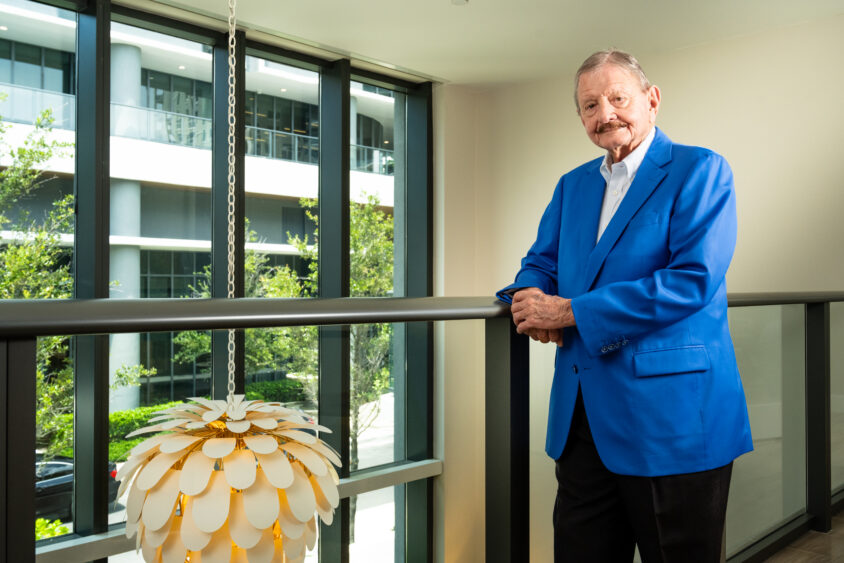
Clark’s own memory of that Tampa begins before he was old enough to understand much of it. On Dec. 7, 1941, the family was driving to South Bay for his fifth birthday in a Plymouth without a radio. His father stopped at a service station and returned to the car with the news that Pearl Harbor had been attacked. During air-raid warnings, Clark’s mother covered the windows so no light escaped. Wartime shortages meant some of his toys were made of paper. He and a neighborhood friend wanted bicycles, but before they owned any, they rolled up their pant legs and walked around Tampa pretending to ride. Later came bicycles ridden across Tampa, pickup games around Edison Elementary, cigarettes when somebody had them and uncles only four, eight and 10 years older whom Clark still credits as convenient bad influences. Near the end of the war, he carried a shoeshine box into the Ocean View Bar and Grill looking for customers.
“The only easy money I ever made was this would have been right about the end of the war, or the time the war was over,” Clark says. “I went into the Ocean View Bar and Grill, set my shoeshine box down, and the bartender gave me a nickel to get out. That was the only easy money I ever made.”
By high school, Clark was earning money on his father’s steel jobs, working alongside ironworkers on power plants before he graduated from Hillsborough High. The summer after his freshman year at Georgia Tech, he joined a crew erecting Atlas launch towers at Cape Canaveral. He remembers carrying a powered reaming machine weighing about 90 pounds on his shoulder while the crew enlarged bolt holes in the steel.
By then, his father’s company had become the obvious place to return. Robert Clark, who had come through the Depression without much formal education, nevertheless insisted that all five of his children attend college. Bob and his younger brother went to Georgia Tech. Two sisters graduated from Florida State, and Clark remembers the third coming within a quarter or so of graduating before she married. Robert never gave Bob much explanation for the rule.
“I guess he felt like people with education would have a better opportunity of getting jobs.”
Georgia Tech itself had not initially felt permanent. Clark arrived knowing few people and expected to finish his first year, then transfer to the University of Florida with his friends. “The thing I didn’t factor in was that D’s don’t transfer.”
Robert was similarly spare with affection. Clark says his father rarely told him what he felt about him or what he thought of what Bob was accomplishing with the company. What Bob could see was the work. Robert remained involved with Tampa Steel for decades and was still coming into the shop several times a week late in life. Years earlier, Bob told his father what he expected to do after college.
“I told my dad, ‘I’ll be on the ground with you when I get out of school.’ And he said, ‘No. That’s crowded down there.’ Meaning you better get your degree. That sent cold chills through me.”
Clark stayed at Georgia Tech, finished his civil-engineering degree and returned to Tampa at the end of 1960. The city he came home to was already pushing beyond the one he had crossed by bicycle. Roads and subdivisions were carrying development outward, while the port, phosphate industry, utilities and industrial plants continued generating heavy work closer to the bay. His father’s company was changing with it. Robert had begun with erection work, and around the time Bob returned, a small fabrication operation was working with about half a dozen people in rented space at the shipyard. For much of Clark’s first decade, his own interests pulled toward industrial and general-contracting work in the phosphate business rather than toward steel fabrication itself. “My first six or eight years, my love was not in the steel business, but it was in the general-contractor industrial type of work.”
No one formally put Bob in charge. Robert never announced that his son would take over or gave him a title above the relatives already working at Tampa Steel. Bob began ordering material because he could read the drawings. Knowing when the steel would arrive made him responsible for the schedule, and the schedule determined how many people the company needed. Before long, everyone had to come to him.
Explore More Tampa Bay Real Estate News
Stay up to date on commercial real estate deals, development projects, office, industrial, retail and multifamily news from across the Tampa Bay region.
“When I came out of school, I could read the drawings, and so I had to order the material. Since I knew when the material was coming in, I had to make up the schedule. And so since I was scheduling, then I had to make up the manpower. Within a year or so, everybody was answering to me. My dad never said, ‘My son is going to be the boss.’ But since I was the information center, everybody had to come to me for information.”
As Robert gradually stepped back from estimating and selling, more of that work fell to Bob. “I was a super salesman.” He says sales became at least a six-day-a-week undertaking, while his father and brother continued carrying substantial pieces of the company. Bob is careful about that distinction. He considers himself instrumental in Tampa Steel’s expansion, but not singularly responsible for it.
The company Clark returned to was crowded with relatives. One aunt managed the office and, as he remembers it, considered part of her job protecting his father from everyone around him, including his own children. Four of Robert’s brothers and two sisters worked in the business, which meant authority and family relationships frequently occupied the same shop. “You put everybody where they can do the most good and the least harm,” Clark says. “Everybody wants authority, but no one wants responsibility.” One of those relatives was Robert’s brother. “Probably one of the hardest parts was my dad had a brother who was 10 years older than me. He was 6-foot-2 and probably weighed 350 pounds, and I had to encourage him to retire. Things like that were a little bit difficult.”
Bob’s younger brother, John, reached Tampa Steel by a different route. Six years younger, John attended Georgia Tech on ROTC, served as an Army officer in Vietnam and returned in 1971. He rarely talked about the war, Bob says, although decades later Bob would mention Agent Orange when discussing John’s military service and the cancer that eventually killed him. Back in Florida, John spent Sundays with their dad, who owned the property. about 200 acres in Pasco County, raising cattle, digging fish ponds and planting fields for hunting.
Bob initially imagined the brothers dividing responsibility evenly. It did not work that way.
“I wanted him to divide responsibility with me, 50% him do half and I do the other half. That wasn’t his makeup. If I had three erection jobs going, he wanted to do one. What I realized was what his forte was. When we build a bridge, we would build one whole damn thing right there and drill the holes and everything. If a guy calls me up and tells me a bridge doesn’t fit, I tell him he screwed up because I had it built. What I learned to do was let him do what he did best.”
John eventually controlled a substantial portion of what happened in the shop, particularly work that benefited from his hands-on attention. Once Bob stopped trying to divide the responsibility evenly between them, he says, John was happier and so were the people around him. The brothers remained close enough that Bob stood beside him at three weddings. “This time he got married, he told his new wife, he said, ‘Look, if this marriage doesn’t work out, next time I’m going to get me a new best man.’”
Clark married his high-school sweetheart in 1961, shortly after returning from Georgia Tech, and remained married for 23 years. He still calls her the most beautiful woman he ever met, but by his own account the marriage had become difficult long before it ended. Clark was drinking heavily, and whatever he once believed he could contain had begun spilling into the rest of his life. “There were a lot of things, and I was no angel, I guess you would say,” he says. “I contributed an awful lot to the demise of the marriage. And drinking did not help in any way.” Looking back, Clark describes the change less as a sudden collapse than as something that gradually stopped holding together. “My wheels came loose and started to wobble,” he says. After the divorce, he says, he spent six years celebrating his freedom with parties, drinking and a social life that increasingly revolved around both.
By Christmas 1990, the celebration had carried him somewhere else. Clark says he drank enough that he missed Christmas altogether, and on Dec. 26 he went into detox, still believing the answer was moderation rather than abstinence. “When I went in there, I felt like I was going to get control of it,” he says. “I was going to learn to drink like a gentleman.” He never drank again, although getting from that decision to the life he has now required more than removing alcohol from the house. For the first four or five years, Clark says, he changed friends, places and routines that had been organized around drinking, gradually replacing a social life built around alcohol with work, meetings, exercise and a different circle of people.
The change showed up inside Tampa Steel as well. Before he stopped drinking, Clark says, he dealt with his father and brother by pushing harder whenever he thought something needed to happen, raising hell and telling them what they should be doing. Afterward, the same disagreements remained, but his way of handling them changed. “What I learned to do was explain where we’re going, what we’re going to do, how things were going to happen rather than push,” he says. “I got to where I was leading them.”
Clark met Patti in 1991, roughly a year after detox, and married her in July 1992. She has never known the drinking version of him. When Clark starts making his own list of the things that changed his life, quitting drinking and marrying Patti arrive close together.
“Patti is a partner. She helped and she participated.”
Patti joined a life already crowded with work, civic organizations, pageants, dinners and people Clark wanted to know or bring together. Years later, the Columbia lunch gave all of that a permanent address, along with one financial advantage he still enjoys pointing out.
“When I started doing it, it was $80 a week. Now it’s up over $550 a week most weeks. But it doesn’t hurt my expense account because there is no booze.”
By 1973, Tampa Steel had reached the point where the family was willing to spend ahead of the work. The company occupied about 11 acres with roughly 40,000 square feet under roof, and its shop could lift about 10 tons at a time. Clark remembers doing roughly $3 million in annual business, much of it within 10 miles of the plant, while the beam line installed a few years earlier had begun changing how efficiently the company could fabricate steel. The numbers encouraged the Clarks to add still more capacity, and over the next several years they expanded the plant and equipment around a Florida construction market that appeared capable of keeping it busy. Then the recession arrived. The new machinery remained on the floor, the additional capacity remained in the plant and the volume of building work that had justified both no longer did. “We were all dressed up with no place to go,” Clark says.
The equipment could not earn its way sitting still, so Clark began looking for work that did not depend on another office building or conventional construction project breaking ground. The answer was already taking shape southeast of Tampa, where phosphate companies were spending money on pollution-control systems and industrial improvements. Tampa Steel had done general-contracting and maintenance work in the phosphate business before, which gave Clark somewhere to turn when the building market weakened. The company began taking on pollution-control work, fabricating pipe and doing the mix of steel, concrete, machinery and industrial work that Clark had preferred during his first years out of Georgia Tech. What started as a way to keep newly expanded capacity occupied eventually became another line of business, including a pipe-fabrication operation at Tampa Steel’s own plant.
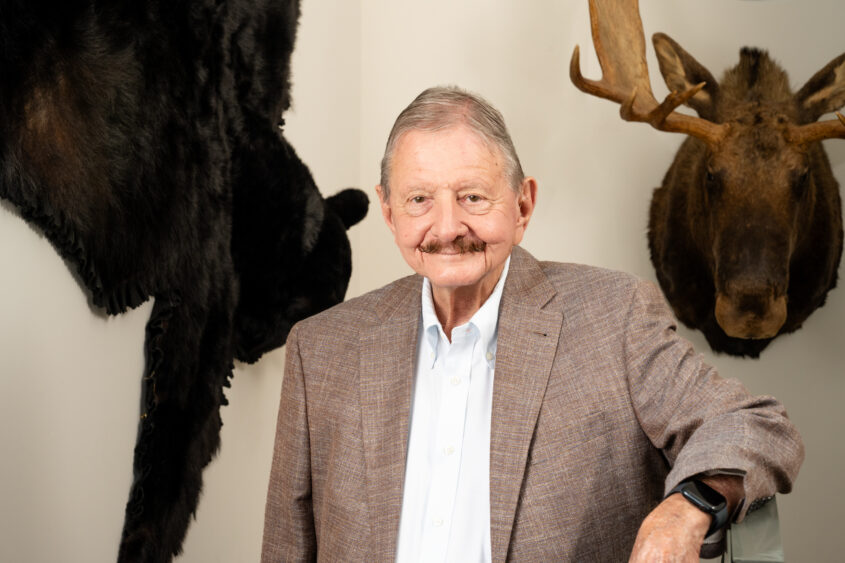
By the time Florida construction returned, Tampa Steel had the plant and equipment to pursue work far beyond the small market around its Tampa shop. The company fabricated steel for Tampa City Center, Tampa Electric’s Big Bend Power Station, the Prime Osborn Convention Center in Jacksonville, SeaWorld and Spaceship Earth at Epcot.
The company, born in postwar Tampa, was no longer confined to it. Tampa Steel moved through some of the projects changing Florida’s physical scale, including Tampa City Center downtown, Tampa Electric’s Big Bend Power Station, the Prime Osborn Convention Center in Jacksonville, SeaWorld and Spaceship Earth at Epcot. Tampa City Center placed the company inside the downtown building cycle Clark was watching at home while Disney carried it into another kind of megaproject. In a photograph from Epcot, Robert and Bob stand beneath the unfinished sphere of Spaceship Earth while its triangular steel frame rises behind them. Robert wears a pale short-sleeved shirt. Bob stands beside him in a white dress shirt and tie. Behind them is work being fabricated by the company Robert had started with a welding machine, a used truck and a homemade boom.
By then Tampa Steel could pursue much larger bonded projects, and the additional capacity came with a personal risk for Bob. His own balance sheet stood behind the company’s promises. “If I couldn’t do it, they were going to take it out of my house.”
Tampa Steel had already begun fabricating the Prime Osborn Convention Center in Jacksonville when the main area of the building grew by two feet. Steel already moving through the shop no longer matched the job, and Clark says Tampa Steel had to wait for revised drawings and additional material before it could resume that portion of the work. The delay created another problem inside the plant because the company could not simply leave its crews and equipment idle until Jacksonville was ready again. Other scheduled work moved into the available production time, including hangars at Warner Robins Air Force Base in Georgia, so by the time the revised Jacksonville drawings and material arrived, Tampa Steel had both the delayed job and the work that had filled its place competing for the same people and equipment. The building had changed, the fabrication sequence had changed and the workload had changed, but the original deadline had not. Clark says the company sometimes went from having too little work for its normal manpower to suddenly needing roughly twice as many people to meet obligations that had converged on the shop at once.
Spaceship Earth created the same problem by another route. Tampa Steel expected certain welds to require X-ray inspection, but Clark says inspectors expanded the testing to joints that had not been included in the company’s understanding of the work, costing the shop about two months of production without adding two months to the schedule. Tampa Steel therefore had to increase manpower to recover the lost time, while the disputed costs became part of a $2.2 million claim that Clark says the company eventually settled for $1 million. By the end of the decade, Tampa Steel had collected roughly $5 million to $6 million on construction claims that Clark believed were worth about twice that amount.
“With construction claims, in the ’80s we collected probably $5 million or $6 million. If we collected that much, they were worth twice that much. On Spaceship Earth, we had a $2.2 million claim. We settled for $1 million. Construction claims and fast-track construction almost put us out of business in the latter part of the ’80s.”
The experience changed what Clark spent his time doing. “I used to be the best steel fabricator around. Now the best letter writer.” Asked decades later what nearly losing the company did to him, Clark gives the experience a different name: “It was all part of the education.”
Workers’ compensation costs gave Tampa Steel another reason to leave building erection behind. Clark says the company’s experience modifier had climbed to 1.9, leaving it paying nearly twice the manual rate. The company had already tried several small bridges around Florida, including a widening job Clark remembers at roughly $150,000, when an extension of Miami’s automated people mover went out for bid. The original system had already developed a reputation inside the steel business because Clark says its construction had contributed to the failure of Bristol Steel, a Virginia fabricator. When the extension came around, that history was still fresh enough that competitors did not need much persuasion to stay away. “Every damn body was afraid of it,” Clark says.
Clark was not operating from a position of abundance when he decided to pursue it. The claims and losses of the previous few years had reduced Tampa Steel’s net worth from a couple million dollars to roughly $500,000, which meant a bad bridge job could compound the damage rather than cure it. Pricing the work also created another problem because Clark did not want his number circulating among competing contractors before the bids were opened. His method was to build the price, then protect it behind what he calls “bullshit and feathers” while deciding which contractors could be trusted with the number that mattered. “I picked out a couple contractors that I trusted and gave them a price,” he says. “The two people I gave the best price to were the low two bidders.” One of those contractors won the work, putting Tampa Steel onto a $15 million job.
The job did more than keep the shop busy. Clark says Tampa Steel made 25% before taxes, a margin large enough to change the calculation about where the company should put its effort next. Bridges also fit the shop differently from the building work that had caused so much trouble. Tampa Steel could assemble an entire bridge section on the floor, drill the connections and know that the pieces fit before they ever left the plant, while John was particularly useful on the heavy, self-contained jobs that could be built and checked in front of him. The Florida Aquarium, completed in the early 1990s, was, in Clark’s telling, the company’s last major building job.
Over roughly the next two to two-and-a-half decades, Clark estimates Tampa Steel put about $19 million into its property and plant as bridge fabrication became a larger part of the business. Equipment that once lifted 10 tons gave way to bridge pieces weighing hundreds, and the property eventually spread across roughly 32 acres with about 250,000 square feet under roof. Tampa had meanwhile filled outward around the roads Clark once remembered as edges of town. Some Tampa Steel loads became so large that they could move through that city only after ordinary traffic had been cleared, leaving the plant during midnight travel windows on their way to bridges somewhere else. On a bridge the company built across Highway 50 for horses, Clark says, material had to be added to control vibration so the movement would not spook the animals.
Clark rarely followed the steel to admire the finished structure. By the time a bridge left the plant, his attention had moved to the next problem. “I just want it marked on the map where it goes.” Then the trucker had to figure out how to get it there.
The bridge business sometimes put Clark himself far from Tampa. In September 2001, he was in the Washington area for a pre-bid meeting on the Woodrow Wilson Bridge and had dinner with his daughter and son-in-law. The next day, Clark remembers driving through the area with the Pentagon burning. His son-in-law, a West Point graduate who had worked in defense, committed within the following year to joining Tampa Steel.
John had worked beside Bob at Tampa Steel for decades and, Bob says, had almost never been sick when he began experiencing discomfort. Doctors found Stage 4 cancer in his liver, lungs and colon, and he died May 12, 2017. For more than a year afterward, Bob spent less time paying attention to what was happening in the shop, trusting the engineers and supervisors already in place to keep the work moving while he dealt with his brother’s death. The arrangement appeared to hold until Clark eventually sat down with the company’s financials and saw numbers he did not like. When he went looking for the reason, he says, he found some of the people responsible for supervising production sitting in their offices instead of staying on top of the work below.
“I tell you what it cost me: a lot of money,” Clark says. “I felt like the engineers and supervision I had were handling things, but I didn’t even think about it. I was just damn depressed. Then one day I looked at my financials and they didn’t look good, and I realized the people that were supposed to be supervising the work were sitting in their offices.”
Clark pushed his attention back into the plant, but what he found also clarified something about the brother who was no longer there. John’s office had occupied a corner of the shop, where he could see the work and the people doing it. “Just his presence in the factory,” Clark says, “kept some people on their toes.”
Clark had confronted another problem he could not solve through work when both of his granddaughters were born with developmental disabilities. Their family eventually found Brookwood, a residential community in the Houston area where adults with disabilities can live and work.
“Naturally I was going to fix these little girls. I went to all the best doctors. We’re going to fix the little girls. They don’t have a fix. It was really hard for me to deal with. It really was. Still bothers me. I cannot change them. What I can do is help plan for their future by legal trusts and make sure they can be there in Brookwood.”
Robert kept coming to Tampa Steel several times a week into old age before dying in 2005. By 2025, John was gone and Bob was 87. In April, the family sold Tampa Steel to Precision Build, preserving the Tampa Steel name and workforce while ending eight decades of Clark ownership. Bob kept his title of president.
“I was 87 years old. I guess that’s the reason. I couldn’t guarantee that I was going to be around forever.”
After eight decades of family ownership, an interviewer offered him the expected word for the sale: bittersweet. “Absolutely not.”
Clark wanted Tampa Steel and its employees to have somewhere to go after he could no longer be there, and Precision Build gave him that answer.
“Monday, Wednesday and Friday I get up at 3. I’m at a personal trainer at 4:50. I leave home around 6, and every morning I go to a 6:30 a.m. meeting. I leave it a few minutes early, around 7:10, 7:15, so I get to my shop at 7:30.”
If lunches, meetings and civic commitments take too much of the week, he sometimes goes back Saturday or Sunday. Clark is approaching 90. Asked how much longer he plans to work, he says, “Three more years. Next year I’ll tell you three more.”
Clark has treated the Tampa Bay Chamber’s term limits much the same way. He has served on the board for roughly 24 years, despite a structure that ordinarily sends members off after two three-year terms. “What you do is you serve two three-year terms, then you’re off a year. What I’ve been able to do is during my off year, I’ve been able to get a presidential appointment. Hopefully in ’27 I get a presidential, so I can keep on board.”
His civic opinions remain similarly practical. Asked about Tampa’s transportation problems, the bridge builder goes first to money: the region needs a gas tax, he says, and rail once discussed between the airport, Westshore and downtown would cost considerably more now because Tampa waited. “We need to do something.” He has spent about 25 years with Visit Tampa Bay, too, and every week the Columbia lunch puts another group of people around Table 100.
Clark can put years on board seats and names on projects, but he has no answer when asked what his legacy will be. Pressed to imagine what somebody might say about Bob Clark 50 years from now, he talks about friends, lunches and the people around him. Then he settles on himself.
“I really enjoy being me.”
When Clark graduated from Hillsborough High in 1956, he remembers the interstate extension ending not far beyond Fowler Avenue, where he and his friends went to drag race. Even decades later, Tampa could still strike outsiders as slow. Clark remembers being in Miami around 2002 while Tampa was competing for the Republican National Convention and seeing an evaluation of the candidate cities in which Tampa’s name was followed by a string of Z’s, shorthand, as he understood it, for a city putting people to sleep. More than six decades after Clark raced on the edge of the interstate, he watched Water Street rise around the arena.
“He hit the gas pedal,” Clark says of Jeff Vinik.
Asked what remains of the city he grew up in, Clark reaches for things he can still name.
“We got a cigar history. We used to have some good breweries here in town. I’m talking about Tropical, Silver Bar and things like that. Culture. I don’t know. We call ourselves the Cigar City, is what we used to call ourselves. But it’s changed. It’s changed so much.”
Near the end of the interview, Clark is asked whether there is anything else he wants to add. There is. In 1955, Hillsborough High was playing undefeated Orlando Edgewater, and with about a minute left Hillsborough turned over the ball and Edgewater drove inside the 20-yard line. Clark was playing safety. He knew the right halfback liked to run left and throw.
“Sure enough, he passed. There was a big scrum in the end zone, and as time was running out, a few seconds left, I intercepted the ball and saved the game. The Tampa Tribune had the five players. I mean, come on. They can identify a man alive in a five-man play.”