
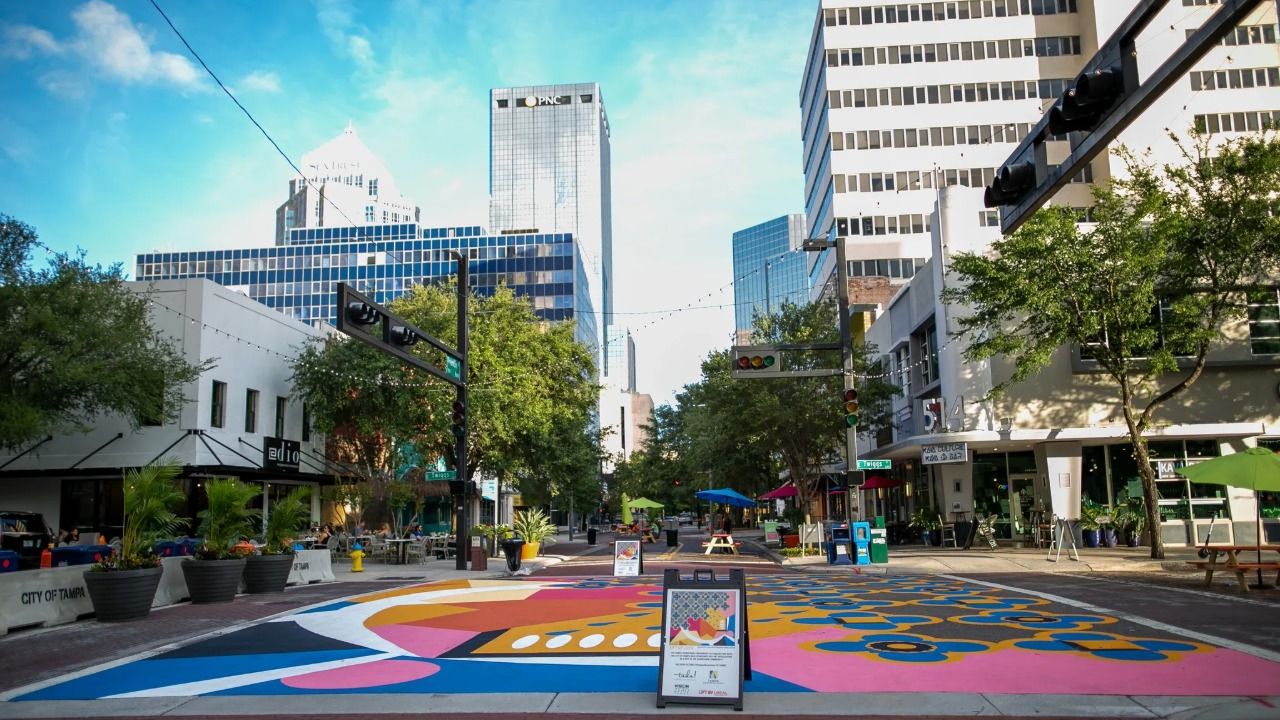
For much of Tampa’s early history, Franklin Street was the center of downtown commerce. Streetcars ran the corridor, carrying shoppers between Maas Brothers, Woolworth’s and S.H. Kress, while theaters, restaurants, banks and storefronts gave the street the density and variety that made a city feel centered.
That role faded over time as retail followed suburban growth, Interstate 275 cut across the corridor and surface parking and vacant buildings began to interrupt blocks that once carried steady commercial life.

Now, Franklin Street is drawing fresh attention for a different reason. As development spreads across downtown Tampa, the corridor sits at the center of several of its fastest-growing districts and has begun to emerge as the link connecting them.
On one side, Water Street Tampa continues to add hotels, apartments, office space and restaurants near the waterfront. To the east, the Channel District has filled with housing and hospitality projects. To the north, Tampa Heights has built its own gravity around Armature Works and the Riverwalk, while Gasworx is set to bring more density just beyond Interstate 275.
Franklin Street runs between those districts and could help unify downtown if the gaps along the corridor begin to close.
READ: TAMPA BAY REAL ESTATE NEWS
“It’s an important piece of connective tissue linking the River District, the downtown core and Tampa Heights,” said Kenyetta Hairston-Bridges, president and CEO of the Tampa Downtown Partnership.
That idea has been circulating for years. In 2023, the partnership completed a conceptual master plan for the Franklin Street corridor, building on earlier visioning work that described the street as downtown Tampa’s historic Main Street and one of its most important north-south connectors.
The case combines economic development with the street’s historic identity. Franklin Street still holds older buildings, established institutions and a central location, even as long stretches of the corridor lack continuity.
Public investment sets the stage for redevelopment
Tampa’s Community Redevelopment Area approved $6 million in late 2024 for streetscape and infrastructure improvements along Franklin Street, with the funding spread over three fiscal years beginning in fiscal year 2026.
The project covers roughly 1.1 miles, from Jackson Street downtown to Palm Avenue near Tampa Heights. City officials expect to issue a request for qualifications for the design phase in the coming months.

Cedric McCray, director of the Tampa CRA, said the work is meant to make the corridor more investable.
“We’re priming the area for future investment,” McCray said.
The improvements are expected to include upgraded sidewalks, pedestrian lighting, crossings and wayfinding. On paper, the upgrades reflect routine urban design
In practice, they address one of the oldest problems on Franklin Street: the uneven walking experience. Some blocks still offer shade, historic frontage and active businesses. Others break down into empty storefronts, fenced lots, dead corners and the awkward crossing beneath the interstate.
READ: TAMPA BAY BUSINESS NEWS
Courtney Orr, the CRA’s urban core redevelopment manager, said the public investment is intended to support the kind of private activity that gives a street staying power.
“When people live nearby and can walk to restaurants or shops, those businesses have a better chance of succeeding,” Orr said.
That logic has already begun attracting private capital
Joshua Pardue, a Tampa investor with properties along the corridor, said the stretch from downtown north toward Tampa Heights has the fundamentals for a stronger retail street if more of its vacant and underused buildings come back into service.
“That stretch from Big Blue north to the YMCA should be one of the most walkable retail corridors in the city,” Pardue said.
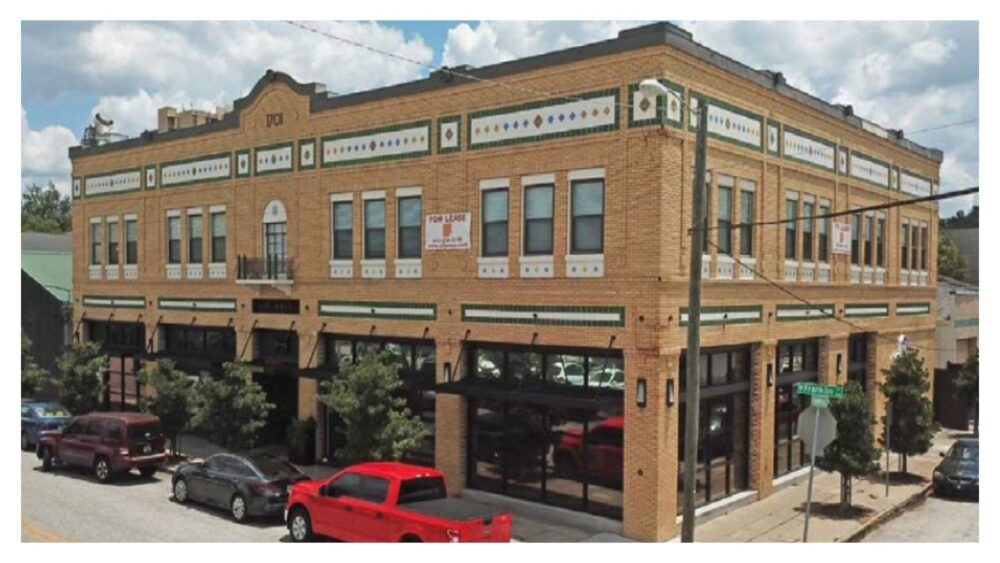
Pardue and his partners recently acquired the former Hall on Franklin building and plan to reopen the long-vacant property within 60 to 90 days with several restaurant and bar concepts, including Hail Mary Social Club, Uno Mas Taqueria and Boogie Heights. The building closed in early 2020 during the first months of the pandemic and has remained largely inactive since.
“The whole strategy is to get more retail density, which is what drives walkability,” Pardue said.
Franklin Street still holds a mix that is difficult to recreate from scratch: older building stock, a recognizable address, proximity to downtown offices and apartments, and blocks underbuilt enough to change meaningfully over the next decade.
Surface parking lots still interrupt the corridor
“Tampa’s biggest problem is surface parking lots,” Pardue said.
Developers say structured parking adds significant cost to new projects, which is one reason surface lots remain common across downtown. As rents and land values rise, those economics begin to shift toward denser development.
That dynamic has kept Franklin Street central to downtown’s redevelopment plans, even as progress has moved more slowly than in surrounding districts.
READ: TAMPA BAY RAYS NEWS
Much of the corridor consists of older buildings, underused parcels and surface parking that will require both private capital and public investment to reconnect the street into a continuous urban corridor.
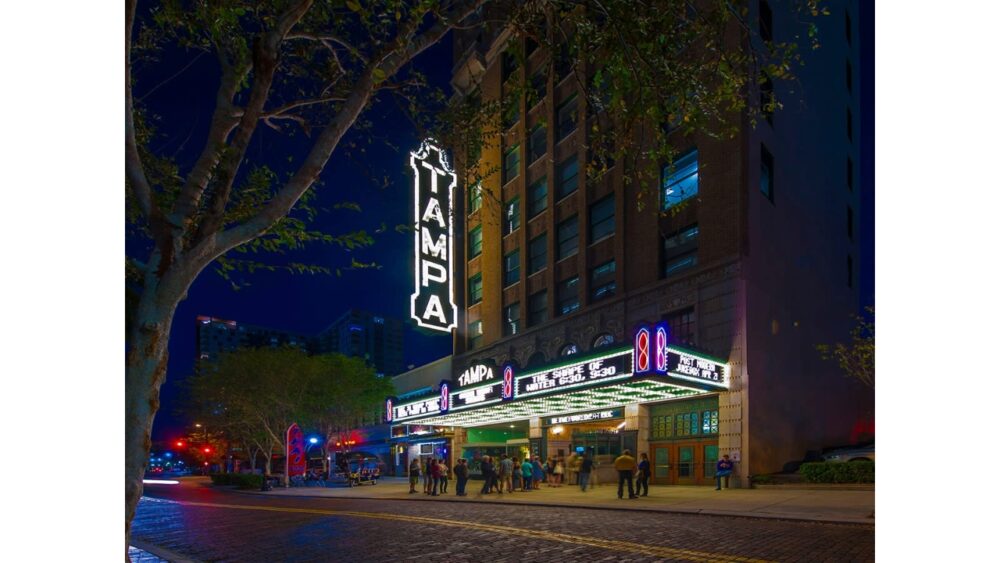
For John Bell, president and CEO of Tampa Theatre, the street’s future still begins on the sidewalk outside the historic theater.
The theater opened in 1926 and remains one of the corridor’s strongest anchors. Bell said planners have discussed concepts that would allow portions of Franklin Street near the theater to function more flexibly during major events, giving patrons room to gather before and after performances and extending the theater’s presence into the public realm.
“The show starts on the sidewalk,” Bell said
The idea extends beyond the theater itself. A downtown street succeeds when people arrive, linger and return rather than simply pass through.
Franklin Street once served that role. The current redevelopment push, both public and private, aims to restore that continuity along the corridor.
Hairston-Bridges said the business case ultimately follows the residential one.
“Retail follows rooftops,” she said.
Downtown Tampa has added those rooftops in growing numbers over the past decade. The next question is whether Franklin Street can absorb enough of that momentum to become more than a corridor people talk about.
If the streetscape work proceeds, if buildings reopen and if surface parking begins to give way to denser development, Franklin Street could again function as a central artery through downtown, linking districts that have grown around it.
If the pieces come together, Franklin Street could again anchor the districts that now surround it.
Stay Informed
Stay up to date on Tampa Bay business news, executive profiles and the companies shaping the region.