
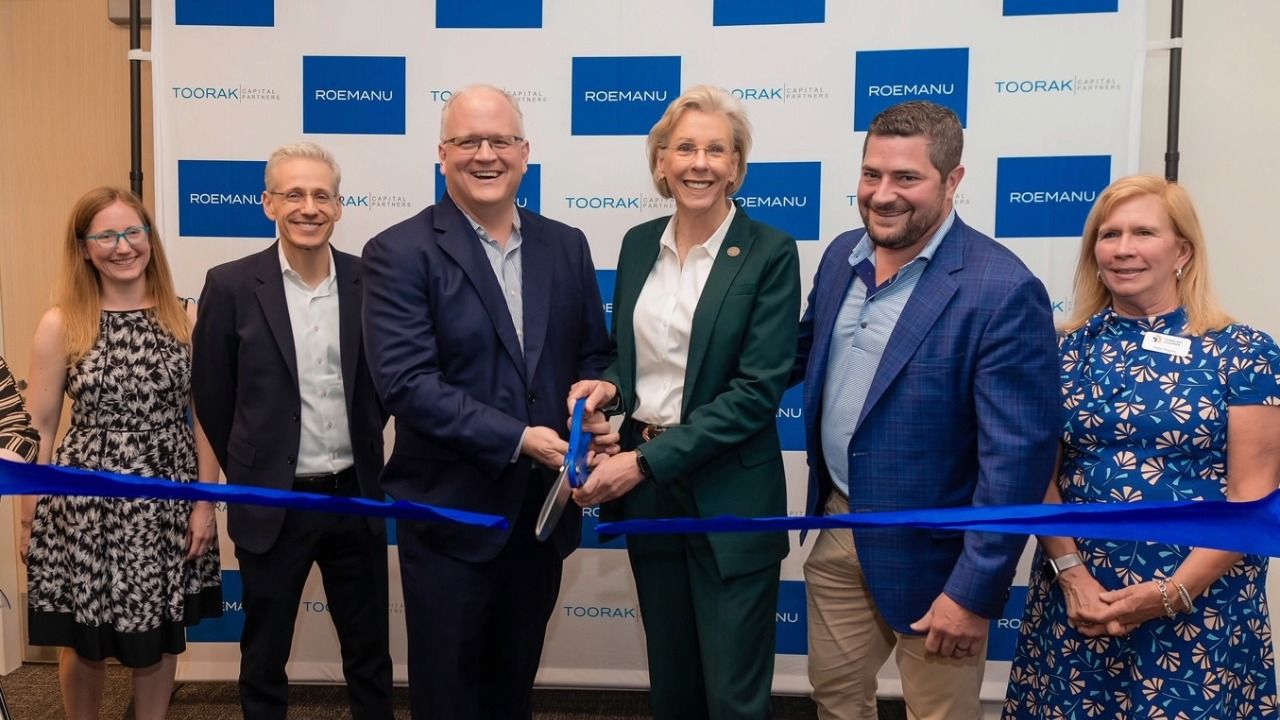
When John Beacham moved Toorak Capital Partners from suburban New Jersey to Tampa, he was trying to solve a talent problem.
The firm he founded in 2016 had grown into a significant lender in a corner of the housing market that finances investors buying, renovating and renting or reselling homes. The work required underwriters, appraisal reviewers, closers and operations staff. In New Jersey, Beacham said, that became harder to build.
“We had a lot of trouble recruiting younger people,” Beacham said. “As the company expanded and evolved, we realized over time we were going to need many more people in the company.”

That need pushed Toorak to Water Street Tampa, placing the company among a growing group of finance firms shifting parts of their operations away from traditional hubs.
For years, firms operating in national capital markets clustered in cities such as New York, Chicago and San Francisco. Some are now looking to lower-cost regions with population growth and deeper labor pools in specialized functions. Tampa emerged as one of those markets. Beacham decided it could support a headquarters.
Toorak operates in a segment of housing finance that has changed quickly over the past decade. The company funds loans for professional real estate investors to purchase and renovate single-family and small multifamily properties. It partners with lenders in the United States and the United Kingdom, buys loans and finances them through capital markets while retaining credit risk.
Since its inception, Toorak says it has funded more than $15 billion in mortgage loans, completed more than 35,000 loans and supported more than 66,000 rental and non-owner-occupied housing units. It has also completed $4.1 billion in securitizations across 16 deals.
READ: TAMPA BAY REAL ESTATE NEWS
Beacham has spent much of the past decade helping institutionalize that market.
When Toorak launched, investor loans on residential properties operated differently from traditional mortgages. A homeowner could borrow on standardized terms supported by government-backed systems and deep secondary markets. An investor buying the same property to renovate often faced higher rates, lower leverage and inconsistent underwriting from local lenders.
“There was a need to take this market that was, frankly, very local, different underwriting standards in each market around the country, no homogenizing kind of capital influence on this and turn it into a normal institutional market,” Beacham said.
That shift drew in private equity firms, credit funds and structured-finance investors. What had been a fragmented, locally financed business has become part of the broader private credit ecosystem.
He said Toorak’s typical customer is not a large institutional buyer assembling national portfolios, but a smaller operator working through an LLC, often completing several projects a year in a single market.
“Our customer is a local person who is maybe doing five houses a year at most, who wants to go buy and renovate that house,” he said.
Toorak does not lend to owner-occupants and bars borrowers from moving into the homes it finances. The structure keeps the company in a commercial lending category rather than consumer finance. It also reflects an underwriting preference for repeat operators with experience managing construction, budgets and resale risk.
That underwriting process has become increasingly data-driven. Beacham described mortgage lending as a document-heavy business built around appraisals, budgets, background checks and market data that were once handled manually. Toorak has invested in systems that absorb that information automatically and use it in credit decisions.
The company has used the performance of tens of thousands of prior loans to build internal risk models that estimate default probability, Beacham said. Some factors are straightforward, including borrower experience. Others are more granular. Properties that align closely with local pricing and design tend to perform better than those that deviate from local norms.
READ: TAMPA BAY BUSINESS NEWS
Toorak’s loans typically run about a year, making the firm sensitive to short-term changes in local housing conditions. Beacham said that requires a detailed view of neighborhood-level data rather than broader market trends.
The move to Tampa followed a similar logic of operating conditions rather than branding.
Beacham said the company evaluated multiple markets before relocating. Tampa stood out for population growth, job growth, cost of living and a regional workforce with experience in mortgage and servicing functions. The city also offered a downtown office environment close to a major airport, factors he said matter for a growing firm.
Toorak now has about 270 employees globally across the United States, United Kingdom and India, according to Beacham. The company had about 30 employees in its New Jersey office before the move. It now has roughly the same number in Tampa and is nearing capacity in its current space.
The decision to move the headquarters, Beacham said, was about where the company operates and where decisions are made.
He said Tampa has been easier to navigate from a civic and business standpoint, with local leaders and organizations more accessible than in larger markets, allowing the company to build relationships and engage in community work, including with Habitat for Humanity and local cultural institutions.
Tampa’s growth has brought both opportunity and pressure, as rising population and outside investment reshape the region. Beacham said business leaders entering the market need to engage with local institutions as the city evolves.
For Toorak, the relocation was driven by labor and scale. For Tampa, it reflects a broader shift in how companies in finance and private credit think about geography.
Firms that once concentrated decision-making in a small number of cities are beginning to distribute those functions more widely. Beacham’s bet is that Tampa can support that shift not as an outpost, but as a place to run the business.
Stay Informed
Stay up to date on Tampa Bay business news, executive profiles and the companies shaping the region.