
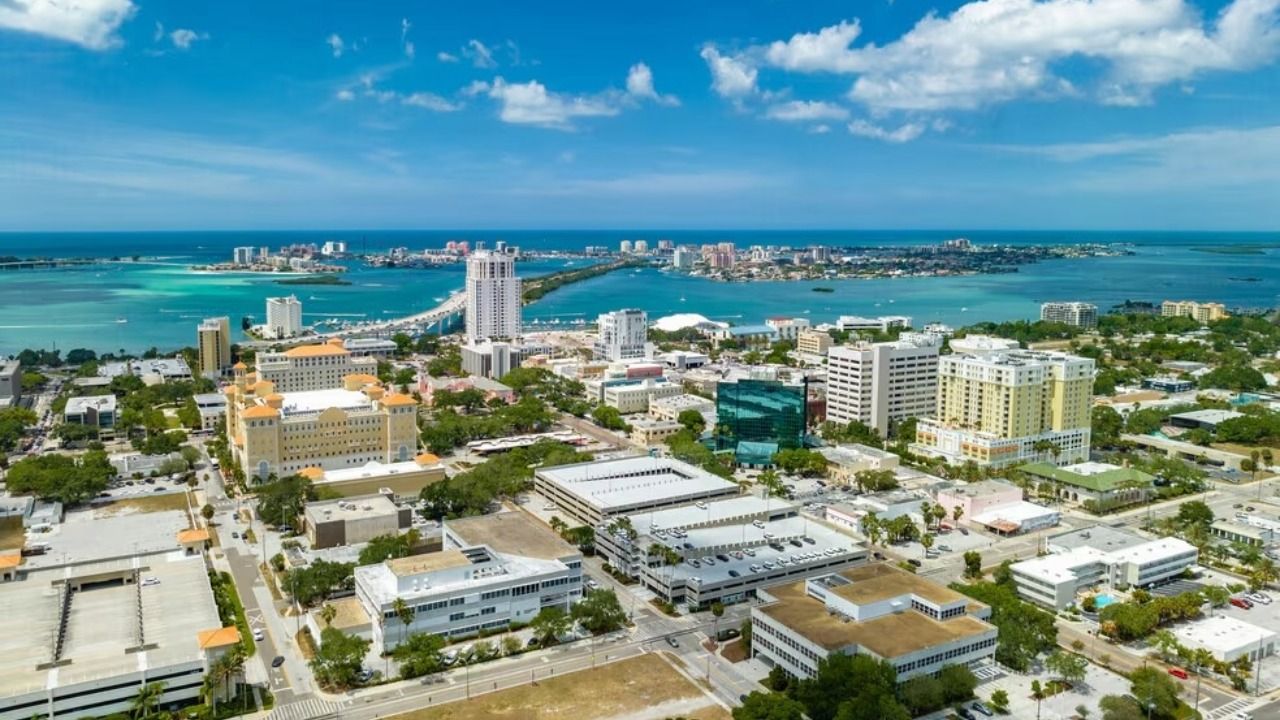
Pinellas County’s plan to redevelop its Clearwater land holdings is already facing pressure from residents and local officials to retain ownership of the sites, as a debate over whether to sell or lease the properties emerged during the county’s first public meeting on the process.
Commissioners held a town hall Wednesday to gather input on the future of county-owned properties declared surplus earlier this month, part of a broader effort tied to the relocation of government operations to a new campus near U.S. 19 and Ulmerton Road. County staff said the sites, totaling about 25 acres across 17 properties, represent what officials described as the largest redevelopment in Clearwater’s history.
While the meeting outlined a multi-year process, the discussion centered on how the land should be controlled over time. Residents, business owners and elected officials consistently urged the county to pursue lease structures rather than outright sales, arguing that retaining ownership would preserve flexibility, protect public interests and allow the county to guide redevelopment over decades.
State Rep. Kim Berfield, who represents Clearwater, said the decision will shape the city’s long-term identity and cautioned against treating the sites as simple real estate transactions.
“These buildings and parcels are not merely land and prospective redevelopment sites,” Berfield said. “They’re integral parts of Clearwater’s narrative. Once the property is sold and redeveloped, the chance of preservation is often permanently lost.”
Residents returned to that concern throughout the evening, often framing it in financial terms. Several said a sale would provide a one-time return but eliminate future revenue and limit the county’s ability to influence development, while others argued leasing would preserve control while still allowing private investment.
Read the latest Tampa news and updates
The concern extended beyond finances. Multiple speakers warned that selling large parcels could allow a single buyer to consolidate ownership across downtown Clearwater, shaping development in ways that may not reflect broader community goals. Others pointed to the risk of losing historic structures, including the county courthouse, and called for preservation requirements to be built into any redevelopment plan.
At the same time, residents outlined a range of ideas for how the sites could be used. Suggestions included mixed-use projects with housing, retail and hotels, along with affordable housing, cultural space and transit-oriented development. Several speakers emphasized the need for consistent, everyday activity downtown rather than occasional destination uses, noting that existing venues do not provide enough places for residents to gather regularly.
Business owners reinforced that point, describing the limits of current activity and the challenge of sustaining foot traffic. Jessica Ontiveros, a downtown business manager, said visitors often ask what else there is to do nearby and find few options.
“We don’t want just beautiful buildings that are empty,” she said. “We need more working businesses, more people, more things going on.”
County officials said no decisions have been made and emphasized that both sale and lease options remain under consideration. Assistant County Administrator Blaine Williams said the county will ask developers to propose different transaction approaches, including fee-simple sales and ground leases, as part of a competitive request-for-negotiations process.
The process, expected to begin as early as June pending commission approval, will give developers about 90 days to respond before the county evaluates proposals and negotiates with shortlisted teams. Public presentations are expected in early 2027, followed by additional input before a final selection.
Commissioners acknowledged that the structure of the deal is tied to how the new government campus will be financed. Commissioner Dave Eggers said the county does not have the cash to fund the project outright and may need to rely on land value to reduce borrowing costs, but added that leasing options will be evaluated alongside potential sales.
“We’re going to be looking at these developers for their leasing knowledge and what that means for us from a cash standpoint today and going into the future,” Eggers said.
Commissioners also emphasized that the process will take time and remain public, with multiple opportunities for residents to weigh in as proposals take shape.
For now, the town hall clarified less about what will be built than how the decision will be made. The question of whether to sell or lease the land has moved to the center of the process, shaping both public input and the options the county will consider as it prepares to bring developers into the conversation.
Read More Tampa Bay Business News
Explore the latest Tampa Bay business news, real estate deals, development projects, executive moves and company updates shaping the region.