
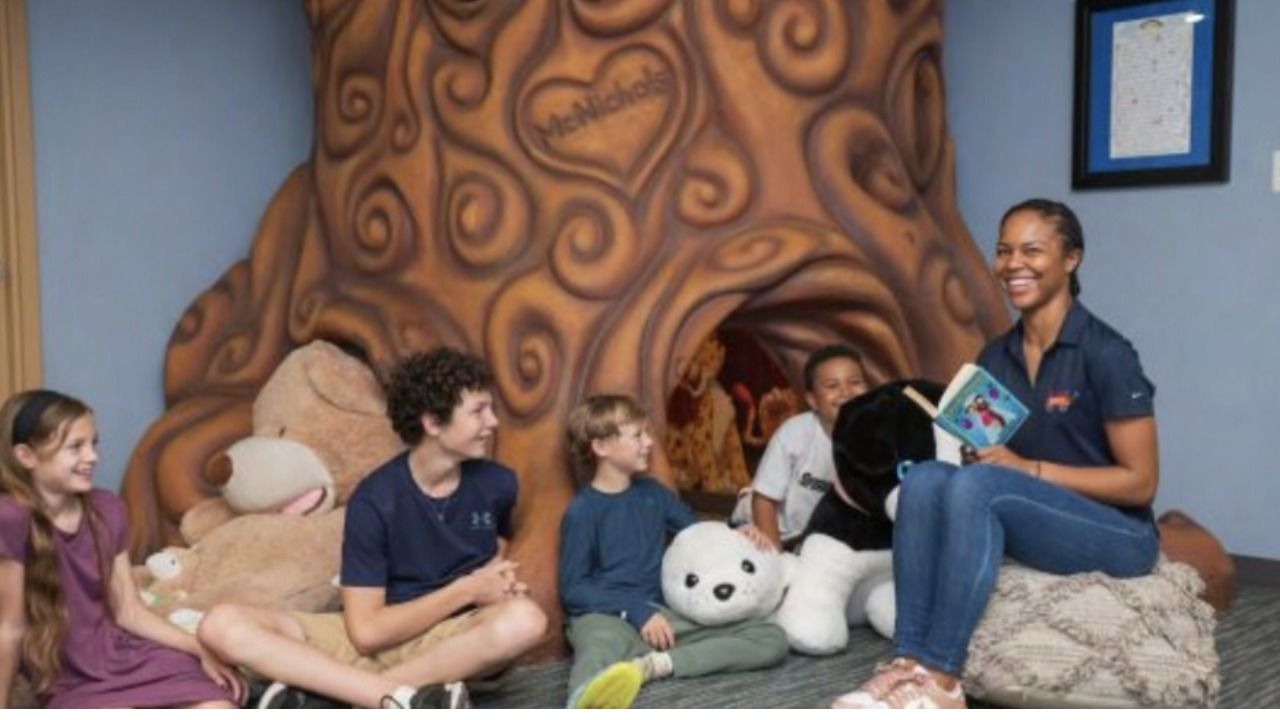
Many children entering foster care after years of instability need more than shelter. They need consistent adults, stable routines and the chance to remain with their brothers and sisters long enough to feel safe, trust others and simply be children again.
That work defines daily life at A Kid’s Place of Tampa Bay, a Brandon-based residential foster-care campus serving children from Hillsborough, Pinellas and Pasco counties. While the organization was created to keep sibling groups together after children are removed from their homes, staff members say much of the work now centers on helping children settle into routines, relationships and expectations that feel predictable and safe.
“Compared to your traditional child, they are much angrier and they have less trust in the adults that they are first meeting,” CEO Brad Gregory said.
Gregory, who has worked in child welfare for more than three decades, said the first hours after a child arrives are often less about rules and paperwork and more about helping children feel safe. Staff members show children their rooms, ask about the belongings they brought and try to make the campus feel calm and familiar from the beginning.
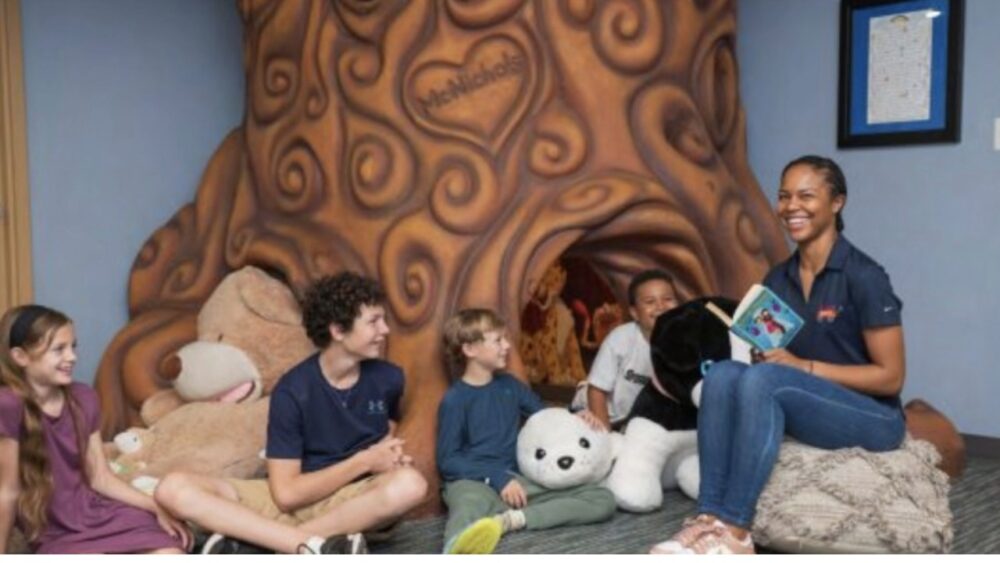
“We try to make it as homelike as possible and as welcoming as possible,” Gregory said.
The campus itself reflects that philosophy. Five residential homes sit along a cul-de-sac-style property where children share bedrooms with siblings when possible, decorate their spaces with personal belongings and live alongside house parents who remain on campus for seven-day shifts. Gregory said consistency has become one of the organization’s defining principles because children often form deep attachments to caregivers after years of instability.
“Our job is to be here, available, 24 hours a day,” Gregory said. “These kids do build relationships with the staff. And when staff leave for whatever reason, it does impact them. It’s probably very similar to watching their parents get divorced or there’s a sibling being moved away.”
For many children arriving on campus, ordinary routines are unfamiliar. Staff members help establish consistent mealtimes, school schedules and bedtimes while creating space for children to decorate their rooms, ride bikes, spend time with friends and settle into everyday life.
The organization currently serves between 14 and 16 sibling groups at a time, with siblings making up roughly two-thirds to three-fourths of the campus population, according to Gregory. Staff members say children who remain with their brothers and sisters often adjust more quickly because they arrive with someone they already trust.
“There is less acting out from the sibling groups,” Gregory said.
Mellen said children often begin to open up after spending time with other children facing similar circumstances.
“Those walls are starting to fall,” Mellen said. “They begin building trust with the other kids here, and that eventually carries over to the staff.”
Sibling continuity also changes family dynamics that many children carry into foster care. Older siblings frequently arrive acting as caretakers for younger brothers and sisters, roles they developed long before entering the child welfare system.
“As they trust us, the oldest, who is the caretaker, gets the opportunity to be a child again,” Mellen said. “They play with their friends. They go do their own thing and focus on the things that bring them joy.”
That process often unfolds gradually. Gregory said children usually begin opening up once they feel more comfortable with staff and peers on campus.
“I think they start to share some of the things that has happened to them that they typically wouldn’t share initially,” Gregory said.
As children began staying longer on campus, A Kid’s Place expanded beyond residential care to include mental health, education and independent living support. The organization now staffs separate positions focused on counseling, academics and services for teenagers aging out of foster care.
Gregory said the goal is to allow staff members to focus deeply on individual areas rather than dividing responsibilities across multiple roles.
The average stay on campus has also increased. When Gregory joined the organization nearly nine years ago, children typically remained at A Kid’s Place for four to seven months. Today, the average stay ranges from 12 to 15 months, according to Gregory, reflecting broader changes in the foster care system.
As stays lengthened, the organization began developing more individualized academic and developmental support plans for children, many of whom arrive behind in school.
“Academically, our kids are about two years behind,” Mellen said.
Gregory said child welfare systems often focus on policy and funding changes while overlooking the long-term emotional effects instability has on children.
“People lose track of the consequences that it has on the human being,” Gregory said.
That evolving mission helped drive the organization’s newest expansion project: a 12,000-square-foot Activity Center expected to open later this year. The facility will create additional space for therapy, tutoring, family visits and recreation, while providing children with dedicated areas for music, art, and vocational programs.
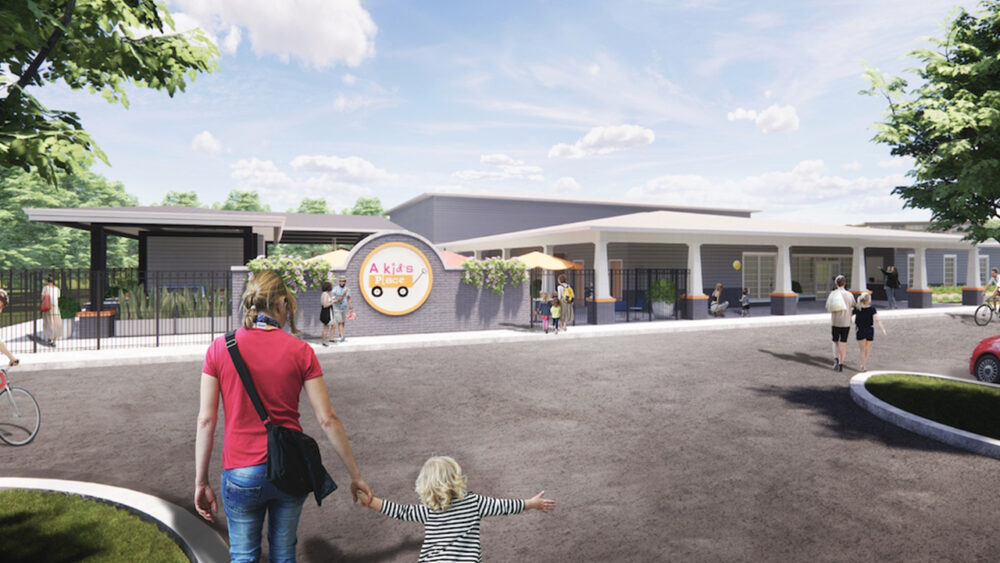
Gregory said the organization originally viewed the project as additional space for activities before realizing the campus had outgrown its existing facilities.
“We have realized we do not have the space for family visits, for the counseling that occurs, for arts and crafts, even the trade development,” Gregory said. “When we get Thanksgiving dinner, we have to do it in rotations of three because we don’t have a big enough space.”
The center will also create space for volunteers, mentors and enrichment programs that staff members say children increasingly need as stays lengthen and services expand beyond emergency placement.
“A lot of it is giving them a space to be a kid in a safe environment,” Mellen said.
Gregory said A Kid’s Place has also spent years trying to reshape public perceptions around residential foster care campuses, which are often associated with institutional settings rather than family-style environments.
“If you are of a certain age, you probably look at a group home as an institution,” Gregory said. “We have worked very hard over the years to make group homes a viable option to a foster home and a very homelike situation.”
For Gregory, some of the organization’s impact becomes clearest years after children leave campus. He recalled meeting a worker from a tree company hired after Hurricane Milton damaged the property. The young man introduced himself and explained he had lived at A Kid’s Place with his brothers years earlier.
“He said more things about what it meant to be here and his siblings,” Gregory said. “He’s very proud of A Kid’s Place.”
Another former resident handed Gregory a letter after making honor roll at school.
“When I came here, I couldn’t read or write my name,” she told him.
Mellen said former residents often stay connected to the organization long after leaving campus, returning to volunteer, speak at events or mentor younger children currently in care. Some return to share updates about military service, college or careers.
Others stop by simply to see the staff members who helped provide stability during difficult periods of their childhood.
“One of the consistent things that we hear continues is that loving, nurturing environment and stability,” Mellen said. “Something they didn’t know before they came and lived at A Kid’s Place.”
Read More Tampa Bay Business News
Explore the latest Tampa Bay business news, real estate deals, development projects, executive moves and company updates shaping the region.