
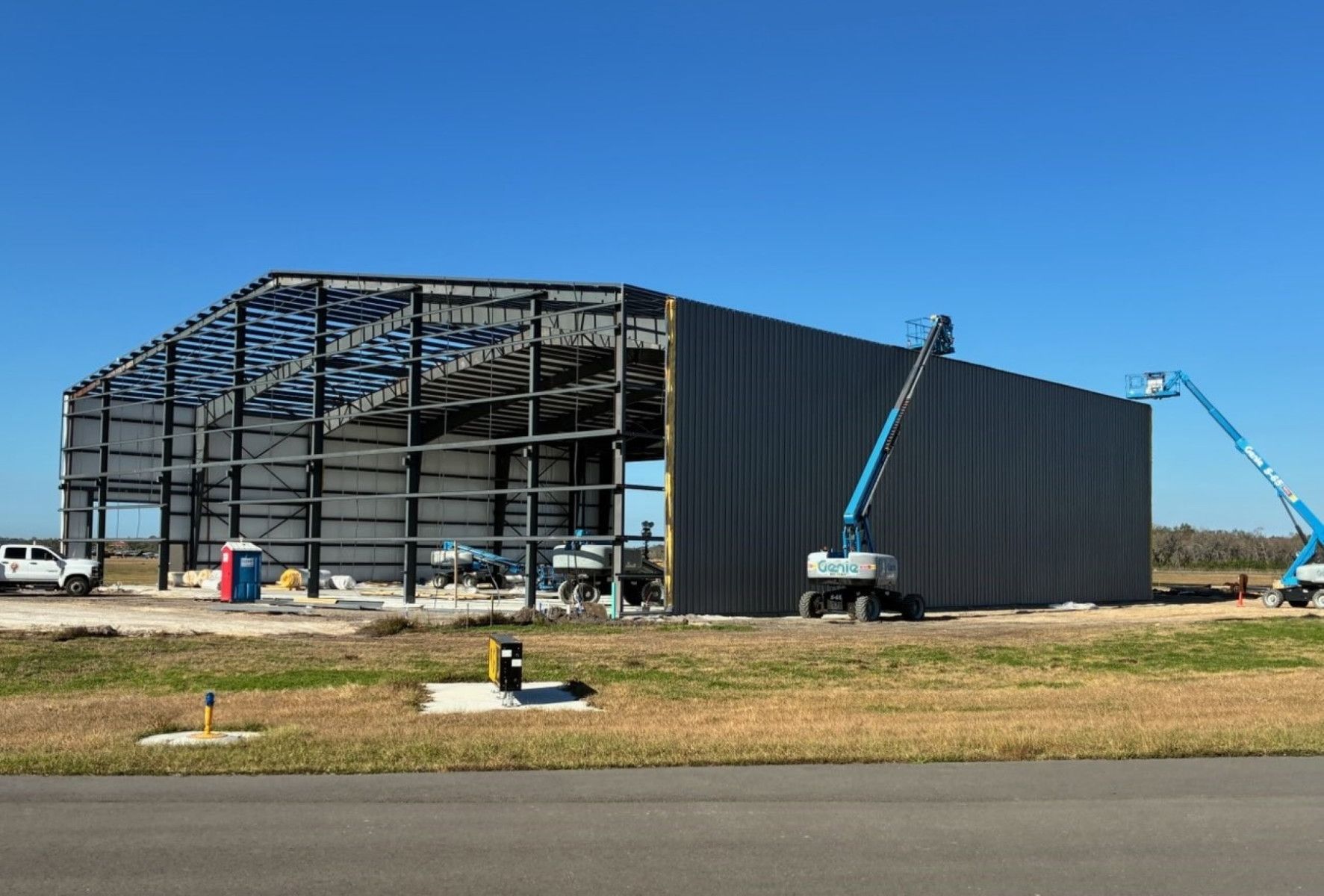
Private aviation company FlyUSA has opened a 50,000-square-foot hangar at Tampa International Airport, bringing 20 of its 30 regional aircraft into one facility as it expands its fleet and prepares to manage larger private jets.
The new hangar, on the airport’s north side, can accommodate approximately 20 aircraft, depending on their size, and includes a specialized tail door large enough for jets up to the size of a Boeing 737. It can also house newer business jets, including the Gulfstream G700 and Bombardier Global 7500, which are too large for many older corporate hangars.
The additional space will allow FlyUSA to take on larger aircraft as the company works toward managing 100 jets and generating $500 million in annual revenue by 2032. Until now, its growing regional fleet had outgrown the available hangar space, leaving the company without a single facility suited to its operations.
“The sheer size of the hangar should help accelerate our move into managing larger aircraft, because we have space for them now,” said FlyUSA CEO Barry Shevlin.
The Tampa facility will serve as FlyUSA’s primary maintenance operation, supporting approximately 30 employees and bringing aircraft storage, fueling, ground services and a private lounge for aircraft owners into one location.
Because the hangar sits away from Tampa International’s two existing fixed-base operators, FlyUSA handles fueling and aircraft movements with its own employees rather than relying on outside ground crews. The company drew on its experience operating Clearwater Executive Airport, where its facilities management team had already developed those capabilities.
The arrangement gives FlyUSA more control during busy travel periods, when multiple operators may be competing for the same ground-service resources. Its private lounge, reserved for aircraft owners, includes individual lockers and a conference room, while charter passengers will continue using the airport’s traditional fixed-base operators.
The opening comes as private aviation operators face a shortage of hangars capable of accommodating newer, ultra-long-range aircraft, creating problems for owners whose jets cannot fit inside facilities built for smaller planes.
“The hangar shortage is still definitely an issue, and it’s particularly bad for people buying the newest ultra-long-range aircraft like the Gulfstream G700,” Shevlin said. “They don’t fit in most hangars that were built more than five years ago.”
FlyUSA, which recently made the Inc. 5000 list of America’s fastest-growing private companies for the third consecutive year, is planning another 50,000-square-foot hangar in Lakeland, where it holds a ground lease.
That facility could open in late 2028 or early 2029 and would likely handle longer, more involved aircraft maintenance work, allowing Tampa to remain the company’s primary maintenance and aircraft-owner base.