
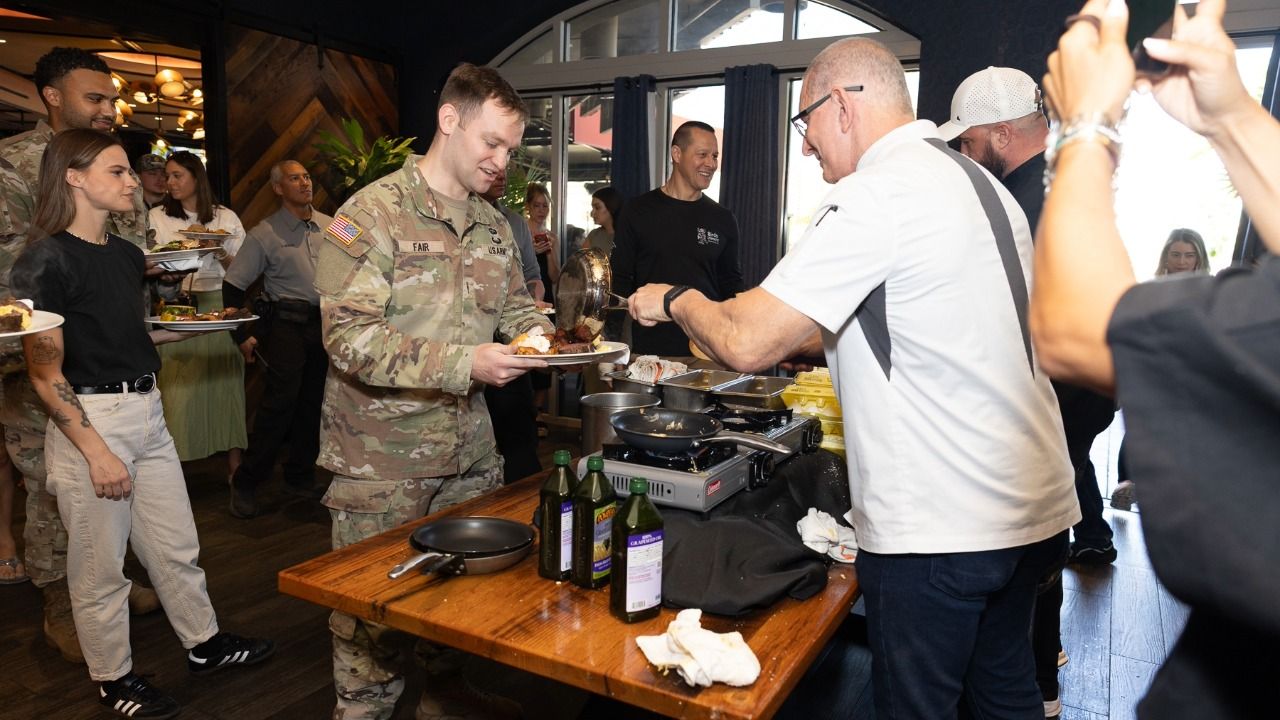
Robert Irvine did something unusual in Tampa last week: he stayed.
For a chef who travels roughly 345 days a year on the road between cities, military bases, and television shoots, four days in one place is a commitment. The Tampa Bay Wine & Food Festival, held April 7–11, was enough to hold him there.
“You look at Miami, New York, Aspen. Tampa Bay is right up there with them,” Irvine said during the event.
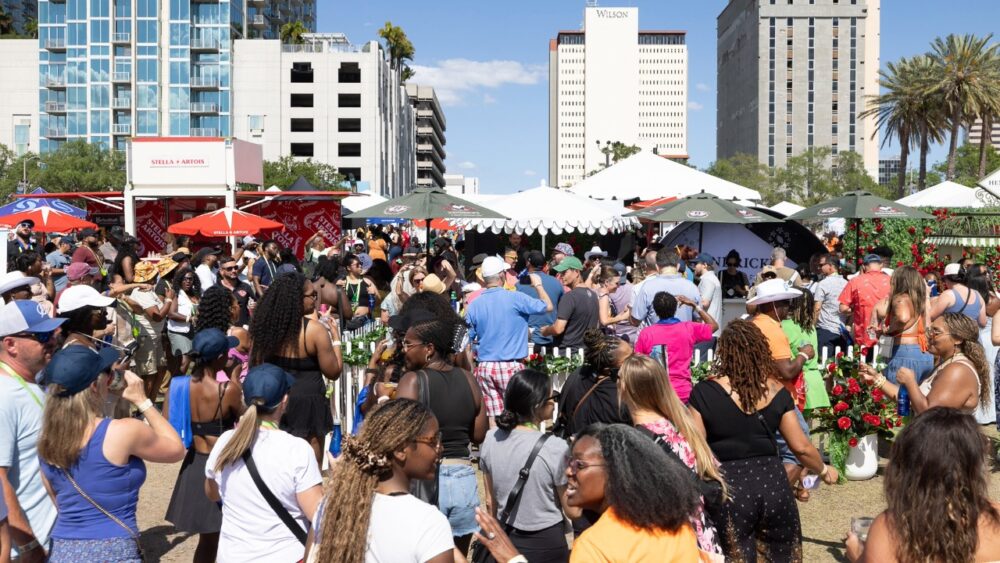
Now in its fourth year, the festival has grown into a five-day event that brings together more than 60 restaurants, national sponsors and thousands of attendees across Tampa and St. Petersburg. The festival brings the region’s culinary scene into one place, creating exposure that can translate into sustained business for participating restaurants, particularly those without the reach of larger brands.
Irvine said the format also helps smaller, independent restaurants gain visibility alongside larger operators, bringing “mom-and-pop businesses to the forefront.”
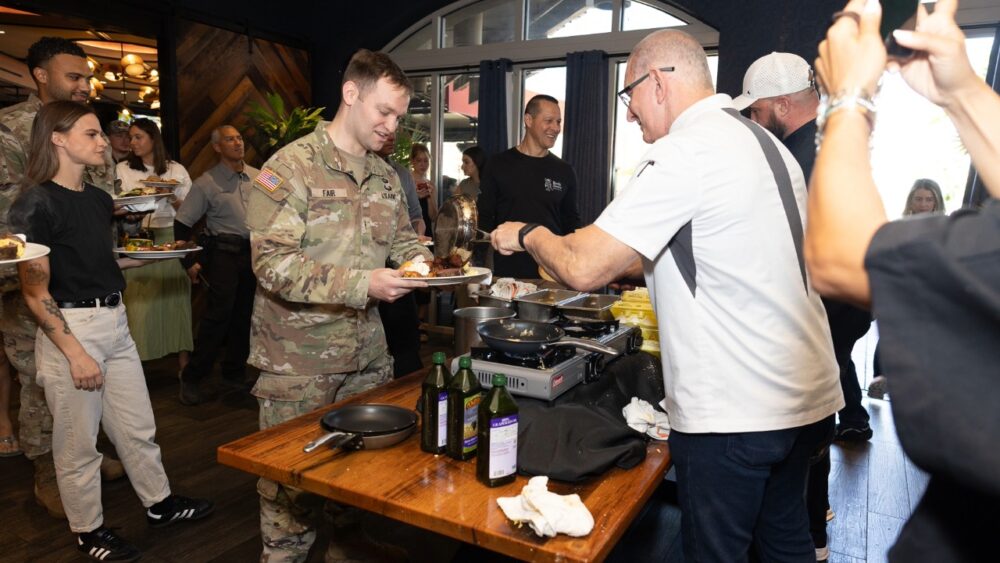
In Tampa, Irvine moves freely through the crowd, stopping to talk, sampling dishes and engaging directly with guests.
He said the quality of the food reflects that shift, describing dishes he sampled on site as among the best he has had.
That access is not typical of larger markets, where structure and scale often separate operators from the audience they are trying to reach. Irvine said the event also reflects the region’s structure, with a mix of neighborhood restaurants and established operators participating, rather than a curated set of headline names.
“Here you get up close and personal with the chefs. I just walked through the crowd to get some food and a drink. You don’t always get that in other cities,” he said.
Diners meet the people behind the restaurants, and operators build relationships that extend beyond a single event, while smaller concepts share space with established names and gain access to audiences that are harder to reach in larger, more segmented markets.
“When it brings business to your restaurant, that’s completely different,” Irvine said.
The festival has expanded alongside the region. Programming ranges from multi-course pairing dinners across Tampa and St. Petersburg to large-scale events at Curtis Hixon Waterfront Park, including the Chef Showdown and Grand Tasting. New elements this year, including a bartender competition and late-night programming, drew a larger audience and extended the time guests spent at the event.
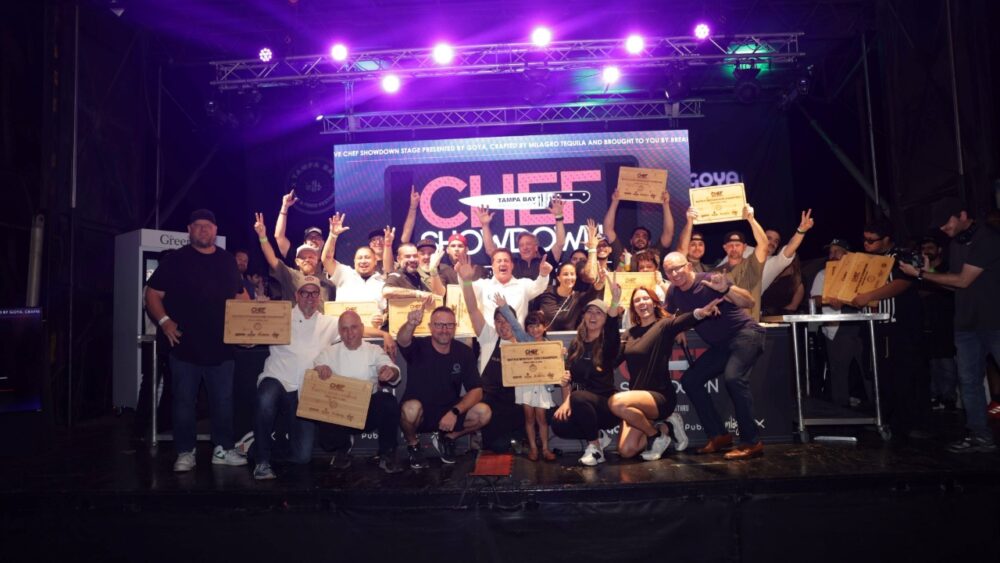
At the Chef Showdown, 20 chefs competed across 10 categories, with winners including Chef David Lazer Benstock of Il Ritorno and Chef Tyson Grant of Parkshore Grill. The Grand Tasting brought together more than 40 restaurants, where Ocho Trece earned “Best of the Fest” for its oxtail croquette. For Irvine, the level of competition reflected the depth of talent in the market.
“I saw eight world-class chefs on that stage,” he said. “That’s not bad.”
He has lived in Tampa for 17 years and has watched the market shift from an emerging scene into one drawing national attention. Population growth and capital have reshaped the region’s hospitality sector, and operators are beginning to follow.
“You’re going to see chefs from New York, Philadelphia, LA come here and open restaurants,” Irvine said.
He pointed to early signs of that movement already taking shape, with established chefs relocating and new concepts opening in Florida. Operators are seeking lower-cost markets with growing customer bases. Tampa is no longer developing in isolation. It is entering the same competitive set as larger, more established food cities.
“Tampa is becoming a big city,” he said.
He also ties that growth to consistency in operations and demand, noting that Florida’s approach during the pandemic allowed restaurants and hospitality businesses to continue operating while other markets slowed.
“Florida didn’t stop,” Irvine said. “That’s why it’s thriving today.”
The festival brings national brands and visiting chefs into the market while placing local operators alongside them, creating a mix that continues to draw both industry attention and consumers. For participants, the value is not just visibility during the event, but the ability to convert that exposure into sustained demand.
The festival also has a philanthropic component. Proceeds support the CI Foundation’s EAT SMART initiative and the Robert Irvine Foundation, which focuses on veterans, first responders and community programs.
“I want to help the next generation of chefs,” Irvine said.
The Tampa Bay Wine & Food Festival is scheduled to return April 6–10, 2027.
Read More Tampa Bay Business News
Explore the latest Tampa Bay business news, real estate deals, development projects, executive moves and company updates shaping the region.