
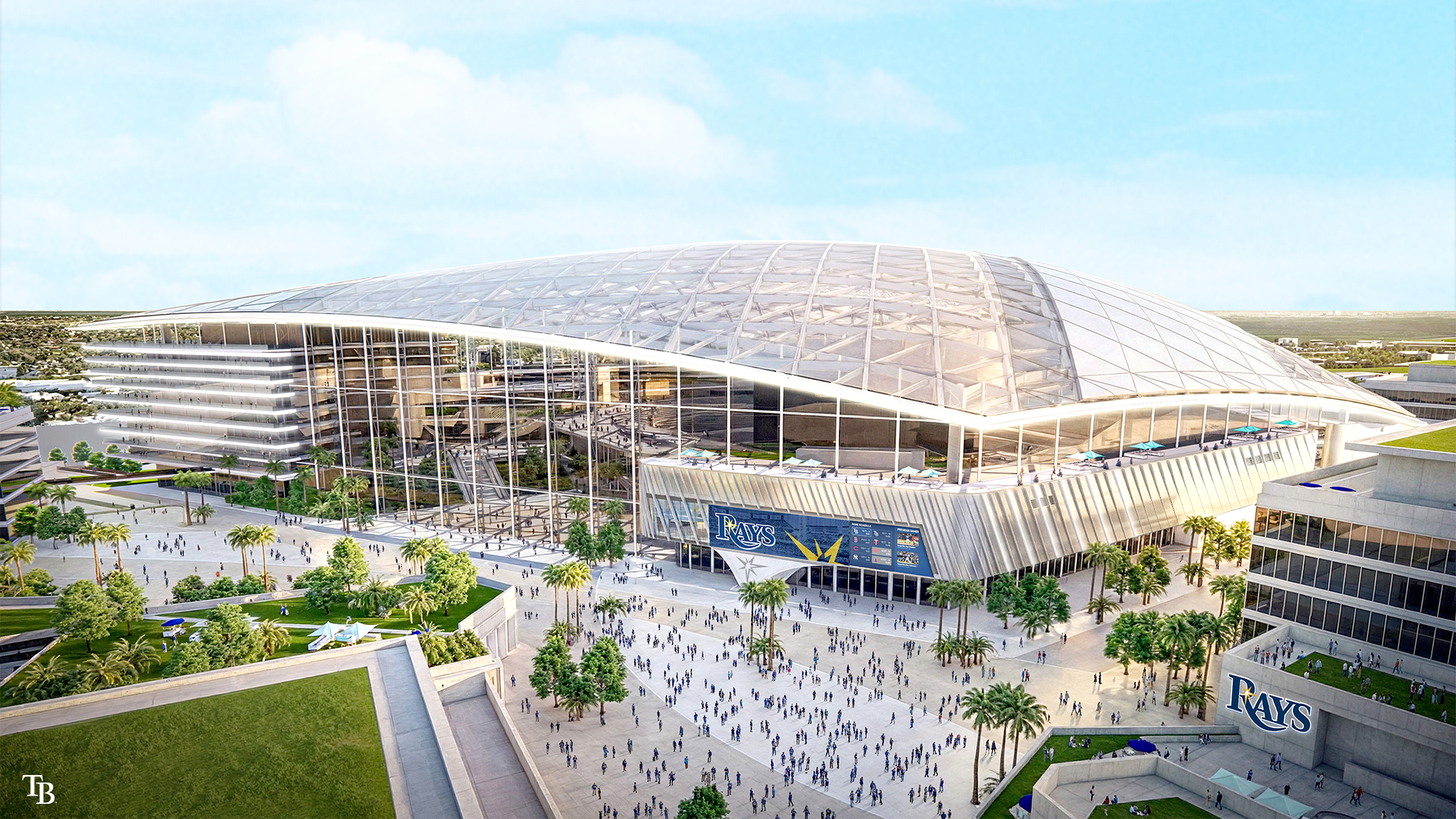
Tampa may have to cut funding for roads, public safety and other priorities if tax revenue for a new Rays ballpark falls short, city finance officials told council during the project’s first public review Tuesday. The risk is the city borrowing against future Community Investment Tax revenue to fund the proposed $2.3 billion stadium and what happens if projections fall short.
Council members pressed staff on how much would be bonded, who would pay interest and how the city would protect core services if revenue declines. Chief Financial Officer Dennis Rogero said the city expects to collect about $783 million from the tax over 15 years but would need upfront access to support the project.
“They can’t wait over a 15-year time frame to get that funding,” Rogero said. “That can be accomplished by bonding this revenue.” Councilman Luis Viera asked who would pay interest, which Rogero said remains under negotiation.
Rogero said the city would adjust spending if revenue falls short. “If the funding comes in over that 15-year time period less than anticipated, we will have to reduce the allocations for these projects,” he said. Council members tied that risk to state policy, with Councilwoman Lynn Hurtak pointing to the elimination of sales tax on commercial leases and potential property tax changes in Tallahassee.
Rogero said the lease change has already reduced expected city revenue by millions of dollars annually, adding to uncertainty around long-term projections tied to the deal.
The proposal calls for a fixed-roof ballpark at Hillsborough College’s Dale Mabry campus with a 130-acre mixed-use district. Rays chief executive officer Ken Babby said the team would contribute more than $1.1 billion, fund surrounding development and cover cost overruns.
“The Rays are taking 100% of the cost overruns on the project,” Babby said. “If the ballpark becomes $2.6 billion, every penny above $2.3 would be paid by this ownership group.” City officials said public funding would be limited to the stadium.
Public safety leaders said the deal must include enforceable protections for staffing, response times and infrastructure as demand increases around a large-scale venue. Walter Hill, vice president of Tampa Firefighters Local 754, said long-term service depends on execution, not just funding.
“Funding alone does not deliver service,” Hill said. “Execution does.” Brandon Barclay, president of the Tampa Police Benevolent Association, said the union supports a Rays stadium but wants protections written into the agreement.
“Support does not mean a blank check,” Barclay said. “Any memorandum of understanding must include public safety resources.”
Council members also raised concerns about traffic around Dale Mabry Highway and nearby neighborhoods that already face congestion during major events. Councilman Charlie Miranda said existing conditions point to the need for larger transportation solutions.
“We don’t need buses,” Miranda said. “We need light rail overhead.”
Rogero outlined competing demands on Community Investment Tax revenue, including transportation, public works, public safety, parks and major facilities such as Raymond James Stadium and Benchmark International Arena. Council members said those obligations raise questions about what could be reduced if revenue declines and debt obligations remain fixed.
“The problem, not the Rays, is the money,” Miranda said. Councilman Guido Maniscalco said the city must weigh what it would give up for the project.
“Nothing is free,” Maniscalco said.
Babby said the financial structure is still under negotiation and that public funding would go only to the stadium. “Public moneys from the city or from the county would go into the ballpark, not the development,” he said.
Stakeholders raised concerns about taxpayer exposure and existing public assets. Joe Greco, a member of the city’s Citizens Budget and Finance Committee, urged council to require voter approval before using public funds, arguing that taxpayer consent should come before any financial commitment.
“Any use of city funds on the new stadium is a violation of taxpayer intent,” Greco said.
Jennifer Castro, chief deputy tax collector representing Nancy Millan, said the Drew Park office, which serves about 200,000 customers annually, should not be displaced without a plan to maintain service levels. “We cannot stand by while our busiest office is in jeopardy without a funding replacement plan,” Castro said.
Business leaders said the project could rebuild the tax base in Westshore, which has lagged in commercial growth. Michael Maguire, executive director of the Westshore Alliance, said the alternative also carries risk if the area continues to fall behind competing markets.
“If we don’t do this, then we join the ranks of Oakland,” Maguire said.
Key financial terms remain unresolved, including how much the city would bond, who would pay interest and how the city would protect core services if revenue declines. City officials and the Rays are working toward a June 1 deadline to finalize a memorandum of understanding, which will determine how risk is shared and how the project moves forward.
Read More Tampa Bay Business News
Explore the latest Tampa Bay business news, real estate deals, development projects, executive moves and company updates shaping the region.