
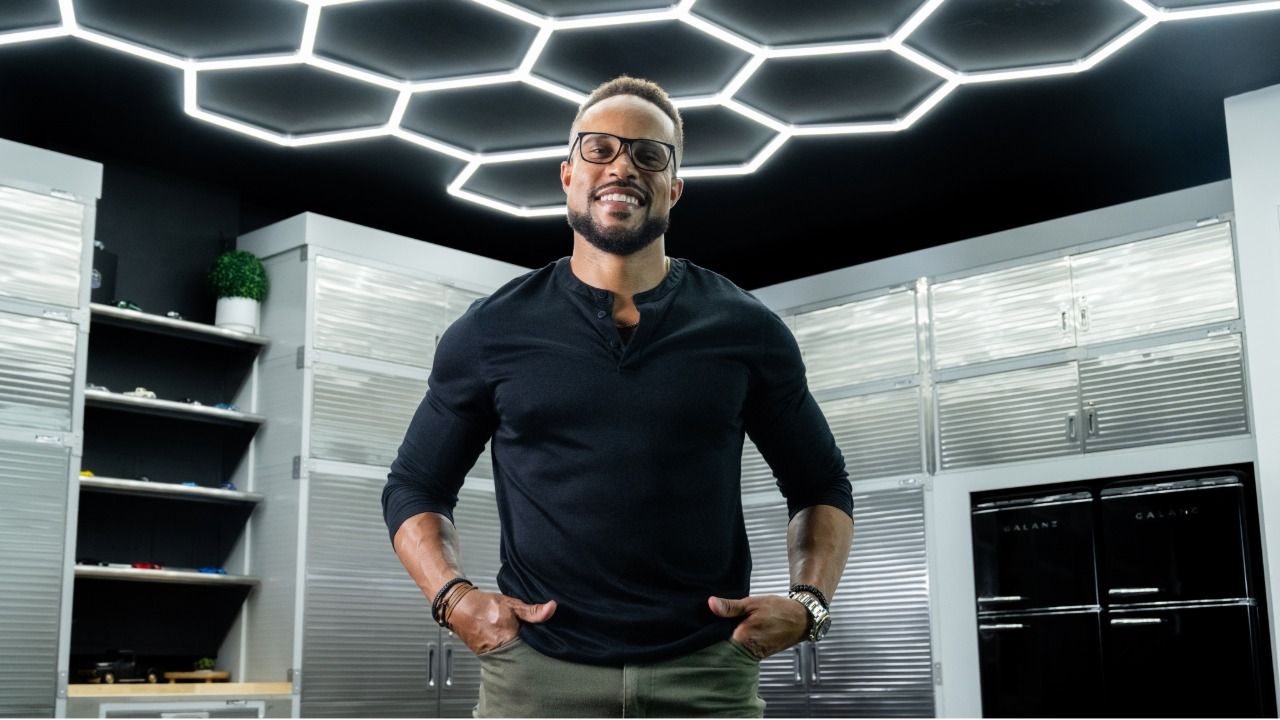
Allen Greene II had spent most of his life believing he could outwork almost anything.
He learned that mentality from his father, Allen Greene Sr., while working alongside him on flooring crews across Tampa Bay, hauling material before sunrise, mixing self-leveling cement and spending long days inside unfinished buildings, where Greene II absorbed the belief that persistence and physical labor could solve almost any problem. He later carried that mindset into Envision Construction Services, the commercial construction company he and his father built in the wake of the recession after losing their separate flooring businesses, before years of setbacks, loss and faith forced him to reconsider how much hard work alone could actually hold together.
Only weeks after Greene II and his wife, Ariana, brought home their first child following years of fertility treatments and a difficult pregnancy, Greene II was critically injured in a crash and rushed to Tampa General Hospital with broken ribs, a brain bleed and severe lung damage. Doctors warned the family he might never breathe independently again while Greene Sr. listened to discussions about a tracheotomy and neurological uncertainty. Greene Sr. asked them to wait, went home to pray and returned the next day to sit beside his son, who could not speak but could still squeeze his father’s hand.
“When he squeezed my hand, I knew,” Greene Sr. said. “I knew he was still there.”
When Greene II finally returned home from intensive care, the struggle shifted from physical survival to everyday function. He forgot conversations midway through them. Passwords disappeared from memory while he typed them. Sometimes he would walk into a room in the office and forget why he had gone there in the first place. While the business continued operating around him, Greene II relearned basic cognitive routines through rehabilitation and therapy while Ariana covered parts of the business, managed responsibilities at home and filled the house with handwritten reminders to help him navigate daily routines again.
For the first time in his life, Greene II said effort alone could not solve the problem in front of him.
“I’ve always been the person who thought, ‘I got this,’” he said. “And suddenly I didn’t.”
By then, the recession had already stripped away much of what Greene II believed endurance alone could protect.
Father and son eventually rebuilt the business through Envision Construction Services, where Greene II now leads operations while Greene Sr. remains deeply involved in the company they built together. Focus Flooring, an affiliated commercial flooring company born out of Envision, operates separately, with Greene II serving in a more advisory ownership role. Envision employs about 30 people, while Focus Flooring employs about 15. The companies have worked on projects tied to Tampa International Airport, healthcare systems, schools and large commercial developments throughout the region.
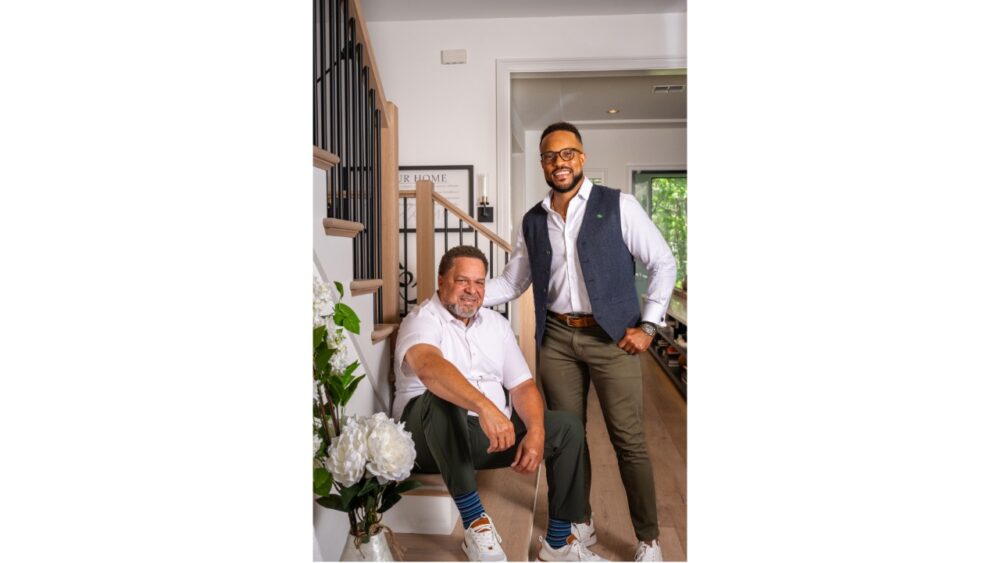
Envision handles commercial interiors, renovations and specialty construction projects where schedules, coordination and operational continuity leave little room for error. Crews regularly work inside active airport terminals, healthcare facilities and occupied commercial spaces where businesses continue operating around them. Last year, Envision generated about $9.8 million in revenue while Focus Flooring generated more than $7 million. This year, the companies are targeting roughly $13 million and $9.6 million, respectively, while continuing to grow their commercial construction work throughout Tampa Bay and beyond.
Greene II said growth accelerated once he stopped viewing leadership as control and started viewing it as stewardship.
“We build people to build buildings,” he said.
Construction shaped much of Greene II’s childhood long before he officially entered the business. Weekends often meant riding between jobsites with Greene Sr., cleaning vehicles, sweeping floors or watching flooring crews work across Tampa Bay. Construction dominated much of family life, and Greene Sr. often kept his son close on jobsites while school increasingly felt disconnected from the way Greene II naturally learned.
His attention drifted away from school and toward cars, sports and small hustles that made money. At one point, he figured out how to alter report cards by copying letters and numbers, charging classmates to improve their grades, asking them, “What do you want your GPA to be?”
Greene Sr. said he already saw instincts that later translated naturally into business leadership because even then, “he always understood how things fit together.”
Much of that mentality came from watching his father repeatedly rebuild his life, Greene II said. Greene Sr. was born on an Air Force base in Japan while his father served as a master sergeant and aircraft mechanic, then moved through New York and South Carolina before the family settled in East Tampa during the late 1960s. Tampa schools were integrating when Greene Sr. was in sixth grade, and he grew up in a city where opportunity for many Black families depended on reputation, relationships and the ability to keep working when formal pathways narrowed. His father carried military discipline and deep religious conviction, leaving the Air Force four years short of a pension because his church told him he could not remain in uniform and stay within the faith. Greene Sr. admired the conviction, even as he later described his own faith differently.
“I accepted God,” he said. “I just didn’t accept religion.”
Before construction became the family business, Greene Sr. unloaded phosphate cargo along Tampa’s docks, operated cranes, owned a Subway franchise and installed flooring across the region. During some of the company’s leanest years, his wife, Yolanda, helped carry the household financially while Greene Sr. continued trying to keep the business moving forward. Years later, the company he built with his son would help shape projects across the same city as Tampa’s waterfront, airport and commercial corridors changed around them. For Greene II, those experiences became part of the family’s operating language: someone had to create opportunity before anyone could build a future.
“If you don’t have an opportunity,” Greene Sr. said, “how can you have success?”
After his parents’ marriage deteriorated, father and son drifted apart for years, Greene II said. Greene Sr. buried himself deeper in work while Greene II withdrew emotionally during high school. Construction work kept them physically connected even as emotional distance grew between them. Greene II said the relationship eventually evolved differently than the traditional father-son business story, with construction gradually becoming the mechanism through which both men rebuilt trust, aligned spiritually and ultimately built the company together.
During those years, Ariana remained one of the few steady influences in Greene II’s life. The two had known each other since middle school, and Greene II credits her with helping redirect his life during a period when he felt increasingly disconnected from both school and family.
“She told me, ‘You’ve got to move on. You’ve got to start somewhere,’” Greene II said.
Ariana continued working full time in finance while helping support Envision after hours, assisting with administrative work, finances and the household during periods when the business could not reliably support the family on its own.
After struggling through high school and a semester of college, Greene II asked his father for full-time work. Greene Sr. started him at the bottom. Most mornings began before sunrise with Greene II mixing 50-pound bags of self-leveling cement before spending the rest of the day hauling material, cleaning jobsites and learning flooring installation through repetition while Greene Sr. supervised crews and managed projects.
Greene Sr. still laughs remembering that period because “he was the mixer.”
Spending nearly every day together inside trucks, warehouses and unfinished buildings gradually repaired the relationship between father and son, Greene II said.
“I think a lot of our relationship evolved around work,” he said.
While father and son rebuilt their relationship, the flooring industry beneath them began collapsing. Residential work disappeared across Florida almost overnight as condo investments failed, credit tightened and cheaper labor crews undercut established contractors throughout the market. By then, Greene II had already started a flooring business of his own alongside his father’s operation, pursuing separate accounts and vendor relationships while both businesses expanded through the housing boom. When the recession hit in 2008, it did not wipe out one company. It wiped out two.
“Any two men in a truck can pull up and compete,” Greene II said as flooring work evaporated and he lost his condo, two trucks and much of the financial stability he thought years of work had secured while Greene Sr. watched decades of work begin slipping away at the same time. “A service-based business approach that wasn’t built to stand the test of time.”
After the recession and starting Envision, father and son often worked 80- and 90-hour weeks while paying employees before paying themselves. Greene Sr. said there were periods when survival depended entirely on continuing to show up at jobsites despite mounting losses and uncertainty. He still remembers watching repossession companies haul away trucks that once represented financial progress for the family, company lettering still stretched across the doors while work boots remained inside the cab.
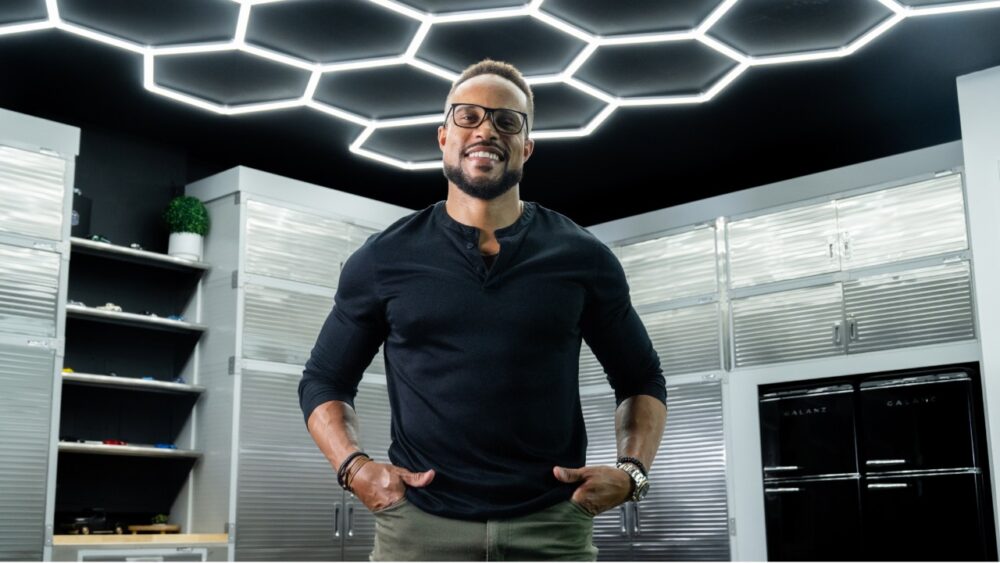
During one especially difficult stretch, Greene II said a homeowner refused to pay after a project had already been completed, leaving the company without enough cash to make payroll. He said his mother wrote the business a $15,000 check to help keep employees paid at a moment when the company might not have survived otherwise.
“Hard work and making money doesn’t equal sustainable business,” Greene II said.
While continuing to work long days in flooring, he enrolled in trade school in Sarasota to study construction estimating and general construction while preparing for his GC licensure. Many nights ended with him falling asleep at the study table before waking up and starting over again the next morning.
While the business continued deteriorating, Ariana kept bringing him to church, where conversations with Pastor Greg Powe and other mentors gradually changed how he viewed business, leadership and the fractured relationship with his father.
“There would be no Envision without that,” Greene II said. “There would be no marriage, no kids and no relationship healing. All of that came through God changing how we viewed everything.”
One of the turning points came after Greene II and his father built a dividing wall inside Revealing Truth Ministries. When Greene II returned to pick up the check, he met Powe face to face for the first time. Greene II said the relationship that followed reshaped not only his faith, but the direction of the company and the relationship between father and son.
Since Pastor Powe’s passing, that legacy has carried forward through Bryan and Rashida Powe, now senior pastors, and Pastor Deborah, the overseer, who have all been more like family than friends to Greene II and Ariana over the past two decades.
Faith forced Greene II to reconsider the belief that he alone could carry the weight of success, failure and responsibility.
“There’s another kind of pride,” he said. “The kind where you think, ‘I got this.’”
Powe often repeated a principle that later became embedded in the company’s culture: “We will not quit, therefore we cannot be defeated.”
Faith gradually shifted the business from something Greene II believed he had to control alone into something he felt responsible to steward. Greene Sr. described the same idea in business terms that reflected the family’s faith.
“Money is a force,” he said. “It is not the driving force.”
In 2009, father and son formally launched Envision Construction Services together, combining Greene Sr.’s field experience and relationships with Greene II’s growing focus on operations, estimating and long-term business development.
Greene II immersed himself in estimating, project management, operations and business planning while learning commercial construction through church projects, flooring contracts and small renovations. Greene Sr. remained heavily involved in field operations and execution while Greene II focused increasingly on systems and growth strategy.
Envision was not simply rebuilding the old business after the recession. Greene II said father and son were building something new on a different foundation. The company shifted away from residential work and deeper into commercial construction, where specialization, operational trust and systems mattered more than instinct and hustle.
The shift led father and son to start a commercial flooring division with three goals: build relationships, build revenue and better understand commercial construction. The company gradually expanded through relationships with large-scale construction firms, most notably The Beck Group, while also taking on church and community projects throughout Tampa Bay.
Greene II said Beck built a bridge for them to cross. Ryan Toth and the Beck team gave Envision access to opportunities most emerging firms never see and, more importantly, the mentorship and real project integration that turn access into capability. It was a true partnership, the kind that shaped how Envision still approaches the community and projects today.
Greene II said those partnerships mattered because they allowed Envision to participate operationally instead of functioning as symbolic minority participation.
As they searched for quality mentorship, they ran into opposing principles across much of the market.
“You’re trying to basically pay us to put our name on a piece of paper,” Greene II said, describing deals the company rejected from larger firms. “But not allow us the chance to learn and grow and build a business.”
Instead, father and son focused on building a company they believed carried a responsibility to create opportunities for other people through mentorship, employment and long-term growth.
“We believe God is the one lifting people up,” Greene II said. “Our responsibility is to help bring people along when we can.”
In 2016, Envision landed a small Delta buildout at Tampa International Airport worth roughly $60,000 to $68,000. The project later expanded after another flooring contractor encountered major installation problems under severe deadline pressure.
Greene Sr. often worked nights alongside crews removing and repouring flooring while airport operations continued around them. At the same time, Greene II handled coordination, client communication and operational oversight as the company raced to meet deadlines. Overnight crews worked beneath bright terminal lights while travelers rolled luggage past active construction zones before dawn. Eventually, the original project grew into more than $2 million in airport work.
Greene II also began pushing for warehouse space the company did not yet appear ready to need. Envision still operated from a small office and did not have enough contracts to justify the expense, but Greene II believed the company needed room to grow before the growth arrived. Greene Sr. eventually agreed, and father and son drove around Tampa looking at buildings until they found one and signed the lease, even though they did not yet have enough pallets to fill it.
Greene II said the airport project felt like proof Envision could compete at a higher level after years spent rebuilding the company following the recession. The company was beginning to stabilize before another setback arrived in 2019, when a major estimating miss on a South Tampa project created losses exceeding $500,000.
“It should have taken us out,” Greene II said. “I was angry. I was crying. I felt responsible.”
The loss pushed Envision back into restructuring. Greene II said Powe’s principle of “order before increase” became the operating frame for the season that followed, as the company rebuilt around structure, accountability and repeatable systems rather than memory or instinct.
Whiteboards filled with revised procedures, operational controls and new accountability systems. The company later adopted EOS leadership principles and focused on creating processes that could scale beyond the founders themselves.
“Sometimes the most painful moments produce the growth you need,” Greene II said.
Jacques Duval became central to that work after the 2019 loss. He had joined the company in 2016 to help build marketing, media, business development and sales before stepping sideways into operations in the flooring business. A close friend of Greene II and Ariana, Duval helped take what lived in Greene Sr.’s head and Greene II’s head and turn it into processes the rest of the team could follow.
Recovery forced Greene II to rely on employees, systems and leadership structures in ways he never had before.
While Ariana helped manage the household and stabilize parts of the business, Greene II slowly rebuilt routines that once felt automatic. Greene Sr. drove his son to therapy appointments before heading to jobsites and the office, much like the years they once spent riding together between warehouses and unfinished buildings, while employees kept projects moving throughout the company.
The business, he said, mattered less as a source of revenue than as a way to create stability and opportunity for other people long after individual projects ended.
Inside Envision and Focus Flooring, several employees who entered through entry-level positions now manage departments, crews and projects throughout the organization, a form of growth Greene II said matters more to him now than revenue alone. Ariana now oversees finance and operations for Envision while other longtime employees have moved into leadership roles across the business.
The flooring operation formally spun into Focus Flooring in 2022, which now employs about 15 people. In 2023, Duval became the company’s first president, a transition Greene II said reflected the broader focus on developing leaders from within the organization.
“If your life isn’t better after working here,” Greene Sr. said, “then we failed you.”
The company’s focus has also shifted toward deeper long-term investment in fewer community partnerships. Greene II said the company once spread its giving widely across community organizations, but leadership has been shifting toward deeper commitments with fewer partners, putting more time, talent and money behind organizations connected to youth, workforce development and education.
That work has included Revealing Truth Church (formerly Revealing Truth Ministries), workforce programs through Workforce Development Partners and ABC, where Greene II serves on the board, the University of South Florida, Hillsborough County schools, churches and mentorship tied to projects such as the USL soccer stadium at Blake High School, and many more.
Greene II described the earlier approach as “a mile wide and an inch deep.” The new approach, he said, is to choose fewer partners and invest more deeply.
Greene II said he now views Envision less as a construction company than as a vehicle for creating stability and opportunity for employees, families and future generations. He said the company’s survival no longer feels like the result of one person’s ambition or endurance alone, but the product of years of mentorship, sacrifice, faith and relationships that carried multiple generations of the family through seasons that nearly broke them.
He also credits his Uncle Michael White, known in the family as “Big Michael,” as one of the first people who taught him how money, investing and business actually worked, lessons that later shaped how he approached growth, ownership and long-term planning.
Greene Sr. said that shift is now visible in a third generation growing up around the same jobsites where Greene II once learned the mentality that shaped both his life and the business.
“My dad came from one generation,” Greene II said. “I came from another. My kids are going to come from something different entirely.”
Photos Courtesy of Evan Smith.
Read More Tampa Bay Business News
Explore the latest Tampa Bay business news, real estate deals, development projects, executive moves and company updates shaping the region.