
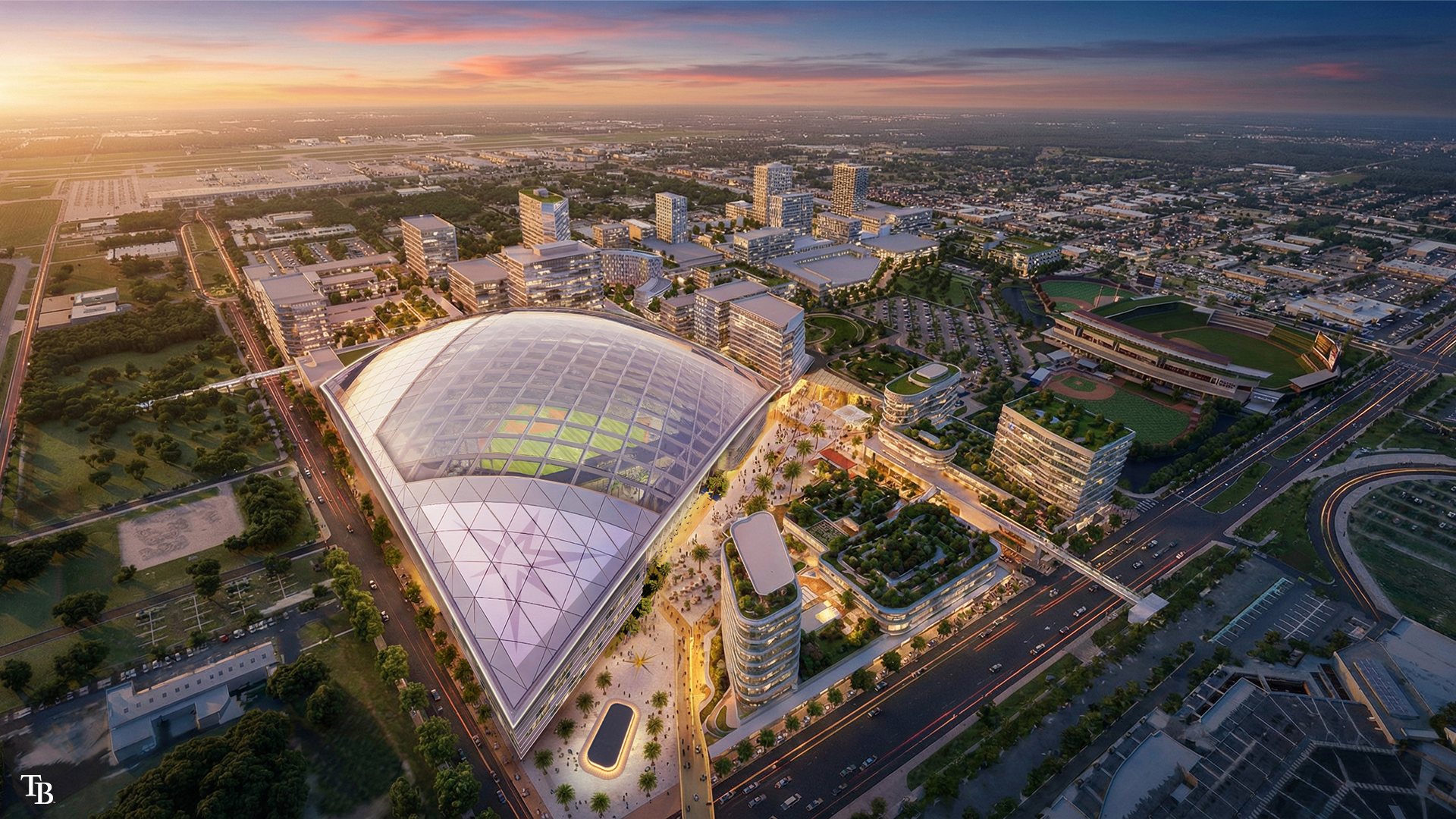
After nearly two decades of failed stadium plans, the Tampa Bay Rays have secured the local government approvals for a $2.3 billion ballpark in Tampa. Hillsborough County commissioners approved the county agreements 5-2 Friday, one day after Tampa City Council approved the city’s portion 4-3. Hillsborough County and the city have committed about $876 million combined, while the agreements make the Rays responsible for about $1.37 billion and all construction overruns.
Those commitments resolve the financing problem that ended the Rays’ previous attempt to move to Tampa in 2018. They also give the franchise an approved path out of Tropicana Field after its replacement in St. Petersburg collapsed last year, leaving the Rays without a long-term stadium plan.
Less than a year after buying the franchise, the Rays’ new ownership group had the stadium agreement that had eluded its predecessors. Managing Partner and Co-Chair Patrick Zalupski acknowledged the work still ahead after Friday’s county vote.
“Today’s vote represents an extraordinary milestone, not simply for the Rays or for a ballpark, but for the future of Tampa and the entire Tampa Bay region,” Zalupski said. “We recognize there is still important work ahead, and we look forward to continued collaboration to deliver on the promise of this transformational project.”
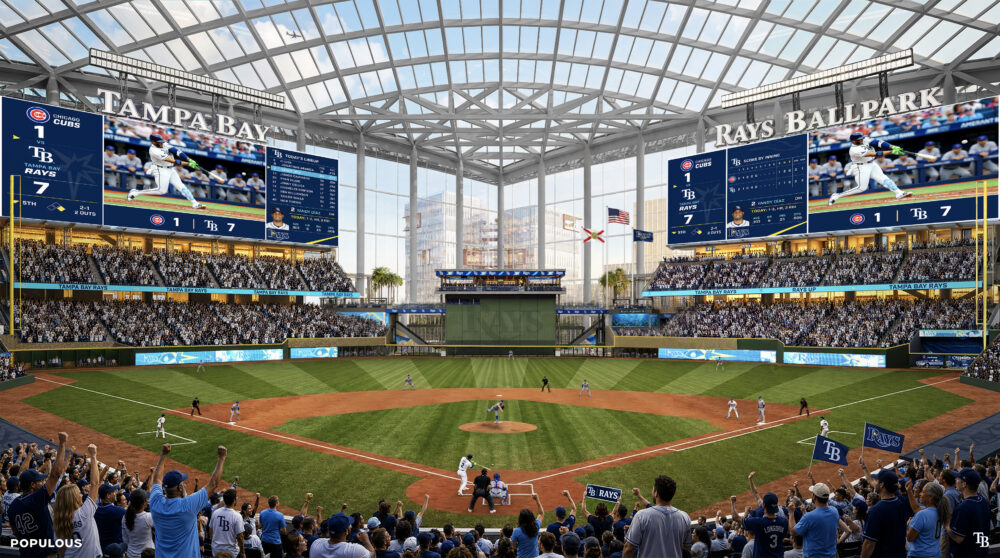
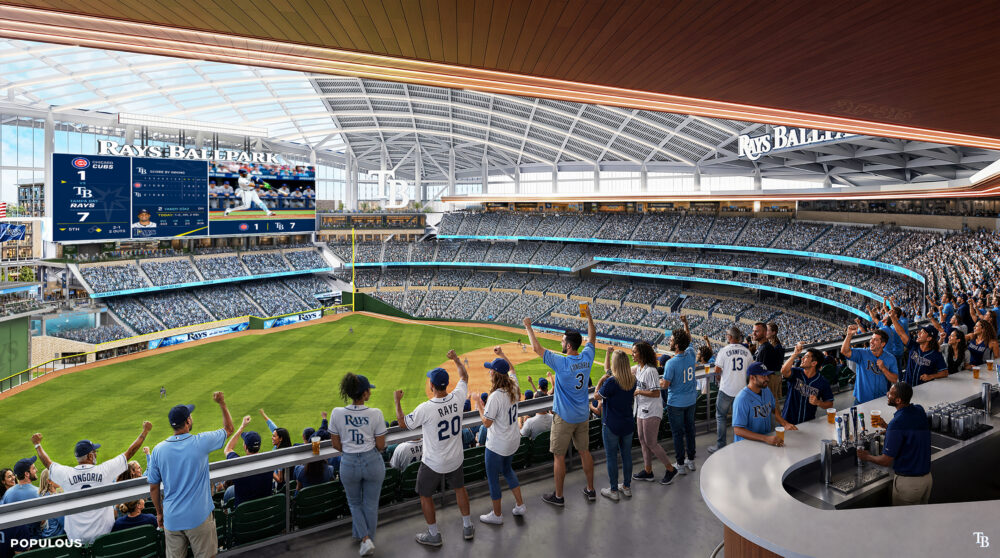
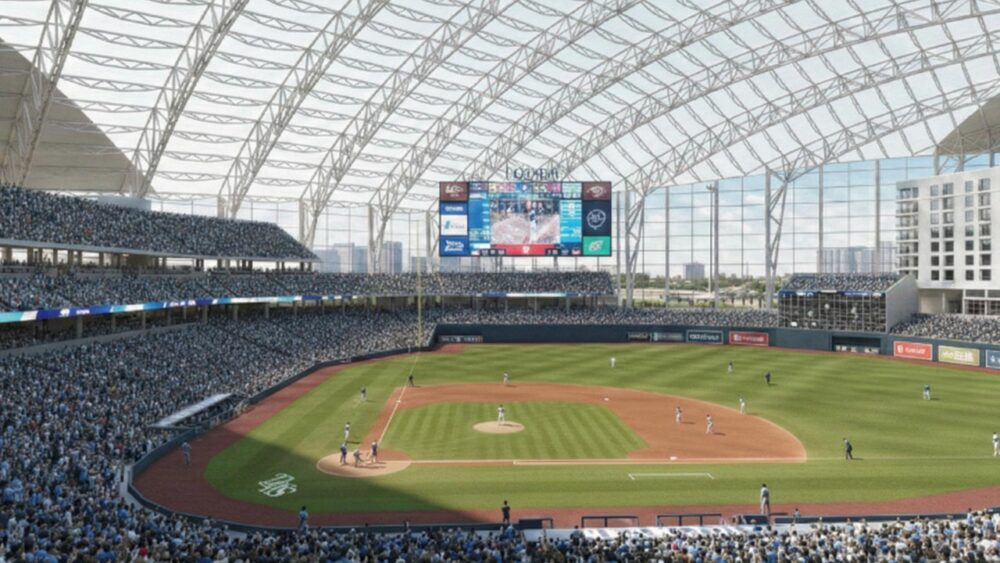
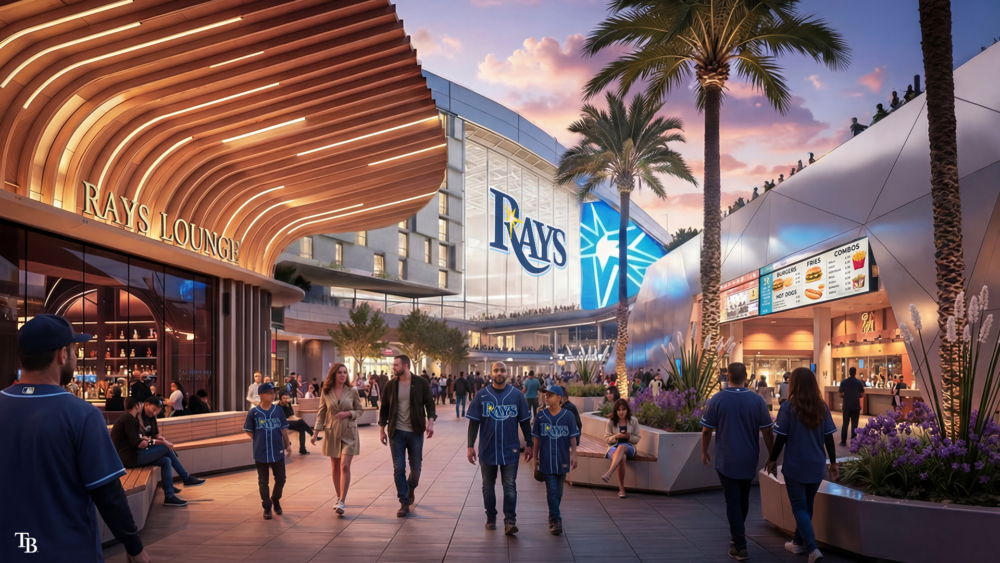
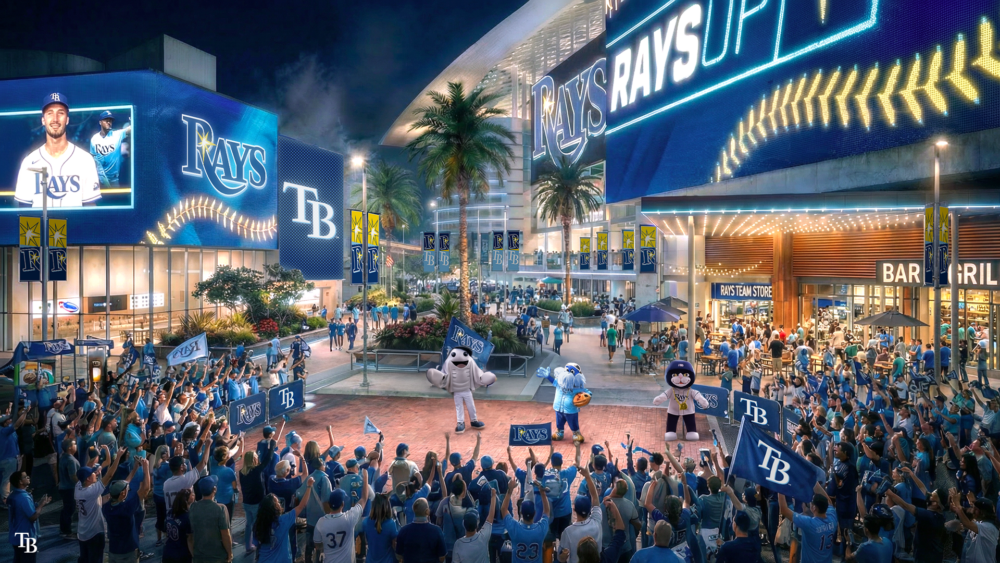
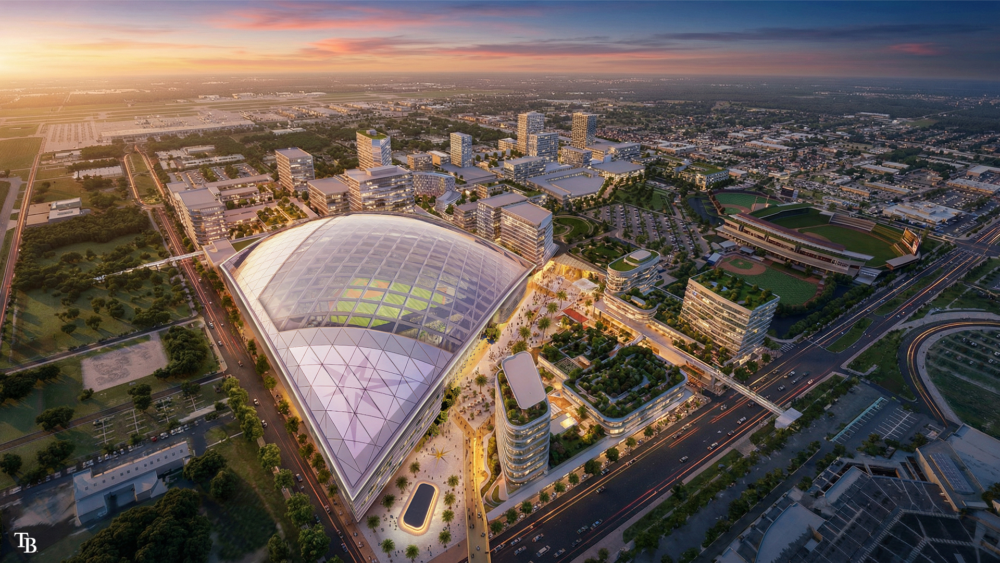
How the Tampa Deal Works
Hillsborough County accounts for roughly $796 million of the public contribution, including $360 million from the Community Investment Tax, $303 million from Tourist Development Tax bonds and reserves, $103 million from other county funds and $30 million in federal disaster-recovery money. The tourism-tax portion consists of $263 million in bonded funding and $40 million in reserves.
The $360 million Community Investment Tax contribution comes from the 15-year half-cent sales tax voters renewed in 2024 for transportation, public safety, public facilities and other infrastructure. Putting that money toward the ballpark changes how Hillsborough County can use the broader program, and county staff said Friday that officials could realign projects and draw on contingencies, alternative funding sources or future revenue from the stadium district to cover other needs. Most of the separate $103 million county contribution would likely come from the general fund, although multiple sources remain available.
The tourism-tax money carries a different obligation because much of it will be borrowed against future collections. Hillsborough County will use $263 million in bonded funding and $40 million in reserves, with the bonds principally repaid from the sixth cent of the Tourist Development Tax and further backed by one of the first three cents if needed. The county’s debt schedule puts principal and interest on the TDT-backed bonds at roughly $569 million over 35 years.
Those first three cents also help finance Visit Tampa Bay, bringing the stadium debt into the same revenue system that supports Hillsborough County’s destination marketing. Visit Tampa Bay received about $32.8 million in TDT funding in fiscal 2025, money it uses to attract visitors, conventions and events that fill hotel rooms and replenish the tax.
That relationship moved from the financing documents into the commission chamber Friday when Commissioner Gwen Myers called Bob Morrison, executive director of the Hillsborough County Hotel & Motel Association, back to the lectern. Morrison represents an industry that collects the bed taxes on which both Visit Tampa Bay and part of the stadium financing depend.
“Visit Tampa Bay is the engine that drives the revenue that allows us to be able to have what Tourist Development Tax funds,” Morrison said.
The scale of that tourism economy helps explain the concern. More than 28 million visitors spent $6 billion in Hillsborough County in 2025, producing an estimated $9.5 billion in economic impact, supporting nearly 62,000 jobs and generating $691 million in state and local taxes. Visit Tampa Bay also reported more than $1.2 billion in taxable hotel revenue, which it calculated at about $37 for every $1 of TDT funding invested in destination marketing.
Morrison wanted the organization to retain enough resources to keep marketing Hillsborough County as the stadium and surrounding development come online. Myers put the issue more directly.
“The reason I wanted Bob to come back up is [that] Visit Tampa Bay does so much here in marketing and bringing so much here to our county and our Tourist Development Tax,” Myers said. “I want to make sure I, as a commissioner, that we take care of them to make sure there are no layoffs, et cetera, at Visit Tampa Bay.”
The stadium financing now places both sides of that tourism equation inside the same tax system. Visit Tampa Bay spends bed-tax revenue to produce hotel demand; Hillsborough County will use another portion of the system to finance a stadium and surrounding district expected to create more visitors, hotel stays and taxable spending. Morrison and Myers were pressing the county to preserve the marketing operation that helps generate the revenue while adding the long-term stadium obligation.
Tampa’s roughly $80 million contribution comes from a different structure. The city will advance the money for public infrastructure and recover it from future property-tax growth around the ballpark. Tampa City Council approved that portion Thursday in a 4-3 vote, and Hillsborough County commissioners approved the county agreements Friday, completing the major local government votes.
Councilman Bill Carlson, one of the four members who supported Tampa’s portion, focused on where the city money would go and how the public could track it.
“None of this money from the city is going to the Rays,” Carlson said. “It’s going to a community development district that will be reviewed by the public. You will be able to pull public records whenever you want. You’ll be able to sit in the meetings, and the money is restricted so that it can only go to public-sector infrastructure that will be owned by the city, county or state.”
With the public commitments defined, the Rays carry about $1.37 billion, roughly 60% of the overall $2.3 billion project, as well as all construction overruns. Hillsborough County will own the stadium, while the Rays will operate it under a 35-year agreement.
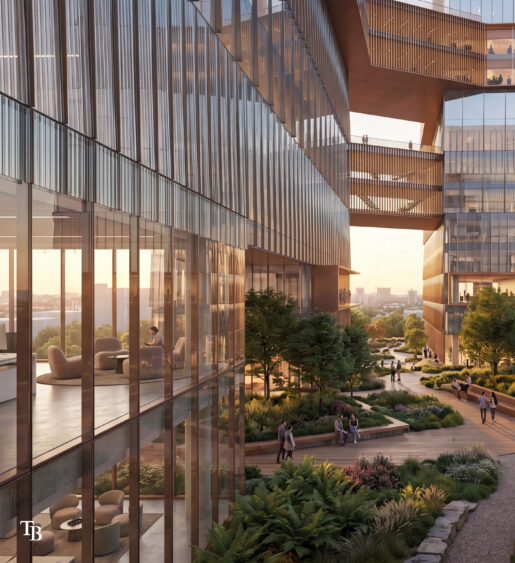
That allocation supplies what the Rays never secured during the failed Ybor City effort: a defined division of responsibility among the team, city and county. The justification for spending public money, however, extends far beyond that financing structure. The ballpark anchors a proposed $8 billion to $10 billion private development around Drew Park, Hillsborough College and Raymond James Stadium, making the surrounding district central to the case local officials built for the deal.
Commissioner Ken Hagan, who has pushed for a Rays stadium in Hillsborough County since 2010, framed the distinction this way:
“If this were the typical old-school stadium paradigm where agreements were centered solely on publicly financing a facility like Raymond James Stadium, I would understand much of the criticism,” Hagan said. “However, this is not the case here.”
The negotiations themselves shifted more responsibility toward the team. Hagan said the Rays’ share of ballpark construction increased from an earlier 50-50 split to roughly 62%, with the franchise also accepting responsibility for overruns. He acknowledged that in a “perfect world” stadiums would be privately financed, while making his case around what officials expect the stadium to set in motion.
That larger plan includes a new Hillsborough College campus, transportation improvements, education and workforce programs and a pedestrian bridge connecting the ballpark with Raymond James Stadium. Hagan compared the scale of the surrounding private development with Water Street Tampa and Midtown Tampa combined.
Water Street gave Commissioner Harry Cohen a local precedent for more than the size of the investment. He served on Tampa City Council as the district moved forward and watched a professional sports anchor, an educational institution, housing, offices, hotels and restaurants accumulate around Amalie Arena.
“I was on the Tampa City Council when we did Water Street, and even though Water Street is a little smaller, there are a lot of similarities between the two projects,” Cohen said. “The biggest being that it involved a professional sports team, an educational institution, and a vision of a work, live and play environment anchored by hotels and restaurants and office buildings and residential.”
Since then, Water Street has become an active mixed-use district, while Midtown has added another concentration of offices, housing, hotels, restaurants and retail. Cohen cited that activity as evidence that Tampa can support another major center, then carried the comparison into a problem that neither development has solved for the region: transportation.
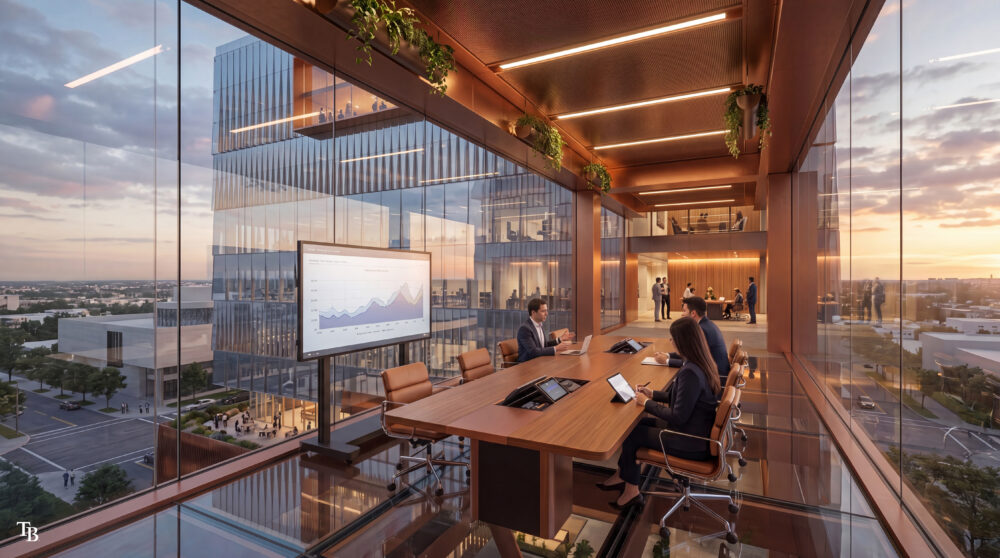
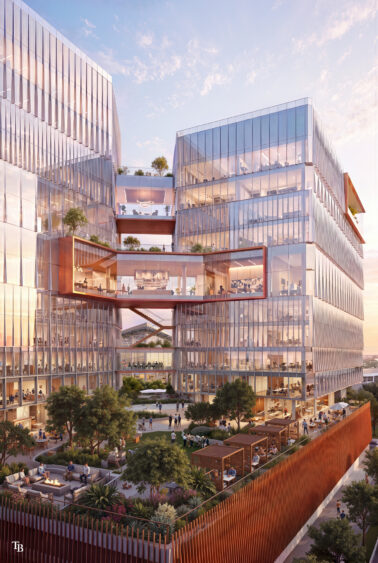
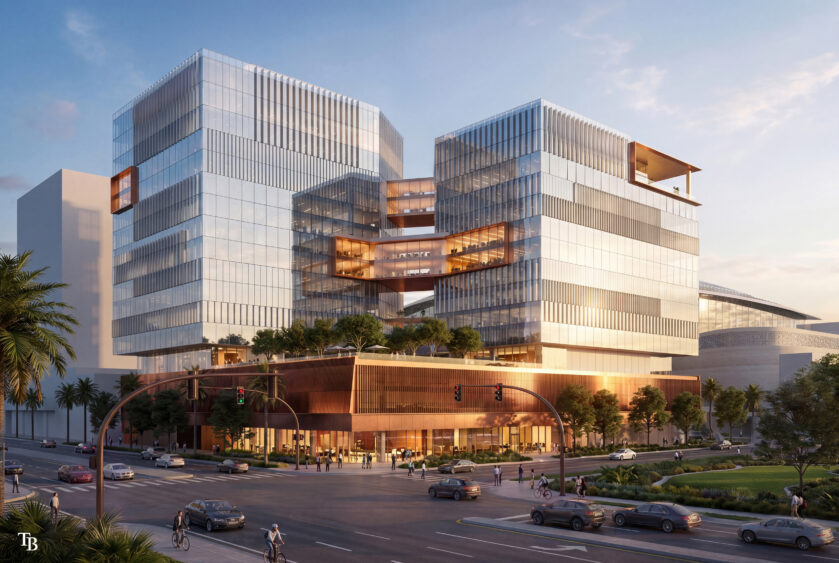
The proposed Rays district sits near Tampa International Airport, Westshore and I-275, with Midtown, downtown and Ybor City extending east from it. Concentrating another large group of residents, workers and visitors along that corridor gave Cohen a reason to revisit a transit conversation that has repeatedly stalled.
“I want to say to the transit activists in this community, this is the moment to restart the conversation,” Cohen said. “This isn’t the end of the conversation. This is the beginning of the conversation.”
Cohen pointed to infrastructure already surrounding the site, including the airport’s people mover and transportation corridors connecting Westshore with I-275 and the Howard Frankland Bridge, as pieces of a network that could eventually extend through Midtown, downtown and Ybor City. He called the development “the catalyst for the discussion,” a role that reaches beyond anything funded in the stadium agreement itself.
Water Street and Midtown provide existing examples; the Rays district remains projected. Its $8 billion to $10 billion in private investment has not been built, and the transit network Cohen described has not been funded. Carlson supported Tampa’s financing structure while drawing a sharper line around forecasts used to quantify what the larger development might eventually produce.
“I don’t believe in economic impact numbers,” Carlson said. “There are people that pay for positive economic impact numbers. There are people that pay for negative economic numbers. I don’t believe either one of them. I’ve gone through both of them. They’re both biased by the models they put together.”
How the Search Came Back to Tampa
The current deal grew out of the failures that progressively narrowed the Rays’ options. When the Ybor City proposal collapsed in 2018 without a financing agreement, the team abandoned the conventional choice between Tampa and St. Petersburg for a more radical alternative: splitting future seasons between Tampa Bay and Montreal.
Major League Baseball rejected the “Sister City” concept in January 2022, eliminating the possibility of a part-time home and returning the franchise to the search for one permanent ballpark in Tampa Bay. The Rays went back to the Tropicana Field property, joining Hines and St. Petersburg on a new stadium within redevelopment of the 86-acre Historic Gas Plant District.
That proposal advanced where the waterfront and Ybor City plans had stopped. St. Petersburg and Pinellas County approved it in 2024, carrying the Rays through the major local government votes and into financing just as Hurricane Milton tore apart Tropicana Field’s roof in October.
The storm left the Rays without a playable home and complicated the project intended to replace it. Pinellas County delayed bond action, and although the city and county eventually approved the financing, the delay pushed back the planned opening and increased construction costs. Sternberg abandoned the approved ballpark and larger Historic Gas Plant District redevelopment on March 13, 2025.
The Rays spent the following season across the bay at George M. Steinbrenner Field while St. Petersburg repaired Tropicana Field, returning in 2026 to an aging stadium whose replacement had vanished. During that interval, Patrick Zalupski led a group that completed its purchase of the franchise Sept. 30, 2025, ending Sternberg’s two decades as principal owner and installing Bill Cosgrove as co-chair and Ken Babby as chief executive officer.
The new ownership group revived the Tampa route that financing had closed in 2018, reaching definitive agreements with the city and Hillsborough County in August for the $2.3 billion project that has now cleared its major local votes.
Those agreements also brought Hagan to the decision he had spent years pursuing. He told commissioners that his effort to move the Rays to Hillsborough County had run since 2010 through five election cycles and years of criticism, threats and political pressure. With an agreement finally before the commission, his case no longer centered on whether Hillsborough County could land the franchise, but on what it would surrender by rejecting the deal.
“There is a cost of doing nothing,” Hagan said.
A Problem That Predates the Stadium Search
St. Petersburg opened the $138 million Florida Suncoast Dome in March 1990 before Tampa Bay had a Major League Baseball franchise, betting that a completed stadium would help secure one. Major League Baseball awarded Tampa Bay an expansion team five years later, and the Devil Rays began playing at the renamed Tropicana Field in 1998. Less than a decade after that first game, the building constructed to land Major League Baseball had become the building the franchise wanted to replace.
Nearly two decades of failed replacement plans have reversed the order of St. Petersburg’s original gamble. Tampa is not building a stadium in hopes that a team follows. The Rays are already committed to the project, while the public case for the ballpark depends on what follows it: housing, education, jobs and billions of dollars in surrounding commercial development.
The stadium, in other words, is being asked to do more than house a baseball team. Tampa has capped its contribution at roughly $80 million and tied that investment to a district whose economic purpose extends well beyond the gates.
“It’s not merely a vote on a baseball stadium,” City Council Chairman Alan Clendenin said before Thursday’s vote. “It is a vote on whether Tampa is prepared to compete for investments, jobs, housing, education and opportunity, or whether we’re willing to let those opportunities go elsewhere.”