
Every year brings new shifts in hotel performance and 2025 is no different. Room revenues are barely moving across the U.S., which has pushed food and beverage into a bigger role.
CBRE reports RevPAR growth of only 0.1%. At the same time, Water Street hotel food and beverage revenue grew much faster, with 3.8% growth per occupied room. That contrast shows where hotels are finding real momentum.
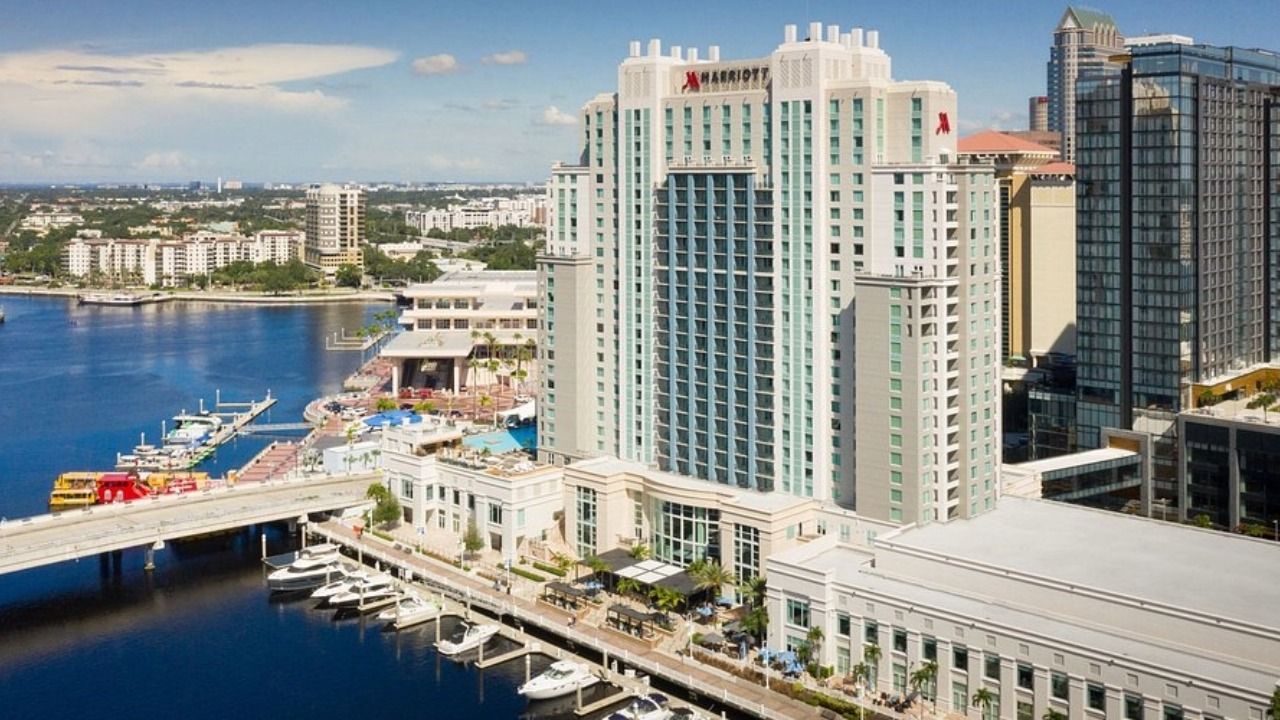
In Tampa, the picture becomes clearer through the Water Street hotels led by Nick Davies, complex director of food and beverage for the JW Marriott Tampa Water Street and Tampa Marriott Water Street.
READ: D.C. based firm buys garden-style apartment complex east of downtown
Davies says his team has been able to grow revenue by reaching two groups at once.
“We have successfully increased guest capture from two key segments: local community patrons and in-house hotel guests,” he says.
He also points to stronger spending.
“We have observed significant growth in the average check across all dining concepts.”
TBBW reviewed CBRE’s national findings and compared them with what is driving results in Tampa.
The goal is to understand the trends, see how the Tampa market fits into them and consider what operators can do next.
What is driving Water Street hotel food and beverage revenue?
Hotels across the U.S. are relying more on restaurants, bars and events because room growth is limited.
CBRE found that a meaningful share of revenue increases is coming from food and beverage.
This stems from guests’ interest in upgraded spaces, modern menus, and higher-quality experiences.
READ: An iconic Davis Islands building is being rebuilt for its next 100 years
CBRE notes that hotels have also spent more on renovations and new concepts. These investments helped increase traffic and gave operators more confidence in pricing. Tampa reflects that pattern but adds another advantage.
It sits in a fast-growing waterfront district where hotel guests and residents mix every day.
Davies says this combination matters for performance. “Our restaurant revenue is exceptionally strong and on track for a record revenue year,” he says.
“This is fueled by both local and hotel guest capture but also by our restaurant event sales.” He adds that guests are willing to pay more when the experience earns it. “Our customers will pay for a truly compelling experience.”
Key trends for 2025
Trend 1: Food and beverage is driving hotel growth
CBRE reports only 0.8% growth in room revenue during the first half of 2025, while food and beverage revenue per occupied room rose 3.8%.
Tampa mirrors this trend and may even exceed it. Davies says his restaurants are on track for a record year due to steady volume and strong checks.
Trend 2: Local guests now shape hotel success
Many hotels nationwide rely mostly on in house guests for food and beverage. Tampa’s Water Street hotels break that pattern.
Davies says locals play a major role in revenue. The area is surrounded by residents, businesses and event activity, which supports traffic even when convention volume changes.
“We remain dedicated to creating restaurant spaces that can compete with the independent restaurants around us,” he says.
Trend 3: Concept investment is paying off
CBRE highlights strong returns from renovated restaurants and refreshed outlets. Tampa is a clear example.
Davies says the hotels completed three major restaurant updates and opened Beacon on the 27th floor.
READ: Pasadena set for 76 new homes just minutes from St. Pete Beach
“Keeping our outlets in tip top shape is key to overall success,” he says. These updates helped shift the perception of the properties from hotel dining to full dining destinations.
Trend 4: Guests want memorable experiences
Nationwide, CBRE sees more interest in creative and personalized service. Tampa diners show the same pattern.
Shareable dishes, smoked cocktails and hands on classes are all gaining traction.
“Guests want something beyond the norm,” Davies says. These touches help raise check averages and build loyalty.
Trend 5: Beverage trends depend on the market
CBRE reports growth in low alcohol and zero proof drinks in many cities.
Tampa is an exception. Davies says non alcoholic drinks are among the lowest selling items across the collection. Classic cocktails still lead in demand.
Trend 6: Event driven revenue is reshaping F and B strategy
Public room rental and service charges are up nationwide. Tampa goes further. Davies reports a 250% increase in restaurant event sales since 2023. Private dining and full buyouts now provide reliable revenue and support labor planning, menu strategy and year round performance.
Trend 7: Profit growth requires balance, not just volume
CBRE reports rising food and beverage profit margins across the U.S., but Tampa approaches this more cautiously.
Davies says the team holds margins tight to avoid pushing higher prices onto guests.
Event sales and consistent local support help manage these pressures while keeping the experience strong.
How to adapt to these trends
Hotels can stay ahead of these shifts by keeping concepts fresh and aligned with what guests expect today.
Interactive experiences help guests feel more connected to the outlet and support higher checks. Teams should focus on both guest connection and revenue goals since both matter to overall performance.
A steady event strategy can shape year round results. Private dining and buyouts help fill slower periods and offer predictable revenue.
READ: 330 luxury apartments planned near Moffitt’s Speros Campus in Spring Hill
It is also important to monitor food costs, labor and pricing to protect margins without reducing quality.
Finally, knowing the local market matters. When hotels understand what residents want, they can create spaces that attract both locals and travelers.
These steps can help hotels strengthen food and beverage performance even when room revenue is soft.
Takeaway
Food and beverage is one of the strongest parts of hotel performance in 2025. CBRE’s report shows this shift at the national level. Tampa’s results confirm it.
Hotels that invest in modern concepts, quality execution and guest focused experiences are in the best position to grow.
Understanding these trends helps leaders make stronger decisions and plan for long term success.