
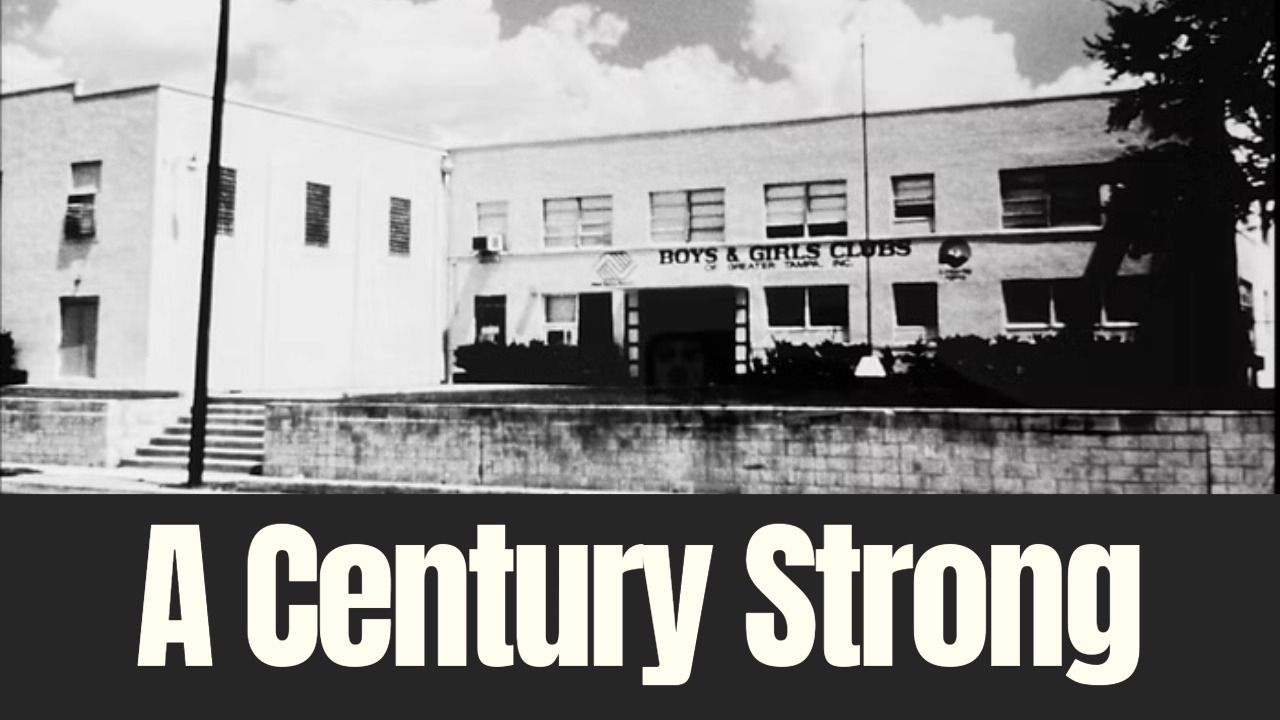
Founded in 1926 as the West Tampa Boys Club, Boys & Girls Clubs of Greater Tampa Bay became Florida’s first Boys & Girls Club and has spent the last century growing alongside the region it serves.
In 2026, the organization is marking its centennial year while sharpening the philosophy that will shape what comes next.
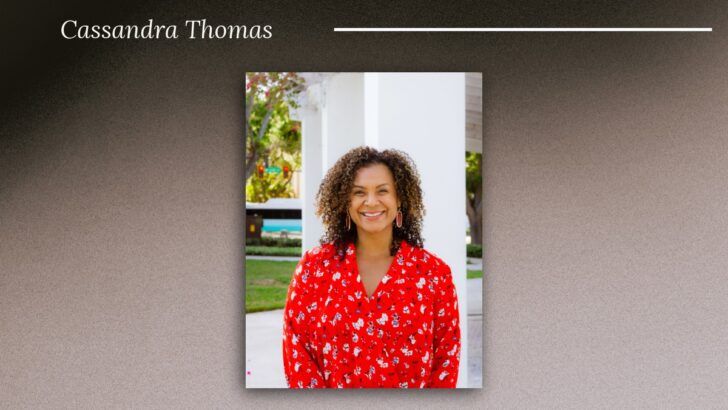
“We’re super excited to be celebrating our centennial this year,” said Cassandra Thomas, chief marketing officer for Boys & Girls Clubs of Greater Tampa Bay. “What this milestone really means to us is honoring a longstanding legacy while being very transparent about where we’re going next.”
Today, the organization operates 63 sites across Hillsborough, Pinellas and Pasco counties, serving more than 24,000 youth and young adults each year between the ages of five and 24.
On an average day, more than 3,000 young people walk through its doors.
A century of service, shaped by restraint
Rather than treating the centennial as a victory lap, Thomas said leadership views the moment as a checkpoint.
The organization’s focus is not on rapid expansion but on durability. That means growing only where programs, staffing and funding can support long-term outcomes.
“The work only matters if it holds up over time,” Thomas said. “Growth without the right systems behind it doesn’t serve kids well.”
READ: TAMPA BAY REAL ESTATE NEWS
The organization continues to serve Hillsborough, Pinellas and Pasco counties, with the expectation that its footprint may extend further.
But Thomas said expansion decisions are made deliberately, guided by capacity and impact rather than opportunity alone.
Programs are designed to support youth from early childhood through young adulthood, reflecting a belief that development does not end at graduation.
Growth with intention
Thomas said leadership often talks internally about responsible scaling.
“The biggest hurdle is ensuring we can scale responsibly,” she said. “That includes financial sustainability and making sure we have the right staff capacity in place.”
Before entering new communities, the organization evaluates whether it can deliver programming consistently and at the same standard as existing sites. That discipline has become central to its operating philosophy.
The goal, Thomas said, is not to be everywhere. It is to be effective where it operates.
Workforce readiness moves to the forefront
While the organization’s mission has remained steady for decades, its programming has evolved to reflect how young people view life after high school.
Thomas said the shift toward workforce readiness came from listening directly to teens.
“We recognized very early on that many young people were considering trade skills or entering the workforce directly instead of pursuing a four-year degree,” she said. “We wanted to make sure our programs reflected that reality.”
READ: TAMPA BAY BUSINESS NEWS
The Life & Workforce Readiness model now focuses on five industry areas: healthcare, finance, culinary and hospitality, construction and skilled trades and information technology.
Programming includes work-based learning, paid internships and apprenticeships, leadership development, financial literacy and job readiness skills such as resume preparation and interview preparation.
Some teens work inside club locations through the Future Leaders program, earning $15 an hour while gaining professional experience.
Decisions guided by data
Thomas said program decisions are grounded in outcome data rather than assumptions.
Participation levels, scholarship distribution and long-term placement outcomes inform everything from program design to fundraising strategy.
READ: TAMPA BAY TECH NEWS
“We track what’s working and what isn’t,” she said. “That data helps us understand where we can grow and where we need to stay focused.”
The organization has adjusted programming over time based on those findings, reinforcing a culture that values evidence over expansion.
Business partnerships expand access
Workforce programming is supported by a growing network of regional partners.
Those include BayCare Healthcare Systems, Bank of America, Coca-Cola Florida, Publix, Tampa Bay Rays, Habitat for Humanity Tampa Bay Gulfside and multiple higher education institutions.
Thomas said the partnerships provide more than funding.
“They create awareness, advocacy and real access,” she said. “Our teens are seeing career paths they may not have been exposed to otherwise.”
Extending support beyond age 18
While Boys & Girls Clubs nationally often serve youth through age 18, the Tampa Bay organization has extended support through age 24.
Thomas said that the decision reflects economic reality.
Early adulthood remains a critical period for career and life decisions, particularly for young people navigating education, employment and financial independence.
READ: TAMPA BAY RAYS NEWS
Many former club members remain connected through alumni networks, seasonal employment or full-time roles. Several current staff members are former club participants.
Thomas said that continuity reflects long-term impact rather than short-term intervention.
Centennial moments connect past and future
Rather than centering the anniversary on a single event, the organization is marking the year through a series of community moments.
In January, it launched the centennial with a Light the City Blue activation tied to its 1926 founding.
Another citywide activation is planned for August 16, the organization’s official founding date.
Later in the year, a historical timeline exhibit will appear at the Tampa Bay History Center, followed by a marker unveiling at the original West Tampa club site.
“These moments are meant to connect the past to the future,” Thomas said. “They’re reminders of where we started and why the work still matters.”
Looking ahead
Asked what success looks like over the next decade, Thomas returned to focus and discipline.
“We want to be the premier youth serving nonprofit in the region,” she said. “That comes from intentional programming, mindful growth and doing the work the right way.”
As Boys & Girls Clubs of Greater Tampa Bay enters its second century, its philosophy is clear.
Longevity is not driven by scale alone. It is earned through restraint, listening and systems built to last.