
Airport officials say Tampa International Airport is better positioned than many Florida airports to withstand the collapse of Spirit Airlines because no single airline dominates the airport’s traffic and competing carriers already serve most major routes.
Spirit Airlines ceased operations this month after failing to secure a financial rescue during bankruptcy proceedings, triggering concerns across the airline industry about reduced connectivity, rising fares and thousands of lost jobs.
Tampa International Airport CEO Michael Stephens said Tampa Bay’s air travel market remains more insulated from disruption because the airport has spent years building a diversified carrier base rather than relying heavily on one airline.
That stability carries particular weight in Pinellas County and St. Petersburg, which account for roughly 27% of Tampa International’s travelers and remain closely tied to the airport’s tourism industry and business travel.
“There’s not going to be a drag on connectivity for Tampa International for this region,” Stephens told the St. Petersburg City Council. “Every route that Spirit flew, we had other carriers flying into those areas.”
Read the latest Tampa news and updates
The difference is more pronounced in airports such as Orlando, where Spirit accounted for a much larger share of traffic.
Stephens said that structure allows Tampa International to absorb disruptions without losing large portions of its route network because no airline carries much more than 26% of total passenger traffic.
“The mix of carriers that we have, we have a really balanced mix,” Stephens said. “Unlike Orlando, where Spirit is a large share of their traffic, if Spirit goes away, Orlando is on pneumonia mode compared to us, where we still adjust to it.”
The airport’s resilience also comes from the type of travelers moving through Tampa Bay. Stephens said Tampa International benefits from a high volume of origin-and-destination passengers, meaning most travelers either begin or end their trips in the region rather than connecting through a major airline hub.
That structure ties airport activity more directly to local tourism, population growth and business travel rather than connecting passengers who can shift quickly between markets.
That travel mix has also helped Tampa International manage periods of unusually heavy demand. The airport handled roughly 3.2 million passengers during the spring break travel period between March and mid-April, Stephens said, while avoiding the severe delays experienced at some larger airports during the recent federal shutdown period.
Spirit’s collapse still created immediate workforce disruptions across the airport campus. Stephens said roughly 10,000 people work across Tampa International each day, including airline employees, contractors and support workers.
Read the latest Tampa Real Estate news and updates
Airport staff have been coordinating job fairs and helping displaced workers connect with airlines and airport employers hiring across the campus.
“It has been a tremendous effort to try to find placement for them,” Stephens said.
Stephens said the airport’s long-term growth projections have not changed despite turbulence in the airline industry, citing continued passenger growth and sustained demand across Tampa Bay.
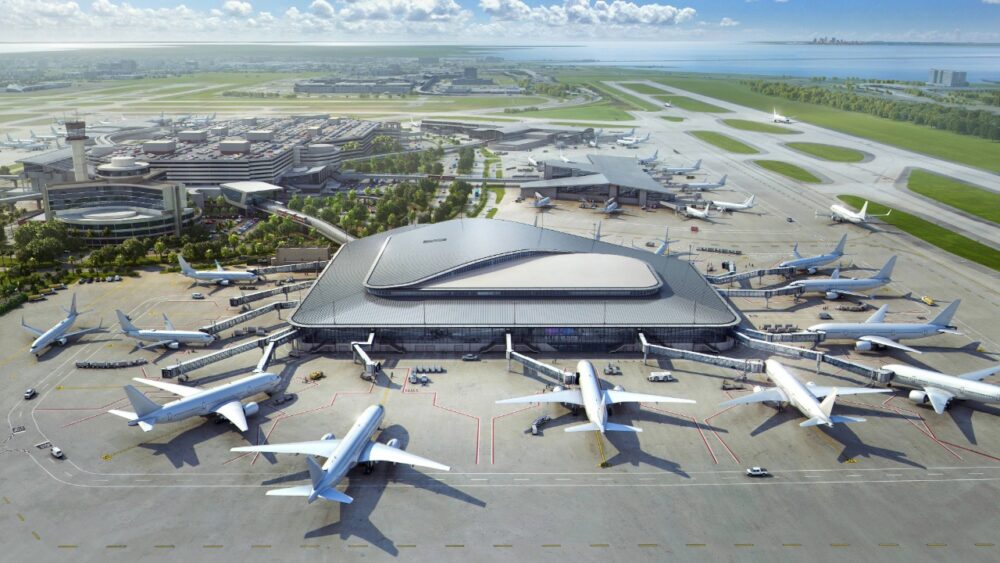
Tampa International continues to advance Airside D, its largest expansion project in decades, as it prepares to accommodate nearly 10 million additional passengers by 2037. Stephens said the new terminal is expected to open in the first quarter of 2029.
Airport officials see the expansion as more than a capacity project, arguing the new airside will help attract visitors, businesses and future investment across Tampa Bay.
The project will add a 16-gate international-capable airside, expanded customs processing, new airline lounges, upgraded retail and dining areas and a concessions redevelopment effort scheduled to continue through 2032.
Stephens said the airport is actively recruiting local restaurants, retailers and artists from across the Tampa Bay area to participate in the project.
Stephens said airport leaders want travelers to experience the Tampa Bay region the moment they arrive rather than move through a generic terminal environment.
“We want you to feel what Tampa Bay is like,” Stephens said. “We want you to experience what folks are going to be able to enjoy within this community.”
That regional identity, Stephens argued, also depends on stronger transportation coordination across Tampa Bay.
He tied the airport’s long-term growth to broader transportation planning, arguing the region cannot continue operating as separate systems competing for infrastructure and investment.
“If we continue in this parochial way, Tampa International suffers,” Stephens said. “We can’t grow, the region can’t grow.”
Stephens said airport leadership is already exploring future electric vertical takeoff and landing aircraft routes between Albert Whitted Airport in St. Petersburg and Peter O. Knight Airport on Davis Islands as part of a broader effort to improve regional mobility, adding that airport officials have already studied flight paths between the two airports for potential electric air taxi service.
“We already have done the routes,” he said. “So our plan is to repeat that, but with new technology.”
Read More Tampa Bay Business News
Explore the latest Tampa Bay business news, real estate deals, development projects, executive moves and company updates shaping the region.