
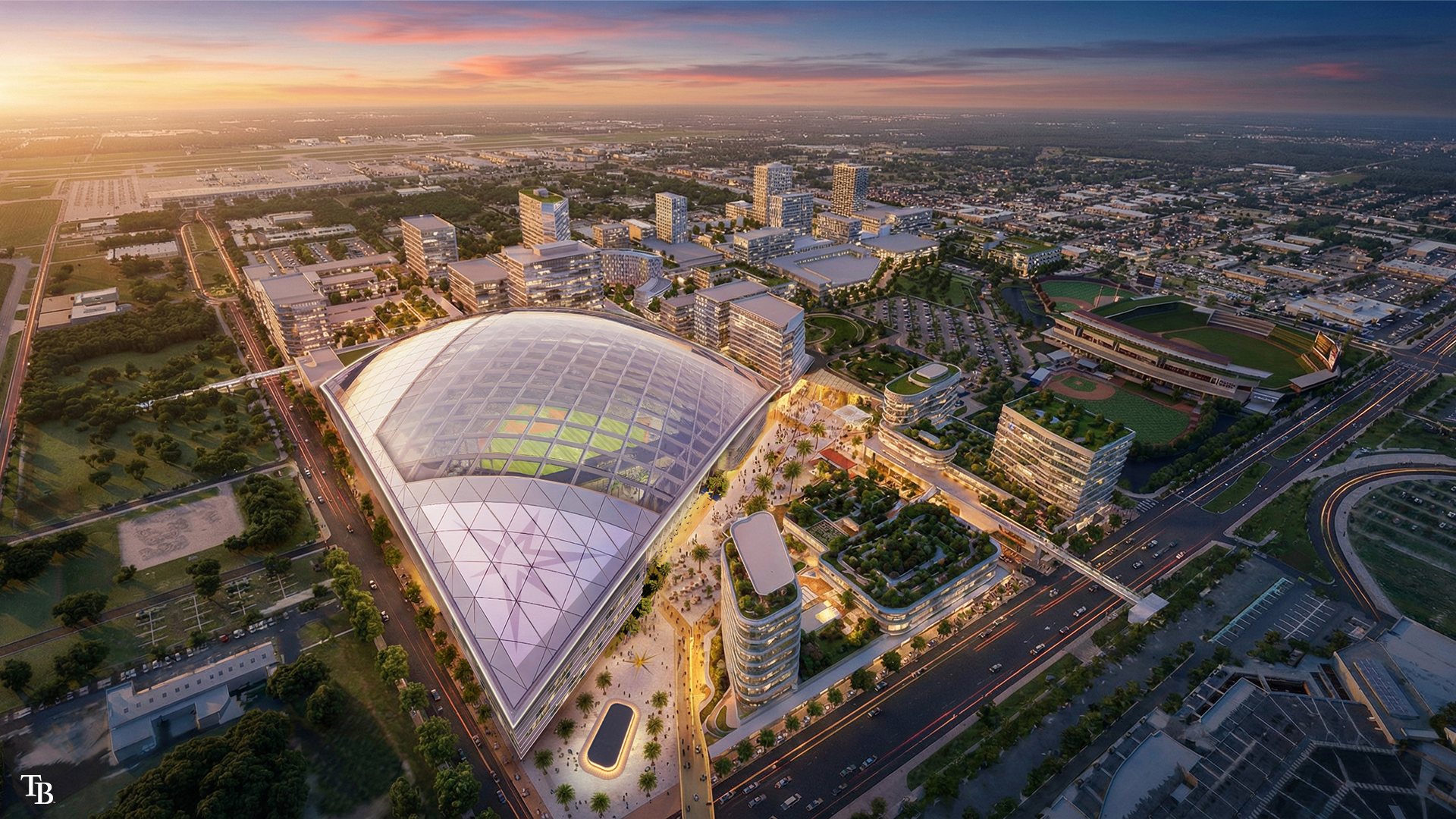
Tampa City Council voted 4-3 Thursday to keep alive negotiations over the Tampa Bay Rays’ proposed $2.3 billion stadium and mixed-use development, advancing a project that has become one of the biggest public-financing fights in Tampa in years.
The non-binding memorandum of understanding passed with support from Bill Carlson, Luis Viera, Naya Young and Alan Clendenin. Charlie Miranda, Guido Maniscalco and Lynn Hurtak voted no.
The vote came a day after Hillsborough County commissioners approved the same framework, giving the Rays enough political backing to move into negotiations on definitive financing and development agreements for a proposed stadium district near Hillsborough College’s Dale Mabry campus in Drew Park.
The agreement doesn’t authorize construction or release public money. But it moves forward negotiations over a project that could reshape a large section of Tampa’s Westshore corridor and commit nearly $1 billion in public participation over time.
Thursday’s hearing exposed sharp divisions inside City Hall over whether the project represents a once-in-a-generation redevelopment opportunity or an expensive public commitment that could compete with future infrastructure priorities.
Much of the debate centered on Tampa’s proposed $80 million contribution for roads, drainage and surrounding infrastructure, along with broader concerns over flooding, transportation, parks and public safety spending.
Carlson, one of the council’s most vocal skeptics and a candidate for mayor, repeatedly questioned the economics of subsidizing private development while the city faces mounting infrastructure demands elsewhere.
“I’m going to reluctantly vote yes,” Carlson said before the final vote, adding that he remains opposed to public subsidies for private projects and expects to oppose future definitive agreements unless the financing structure changes substantially.
Carlson said he supported advancing negotiations largely to preserve the project’s ability to pursue additional state funding opportunities.
He also criticized the negotiation process itself, arguing City Council and the CRA board were brought into discussions too late and warning that reopening portions of the Drew Park CRA agreement could create wider implications for redevelopment districts across Tampa.
Councilwoman Lynn Hurtak, who is also running for mayor, questioned whether voters fully understood during the 2024 Community Investment Tax renewal campaign that some future infrastructure funding could be redirected toward a stadium project. She warned the city risks eroding public trust if residents later conclude core infrastructure priorities were pushed aside.
Councilman Charlie Miranda focused heavily on long-term repayment risk and inflation pressures, warning future city leaders could face difficult choices if projected revenues underperform.
Supporters of the measure argued Thursday’s vote was fundamentally about continuing negotiations rather than approving a stadium.
Councilwoman Naya Young said her support depended on future negotiations producing commitments tied to affordable housing, minority-business participation, apprenticeships and anti-displacement protections for nearby communities.
Councilman Luis Viera argued the city should not walk away from what he described as a major redevelopment opportunity before definitive agreements are negotiated. He compared the project to earlier civic investments including Amalie Arena and Channelside.
The debate underscored how the proposal has evolved beyond baseball into a broader argument over economic development, infrastructure spending and Tampa’s long-term growth strategy.
Rays Chief Executive Officer Ken Babby urged council members throughout the hearing not to prematurely kill negotiations.
“What we’re talking about today is an $80 million conversation with City Council,” Babby said, describing the proposal as part of a larger investment expected to generate jobs, redevelopment and economic activity.
Babby said the Rays already agreed to several concessions during negotiations, including shifting the city contribution from a bond-financed structure to a pay-as-you-go model and adding financial protections requested by city officials.
“We’ve given and we’ve given and we’ve given,” Babby said.
Babby also pointed to support from Hillsborough County commissioners and Hillsborough College trustees as evidence the proposal had gained momentum. He read a statement he said came from Major League Baseball Commissioner Rob Manfred describing the negotiations as “the late innings of a very long game with the future of baseball in Tampa Bay hanging in the balance.”
Business leaders framed the project as part of a broader redevelopment strategy tied to transportation and airport expansion plans across the Westshore area.
Michael Marino, executive director of the Westshore Alliance, described the proposal as a “regional economic catalyst” connected to future transit and redevelopment opportunities near Tampa International Airport and the proposed SkyLink transit hub.
Opponents argued the proposal still lacks finalized construction plans, financing disclosures and detailed development agreements necessary to justify moving forward with such a large public commitment.
During the hearing, city staff presented projections showing Tampa would continue collecting Community Investment Tax revenue during the proposed four-year payment period, though officials acknowledged less funding would remain available for other capital projects while Rays-related infrastructure obligations are active.
Inside the Rays ballpark deal
Under the framework approved Thursday, the proposed development would include a Major League Baseball stadium with at least 31,000 fixed seats, along with apartments, hotels, offices, restaurants, retail space and public gathering areas.
The parties are targeting a 2029 opening.
The framework caps public participation at roughly $976 million plus interest earnings. Hillsborough County would contribute up to $360 million in Community Investment Tax revenue, while Tampa would contribute up to $80 million for surrounding infrastructure improvements.
Additional funding sources would include up to $263 million in tourist-development-tax bonds, $100 million in CRA bonds and another $103 million in county funding sources still to be identified.
The Rays would separately finance at least $120 million through ticket-surcharge bonds backed by stadium and entertainment ticket fees.
The project still faces several major hurdles before construction could begin, including bond validation, CRA amendments, land-use approvals, financing approvals and confirmation that the Rays can fund their share of the development.
“We appreciate the thoughtful engagement with City Council members and staff throughout this process, which from the start was focused on one common goal – arrive at an agreement that is smart, fair and a win for everyone,” Babby said in a statement. “With this step complete, the Rays now look forward to working with Hillsborough County and the City of Tampa as we move toward final agreements that will secure Major League Baseball in Tampa Bay for current and future generations.”
Read More Tampa Bay Business News
Explore the latest Tampa Bay business news, real estate deals, development projects, executive moves and company updates shaping the region.