
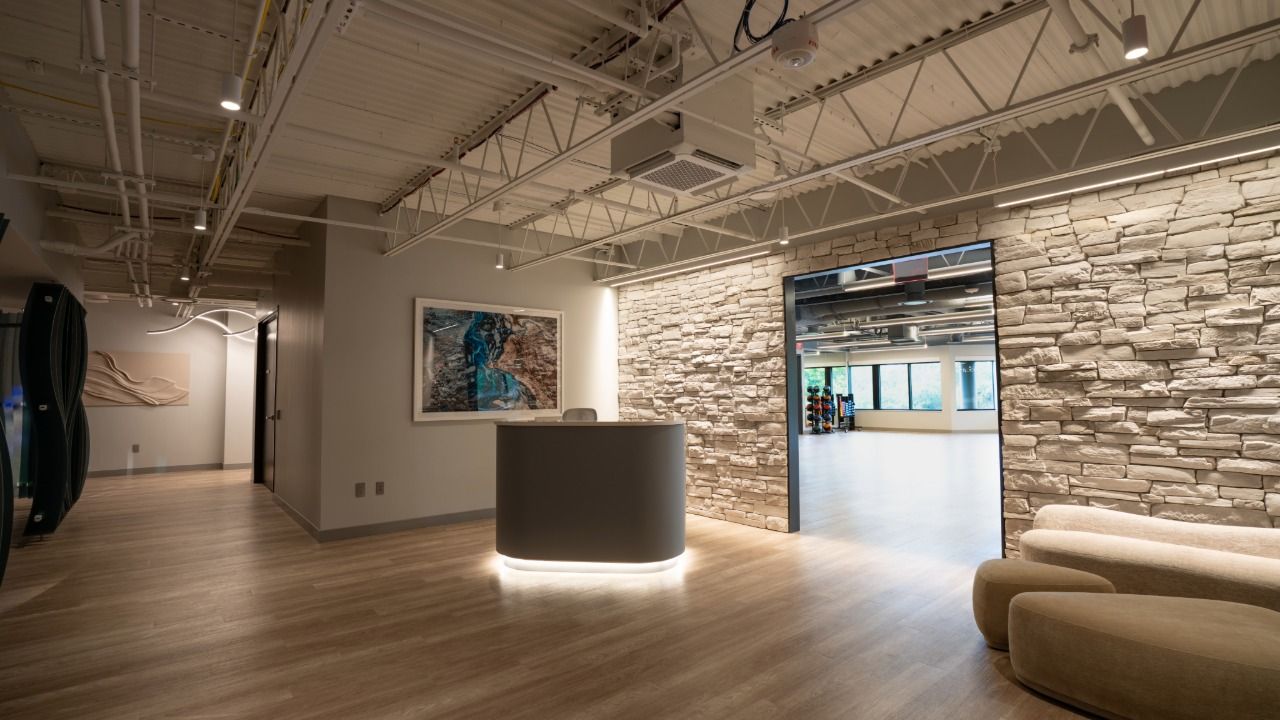
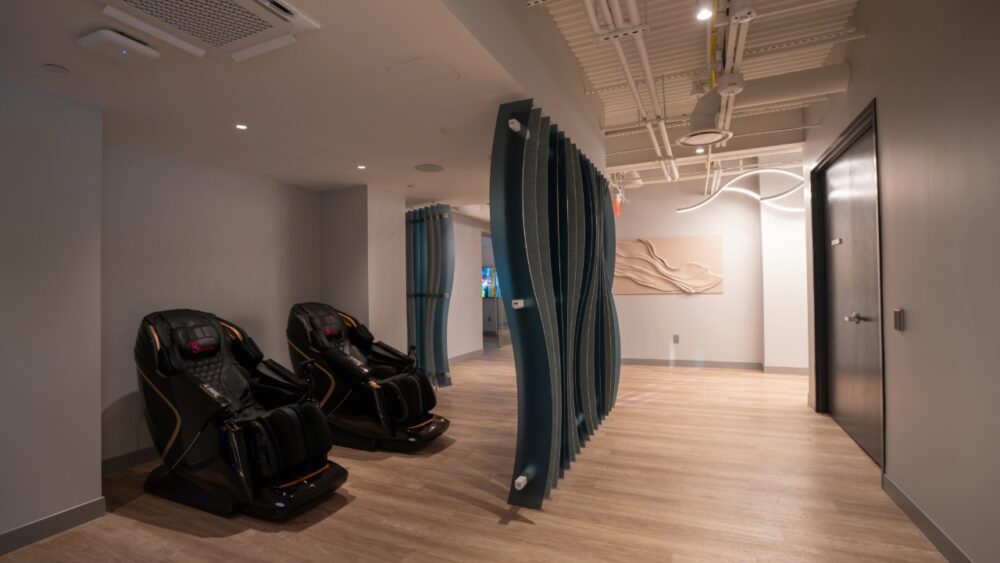
Inside a softly lit recovery room at Power Design’s St. Petersburg headquarters, employees climb into cryotherapy chambers, settle into massage chairs and stretch beneath signs that read “Recover” and “Recharge.” Down the hall, workers stop into the company café for protein-heavy meals and frozen yogurt developed with guidance from an in-house dietitian. Upstairs, employees rotate through Pilates classes, cycling sessions and mobility workouts between meetings and jobsite calls.
A decade ago, the setup might have looked more at home inside a Silicon Valley campus than one of the country’s largest electrical contractors. Now Power Design sees it as part of its labor strategy.
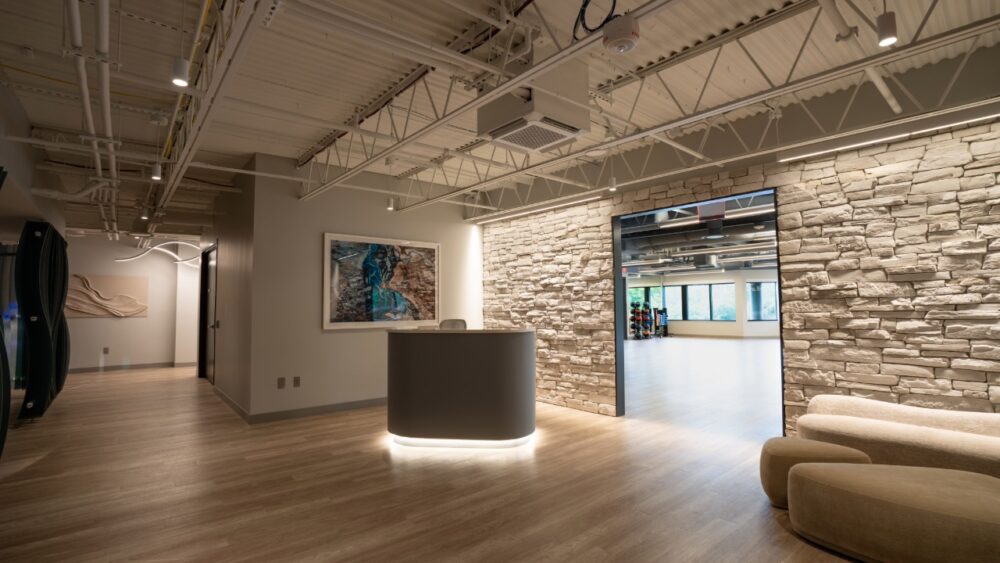
The company has invested roughly $7.6 million into wellness infrastructure since 2016, including a recently expanded 5,000-square-foot recovery-focused wellness center at its St. Petersburg headquarters and additional facilities at its Palmetto training campus. Altogether, the company now operates roughly 27,500 square feet of wellness space across both locations.
While finance firms compete with rooftop bars and catered lunches, Power Design is redesigning the workplace around physical recovery, preventative care and workforce sustainability as skilled-trade labor becomes harder to recruit and harder to keep.
The labor shortage in construction has become severe enough that some employers are beginning to rethink not only how they recruit workers, but how they preserve them.
“We’ve always been passionate about keeping our employees happy and healthy, both physically and mentally,” said Alex Fox, Power Design’s senior director of marketing and brand strategy. “As we’ve grown, that’s evolved into more intentional investments.”
The investments now extend far beyond gyms and recovery rooms.
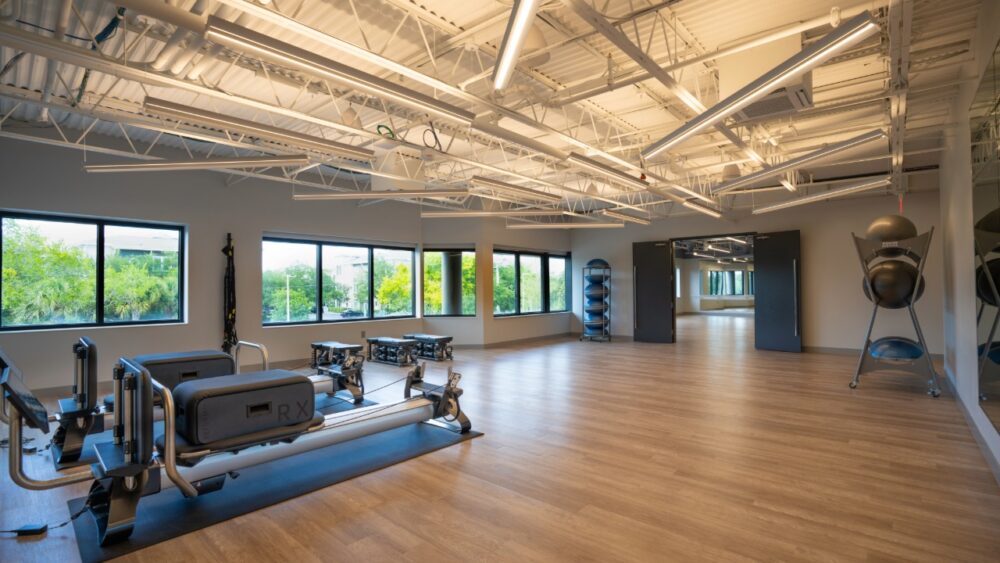
Power Design has built what executives describe as a broader employee-support ecosystem around its workforce — combining wellness, food services, learning and development, mental-health support, career coaching and employee engagement into an internal structure designed to keep workers healthier, more connected and more likely to stay.
After long workdays, employees can stop into the company café and take home prepared meals for their families. Managers receive wellness budgets to treat teams to coffee or meals after major projects. Spouses receive complimentary gym memberships. Employees earn points through an internal wellness platform tied to physical activity, volunteering, preventative care and engagement initiatives.
“We spend the majority of our time here outside of sleep,” said Shelly Scamardo Kantor, Power Design’s health and wellness manager. “If we can help people build healthier habits here, it creates a ripple effect.”
Construction culture has long rewarded toughness and endurance. Many workers spent years avoiding doctors, working through pain and pushing through long shifts in extreme heat.
Scamardo Kantor grew up around the construction industry and understood the mentality when she joined the company more than a decade ago.
“I know what not taking care of yourself looks like in the construction industry,” she said. “We’re up against that typical mindset in the industry — the whole ‘I don’t need a doctor’ mindset.”
The company started integrating wellness into safety meetings, onboarding programs and apprenticeship training. It expanded biometric screenings, mental-health resources and wellness initiatives across both office and field operations.
Today, the company’s seven-person wellness team works alongside Power Design’s safety, learning and development and human resources divisions. Field workers receive stretching guidance, hydration education and wellness check-ins on jobsites across the country. Apprentices complete required wellness instruction before advancing through the company’s internal apprenticeship program.
Executives say the company’s wellness efforts are designed to gradually reshape how workers think about physical and mental health.
Stretch breaks are held across departments. Wellness messaging is woven into weekly safety talks. Employees are encouraged to complete biometric screenings, establish primary-care physicians and seek support before problems escalate. Internal wellness campaigns reward participation with points, competitions and cash prizes.
“We know we’re planting seeds,” Scamardo Kantor said. “Even if somebody isn’t ready to completely change their lifestyle, maybe they start drinking more water. Maybe they will finally go get a biometric screening. Maybe they start stretching. Those small changes matter.”
Some of the company’s wellness staff now travel directly to jobsites across the country, working with field crews on hydration, stretching and injury prevention.
The company also brings foremen and field leaders to St. Petersburg for leadership sessions where executives openly discuss stress, burnout, physical recovery and preventative care — conversations that historically carried stigma inside much of the construction industry.
The company also created a broader employee-support structure called “The Source,” which combines learning and development, wellness, employee engagement and internal support functions. Employees receive regular check-ins from internal support staff focused not only on performance and career growth, but also stress, workload and personal challenges.
“If we hear somebody has something going on in life, we’re checking in,” Fox said. “How can we help? What resources do you need?”
The wellness investments accelerated after the pandemic, when companies across industries began reassessing burnout, retention and workplace culture. White-collar firms redesigned offices around hospitality-style amenities and collaboration spaces in an effort to pull workers back in person.
Power Design took a different approach, focusing more heavily on recovery and long-term health for a workforce of electricians, field supervisors, project managers and traveling crews whose jobs place daily stress on their bodies.
Inside the new recovery space, employees can use multi-spectrum light-therapy beds, cryotherapy chambers and massage equipment. Nearby fitness rooms host group workouts, mobility classes and Pilates sessions. At the Palmetto campus, the company added another large-scale fitness facility with state-of-the-art equipment and a multi-story rock-climbing wall.
Scamardo Kantor said the company intentionally designed the new recovery space to feel less like a traditional gym and more like a place where employees could decompress after physically demanding days.
“We wanted it to feel like a hug when you walk into that space,” she said. “We have that work-hard, play-hard mentality, but the recover-hard part is important too.”
The strategy appears to be producing results. Power Design recorded its lowest turnover rate in roughly 15 years last year, according to executives.
Leadership argues the investments are less about calculating direct financial returns and more about preserving culture, trust and long-term retention.
“You hear companies talk about ROI,” Scamardo Kantor said. “For us, it’s more VOI — value on investment. Is it helping you attract top talent? Is it helping you keep top talent? That pays for itself.”
Construction firms across the country continue facing shortages of skilled labor as older workers retire and fewer younger workers enter the trades. At the same time, physically demanding jobs remain vulnerable to burnout and injury, especially in states like Florida where crews routinely work long hours in high heat.
For years, construction companies largely accepted burnout, injury and turnover as part of the business, replacing workers as crews wore down or left the industry.
Power Design increasingly sees that model as unsustainable as experienced labor becomes harder — and more expensive — to replace.
“Preventative wellness is a huge focus for us,” Fox said. “We want people taking care of themselves before something becomes a bigger issue.”
That philosophy has pushed the company into areas that historically carried stigma inside construction culture, including mental health, preventative screenings and long-term physical recovery.
The company’s leadership team now openly discusses wellness during meetings with field supervisors and foremen from across the country. Employees are encouraged to establish primary-care physicians, complete biometric screenings and seek support before problems escalate.
“It used to be more of that mentality of, ‘I’ll only go to the doctor if my arm is severed off,’” Scamardo Kantor said. “We’re trying to shift that mindset.”
Not every worker fully embraces the company’s wellness culture. Construction remains physically demanding, stressful work. Long hours, travel schedules and jobsite pressure have not disappeared.
But Power Design believes the future of the industry increasingly depends on finding ways to sustain workers longer instead of simply replacing them.
For decades, many construction firms accepted physical wear, exhaustion and turnover as unavoidable parts of the business.
Now, some employers are betting that keeping workers healthier — physically and mentally — may become just as important as finding new ones.
Read More Tampa Bay Business News
Explore the latest Tampa Bay business news, real estate deals, development projects, executive moves and company updates shaping the region.