The story of the father-son team powering Morgan Auto Group

Larry-brett-morgan-Evan-Smith

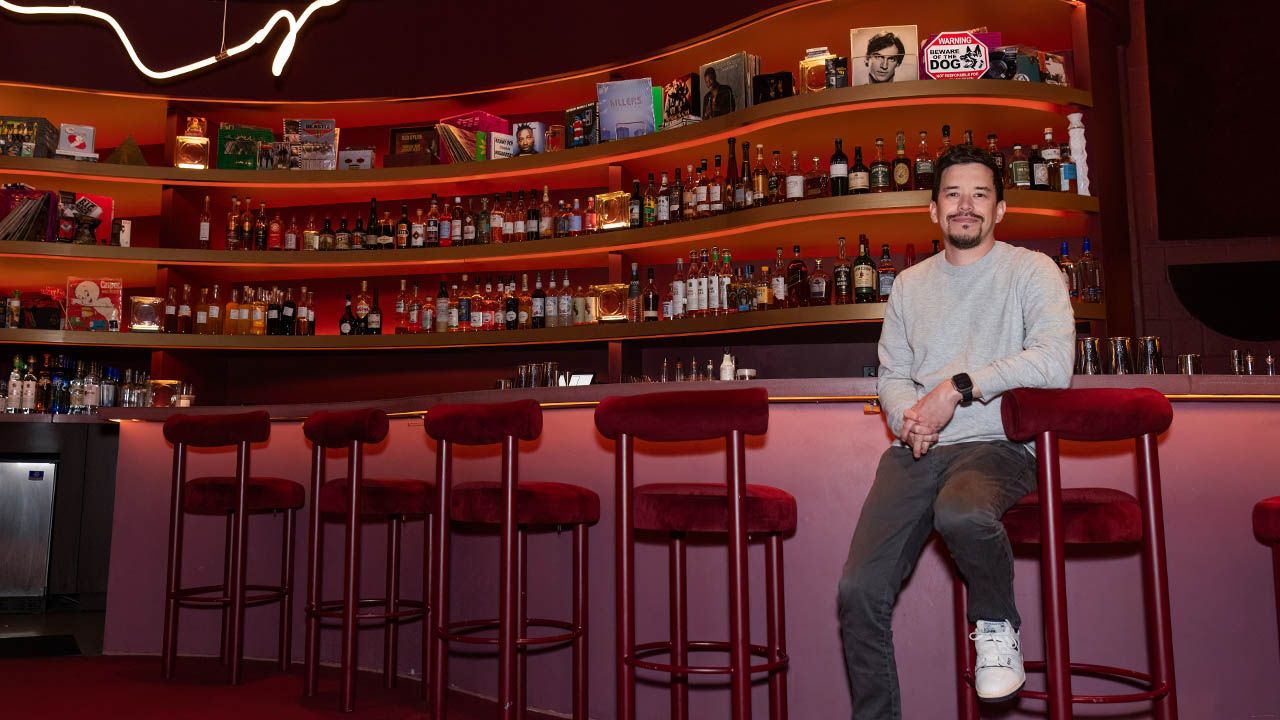
Before getting down to business, Brett Morgan makes it clear: his dad, Larry Morgan, is the foundation of everything. Sitting side by side in Larry’s home office, with stunning views of the water in Belleair Bluffs, there’s an ease between the two — part camaraderie, part reverence, laden with love and respect for one another. “My dad gave me the opportunity, the mentorship, the values,” Brett says. “But he also gave me the space to become who I am.”

It’s a rare kind of story — a father and son who not only work together but thrive doing it. What started with one dealership, the Morgan Auto Group, is now Florida’s largest automotive group, and the 8th largest in the United States, encompassing more than 70 rooftops, over 8,000 employees and a current run rate of $11 billion in revenue. But beneath the impressive numbers is something more human: legacy, loyalty and love.

This isn’t a story about cars. It’s a story about fatherly love and devotion. 

The Power of Family 

Larry Morgan didn’t grow up around luxury cars or fancy neighborhoods. Raised in rural Missouri, on a farm, the son of a farmer and a schoolteacher, he learned the value of hard work and humility, early in life. 

One of the stories he tells us may explain his drive to succeed. In high school, during a baseball game with a key rival, Larry struck out with the bases loaded. His father promptly packed up and left, leaving Larry to find his way home. His home was eight miles away. This served as a rather harsh, early lesson about the importance of winning. 

Larry’s first jobs were working on the farm, milking cows and throwing hay. Later, he would reminisce about his first real entrepreneurial venture, selling fireworks roadside, to support his future college tuition. Truckers would often pull over in the middle of the night to purchase them, waking Larry with a bell. A strong work ethic was well ingrained even before his first day of college.

“I didn’t know growing up that we were poor,” Larry says with a smile, recalling his formative years. “We had a small house, and we lived very simply, but I had two wonderful parents who taught me to appreciate what I had. There was no entitlement.” He adds later that, until he was 12, his home had no indoor plumbing. 

Following college, he rose through the ranks of Firestone Tire & Rubber company. Most every promotion found Larry the youngest to ever ascend to that position. After seven years, he departed Firestone to take the helm of Merchant’s Tire & Auto, in Virginia. He would grow the nine-store, family-owned, chain to over 137 service centers. Evidence of Larry’s penchant for business growth was taking shape.
larry-brett-morgan-tbbw-cover-evan-smith
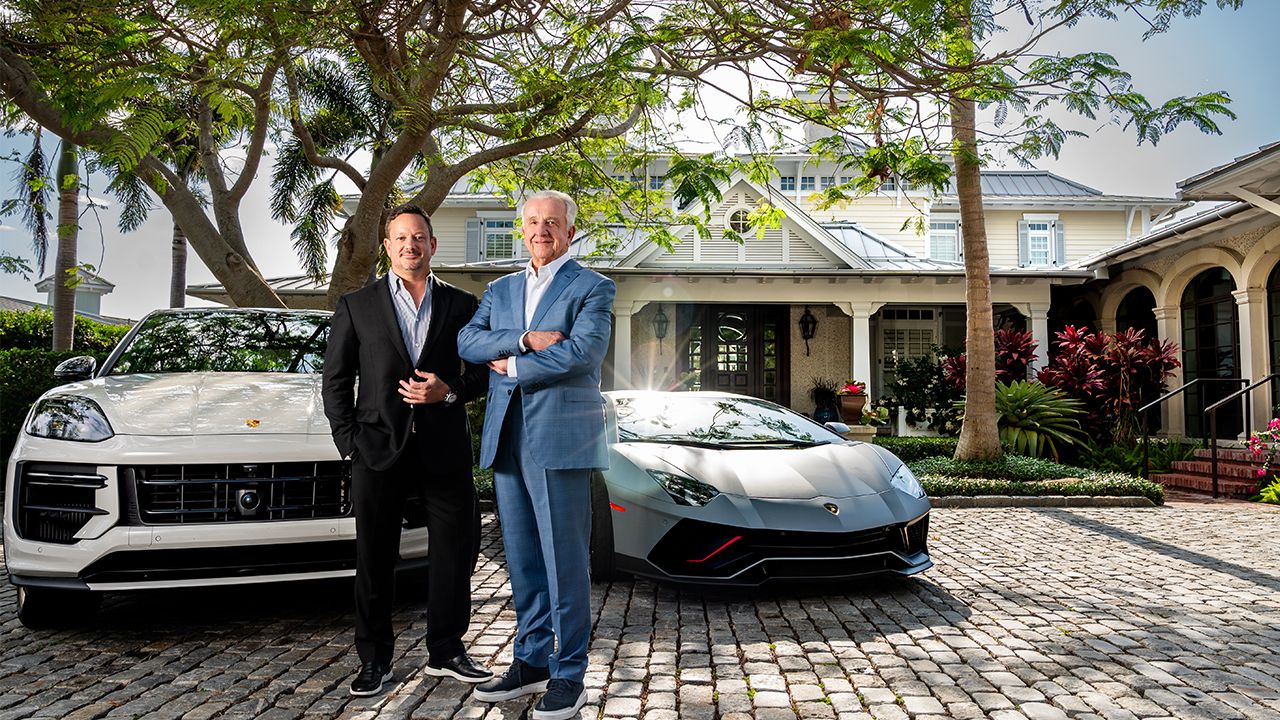
Larry and Brett Morgan | Photo by Evan Smith

When Brett was born, Larry was in the midst of building the Merchant’s organization. Brett recalls having a present father, despite him working long hours, six days a week. 

“He was present when it mattered,” Brett says. “And even more than that, I always felt like I was watching someone who lived with purpose. He wasn’t just working for his own, personal benefit but also so others could find greater opportunity.” 

Brett, reminiscent of examples of this family devotion, tears up as he recalls visiting his dad’s mother in Missouri. “My grandmother,’ he said, ‘she had a fruit bowl full of pill bottles, as she was very sickly late in life. I just remember visiting her as much as we could because it was important,” he recalls. “One night as she wept, I went into her bedroom and prayed with her to bring comfort.” Unknown to Brett, a proud father listened to the exchange from the next room, with love in his heart swelling. The retelling of the story brings the interview to a pause, as the emotional weight of the memory holds time in the present. 

Larry eventually acquired Clearwater-based Don Olson Tire, in 1990, and relocated his family to Florida. He would later change the name of the business to Tires Plus, recognizing a potentially strong brand name from one of their many acquisitions. 

In a little over 10 years, he built Tires Plus from 31 retail stores to over 600. After a surprise offer to sell that business came from Bridgestone, in 2000, Larry took the offer and attempted retirement. The family now jokes that retirement would become one of Larry’s greatest, and most successful, failures. 

Brett graduated from the University of Richmond, in 2001, and began his own professional journey, working as an executive producer for an ABC news affiliate, in Virginia. 

Their story as business partners hadn’t begun quite yet, but their bond had already been forged into something deeper: respect, shared values and an understanding that the Morgan name would mean more than just sales figures. 

The Morgan Auto Story

Morgan Auto Group was officially established in 2004, when Larry purchased their first dealership, Toyota of Tampa Bay. At the time, the move raised eyebrows. Larry had spent decades building a proven track record in retail tire and auto service, but the dealership space came with new challenges – and also some similarities. Both were service-based businesses whose profitability was determined by exemplary customer service success.

“It was a risk,” Larry admits. “I believed there was a better way to do it — a more people-first approach.” 

He brought with him a deep bench of operational experience and a reputation for leading with character. “At that time, I knew that I knew how to grow a business,” says Larry. But growing a dealership group would require new strategies, new relationships and eventually, a new generation.

Before Morgan Auto’s first acquisition, Larry would enter the dealer space as a minority investor, partnering with another Tampa dealer. After attending several lackluster sales meetings, Larry was motivated to get more involved. He also had begun weekly conversations to recruit his son. Shortly before the launch of Morgan Auto, Brett would join his father. He spent his first year as a car salesperson, in their then partner’s store. 
Larry-brett-morgan-evan-smith-tbbw
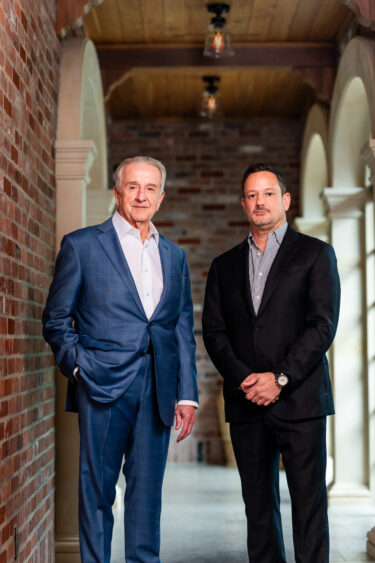
Larry and Brett Morgan | Photo by Evan Smith

Those first few years weren’t glamorous for Morgan Auto. The fledgling auto group focused its efforts on learning best practices, outperforming competitors and slow, and steady, growth through acquisitions that were made every year, or two. 

And then the Great Recession hit. Car sales plummeted. Credit markets froze. For a young company like Morgan Auto Group, the timing couldn’t have been worse.

“We were just getting started and the world fell apart,” Brett says. “It was terrifying. But also, one of the most important learning experiences of my life.”

They huddled, strategized, reduced overhead and, ultimately, survived. Larry focused on keeping relationships intact with manufacturers and lenders. Brett worked the ground floor with management in the stores that were struggling the most. 

“The key was communication,” Brett says. “We didn’t panic. We got to work.”

That early trial by fire bonded the two men in ways they couldn’t have anticipated. It also created a shared sense of purpose: to build a company that could weather storms of all kinds and still take care of its people.

Today, Morgan Auto Group represents 29 brands, including many luxury brands across Florida. Yet, their foundation remains personal.

“Every acquisition, every expansion, it’s not just a number on a spreadsheet,” Brett says. “It’s hard-working people making a bet on us. It’s people who need us to get it right.”

Larry agrees. “We never forget who we’re doing it for,” he says. “Our employees, our customers, our community. That’s why it matters.”

Engineered For Perfection

Working with family can be fraught with tension, but Brett and Larry have found a rhythm that works. At the core is trust — not blind faith, but mutual respect, earned over decades. They both describe it as “unspoken alignment.”

“There’s a lot of freedom in how we work,” Brett says. “We both know our lanes. He’s never hovered. He asks good questions. But he’s let me learn and lead on my own.”

When asked how they handle disagreements, both laugh.

“I probably test his patience more than he tests mine,” Brett jokes. “But I also know when to shut up and listen. And he knows when to let me try something new, even if it’s not what he would have done.”

For Larry, watching Brett grow into the CEO role has been one of the proudest parts of his life, he says. “He’s better at this than I was at his age,” Larry says. “And I tell him that. Not just as a father, but as someone who knows how hard this business can be.”

The two speak often throughout the day. Not because they must, but because they want to. Sometimes it’s business. Sometimes it’s family. Sometimes it’s just to share a win.

Their complementary styles are part of the company’s leadership DNA. Larry brings wisdom and vision. Brett brings energy and adaptability. Together, they make decisions rooted in the same value system: people first, profit second.

“We’ve never had a formal transition plan,” Larry says. “It just evolved. He earned it.”

Caring For Cars and Their Owners

The Morgan name isn’t just known for its dealerships — it’s also synonymous with giving back.

Larry recalls a story of when he learned that it isn’t charity, it’s helping one’s neighbor when help is needed. His parents “lent” him to a family friend, one summer. The family was suffering financially and an extra set of hands on their farm was what they needed to survive. It was Larry’s hands that worked, sunup to sundown, to put food on the table and that’s precisely when Larry learned that it’s not a handout – it’s a hand up. 

Larry and Brett have each built reputations as community-minded leaders donating time, energy and financial support to causes ranging from youth mentorship and heart disease to educational equity and cultural initiatives. 

Larry’s approach to philanthropy mirrors how he runs a business: with care, consistency and commitment.

“We never wanted to just write checks,” Larry says. “We wanted to be involved. To show up.”
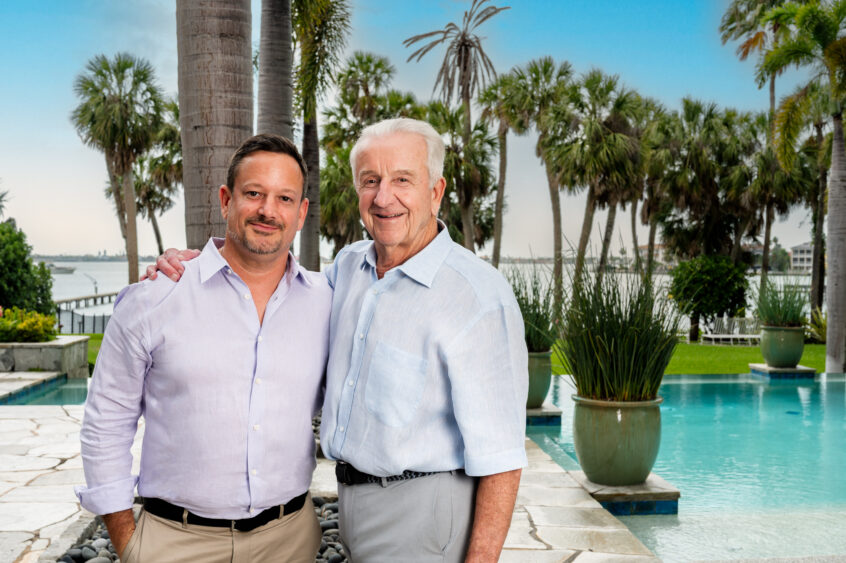
Brett-larry-morgan-evan-smith-tbbw
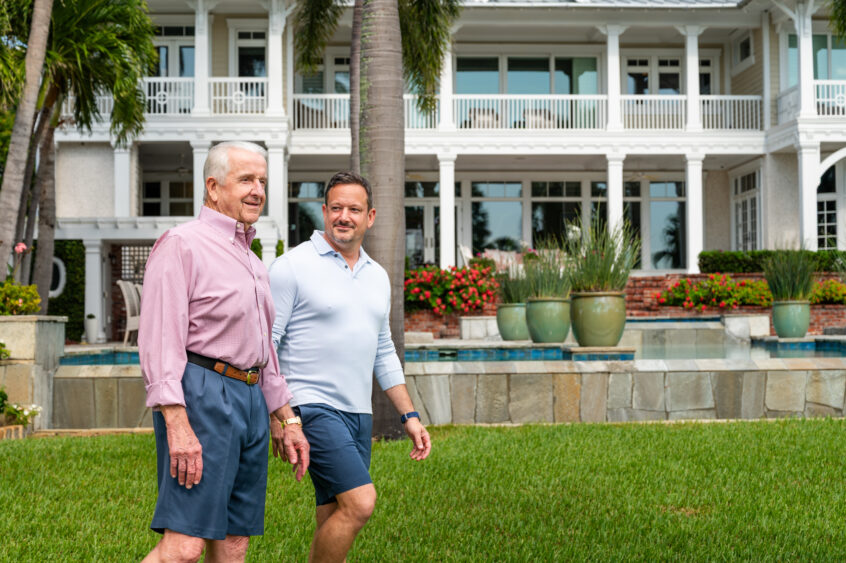
Brett and Larry Morgan | Photo by Evan Smith

For his efforts, often done quietly as possible, Larry was named “Mr. Clearwater,” in 2024, for his lifetime of community involvement and, just a few months later, Tampa Bay Business and Wealth honored him with the Lifetime Achievement Award for its Philanthropists of the Year program. He’s also a past “Time Magazine Dealer of the Year” honoree, as well as a member of three distinct Halls of Fame: The Tampa Bay Business HOF, the Tire Dealer HOF and, most recently, the Florida Auto Dealer HOF. 

Brett has carried that philosophy forward, working to support the American Heart Association, Big Brothers Big Sisters and local schools and organizations focused on economic mobility and leadership development.

“Mentorship is huge for me,” Brett says. “When someone believes in you, everything changes. My dad was that person for me. Now I want to do that for others.” Another passion project for Brett includes his involvement on the board of directors for the Gasparilla Music Foundation. 

That spirit of giving extends across the Morgan Auto Group network. Dealerships regularly organize food drives, volunteer days and fundraising events. Many stores have assisted in the building of Habitat for Humanity homes. It’s not about public relations, Brett says, it’s about culture.

“We want people to feel proud of where they work,” he says. “And part of that is knowing that we’re trying to make the world a little better, one action at a time.”

“We even have our own United Way,” Larry responds. He’s speaking about the Morgan Auto Helping Hand Fund, where employees in dire need can apply for a gift, a loan or a mix of both. 

For Larry, it all comes back to gratitude. “We’ve been lucky,” he says. “And with that comes responsibility. We’re not just building a business, but also supporting the communities where we do business.” 

Riding Shotgun 

As Morgan Auto Group looks toward the future, father and son remain in lockstep about what comes next. Brett is firmly at the helm as CEO, pushing forward with modern technology, expanded markets and bold acquisitions. Larry remains fully active in the business as a trusted chairman and mentor, offering perspective and strategic counsel. 

“I’m still involved,” Larry says. “But it’s Brett’s company to lead now. And I couldn’t be prouder of the way he’s doing it.”

Recent growth has included expansion into new geographic regions and growing partnerships with luxury brands. But the Morgans are just as focused on keeping their core culture intact — a task Brett takes seriously.

“Scale is only worth it if your people are growing with you,” Brett says. “Otherwise, you can lose who you are.” Both speak to how their pay plans don’t ebb and flow with success, they celebrate their people’s paycheck gains and love to see their earning power grow as their careers progress. 

Brett spends a significant amount of time visiting stores, checking in with general managers and mentoring up-and-coming leaders. They even have their own in-house “Morgan University” to help support those that they see with potential, which includes a five-week, year-long “Morgan General Manager” program. 

“We’re not trying to be the biggest,” he says. “We’re trying to be the best. And that means doing the right thing, every single day.”

As the industry shifts — toward electric vehicles, digital retail and AI-enabled customer service — Brett sees opportunity. But he also sees more responsibility.

“Change is inevitable,” he says. “What matters is staying true to who you are, while fully embracing the future.”

Larry agrees. And while his role is less hands-on now, his legacy continues in every decision Brett makes.

“If I could give advice to any parent building a business, it would be this,” Larry says. “Build it well. Build it with heart. And if your child wants to join you in that journey, let them lead when the time is right.”

He pauses, looking across the room at Brett with a glimmer in his eye. “It’s the most rewarding thing I’ve ever done.”

Brett nods. “I get to work with my hero. How many people can say that?”

“Success isn’t about the awards or the money,” he says. “It’s about building something meaningful and giving back to the community that’s given so much to me.”
Read more

Cindy Hesterman shares her journey of humility and empowerment 

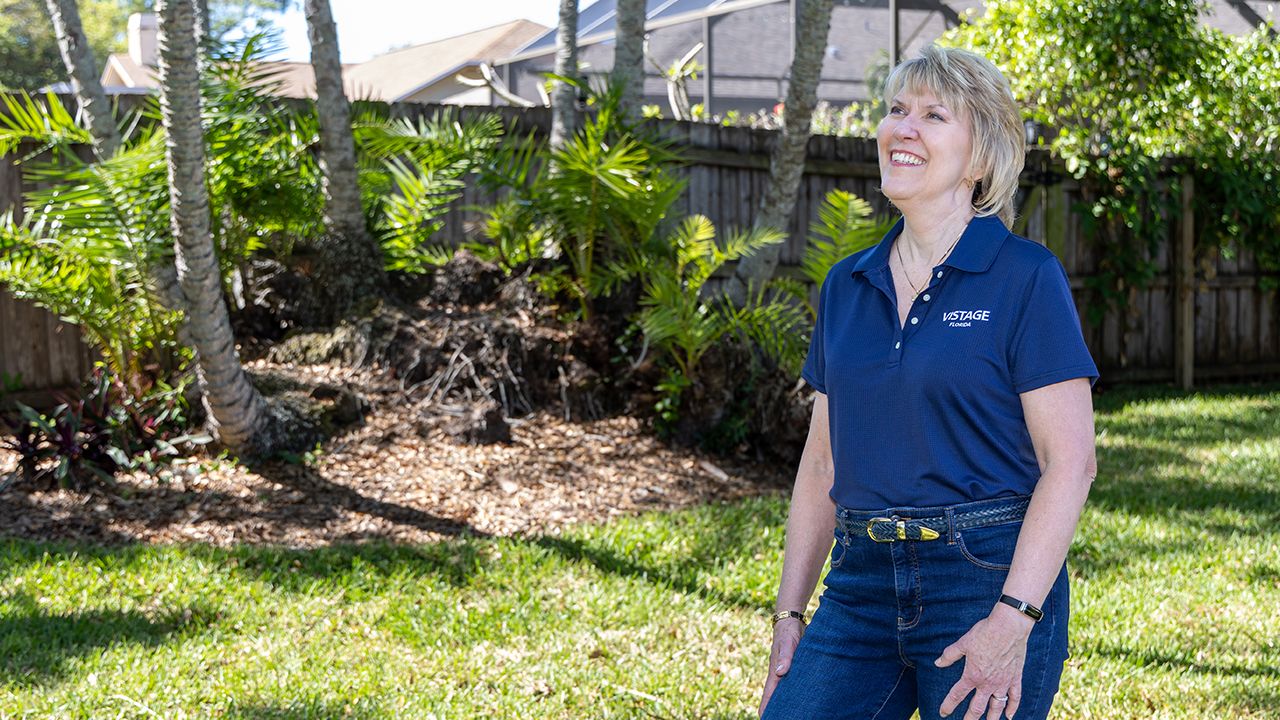
Cindy-hesterman-vistage-tampa

Cindy Hesterman didn’t always know she would become a leader of leaders. She was the daughter of a janitor and an accounting clerk, born in Fort Wayne, Indiana, during a time when hard work was expected, and excess was unheard of. But what she lacked in material wealth, she gained in purpose rooted in faith, … Read more

Chon Nguyen: The story of a strategic serial entrepreneur

It’s hard to pinpoint exactly where Chon Nguyen’s business story should begin. Is it his high school years, where a young tech enthusiast was already earning Microsoft certifications?  Born and raised in the Tampa Bay area, Nguyen has crafted a legacy that’s as dynamic as the city he calls home. From technology to hospitality, his … Read more

The love story of Mike and Leigh Harting of 3 Daughters Brewing 

It’s a tale as old as the 2000s: boy meets girl, boy likes girl, girl likes boy, and circumstances keep them apart—but only temporarily. Much like a Valentine’s Day Hallmark movie, the pair grows up, reunites and finds their forever with each other. Together, they build a St. Petersburg-based beer empire—one the entire community falls … Read more

How Erika Sims balances family, business and a crane legacy

erika-sims-crane

Her happy place is her family’s sprawling porch, overlooking Plant City land that’s been in the family for three generations. Across the creek lies her sister’s home, next door is her late father’s house and, in between, cows graze lazily under the Florida sun.

Beside her sits her wife of nearly 11 years, Barbie, and in her hand, a warm cup of tea. This is where Erika Sims, chief executive officer of Sims HD and co-owner of Sims Crane & Equipment, comes to decompress—a peaceful pause from her whirlwind life of business, family and philanthropy.

Erika, the eldest of Tampa’s Sims Crane third generation, carries the weight of a family legacy intertwined with cranes and construction. Her journey to leadership, however, is anything but linear. It’s a story of contrasts—wealth and modesty, tradition and independence, struggle and triumph, but it’s unapologetically hers. 

Growing Up a Sims

Sims Crane & Equipment is more than a business; it’s a family dynasty. Her story begins long before she was born, in Tennessee with her grandfather’s humble roots.

“He came down here, became an ironworker and helped build the original Sunshine Skyway Bridge,” she says. By 1959, he had purchased his first crane, laying the foundation for a company that would grow to be, at one time, one of the largest in the country.

Erika’s upbringing reflected two contrasting worlds. Her father’s side reveled in wealth with lavish parties, Rolls-Royces and a reputation for larger-than-life personalities. Her mother’s Cuban family, on the other hand, embodied humility and resilience.

“My dad’s family was all about parties and Jack Daniels. Meanwhile, my mom’s Cuban family in West Tampa was modest—my grandmother barely left the house,” Erika says. Her childhood was heavily influenced by her maternal grandmother, as her parents separated before she was one year old. “I was the first girl born in my Cuban family’s next generation.”

erika-sims-crane
Erika Sims

Visits to her father’s home, every other weekend, offered a glimpse into the Sims family’s affluence but the disconnect between her two worlds was stark. While her father was often absent, due to work, her Cuban grandmother instilled in her the importance of being present, hard work and humility.

Despite these challenges, Erika thrived in academics and athletics. At private school, in Tampa, she excelled in basketball, with her high school team winning the state championships.

“Basketball was my life—I was a 4.0 student and put everything into the sport,” she says. 

Summers were a different story. “We had a tree farm, along [U.S. Highway] 301, and I spent my breaks clipping palm trees and fixing sprinklers. I got stung, sunburned and realized manual labor wasn’t for me—but it taught me the value of hard work.”

Family dynamics were complicated, yet formative. Her father set high expectations for her, as the eldest child. 

“He had this aura that could break you. He set high expectations for me, as the eldest, and all of my siblings…though at the time, I didn’t fully understand it,” she says.

In high school, Erika came out as gay, a decision that added layers of complexity to her journey and her relationship with her father. 

“While he may not have understood what it felt like to be me, or to be gay, he always loved me and I knew that,” she says. “I knew who I was, from a young age. Even in a conservative school, it never occurred to me that there was something ‘wrong’ with me. “I’ve always been me and loved who I am and that’s what I hope I pass on to my children.” 

When her Catholic school reacted negatively to her first girlfriend she was asked to leave, marking a turning point in her life.

A (Reluctant) New Beginning

Erika entered the University of Florida determined to chart her own course, far away from the shadow of her family’s business. 

“I went to [the University of] Florida thinking I’d find my own path,” she explains, even if it took her some time to pick her major — industrial organizational psychology. It seemed like a natural fit for someone passionate about improving workplace culture. “It’s all about employee productivity and happiness—things I’d grown up seeing my dad and grandfather value, in the way they treated their employees.”

Like many young adults, Erika grappled with uncertainty. “I changed my major so many times, UF eventually told me, ‘If you change again, we’re going to ask you to leave.’ I just didn’t know what I wanted to do,” she says. Her final decision to major in psychology aligned with her upbringing and her fascination with organizational behavior, but it wasn’t enough to keep her at school.

After five years at UF, Erika left without a degree. “I failed golf,” she admits, with a laugh. “It was an 8 a.m. class and I just couldn’t get up. But, honestly, by that time, I was burned out and needed a break. I’d been working one or two jobs since I was 14, and I needed to reset.”

Coming home to Tampa, she initially had no plans to join the family business. “At that point, I knew that to do anything meaningful with my degree, I needed at least four more years of school and I just wasn’t up for that,” Erika says. 

Sims returned to the family’s sprawling property and moved into her grandfather’s house. It wasn’t long before an opportunity at Sims Crane came knocking. 

erika-sims-crane-hd
Erika Sims on her family’s property, in Plant City.

“One day, they came to me and said, ‘Bobby doesn’t want to run safety anymore—he wants to go back to being a truck driver. Do you want to take it on?’” she recalls. “I asked, ‘What does that mean?’ and they told me, ‘You just go to every branch once a month and run a safety meeting.’ It sounded simple enough, so I said yes. Total lies!” she says, laughing.

What began as a seemingly straightforward role turned into a transformative experience. 

“We had a 17-page safety manual when I started. By the time I was done, it was 320 pages,” she says. 

The role gave her a unique perspective on the company’s operations and allowed her to interact with employees across all levels. 

“I loved it because I got to work with everyone in the company and see what we did, from so many different angles. I was always in a supportive role, never adversarial, and that made all the difference in how I built relationships,” she says. 

Her entry into the family business wasn’t without challenges. She had to overcome skepticism from employees who assumed her role was handed to her. 

“I had to work 10 times harder because I was both a girl and a Sims. I wanted to prove—to them and to myself—that I belonged there,” she says.

As she navigated her early years at Sims, Erika also began to confront personal struggles. “Coming back from UF, I had this assumption that staying out late, drinking and partying was just normal. I didn’t realize how much it was affecting me until my dad sat me down and said, ‘You need to go to rehab.’ At first, I was angry. Everyone knew he himself enjoyed the party lifestyle—so I thought, ‘Who is he to tell me this?’ But in hindsight, it was the best decision I ever made.”

The experience was a turning point, not just in her personal life but in how she approached her role at Sims. 

“Getting sober taught me so much about myself and how to deal with challenges. It gave me the tools to face the pressures of the business and the expectations that came with being part of the Sims family.”

The Next Phase of Growth

Over the next several years, Erika’s responsibilities grew and she began to step into leadership roles. She credits her father and grandfather for instilling a deep respect for the company’s employees. 

“Growing up, I watched them care deeply about the people who worked for us. Employees were treated like family and that’s something I’ve always tried to carry forward in how I lead,” Erika explains. 

Despite initial reluctance, Erika found herself increasingly drawn to the family business. “At first, I thought this was just a temporary stop. But the more I worked, the more I realized how much I loved what we were building. It wasn’t just about cranes or contracts—it was about people, relationships and doing things the right way,” she says. 

By the time she transitioned into operations, and later launched Sims HD, Erika had found her stride. 

“I finally reached a point where I realized I didn’t have to prove anything to anyone. I earned my place here, not because of my last name, but because of the work I put in,” she says. 

These days, Sims Crane generates several hundred million, in revenue. Sims HD, Erika’s division, currently brings in $6 million annually, with a 15% net profit margin. Erika has ambitious goals for Sims HD. 

“My goal, in the next 10 to 15 years, is to grow it to somewhere in the $25 million range,” she says. 

Erika attributes much of the sales growth to her focus on supporting her team, “I just made sure my salespeople had everything they needed to be successful. Within a couple of years, we had salesmen hitting a million dollars a month in sales.”

Erika described Sims HD as her “100% ownership,” noting that her focus on scalability and independence aligns with her long-term vision for the business. Sims HD, which specializes in heavy haul and rigging, allows her to lead a smaller team (17 employees), compared to Sims Crane’s 700 employees. “I like that it’s small and reminds me of how the family business used to feel, when I was growing up.”

Erika mentioned she might consider selling Sims HD, in a decade, depending on circumstances. “I go back and forth on whether I’ll sell it in 10 years and fully retire… but my focus, for now, is on growing it.”

She also is contemplating how the next generation might engage with the family business. 

“If my kids want to work here, and prove themselves, then maybe it stays in the family. But they’d have to earn it,” Erika says. Just like mom. 

A Lasting Legacy

As Erika navigates the future of her businesses and her family, she remains steadfast in her principles. “If you do what’s best for the business, you’re ultimately doing what’s best for the family,” she says. 

This philosophy guides her as she expands Sims HD, scaling the business with a vision of innovation, while staying true to the family values that defined her upbringing.

Erika’s leadership is a blend of tradition and modernity, balancing the lessons learned from her father and grandfather with her own approach to inclusivity and empowerment. As one of the few women in the male-dominated crane and rigging industry, she has broken barriers while building bridges. Her work with national organizations and industry associations reflects her dedication to shaping a more equitable future for those who follow in her footsteps.

 “There’s so much opportunity in this industry and I want to make sure that anyone—regardless of gender or background—feels they have a place here,” she says.

At home, Erika cherishes the quiet moments with her wife and their children, Zoey and Noah. Living on the same land where she spent much of her childhood, she’s come full circle, now creating a legacy for her own family. “This is where I grew up—riding bikes, burying time capsules – digging them up the same day, learning to shoot—and it’s what I want for my kids. But more than that, I want to be present,” she says. ♦

Photos by PamElla Lee

Read more

The CEO of Mega Service Solutions leads from the heart, on all fronts 

John-Mejia

He’s a man of many layers. You might see John Mejia at a community event, or hosting an impressive tailgate at a sporting event, his charming and beautiful wife Samantha, by his side. Together, they are the epitome of fun. There are deep currents in his story. His memories from his military service days bring … Read more

Kelly Boyd-Rivera started a dental lab in Tampa with a goal of global expansion

How did the St Pauli girl become a chief executive officer for a dental prosthetics company?  Now that we have your attention, the real question is, how did a young single mother graduate from Purdue University, with a double major, and rise to the notoriety of being one of the only women led dental prosthetics … Read more

Rob Elder’s offroad adventure wasn’t a bumpy one, but he made it his own

In a suburb of Detroit, Michigan, is where Robert “Rob” Elder’s story begins. With car dealerships being where his family made a name for itself, in the professional world, the location is fitting. He, his brother Tony and sister Stephanie run the Elder Automotive empire today. Elder as president and chief executive officer of the … Read more