
Ben Heldfond is a self-described serial entrepreneur. Through his company, Heldfond Holdings, he invests in a wide variety of companies. Some of them he has an active role in, either through management or the board of directors, while with others, he is a silent, private-equity investor. Heldfond Holdings started as a real-estate company that operates multifamily apartments in California and Florida. That company currently has approximately $35 million in assets. The passive investments made in Heldfond Holdings include seed investments in companies such as FanDuel, ThirdLove and Rubrix, to name a few; it currently holds 20 companies in all.
TBBW CEO and Publisher Bridgette Bello interviewed Heldfond in front of an invitation-only, sold-out audience at Eddie V’s in Tampa. The following transcript has been edited for brevity and clarity.
Tell me about your experience so far being “Mr. January” of TBBW. (Heldfond was the subject of the cover story in that issue.)
I was a little disappointed I didn’t have a centerfold. [Laughs.] It’s a little weird, like when you hear your own voice on the radio. It doesn’t sound like you think it does. We are our own worst critics. It’s a little awkward.
You sent me an email two weeks after the release of the story, and said your friends and family have been really excited about the story, and that people have reached out and asked for help [with their own substance addictions].
[Addiction] is a terminal disease that affects a lot of people. By telling my story, being open about it and breaking my anonymity, I want people know that there’s hope. Recovery is possible.
What’s changed since we did the interview?
Jumping from sobriety to investments in alcohol. [Laughter.] I had an investment in a kombucha drink. I’m very bullish on food and beverage, because it’s very active in the acquisition market
I call myself a serial entrepreneur, but I think there’s a lot of misnomers on what an entrepreneur is. I’m a serial investor. The entrepreneur is out there with the spirit of changing the world. I invest in people, not things.
I had an exit from a company that was bought by Pepsi. And the entrepreneur that started the company was the type of guy you want to invest in. He started another company that was kombucha beer. Part of what I believe, as an investor, is that if somebody does something for you and it makes you a success that, on their next venture, the least you can do is support them.
And marijuana?
And marijuana. Yes, I am sober. I also have my medical marijuana card. I do not smoke THC [tetrahydrocannabinol, one of the intoxicating ingredients in marijuana]. I use CBD [cannabidiol, a nonintoxicating compound in marijuana] oil for pain. I am a big believer that as long as it’s used medicinally and not abused, I think it has great medicinal benefits.
What’s the process you go through to determine whether or not you want to add a company to your portfolio?
I’m not claiming to be a genius, but I consider myself reasonably smart. I have to understand [the company’s mission] first and foremost. I see a lot of pitches where I don’t understand what they do. It doesn’t mean I have to fully understand it, I just need to understand what it’s doing and how it’s going to be disruptive.
I invested in a nuclear company. At the end of the pitch, I understood the benefits it could have if they were able to accomplish what they were trying to do.
The next thing is the person. The entrepreneur. I think my gut is a large reason why I’ve had success investing in people.
There’s an expression on whether you’re a horse investor or a jockey investor. And I’m definitely a jockey investor.
When we first moved here, we thought we could open a restaurant and I thought I could manage a restaurant. But I quickly learned that is a terrible business for me because I’m not an operator. I met Jeff Gigante and his group, and they allowed me to invest in their company, so I did. If you look at my portfolio of companies, it’s all across the board.
But the one common thing is the jockey. Otherwise it’s just a good horse.
I would say that’s a winning investment, knowing what I know about Jeff. But I have to believe there has been some losers.
Oh, yeah. Even Warren Buffett has had a few losers, but that’s part of the game. I’m also a partner for a record label. And it’s the same sort of mentality.
Even with everything that goes with having a great idea, some businesses just don’t make it. Two out of three isn’t bad.
You and your ex-wife Nikki have made a commitment to be excellent parents to your son, Asher. You’re writing a book together. You take vacations together. Can you talk about that?
I think it’s important to share the message of what Nikki and I were able to accomplish. Our son was 3 or 4 years old when we decided to get divorced.
My parents were divorced when I was 13. I don’t know if anyone remembers the movie “War of the Roses”—that was pretty much their divorce, and it was a terrible place to be put in as a young man. To have your mom and your dad talking bad about the other one.
If anybody else would have talked about my mom that way, I would have knocked them out at that age. It ends up handing a child this huge emotional bill that they have to pay.
Nikki and I set out on this journey to do it better and we really didn’t have a handbook. If you had asked us 12 years ago what we wanted, I think we wanted to be in the same room together and be able to not have that tension.
It evolved, and all we did was have a simple litmus test. Whatever decision we made had to pass the test of what was best for Asher,
I think in the beginning we sort of faked it until we made it. She started dating our sheriff, Chad Chronister, and they’d be at baseball games.
Divorce pushes the two biggest “FU” buttons. And that’s romance and finance. I’d be at games and they’d be together, and my stomach was turning, but I had a smile on my face. I would just pretend that everything was OK.
I got to know Chad, and I saw that they were obviously meant to be together, and then I met my wife, and then you throw two other people in the mix. We have a great relationship.
You talked about having a whole new strategy for philanthropy. What’s different about it for you?
There’s something the U.S. government created called a DAF, or a donor-advised fund. It allows donors to make a charitable contribution, receive an immediate tax deduction and then recommend grants from the fund over time.
I found this local organization called the Community Foundation of Tampa Bay. With everything going on in the world, I’ve sort of changed my worldview a little bit and I’ve been frustrated with some of the things going on in politics today. I think we can make a lot of impact here in our community, whether it’s with politics or giving.
CFTB bring donors together. We all have our own things we like to give to, so they pair people up who may not know each other but they have the same giving interests. ♦
ABOUT CEO CONNECT
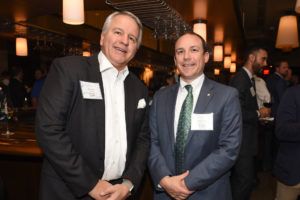
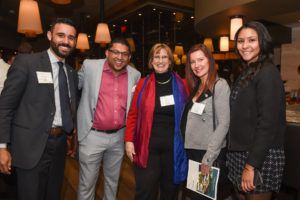
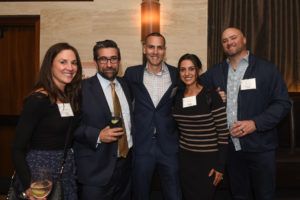
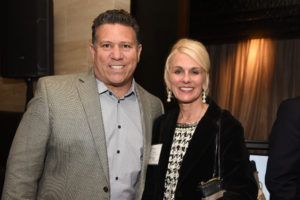
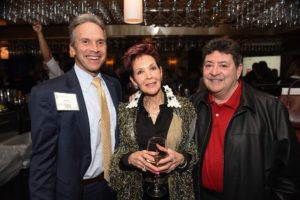
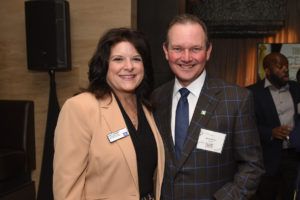
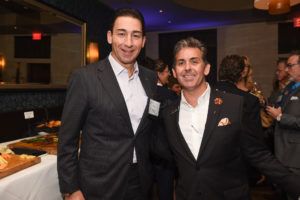
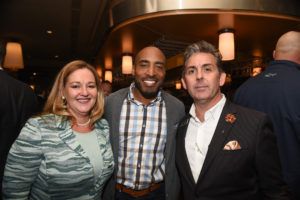
TBBW’s “CEO Connect” series is an exclusive, invitation-only, monthly event that brings together many of the Tampa Bay area’s top business leaders to meet and mingle. The sponsors of this month’s event were CDW and Eddie V’s.
The evening begins with a cocktail reception for about 100 guests, followed by the highlight of the event—a live interview conducted by Bridgette Bello, TBBW’s CEO and publisher, of well-known C-level executives who provide insight into their personal lives, careers and views on issues affecting the business community.
Partnering with TBBW on this event provides an opportunity to network with the area’s business elite, generate new business opportunities, and increase brand awareness.
For information about event sponsorship opportunities, email Jason Baker at [email protected]