
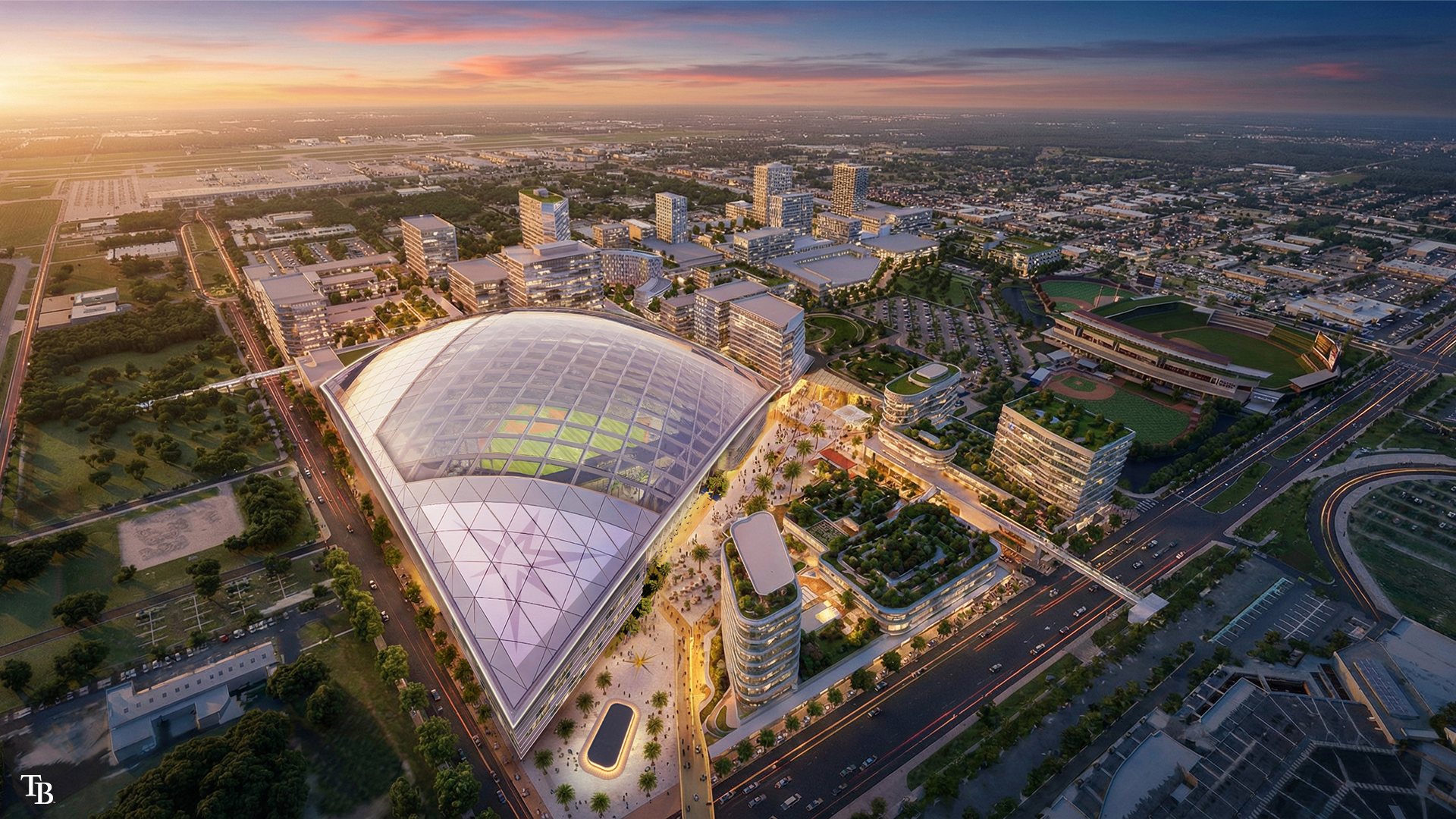
Hillsborough County commissioners approved a non-binding memorandum of understanding with the Tampa Bay Rays, the City of Tampa and the Community Redevelopment Agency for a $2.3 billion stadium and mixed-use development at Hillsborough College’s Dale Mabry campus.
The 5-to-2 vote marks a milestone in the county’s decades-long effort to secure a permanent home for the team, with supporters projecting roughly $2.2 billion in ad valorem taxes and nearly 12,000 jobs. Some commissioners, however, stressed that public financing and community benefits must be carefully verified before taxpayer dollars are committed.
Economic Impact and Project Scope
The plan calls for a 31,000-seat stadium within a 121-acre Ballpark District, alongside residential, office and entertainment space. The Rays would cover construction cost overruns and operate the stadium under a 35-year agreement with options to extend. Phase one is scheduled to open in April 2029, while subsequent phases remain unscheduled.
State officials have pledged $150 million to support Hillsborough College. Aecom estimates that roughly 1 million square feet of development will generate $2.2 billion in taxes over 30 years. Phase one assessed values are projected to reach $1.1 billion by 2034 and rise to $4.8 billion by 2058, including tax-exempt facilities. Nonresidents are expected to contribute 16–20% of total sales tax collected.
Supporters’ Arguments
Supporters framed the deal as a long-term economic engine. Rob Ledford, president of the Tampa Bay Chamber, said:
“The private sector will cover any cost overruns, and this project can create jobs, support youth programs and revitalize underperforming CRA districts.”
Commissioner Christine Miller highlighted civic engagement:
“Hillsborough County has grown strongest when we were willing to invest in ourselves and think boldly about what the next generation can inherit from the decisions we make today.”
Commissioner Harry Cohen cited broader economic stakes, including the Tampa Convention Center and professional sports teams:
“The choice for local leaders is not between this memorandum and a perfect, fully settled agreement. The choice is between moving this process forward or letting it collapse. To not move the process forward would be highly irresponsible.”
Scrutiny and Safeguards
Some commissioners raised concerns about public funding affecting other priorities. Commissioner Donna Cepeda said:
“We have so many important infrastructure projects that would be pushed back. I can’t believe we would even consider using our reserves for this; it’s just really outrageous. We live in a hurricane zone, and we need to keep our monies reserved.”
Commissioner Joshua Wostal emphasized the need for verified financing and public benefit:
“All financing has to be verified, and we need clear assurances of public benefit before any taxpayer dollars are committed. This project could be transformative, but we must protect the county from overextension and ensure general revenue isn’t used to cover cost overruns or undermine other county priorities.”
County staff confirmed that all private and city financing must be verified and that public funds will be used only for components with direct public benefit. Value engineering will be applied to public areas to control costs.
Next Steps
The board continues to review construction schedules, infrastructure impacts and safeguards for taxpayer dollars as negotiations proceed on final agreements. The project could reshape the Dale Mabry campus and the surrounding Drew Park area. The plan now moves to Tampa City Council for further consideration.
Read More Tampa Bay Business News
Explore the latest Tampa Bay business news, real estate deals, development projects, executive moves and company updates shaping the region.