
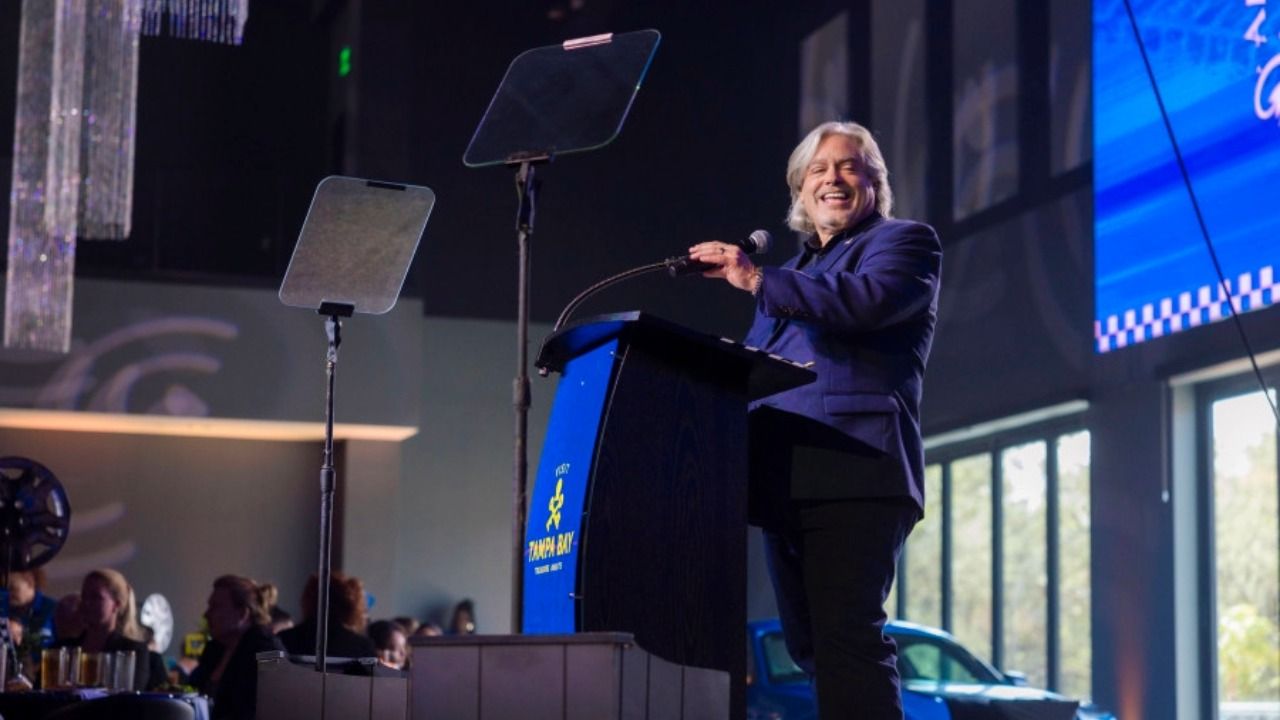
At Visit Tampa Bay’s 2014 annual meeting, Santiago Corrada told Hillsborough County’s tourism industry that he wanted taxable hotel revenuefTourist-tax collections climbed from roughly $21 million when Corrada arrived to about $70 million in 2024, even as Hillsborough added only about 4,100 hotel rooms during his 13 years at Visit Tampa Bay and the 1980s-era Tampa Marriott Water Street remained the county’s largest hotel by room count.
The number mattered beyond bragging rights because Florida law reserved an additional percentage point of tourist-development tax for counties that crossed the state’s high-impact tourism threshold, something only eight counties had done when Corrada began pushing Hillsborough to become the ninth.
Corrada had spent his first year studying the law, Hillsborough’s hotel business, and nearly 500,000 future convention and meeting room nights already on the books, enough to show him when hotels would fill and, more importantly, where the empty nights remained between conventions and major events.
Thanks to the support of the hotel Industry, which initially volunteered to impose the tourism development tax on hotel guests more than 40 years ago, the target was reached, and Hillsborough County became eligible for the additional tax. Eventually, the county began collecting the sixth cent in 2019 after Visit Tampa Bay and the hotel industry pushed county leaders to levy it, creating a stream of tourist-tax money that Corrada estimates now generates an additional $13 million each year.
More than a decade after Tampa Bay’s hoteliers and Corrada put that unlikely number before the industry, the sixth cent it helped produce is now being reallocated to help publicly finance the Tampa Bay Rays’ proposed stadium near Raymond James Stadium.
Long before Hillsborough chased $600 million in hotel revenue, Corrada took over another institution facing numbers nobody wanted, with problems at Miami Edison Senior High School visible in its hallways before they appeared on a state report card.
When Corrada became principal of Miami Edison Senior High School in 1998, the overachieving son of Cuban exiles inherited a school where community activists had gathered support from about 500 families for a possible boycott, fleas infested the halls and some students lived with poverty severe enough that contemporary reporting described them fainting from hunger.
Corrada met the activists in a sweltering back room of a Little Haiti church, then made himself difficult to separate from Edison, attending football games, dropping into Saturday tutoring and senior picnics, learning students by name and absorbing two failing state grades at a school where three out of four students spoke Creole at home.
By November 2002, Edison’s football team had gone 9-1 for its first winning regular season in 11 years, and Corrada came through a pep-rally banner wearing a pirate eye patch and sash before dropping into his trademark split at center court as bass shook the bleachers and students packed into the gym erupted around him.
The season ended differently after an eligibility dispute wiped out Edison’s playoff run and a judge denied the alumni association’s attempt to save it, leaving Corrada to return from court, tell the students himself and resume his usual place in the lobby monitoring class change.
Wide receiver Jackie Chambers found him there and promised, “Don’t worry, Mr. C. We’ll take it out on them in basketball,” breaking the exhaustion on Corrada’s face with a smile before the principal answered, “Thank God for you, Jackie!”
His jobs grew larger after Edison — first in Miami government, then at Tampa City Hall, where the former Convention Center & Tourism Director eventually coordinated more than 50 departments and divisions as chief of staff, and finally at Visit Tampa Bay in 2013.
At Visit Tampa Bay, that meant hotels, restaurants, attractions, airlines, cruise lines, sports teams, convention organizers, and public officials- an industry built from rooms, airplane seats, venues and businesses that belonged to other people but had to work together closely enough for Tampa Bay to compete with larger destinations.
Five years after Hillsborough qualified for the sixth consecutive year, Visit Tampa Bay put another number on the board — $1 billion in annual taxable hotel revenue by 2025 — and the county, once again thanks to the heavy efforts of the hotel industry working with Visit Tampa Bay, achieved the goal two years early and has remained above $1 billion for four consecutive fiscal years, according to Corrada.
Tourist-tax collections climbed from roughly $21 million when Corrada arrived to about $70 million in 2024, even as Hillsborough added only about 4,100 hotel rooms during his 13 years at Visit Tampa Bay and the Tampa Marriott Water Street remained the county’s largest hotel by room count.
“It was selling what you had at the time,” Corrada said, describing a strategy that increasingly filled the gaps between conventions and sporting events with leisure travelers rather than waiting for the next Super Bowl, Final Four or major meeting to refill the hotels.
Hillsborough hotels now regularly run in the 70% and 80% occupancy range while Visit Tampa Bay is looking at convention business for 2035 and 2038, and Corrada says Tampa is already losing some groups because the city cannot host enough large conventions at the same time.
“Even if you have a bigger convention center, where are those people going to stay?” Corrada said. “The demand is there. It’s just the inventory is not.”
Visit Tampa Bay can recruit a convention for 2035 without knowing how much public money it will receive when the delegates arrive, because its county agreements run two years at a time while incentives, concessions, leases and other contractual obligations attached to that business can remain in force for more than a decade.
“You just can’t go back and renege on a contract or a lease and say, ‘Oh, I can no longer pay this. I have to pay less,’” Corrada said, explaining that those commitments get funded before Visit Tampa Bay turns to staffing and other programming.
During the pandemic, hotel occupancy fell to 49% and Hillsborough’s tourist-tax collections dropped 14.1% to $30.42 million, forcing Visit Tampa Bay to furlough or lay off employees as the revenue supporting its operations fell with travel.
Craig J. Richard, president and CEO of the Tampa Bay Economic Development Council, has watched Corrada and his team work through hurricanes, the pandemic and earlier threats to Visit Tampa Bay’s funding while the county’s hotel business continued to grow.
“They have bounced back repeatedly from hurricanes, the pandemic, and dire threats to their funding with absolute class and professionalism,” Richard told TBBW.
Hotel revenue has since recovered beyond its pre-pandemic peak, but Visit Tampa Bay, like all destination marketing organizations in Florida and around the country, still does not control how much of the resulting tourist-tax revenue reaches its budget, because the Tourism Development Council makes recommendations and county commissioners ultimately decide the allocations.
“All of it is really,” Corrada said when asked how much of that decision was outside his control. “The only thing we can control is our relationships and our effectiveness with the allocated dollars. You give us so much, and then we can do so much.”
Corrada wants to work closely with the Rays, whose broadcasts Visit Tampa Bay has bought advertising around in New York, Boston and Toronto and whose proposed stadium he is already discussing as a venue for sporting and non-sporting events beyond regular-season baseball.
Rob Higgins worked alongside Corrada on major-event bids while leading the Tampa Bay Sports Commission before becoming CEO of USF Athletics, giving him a view of the tourism-sports relationship from both sides.
“No matter the responsibility, Santiago has always led by putting our hometown’s best interests first, which has resulted in invaluable impact of all shapes and sizes for our community over the years,” Higgins told TBBW.
By Corrada’s calculation, close to 60% of Hillsborough’s tourist-tax collections currently supports professional sports facilities, amateur athletic complexes, the Tampa Bay Sports Commission, sporting-event incentives and other sports-related uses, with the sixth cent scheduled to join that pool after the coming fiscal year.
During the county’s Rays deliberations, Commissioner Gwen Myers called Hillsborough County Hotel and Lodging Association President Bob Morrison back to the microphone and asked him to repeat what he had said about protecting Visit Tampa Bay before commissioners acted on the stadium agreements.
Morrison called Visit Tampa Bay the “engine that drives the revenue” behind the tourist-development-tax fund, while Myers told county staff she wanted the organization protected from layoffs even as she argued for the longer-term economic benefits of bringing the Rays to Tampa.
Visit Tampa Bay raises roughly $2.7 million a year in private revenue and works with more than 1,000 partners, including hotels, Manthey Hospitality, the 1905 Family of Restaurants and many others that contribute rooms, venues, discounts, services or money to help land and host business, providing resources outside the county allocation but nowhere near another $13 million revenue stream.
Andrea Gonzmart Williams of the 1905 Family of Restaurants has seen the other side of those partnerships inside her restaurants, where she said Visit Tampa Bay’s work has brought her into contact with visitors from around the world.
“Getting to work with Visit Tampa Bay on projects is always a fun, fast-paced experience. Having the opportunity to help share what our city has to offer through videos and interviews is one of my favorite parts of my job,” Gonzmart Williams told TBBW. I have had the opportunity to meet so many individuals in my restaurants from all over the world because VTB has brought them to Tampa. Santiago and his team are truly a Tampa treasure and embody everything our city represents.”
“Those folks are always there with us,” Corrada said, adding that trying to replace a major public-funding loss by returning to businesses already contributing to Visit Tampa Bay’s events would amount to “double, triple dipping on some of these folks.”
Visit Tampa Bay can keep selling Tampa Bay, recruiting partners and booking conventions years ahead, but after 13 years of growing the hotel business behind the tourist tax, Corrada enters the next county budget cycle without control over how much of that revenue commissioners return to his organization.
Strangers now stop Corrada at the airport, recognize him as Santiago and thank him for Tampa Bay’s rise; encounters he says usually end with him redirecting the praise toward the staff and partners whose work produced the numbers attached to his tenure.
“Santiago doesn’t do this by himself; he could never do it by himself,” Corrada said. “I get to talk about and brag about the great work that they do.”
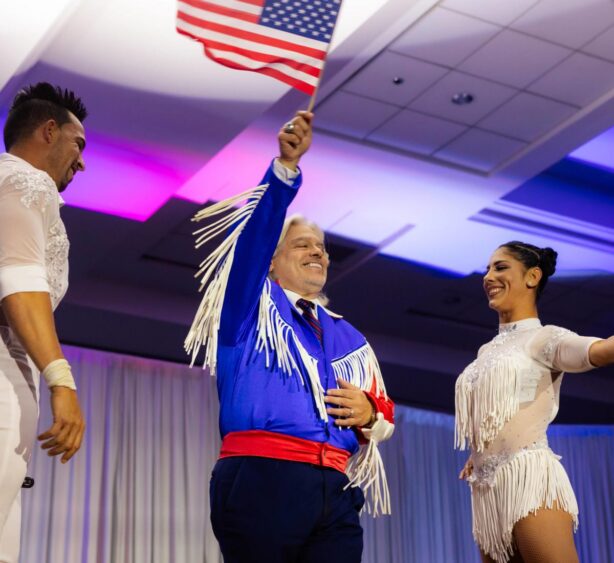
The same Corrada who once dropped into the splits at an Edison pep rally still lets his staff put him into the show, including a recent America 250 event where an unmeasured jacket lasted about 10 seconds before he pulled it off in front of the crowd.
“I thought the buttons were going to pop out and kill some of y’all in the audience,” Corrada said.
Near the end of an interview about the Rays and Visit Tampa Bay’s future, Corrada said he had nothing else to add, then stopped himself with “one last thing” and returned, unprompted, to the sixth cent.
“I think it’s important that businesses and residents understand the improvements to our county that have resulted from the efforts of the hospitality industry,” Corrada explained. “From MICHELIN-starred restaurants to stadiums, culture and attractions, we are very proud to have led and fought for those victories.”