
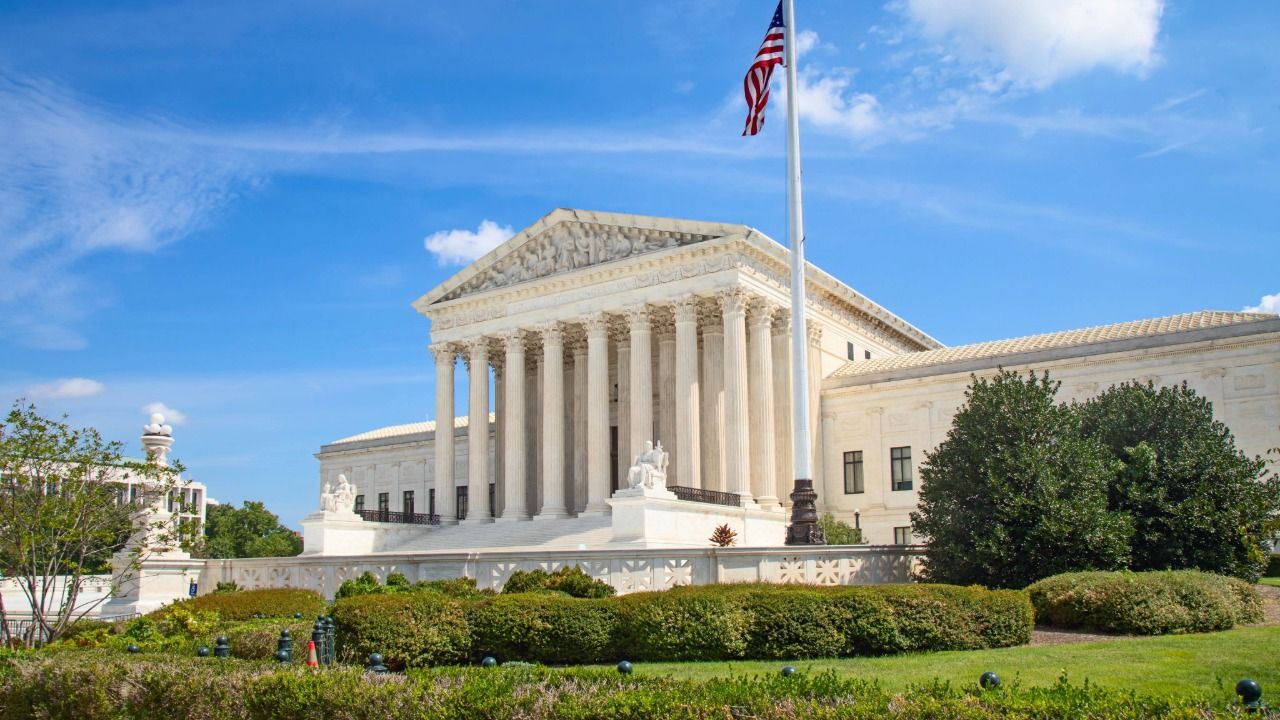
The U.S. Supreme Court on Friday struck down President Donald Trump’s use of emergency powers to impose sweeping global tariffs, a ruling that could lower import costs for companies across Tampa Bay.
The ruling reaches purchasing departments, warehouse floors and shipping schedules across Tampa Bay.
The court ruled the president overstepped his authority under the 1977 International Emergency Economic Powers Act.
Chief Justice John Roberts wrote that Congress did not grant the executive branch the power to impose tariffs at this scale without clear legislative approval.
“Had Congress intended to convey the distinct and extraordinary power to impose tariffs, it would have done so expressly,” Roberts wrote.
The Wall Street Journal reported the case centered on tariffs that included a general 10% duty on imports from most countries announced in April 2025, along with additional tariffs on Canada, Mexico and China tied to fentanyl and trade deficit concerns.
The Tax Foundation estimated the tariffs at issue would raise about $1.5 trillion over the next decade, representing roughly 70% of Trump’s second-term tariffs.
How the ruling affects Tampa Bay trade
Port Tampa Bay handles more cargo than any other Florida port and supports more than 192,000 jobs, according to its latest economic impact report. The port reports it generates $34.6 billion in annual economic value across the region.
In 2023, it handled about 35 million tons of cargo that supply construction sites, grocery stores, restaurants and manufacturers throughout West Central Florida.
“The broad strokes are that basically the Supreme Court has ruled that the president does not have the authority to achieve these kinds of broad sweeping, quote-on-quote, emergency tariffs,” said Dr. Abigail R. Hall, an associate professor of economics at the University of Tampa.
READ: TAMPA BAY BUSINESS NEWS
Hall said companies that import goods from countries covered by the struck-down tariffs should see costs fall.
“Businesses that rely on imports from countries that have been affected by these tariffs should expect to see that the costs or the prices of those goods that they’re importing would go down,” Hall said.
The ruling strikes down tariffs imposed under emergency authority but leaves some other tariffs in place.
“The tariffs that were implemented under the EPA, those have been struck down,” Hall said, referring to the International Emergency Economic Powers Act.
What business owners should watch
Over the past year, many Tampa Bay businesses renegotiated supplier contracts or absorbed higher input costs to protect customer relationships. Smaller operators felt those shifts first.
“Small businesses tend to feel the pinch from tariff policies first,” Hall said. “They’re operating with the relatively smaller budgets tend to be operating on slimmer margins.”
Hall said relief may show up fastest in goods that move quickly from import to sale.
READ: TAMPA BAY REAL ESTATE NEWS
“Typically, those goods that are perishable or have a relatively short time from creation to ultimate consumption are the goods that get hit by the tariffs first,” she said.
That means food products and fast-moving consumer goods could reflect changes sooner than heavy industrial materials, which are tied to longer contracts.
What comes next in Washington
The administration defended the tariffs as a national security measure, and Hall said policymakers often apply that label broadly.
“You can really kind of manipulate that national security argument to cover pretty much any voter service that you want to,” Hall said.
The ruling does not directly alter operations at MacDill Air Force Base or Tampa Bay’s defense contractors, Hall said.
The court’s decision returns tariff authority to Congress, which controls what happens next.
“Congress has the authority to enact tariffs,” Hall said.
Businesses should expect continued uncertainty while Washington determines its next step.
“Over the next 30 days, I think for most businesses, it’s going to be kind of a continuation of what we’ve seen over the last year, which is a lot of uncertainty,” Hall said.
The federal government collected tariff revenue while the case moved through the courts. If the tariffs are unlawful, that money may have to be returned.
“If these tariffs are illegal, then the question becomes, well, what about the tariff money that’s been collected because that money likely has to be returned,” Hall said.
For Tampa Bay executives, the ruling redraws the boundary of executive power and forces a new round of pricing and contract decisions.
Stay Informed
Stay up to date on Tampa Bay business news, executive profiles and the companies shaping the region.