
In Tampa’s University Area, a missed court date can quickly become a workforce problem.
A suspended driver’s license can erase a commute. A misunderstanding about probation can cost a shift. Even a simple case question left unanswered can spiral into lost wages, housing strain and deeper instability for residents balancing work schedules, child care and transportation.
Those disruptions affect employers, household income and neighborhood stability, reshaping how the Hillsborough County Public Defender’s Office views the justice system’s role in the region’s workforce and economy.
“Access to justice functions as economic infrastructure,” said Dionne Jones, chief of policy and communications for the Public Defender’s Office. “In these ZIP codes, PD13 Street Legal is removing structural barriers that limit workforce mobility and long-term economic growth.”
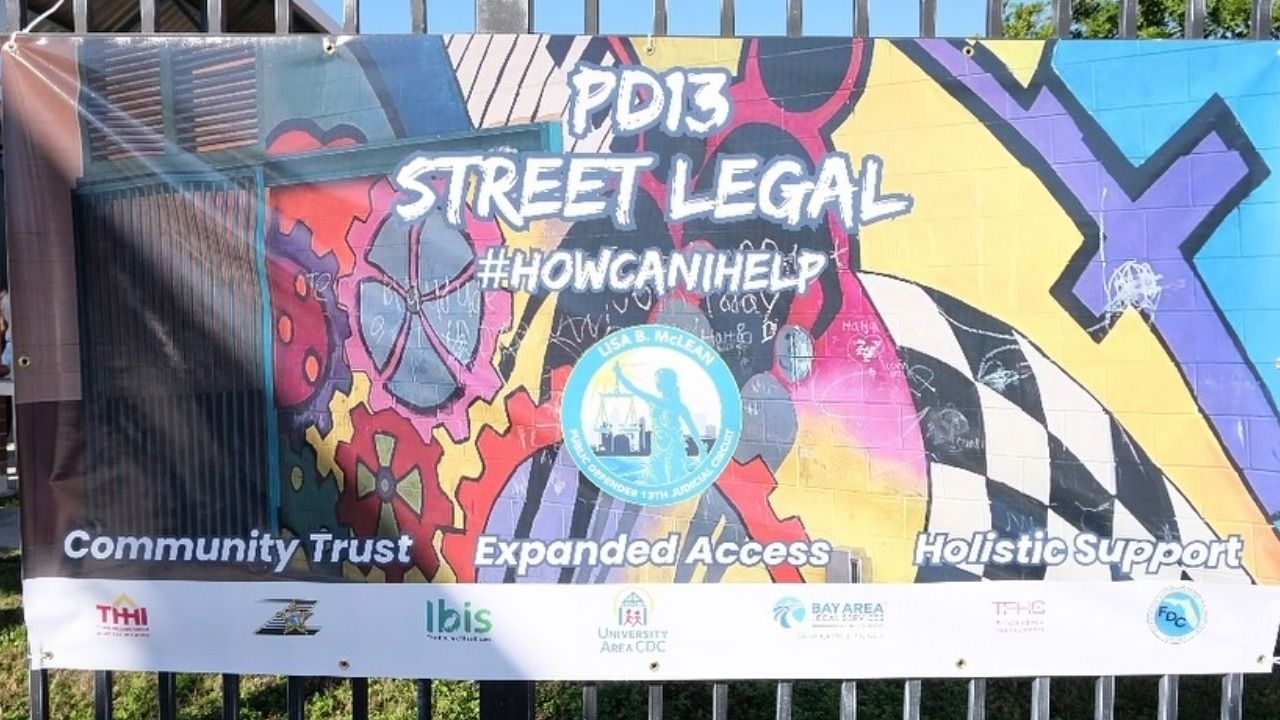
That thinking led the office to launch PD13 Street Legal on Feb. 21, a monthly outreach clinic at the University Community Resource Center, 13605 N. 22nd St., where attorneys, support staff and partner agencies meet residents on the third Saturday of each month from 10 a.m. to 2 p.m.
Residents can review pending cases, confirm court dates, develop compliance plans and connect with support services without traveling to the downtown courthouse.
“Many of our clients experience barriers that make traveling to our downtown office challenging,” Jones said. “Transportation gaps, work schedules, childcare responsibilities and economic instability can all limit access to timely legal engagement.”
That emphasis on early intervention already has proof points across the University Area corridor.
Just down the road from the Street Legal clinic, Junior Achievement of Tampa Bay operates the Bill Poe Family Campus, where more than 25,000 students from Hillsborough and surrounding counties participate each year in programs such as Muma BizTown and Finance Park.
Junior Achievement’s 3DE model, which operates in four Hillsborough County public schools with two additional schools scheduled to launch in the 2026-27 school year, has produced measurable results.
According to the organization, participating schools report a 14% reduction in chronic absenteeism, roughly 10% higher learning gains in English language arts and a 98% graduation rate.
The programs introduce students to personal finance, workplace collaboration and career pathways before they enter the labor market. Those outcomes illustrate the broader premise behind efforts like PD13 Street Legal: earlier intervention can strengthen long-term economic stability.
Where legal access meets workforce pressure
The Public Defender’s Office began developing the Street Legal model after examining where many of its clients live and how access barriers affect engagement with their cases.
Mapping client residency data revealed clear concentrations in ZIP codes 33619, 33612, 33613 and 33610. Those neighborhoods share transportation limitations and economic pressures that shape how residents interact with the justice system.
The University Area site emerged from that analysis. Jones said the strongest concentrations were in 33612 and 33613, with significant client density in 33610 and 33619 as well.
Those ZIP codes also align with areas the Florida Department of Juvenile Justice has identified as having elevated youth arrest activity.
The data revealed a consistent pattern. Legal instability and economic vulnerability often appear in the same neighborhoods.
“We identified ZIP codes where the majority of our clients live, so we were not taking a scattered approach,” Public Defender Lisa B. McLean said.
Street Legal is designed to respond to the realities residents face while balancing work schedules, family responsibilities and legal obligations.
READ: TAMPA BAY BUSINESS NEWS
“It’s this idea of addressing the whole person,” McLean said. “We’re looking at legal questions alongside the issues that shape whether someone can keep their life on track.”
Legal challenges often intersect with housing, health and family stability. When those barriers interrupt legal engagement, manageable issues can escalate.
“When individuals cannot legally drive, clear background checks or confidently navigate court requirements, employment becomes fragile,” Jones said.
Street Legal aims to clarify next steps so residents can stay engaged with their cases.
Inside the Street Legal model
Residents who attend the clinic receive legal consultation, case-status review, discovery review, court-date verification and compliance planning.
Attorneys also screen participants for eligibility for expungement or record sealing.
The Public Defender’s Office considers a resident “served” when a visit produces meaningful legal engagement.
“We are measuring substantive assistance that results in action, clarity or support,” Jones said.
That may include a clarified case strategy, verified court obligations, a compliance plan or a service referral.
A dedicated social services team member works onsite to connect residents with housing support, health care providers, food assistance programs, addiction services and behavioral health resources.
Eight partner organizations participate regularly in the clinic. Those partners include Hillsborough County Social Services, Tampa Family Health Centers, Bay Area Legal Services, Ibis Healthcare, the University Area Community Development Corporation, the Hillsborough County Sheriff’s Office, the Florida Department of Corrections and the Family Healthcare Foundation.
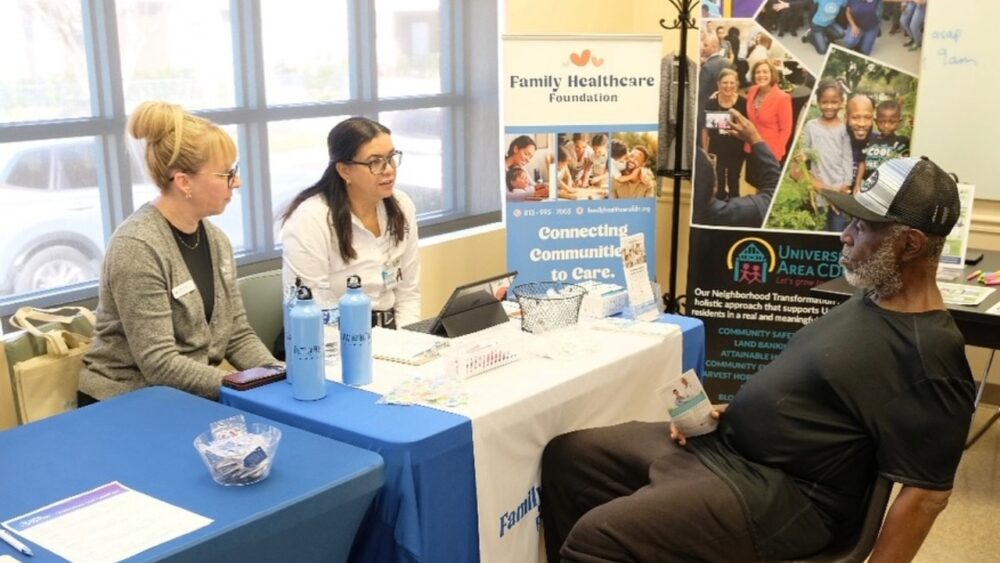
Each clinic deploys four to five assistant public defenders along with about 10 support personnel including investigators, mitigation specialists and intake staff. Partner agencies contribute another 16 to 20 staff members during each session.
The program operates within the office’s existing budget through strategic staff deployment, while community partners provide meeting space and help connect residents to wraparound services.
“We’re trying to put all these people in one room to provide services to that particular community,” McLean said.
Measuring stability beyond the courthouse
The Public Defender’s Office designed Street Legal as a measurable program rather than a one-time outreach effort.
Initial metrics include residents served, ZIP code distribution, legal issues addressed, case strategies developed, compliance plans established and referrals to partner agencies.
“We’re meeting with partners before and after each clinic to track the impact we’re having on the community,” McLean said.
READ: TAMPA BAY REAL ESTATE NEWS
Over time, the office plans to track broader indicators tied to economic and household stability. Those include probation compliance, failures to appear, case resolution timelines, housing stability, workforce referrals and employment status at intake and after intervention.
Jones said the office will also monitor whether participants maintain or obtain employment after receiving assistance.
Improved compliance with court requirements and fewer probation violations could stabilize employment patterns in neighborhoods where legal disruptions interrupt work.
“Most importantly, Hillsborough County would experience a shift from reactive justice delivery to preventative, community-embedded representation,” Jones said.
Why legal stability matters to the regional economy
Economic mobility in neighborhoods like the University Area develops through multiple systems working together.
Schools prepare future workers. Transportation connects employees to jobs. Health care and housing support household stability.
Legal clarity also plays a role.
Residents who understand their court obligations can maintain work schedules and plan family responsibilities with greater confidence. Clear case timelines help households manage transportation, employment and housing decisions.
Programs such as PD13 Street Legal aim to prevent manageable legal issues from disrupting employment.
By placing attorneys and service providers inside the communities where many clients live and work, the program seeks to remove barriers that often keep residents from fully participating in the workforce.
In the University Area, that effort is already underway.
Stay Informed
Stay up to date on Tampa Bay business news, executive profiles and the companies shaping the region.